

Polished concrete floors in Brisbane look stunning when they’re clean, but most people don’t know how to maintain them properly. The wrong cleaning method can strip the protective seal and leave your floor looking dull and damaged.
At superfloor australia, we’ve seen countless floors ruined by harsh cleaners and aggressive scrubbing. This guide shows you exactly how Brisbane polished concrete cleaners should approach your floor to keep it looking new for years.
Why Your Polished Concrete Needs Regular Cleaning
Dust Scratches Your Floor Every Single Day
Dust scratches your polished concrete floor-fine particles act like sandpaper underfoot, slowly dulling the surface if left unswept. Beyond aesthetics, dust traps allergens and moisture that seep into micro-cracks, accelerating deterioration. Regular dust mopping removes this buildup before it causes permanent damage, protecting your investment far more effectively than waiting for visible problems to appear. The reality is straightforward: a five-minute daily sweep prevents what would otherwise require expensive professional re-polishing.
Acidic Spills Set Permanently Within Hours
Spills on polished concrete don’t behave like they do on sealed tile or wood. Acidic spills etch polished concrete permanently-impregnating sealers don’t stop liquids from making physical contact with the surface and therefore cannot prevent acid etching. Prompt cleaning prevents etching of the surface-wiping a spill within minutes stops it from bonding to the floor, while waiting hours often means professional stain removal becomes necessary. Commercial spaces in Brisbane that maintain strict cleaning schedules see dramatically fewer permanent marks than those with irregular maintenance routines.
Neglect Leads to Structural Damage and Expensive Repairs
Polished concrete floors can last decades, but only with proper maintenance. Neglected floors develop dulled patches in high-traffic zones where dirt accumulation accelerates wear. Once the protective seal deteriorates unevenly, moisture penetrates cracks, causing spalling and structural damage that costs thousands to repair.
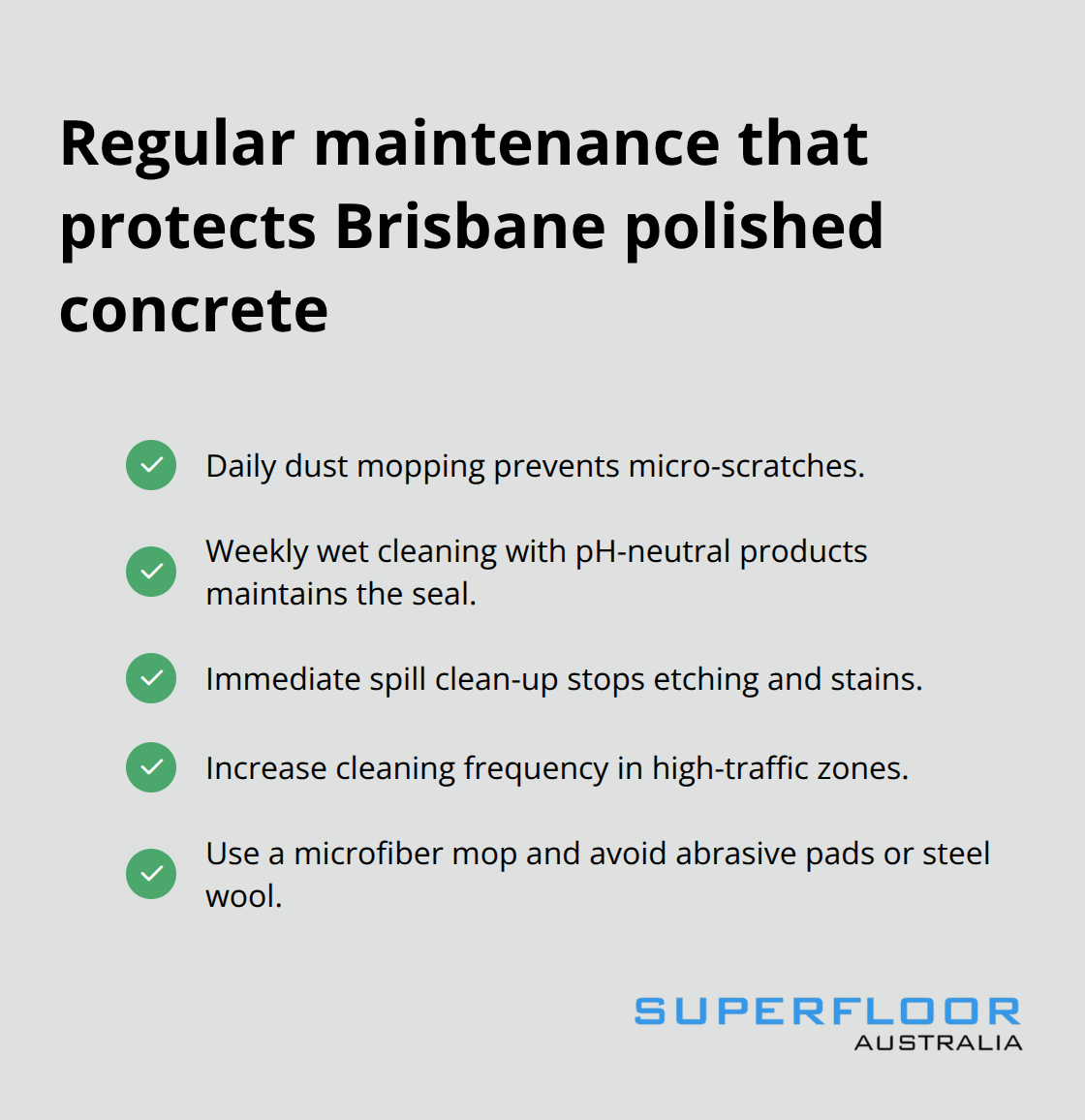
pH-neutral cleaners for polished concrete designed specifically for polished concrete maintain the seal’s integrity, preventing the cascade of problems that follow neglect. A maintenance routine of daily dust mopping and weekly wet cleaning with appropriate products costs almost nothing compared to the expense of crack repairs or full re-polishing when damage spreads across significant floor areas.
Understanding why regular cleaning matters sets the foundation for choosing the right methods-and knowing which products and techniques actually protect your floor rather than damage it.
What Cleaners and Tools Actually Work on Polished Concrete
pH-Neutral Cleaners Protect Your Seal
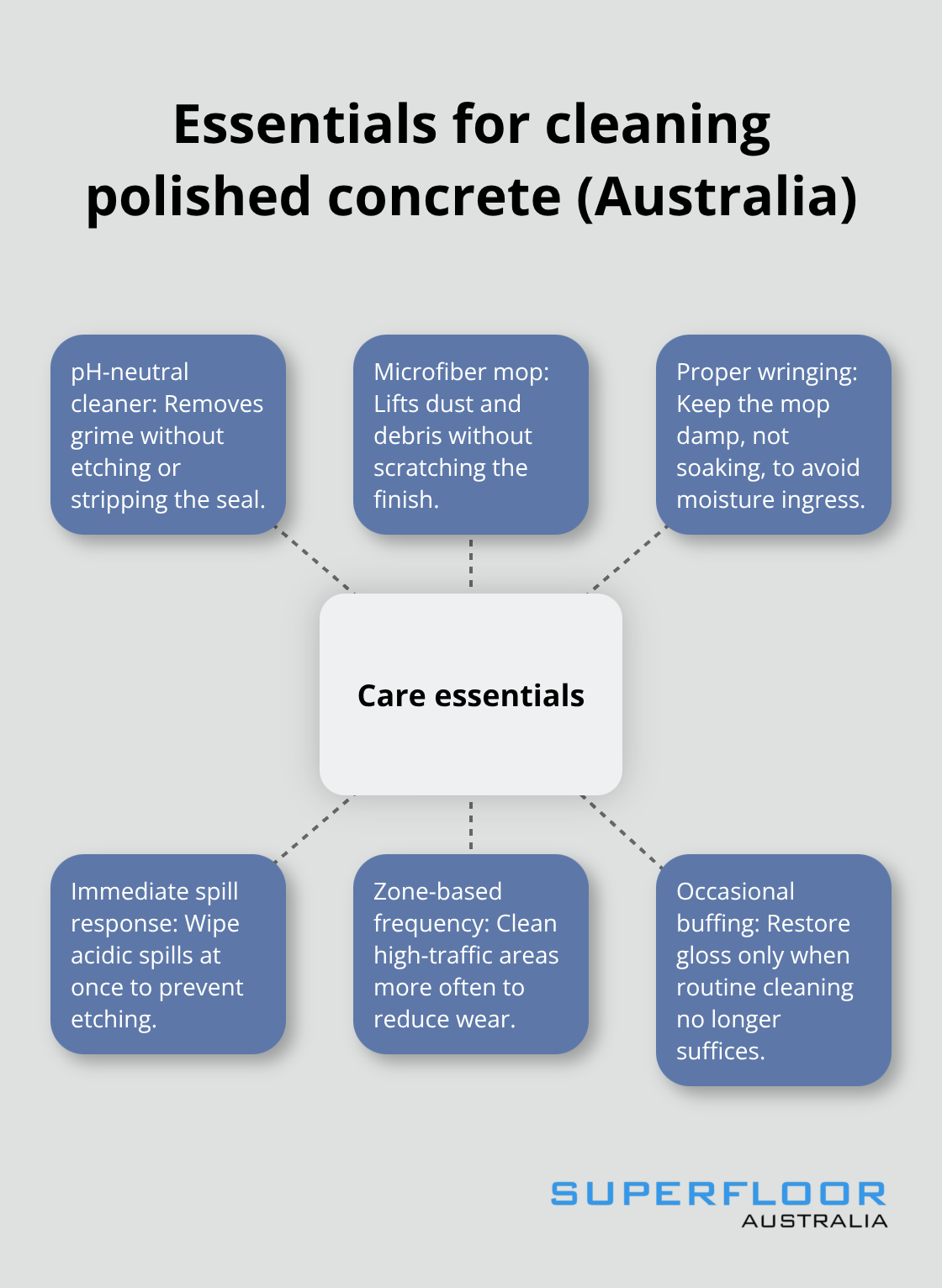
The wrong cleaner destroys your polished concrete floor. Most Brisbane property owners reach for vinegar, bleach, or all-purpose household cleaners without realising these products actively damage the protective seal. Polished concrete requires a different cleaning approach than tile or laminate. pH-neutral cleaners formulated specifically for polished concrete maintain the seal’s integrity while removing dirt and grime effectively. Products with a pH between 7 and 8.5 clean without etching or stripping the surface, while anything acidic or alkaline accelerates seal breakdown. Check the product label before purchasing-many cleaners marketed as gentle still contain citric acid or ammonia that will dull your floor within weeks. For Brisbane homes and commercial spaces, a dedicated polished concrete cleaner costs between fifteen and thirty dollars per bottle and lasts months with regular use, making it far cheaper than professional re-polishing that runs into thousands of dollars.
Microfiber Mops Lift Dust Without Scratching
The tools you use matter just as much as the cleaner itself. Microfiber mops stand out as the best option for polished concrete floors because the microfiber material lifts dust and debris without scratching the polished surface. The fibres are soft enough to protect the finish while fine enough to trap allergens and particles that would otherwise remain airborne. Daily dry mopping with microfiber removes the dust that acts like sandpaper underfoot, preventing micro-scratches that accumulate into visible dullness over months. Steel wool, abrasive scrubbing pads, and stiff-bristled brushes have no place near polished concrete; these tools strip the protective seal and create visible scratches within minutes.
Proper Wringing and Buffing Techniques Matter
When wet mopping, wring out your microfiber mop thoroughly so it stays damp rather than soaking wet. Excess water seeps into cracks and underneath the seal, causing discolouration and structural damage that spreads over time. High-traffic areas in commercial spaces benefit from occasional buffing with a high-speed floor buffer to restore shine, though this should happen only when routine cleaning no longer maintains the surface’s appearance. The combination of pH-neutral cleaner plus microfiber mop plus proper wringing technique protects your investment while keeping the floor looking new.
Understanding which products and tools work sets you up for success-but knowing what to avoid matters equally, as common mistakes can undo months of proper maintenance in a single cleaning session.
What You’re Doing Wrong When You Clean Polished Concrete
Vinegar and Bleach Destroy Your Floor’s Protective Seal
Vinegar sits in countless Brisbane kitchen cupboards, marketed as a natural cleaning solution for everything from windows to floors. The reality is brutal: vinegar and bleach damage polished concrete permanently because acidic substances etch the protective seal and the concrete surface itself. Bleach causes identical damage through a different mechanism-it strips the seal and leaves a dull, whitened residue that no amount of buffing removes. All-purpose household cleaners marketed as gentle often contain citric acid or ammonia that accelerate seal breakdown within weeks of regular use.
Commercial spaces in Brisbane that switched from household products to pH-neutral cleaners report noticeably less surface dulling and fewer permanent stains within the first month alone. The mistake happens because people assume a cleaner labelled natural or multipurpose works safely on all floors, but polished concrete demands specificity that standard products simply don’t provide.
Wet Mopping Causes Hidden Damage Beneath the Surface
Wet mopping creates problems that build silently over months before becoming visible. When your mop stays too wet, water penetrates the seal and seeps into micro-cracks beneath the surface, causing discolouration that spreads like a stain from underneath. This trapped moisture accelerates deterioration of the concrete structure itself, leading to spalling and structural damage that costs thousands to repair.
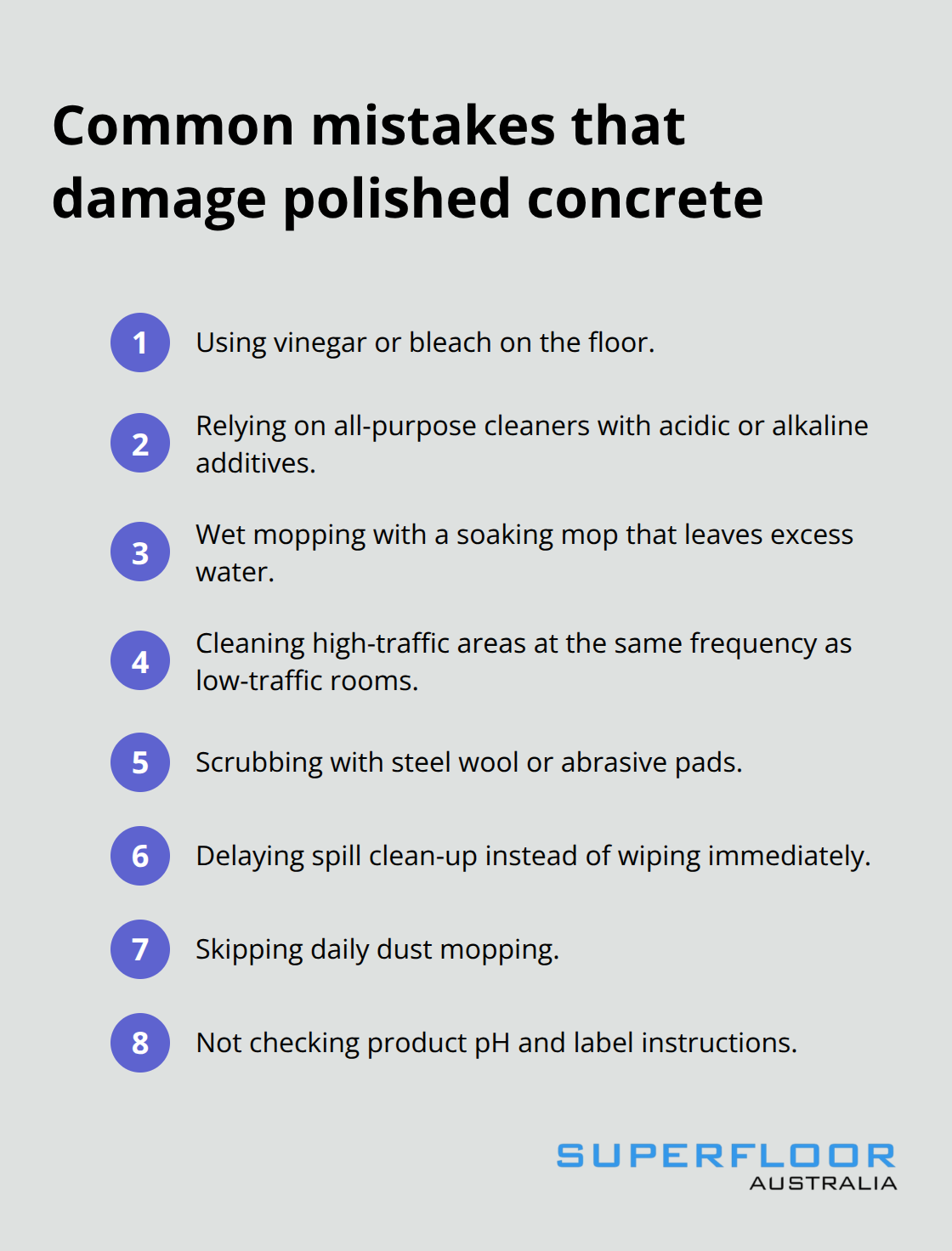
High-traffic zones-entryways, hallways, kitchen areas-accumulate dirt and moisture faster than low-traffic spaces, yet most property owners clean these areas identically to the rest of the floor. Commercial kitchens and retail spaces in Brisbane that implemented zone-based cleaning schedules, increasing frequency in high-traffic areas from weekly to twice weekly, saw significantly reduced wear patterns and maintained gloss far longer than properties using uniform cleaning routines.
High-Traffic Areas Need More Frequent Attention
The solution requires wringing your microfiber mop until it feels barely damp, not soaking wet, and committing to more frequent cleaning in areas where foot traffic concentrates. Occasional buffing with a high-speed floor buffer restores shine in these zones when routine cleaning no longer maintains the finish, but this intervention only works when the underlying seal remains intact from proper cleaning practices. Entryways and hallways (where foot traffic peaks) demand twice-weekly wet cleaning compared to once-weekly schedules in lower-traffic rooms, preventing the uneven wear patterns that make floors look aged prematurely.
Final Thoughts
Your polished concrete floor in Brisbane will look new for decades when you commit to the right cleaning routine. Daily dust mopping with a microfiber mop removes particles before they scratch the surface, while weekly wet cleaning with pH-neutral products maintains the seal’s integrity. The investment of fifteen minutes per week prevents the thousands of dollars in professional re-polishing that neglect eventually demands.
Brisbane polished concrete cleaners understand that consistency matters more than intensity-aggressive scrubbing or harsh chemicals destroy what you’re trying to protect, while gentle, regular maintenance preserves both appearance and structural durability. High-traffic zones need twice-weekly attention, entryways demand immediate spill cleanup, and your mop must stay damp rather than soaking wet. These practices cost almost nothing yet deliver results that rival professional interventions.
When routine cleaning no longer maintains your floor’s shine, professional services become necessary. We at superfloor australia deliver high-quality polished concrete flooring with precision preparation and expert craftsmanship that ensures lasting results, and our team understands the maintenance demands that keep your investment protected long-term. Contact superfloor australia when your floor needs professional re-polishing to restore its natural beauty or when you require guidance on maintaining your existing surface.