

Brisbane floor prep can make or break your project timeline. We at superfloor australia have seen countless jobs delayed because contractors rushed through preparation work.
The difference between a fast turnaround and weeks of rework comes down to precision techniques applied from day one. This post covers the methods that actually work.
Why Poor Prep Destroys Your Timeline
Skipping or rushing floor preparation adds weeks to your project. Contractors who cut corners on surface assessment, dust removal, or moisture testing face peeling coatings, uneven finishes, or failed adhesion weeks later. These failures force complete rework, pushing timelines back by 10 to 20 days or more. The cost difference between doing prep right the first time and fixing a botched floor is staggering-rework often costs 40 to 60 per cent more than proper initial preparation. A properly levelled surface with moisture barriers installed upfront eliminates these expensive delays.
Surface Flatness Controls Your Installation Speed
Uneven concrete slabs slow installation dramatically. When a substrate has high spots or valleys, installers must work around them, grinding out peaks or filling valleys with levelling compounds. This adds days to the schedule. Professional concrete grinding removes surface irregularities in a single pass, creating a flat, uniform base that allows flooring crews to work faster and more accurately.
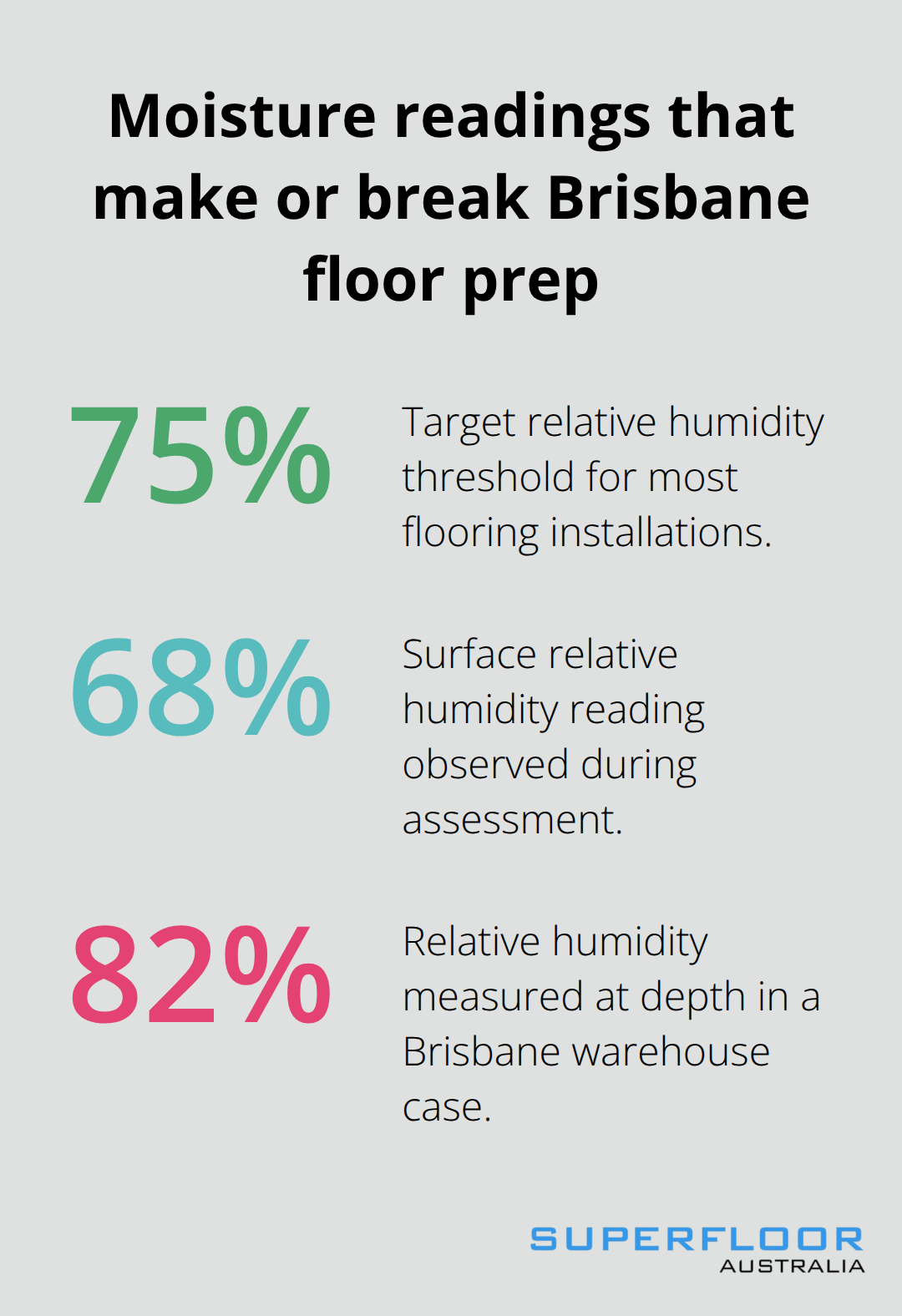
Moisture testing is equally critical-wet substrates cause adhesion failure, forcing removal and reinstallation of the entire floor. Testing moisture levels before any coating or flooring goes down prevents this catastrophe. Try moisture readings below 75 per cent relative humidity for most flooring applications; exceeding this threshold almost guarantees failure within months.
Dust Control Prevents Installation Delays
Dust left on a prepared surface blocks adhesion between the substrate and new flooring. Inadequate dust removal requires additional cleaning passes, consuming extra labour hours and extending timelines. Professional dust suppression systems during grinding (using water spray or vacuum extraction) eliminate this problem during preparation, not after. This approach leaves the surface clean and ready for immediate coating or flooring installation.
A properly prepared, dust-free slab moves to the next trade immediately, while a dusty surface requires costly additional cleaning steps or sits idle waiting for conditions to improve. The difference is substantial-proper preparation saves labour hours and accelerates your entire project schedule. These precision techniques form the foundation for what professional floor preparers actually do on site.
How Professional Floor Preparers Achieve Precision Results
Advanced Grinding Equipment Delivers Uniform Surfaces
High-powered concrete grinders form the backbone of professional floor preparation. These machines operate at speeds that remove surface irregularities in controlled passes, creating uniformity that hand tools cannot match. Professional grinders achieve tolerances within 3mm across large floor areas, which is the industry standard for most commercial and residential installations. The grinding process works in stages: coarse grits remove old coatings, adhesives, and surface contaminants; medium grits level high spots and fill minor valleys; fine grits produce the smooth finish required for coating or flooring adhesion.
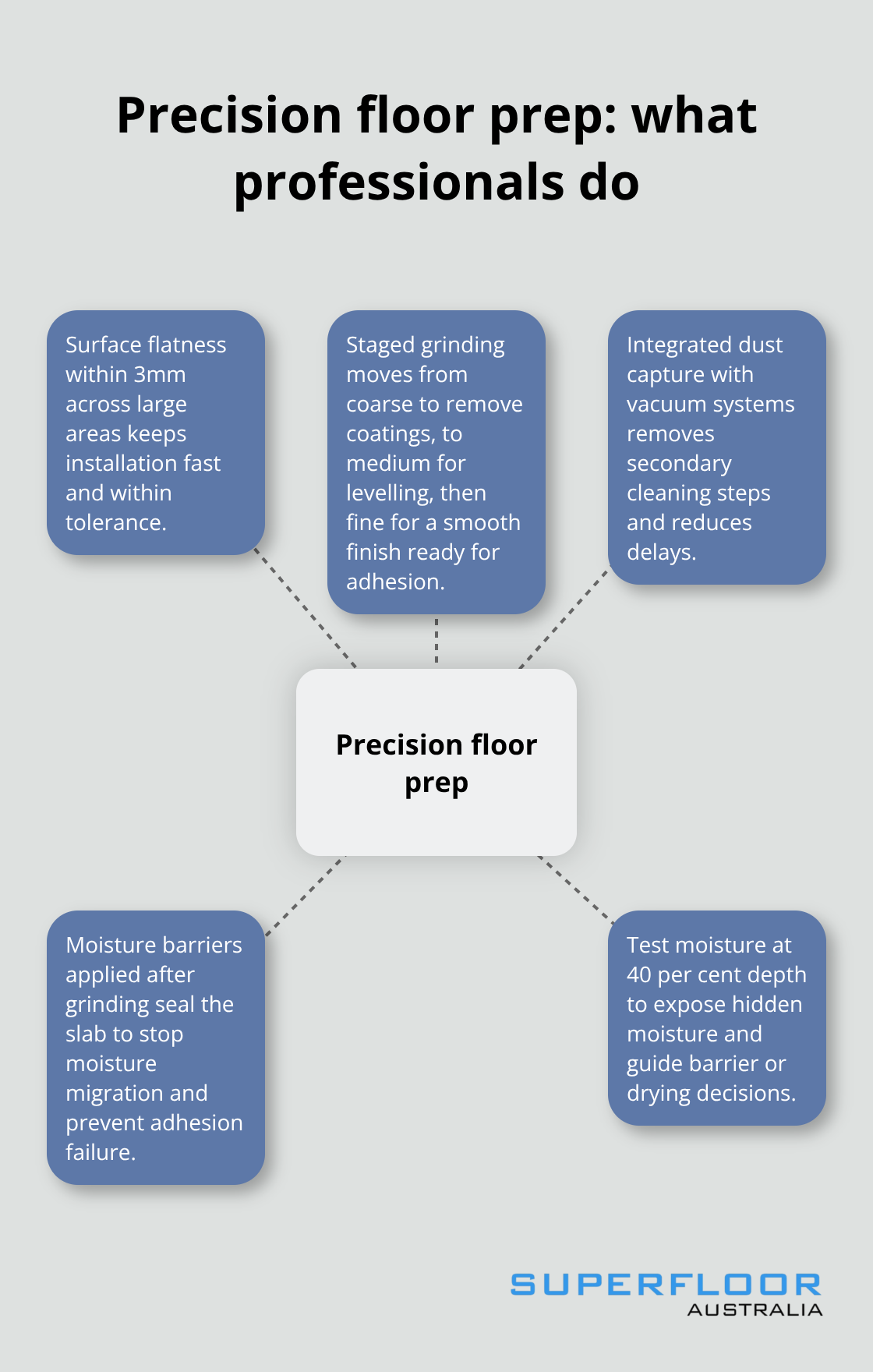
Professional grinders also capture dust during the process using integrated vacuum systems, eliminating the secondary cleaning step that delays project progression. This staged approach prevents the need for additional levelling compounds, which add cost and extend timelines.
Moisture Barriers Prevent Adhesion Failure
Moisture barriers applied after grinding seal the concrete, preventing moisture migration that causes adhesion failure. Testing moisture levels before and after grinding confirms the substrate meets the at or below 75% relative humidity threshold. Moisture assessment protocols measure relative humidity at multiple points across the slab, identifying wet zones that need extended drying time or additional moisture barriers before flooring installation proceeds.
These readings guide decisions on whether to proceed immediately or delay installation, preventing costly rework from moisture-related failures weeks after the floor is installed. A properly sealed substrate eliminates the risk of peeling coatings or failed adhesion that forces complete floor removal and reinstallation.
Dust Control Systems Accelerate Project Timelines
Dust control during grinding separates rushed jobs from properly executed ones. Water suppression systems spray the grinding surface continuously, trapping dust particles and preventing them from becoming airborne or settling on adjacent surfaces. Vacuum extraction systems pull dust directly from the grinding head, creating a cleaner working environment and reducing cleanup time afterward.
The choice between water and vacuum suppression depends on the substrate and surrounding conditions, but both methods deliver faster project timelines than allowing dust to settle and requiring additional cleaning passes later. A dust-free surface moves to the next trade immediately, while a contaminated surface requires costly additional cleaning steps or sits idle waiting for conditions to improve. These precision techniques form the foundation for what separates professional floor preparation from rushed work-and they directly determine whether your project stays on schedule or faces delays that compound throughout construction.
What Mistakes Contractors Make During Floor Prep
Surface Assessment Shortcuts Cost Weeks Later
Contractors rush through surface assessment because they underestimate how much it impacts the final result. Many installers skip the initial surface flatness check, assuming the slab is acceptable. Within weeks, the new flooring starts peeling or shows uneven wear patterns because the underlying surface has valleys up to 8mm deep. The Australian Resilient Flooring Association technical bulletin recommends measuring flatness at multiple points across every 3-square-metre section before prep work begins. Skipping this step means you are essentially gambling with your timeline.
One Brisbane project required complete floor removal and reinstallation after moisture testing revealed relative humidity levels at 89 per cent, far exceeding the 75 per cent threshold. The initial assessment would have caught this in under an hour. Instead, the contractor waited until coatings started failing two months after installation, forcing a full rework that cost 50 per cent more than proper prep would have cost upfront.
Inadequate Dust Removal Creates Adhesion Failures
Dust removal failures happen because contractors assume a quick vacuum pass is sufficient. Dust particles left on a prepared surface create a barrier between the substrate and adhesive, causing adhesion failure that appears weeks after installation when it is too late to fix affordably. Professional floor prep requires multiple cleaning stages: initial dust collection during grinding using vacuum extraction, followed by a secondary tack cloth pass to capture residual particles, then a final damp wipe to eliminate any remaining contaminants.
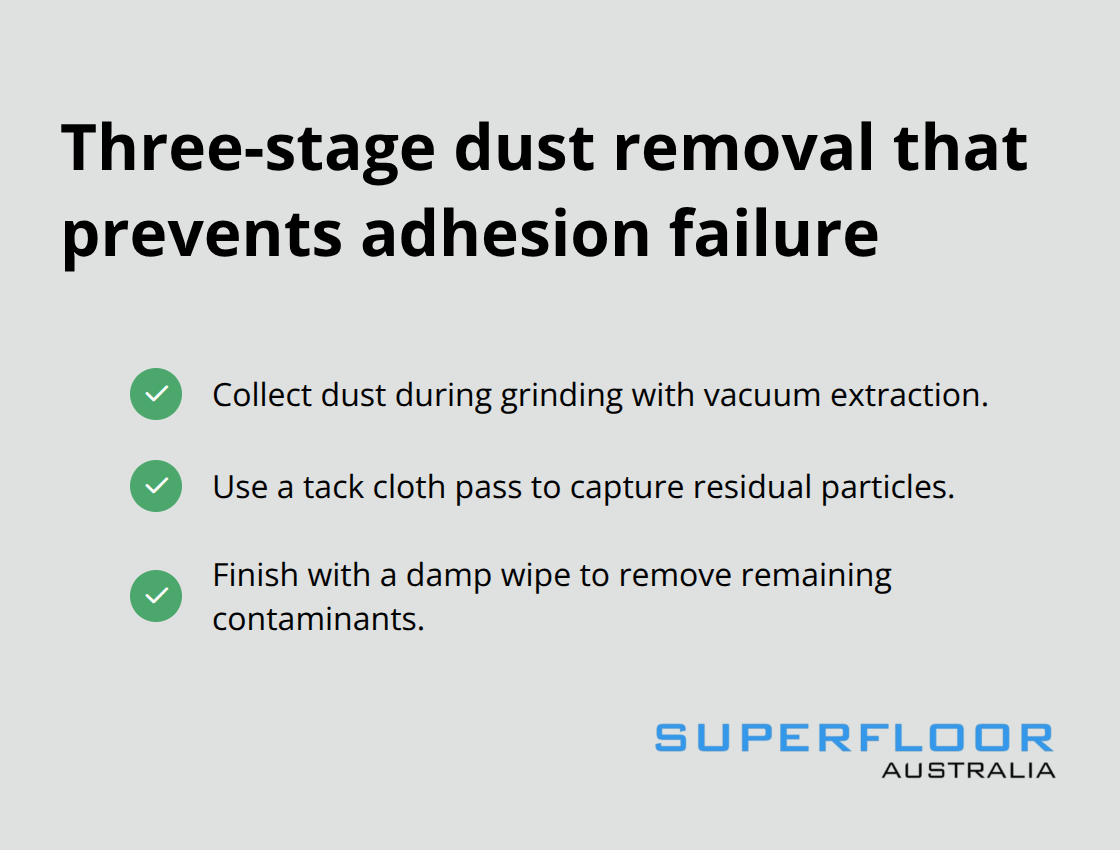
Moisture barriers applied to dusty surfaces fail because dust prevents proper substrate contact. Contractors who skip the secondary cleaning steps inevitably face callbacks and costly rework. The difference between a single vacuum pass and a three-stage dust removal protocol determines whether your floor lasts years or fails within months.
Moisture Testing at Depth Prevents Hidden Failures
Ignoring moisture beneath the surface is perhaps the costliest mistake contractors make. Concrete retains moisture deep within its structure, and surface testing alone misses this problem. Moisture can migrate upward through capillary action, especially in ground-floor slabs or areas with poor drainage. Testing relative humidity at 40 per cent depth into the concrete, not just at the surface, reveals whether moisture barriers are actually needed.
One Brisbane warehouse project revealed 82 per cent relative humidity at depth despite surface readings of 68 per cent. Without that deeper assessment, the epoxy coating would have failed within months. Moisture assessment protocols must include testing at multiple depths and multiple locations across the floor area, not a single reading at one point.
This comprehensive approach (measuring at surface, mid-depth, and deep levels) identifies moisture problems before they destroy your flooring investment.
Final Thoughts
Floor preparation done right eliminates delays, prevents costly rework, and keeps your project on schedule. Skipping surface assessment, rushing dust removal, or ignoring moisture testing might save a few hours upfront, but those shortcuts cost weeks and thousands of dollars later when adhesion fails or finishes peel. The investment in proper techniques pays for itself immediately-professional grinding, moisture barriers, and dust control systems cost less than a single rework cycle.
Experienced professionals bring the equipment, knowledge, and protocols that separate rushed work from reliable results. They measure flatness at multiple points, test moisture at depth, and apply dust control systems that prevent secondary cleaning delays. They understand that surface quality directly controls installation speed and that moisture barriers applied upfront eliminate the most expensive failures.
When you need Brisbane floor prep that delivers results, contact superfloor australia to discuss your requirements and discover how proper preparation transforms your project timeline. We combine advanced grinding equipment, comprehensive moisture assessment, and dust control systems that keep projects moving forward. Your flooring investment lasts longer when the substrate receives the attention it deserves.