

Your kitchen floor takes a beating. Between spills, foot traffic, and the constant need for sanitisation, most surfaces crack under pressure.
At superfloor australia, we’ve seen firsthand how polished concrete kitchen floors outperform traditional options. They’re built to handle the demands of a working kitchen while looking sharp doing it.
Why Polished Concrete Handles Kitchen Demands
Moisture, Chemicals, and Traffic Resistance
Polished concrete floors resist the three things that destroy most kitchen surfaces: moisture, chemicals, and constant foot traffic. The densifier applied during polishing hardens the concrete to a point where spills bead up rather than soak in, and the sealed surface blocks stains from setting. A muddy footprint wipes clean in seconds. Acidic spills from citrus or vinegar won’t etch the finish like they would on marble or limestone. Heavy prep equipment rolling across the floor leaves no marks because the wear surface is harder than most alternatives.
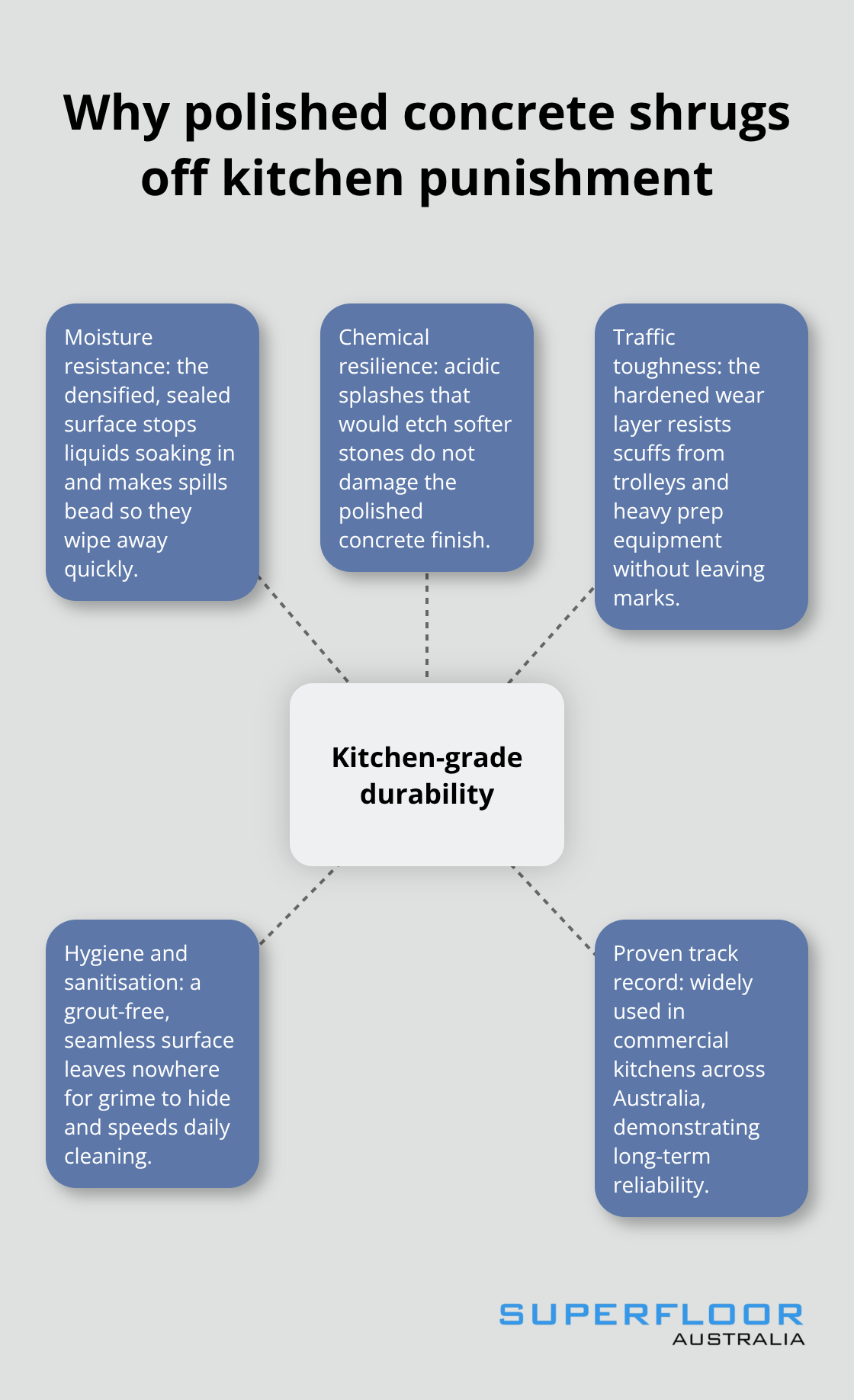
Commercial kitchens have used polished concrete for decades, and that track record speaks louder than any marketing claim. The grout-free design eliminates the dirt traps that plague tile installations, making daily sanitisation faster and more effective.
Simple Cleaning Routines
Cleaning polished concrete requires nothing exotic. Use a pH-neutral cleaner on sealed surfaces, and a microfiber mop traps dirt without scratching. Daily light scrubbing with low-speed machines and mineral-coated brushes maintains both hygiene and shine while strengthening densification over time. For acid-soluble stains like rust or mineral deposits, diluted acid-based cleaners work, but avoid muriatic acid if the floor will be stained later.
Health and Comfort Considerations
The hard surface won’t harbour dust mites or allergens, which matters for households with respiratory sensitivities. Standing for long periods on polished concrete can cause fatigue, so anti-fatigue mats at prep stations protect your feet during service. In cooler Melbourne conditions, the floor retains heat naturally, though radiant heating integration improves comfort if the surface feels too cool.
Long-Term Cost Advantages
Maintenance costs drop significantly because there’s no waxing, sealing every few years, or refinishing cycles like you’d face with other finishes. A polished concrete kitchen floor outlasts most alternatives by years. The durability means fewer replacements over the life of your home, but the real value emerges when you consider what this surface can actually look like.
What Polished Concrete Actually Looks Like in a Kitchen
Three Finishes, Three Distinct Aesthetics
The finish you choose determines everything about how your kitchen floor looks and performs. Cream polished concrete, achieved with power trowels during the initial pour and then burnished and sealed, produces a cloudy, even texture that works well in kitchens wanting subtlety without the full aggregate exposure. Salt-and-pepper finishes reveal roughly 1mm of cement aggregate, sitting in the middle ground for both cost and visual impact. Full-grind diamond polishing, the most dramatic option, exposes substantial aggregate for a terrazzo-like appearance that delivers unmatched visual depth.
Colour, Light, and Material Selection
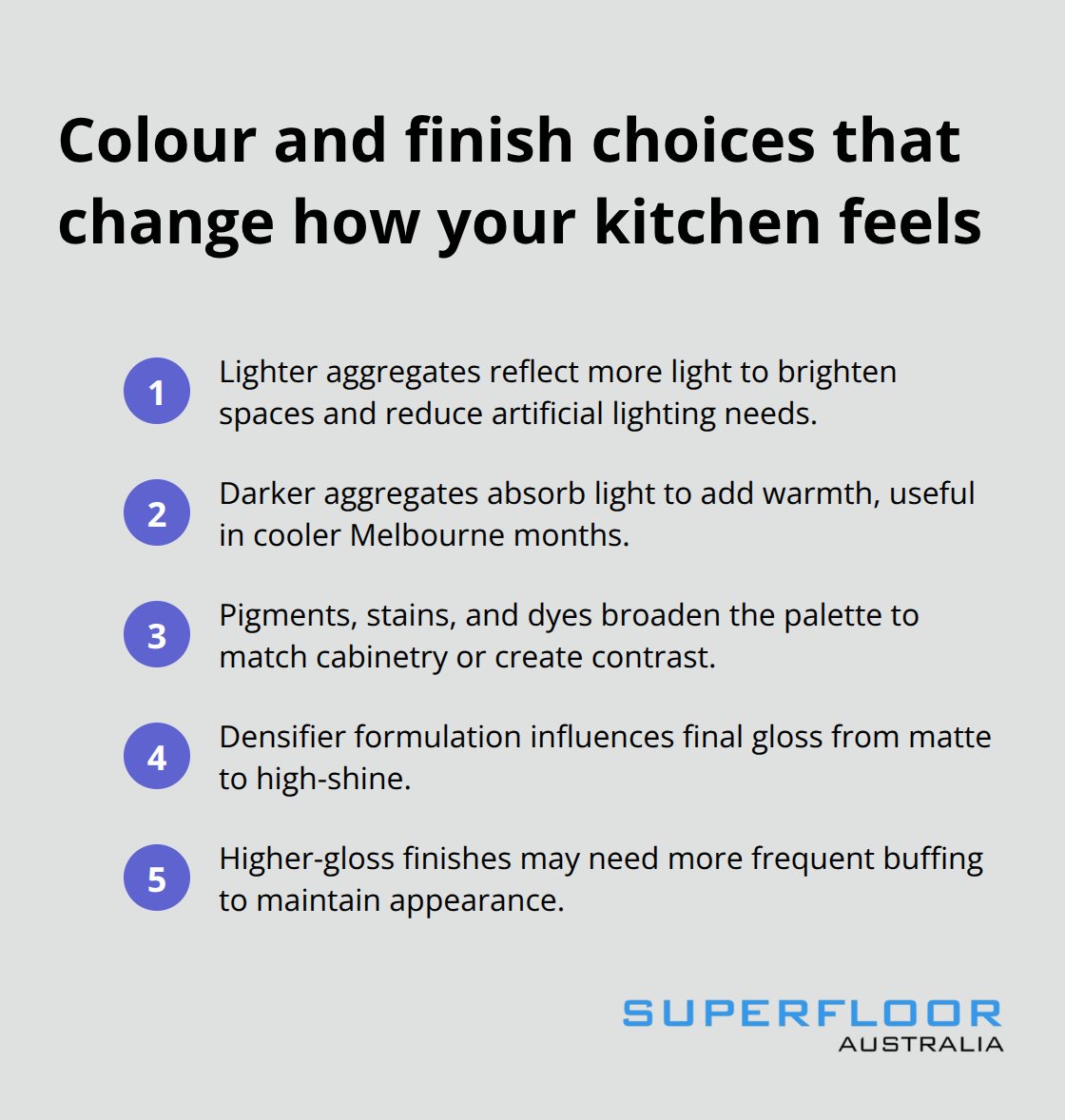
The aggregate you choose matters tremendously. Lighter shades like buff and oyster white have gained popularity in recent years because they reflect more light, making kitchens feel brighter while reducing reliance on artificial lighting. Darker aggregates absorb light and create warmth, particularly valuable in Melbourne kitchens during cooler months. Water-based pigments, stains, and dyes expand your palette far beyond what the concrete naturally offers, allowing you to match existing cabinetry or create bold contrasts. The densifier formulation selected during polishing influences final shine levels-some densifiers produce matte finishes while others deliver glossy surfaces that demand more frequent buffing with mineral-coated brushes to maintain appearance.
Adapting to Your Kitchen Style
Polished concrete adapts to different kitchen styles without looking forced. A modern minimalist kitchen benefits from high-gloss cream finishes that emphasise clean lines and reflect light crisply. Industrial or warehouse-style kitchens suit full-grind polishing with exposed aggregate that celebrates the raw concrete aesthetic. Traditional kitchens pull off warmer-toned salt-and-pepper finishes that feel less clinical than pure modern approaches. Unlike tile or timber, polished concrete won’t fight against your design vision-it absorbs it. The seamless, grout-free surface means no visual interruptions breaking up your floor plan, which actually makes smaller kitchens feel larger.
Planning Installation and Managing Expectations
If you’re building new, involve concrete specialists early to reduce detail work and potentially lower costs, since large floor machines cannot reach corners effectively and smaller machines or hand-polishing require additional labour. For existing concrete floors that are structurally sound, polishing remains feasible, though repairs and colour matching can prove challenging. When selecting a contractor, review their residential work portfolio to understand how different concrete pours and aggregate types affect the final result-appearance variation is normal and often desirable, creating uniqueness rather than factory uniformity. This natural variation means your kitchen floor will reflect the specific character of your space, which leads directly into understanding what maintenance actually demands from you over time.
What Maintenance Actually Costs You Over Time
Daily Care Takes Minutes, Not Hours
Polished concrete demands far less work than people expect, and that’s where the real financial advantage emerges. Daily cleaning takes minutes: vacuum or sweep to remove loose dirt, then wipe with a microfiber mop and pH-neutral cleaner. That’s genuinely it. No stripping cycles, no re-sealing every few years, no waxing routines that consume both time and money. The densifier applied during polishing hardens the surface so thoroughly that it resists the wear patterns that force other floors into expensive refinishing schedules.
How Long Your Floor Actually Lasts
Honed or cream finishes need refinishing roughly every 5 to 10 years in a residential home, while mechanically polished concrete lasts more than 20 years provided proper maintenance is followed. Compare this to timber floors requiring professional sanding and re-oiling every 3 to 5 years, or tile grout lines needing regular sealing and replacement. The cost difference stacks up fast. A typical polished concrete floor costs between $50 and $65 per square metre, with a 50-square-metre kitchen landing around $2,500.
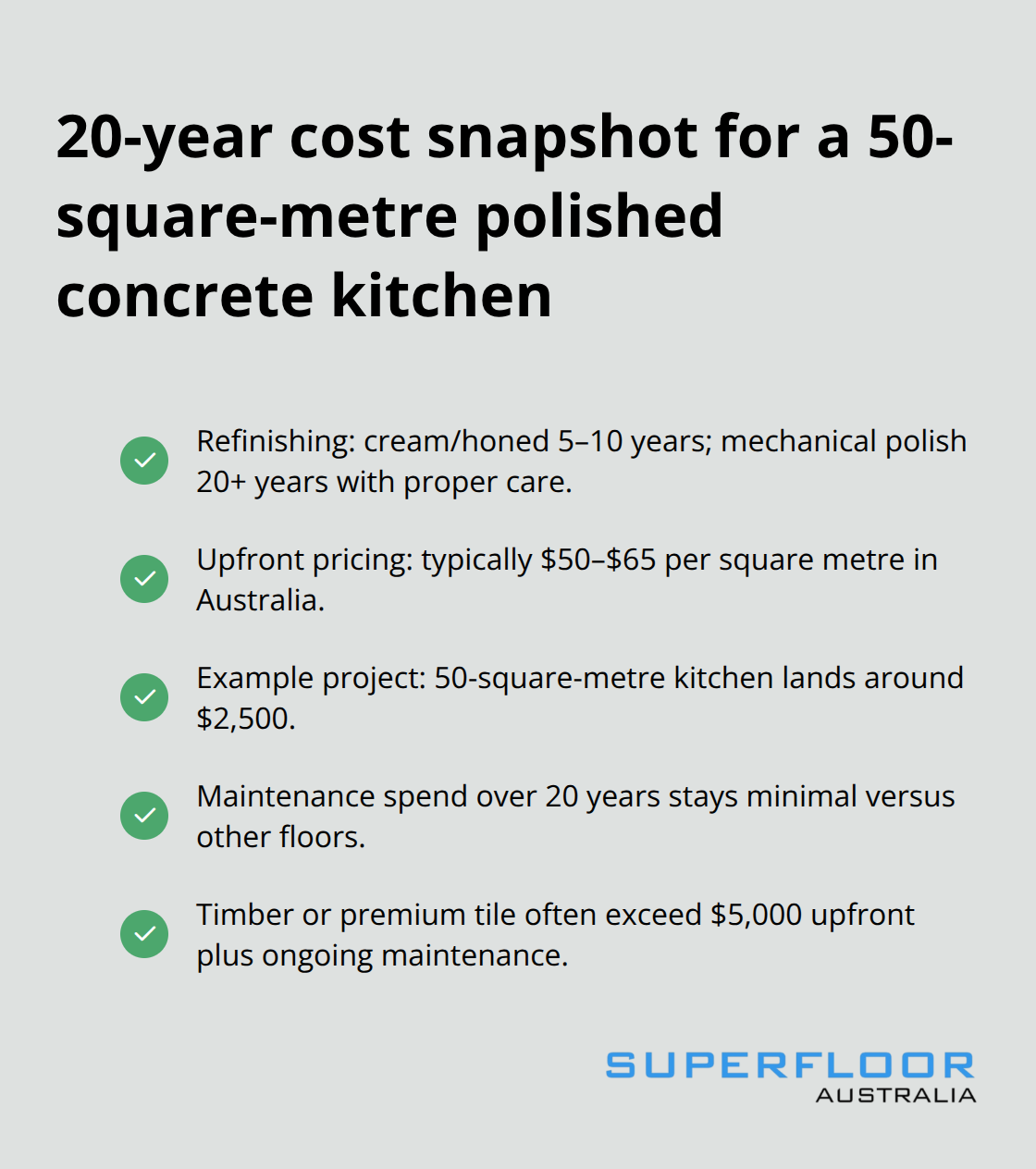
Over 20 years, you’re looking at minimal additional spending beyond basic cleaning supplies. Timber or premium tile installations of similar size often exceed $5,000 upfront and demand thousands more in maintenance and repairs.
Health Benefits That Save Money
The allergen-free surface matters for households with respiratory sensitivities. Polished concrete won’t trap dust mites, mould spores, or pet dander in grout lines or porous surfaces. This means fewer allergy triggers and potentially lower spending on air filtration systems or medical expenses related to indoor air quality. For families managing asthma or allergies, that health benefit translates directly into practical cost savings that don’t show up on an invoice but certainly show up in quality of life.
Choosing the Right Contractor and Densifier
When selecting a contractor, demand to see residential work completed at least 2 to 3 years ago so you can assess how the finish has held up under actual kitchen use. Ask specifically about their densifier and sealer choices, since different formulations affect both longevity and maintenance demands. Some densifiers produce finishes requiring frequent buffing with mineral-coated brushes to maintain shine, while others deliver more durable gloss that resists dulling. Water-based sealants cost less upfront but may need reapplication sooner than urethane options, so factor that into your decision.
Protecting Your Investment Before and After Installation
If your existing concrete has minor cracks or surface damage, budget for repairs before polishing begins-these add time and cost but are non-negotiable for a floor that performs. Request a written maintenance plan from your contractor outlining recommended cleaners, buffing frequency, and when sealant touch-ups are needed. This prevents guesswork and protects your investment by keeping the floor in optimal condition. The grout-free design eliminates hidden maintenance headaches that plague tile kitchens, where grout deterioration creates water entry points and mould growth that demand expensive remediation.
Final Thoughts
Polished concrete kitchen floors deliver what other surfaces promise but rarely achieve: genuine durability without constant maintenance demands. We at superfloor australia have watched homeowners struggle with timber that warps, tile grout that deteriorates, and stone that stains. Polished concrete sidesteps these problems entirely because the densified surface resists moisture, chemicals, and foot traffic while remaining simple to clean.
Whether you choose a subtle cream finish, a balanced salt-and-pepper look, or dramatic full-grind polishing with exposed aggregate, the result adapts to your kitchen’s style without compromise. Light-coloured finishes brighten spaces and reduce artificial lighting costs, while darker tones warm cooler Melbourne kitchens naturally. The seamless, grout-free surface creates visual continuity that actually makes smaller kitchens feel larger-something tile and timber cannot achieve.
A typical polished concrete kitchen floor costs around $2,500 for 50 square metres, then demands minimal spending beyond basic cleaning supplies for the next 20 years. Compare that to timber requiring professional sanding every few years or tile grout needing regular sealing and replacement, and the cost difference becomes substantial over two decades. Contact superfloor australia to discuss your project and discover how we deliver high-quality polished concrete flooring with precision preparation tailored to your specific needs.