

Exposed aggregate concrete in Brisbane has become the go-to choice for property owners who want durability without the fuss. The finish looks sharp, handles Queensland’s weather like a champ, and won’t drain your wallet on maintenance.
We at Superfloor Australia have installed hundreds of these installations across Brisbane, and we’ve seen firsthand why this material outperforms other flooring options. This guide walks you through everything you need to know.
What Exposed Aggregate Actually Is
Exposed aggregate concrete forms when you wash back the top cement layer after pouring to reveal the stones, pebbles, and aggregates beneath. This process exposes the decorative materials embedded in the concrete, creating a unique textured appearance that varies from pour to pour. The finish delivers more than aesthetics-those exposed stones provide natural slip resistance on outdoor surfaces, making surfaces genuinely safer on driveways, pool surrounds, and outdoor walkways, especially during Brisbane’s wet season from December to March when rainfall reaches up to 426 mm per month. Suppliers like Hanson, Boral, and Holcim each offer different colour palettes and stone sizes. The aggregate blend you select determines both appearance and performance in Queensland’s harsh UV environment. Brisbane receives over 150 sunny days per year according to the Bureau of Meteorology, so UV stability matters.
The Real Cost Difference
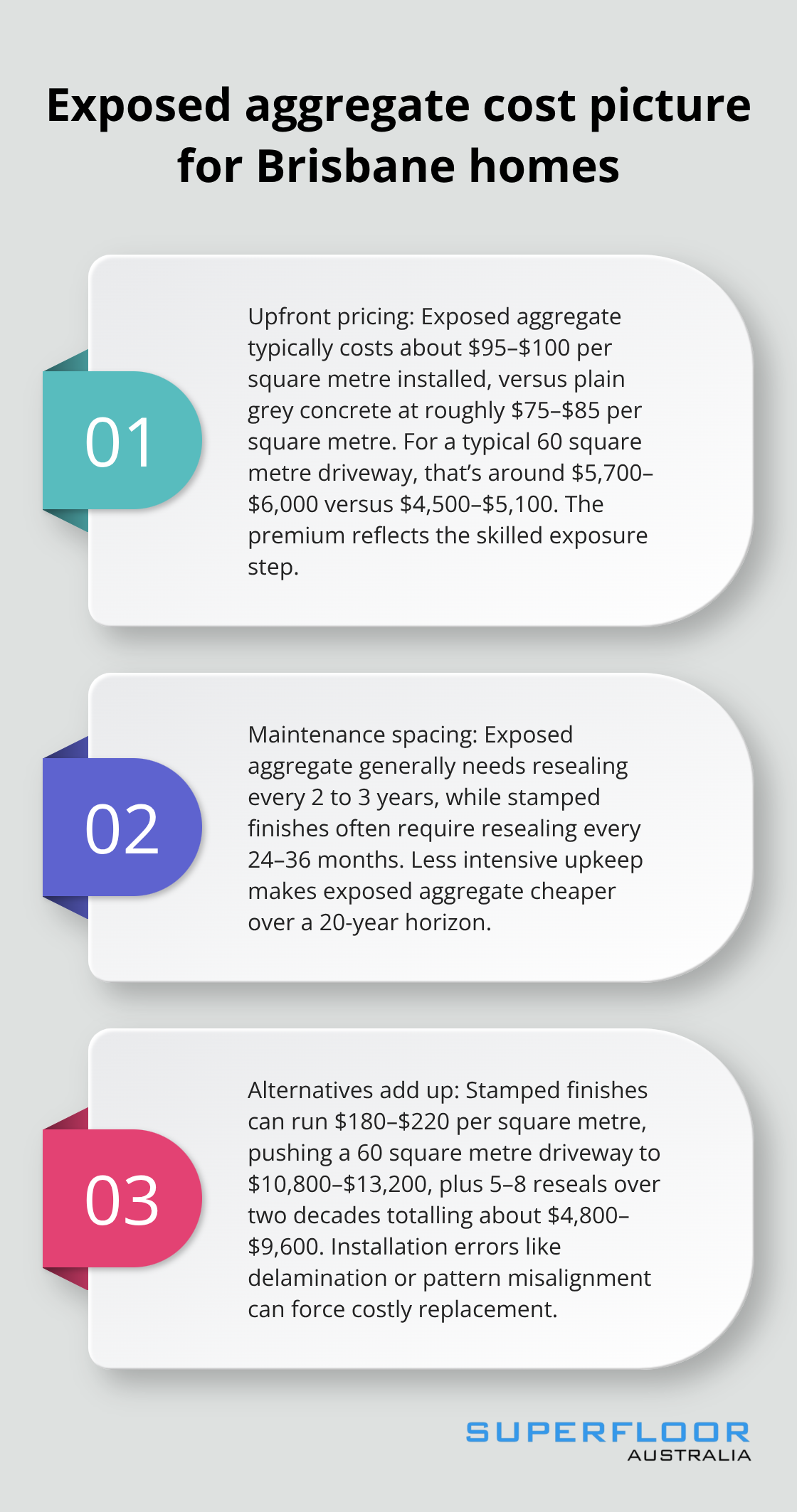
Exposed aggregate costs about $95–$100 per square metre installed, compared to plain grey concrete at roughly $75–$85 per square metre. That $10–$25 difference per square metre reflects the extra labour and skill required to properly expose the aggregate without damaging the stones. A typical 60 square metre driveway costs around $5,700–$6,000 for exposed aggregate versus $4,500–$5,100 for plain concrete. Over a 20-year ownership horizon, exposed aggregate often works out cheaper because it requires less intensive maintenance than stamped finishes, which need resealing every 24–36 months. Exposed aggregate typically needs resealing every 2 to 3 years, and regular seasonal cleaning with mild soap and a soft brush can extend that interval further. Stamped concrete often shows misalignment and delamination issues if not installed perfectly, and poorly executed work cannot be fixed later.
Why It Outperforms Other Finishes in Brisbane
Exposed aggregate withstands Brisbane’s heat, heavy rainfall, and humidity far better than standard concrete or decorative alternatives. The textured surface prevents water pooling and provides reliable grip even when wet, which matters for sloped driveways and pool areas. Plain concrete looks bland and shows every mark, while stamped finishes demand perfect installation and constant maintenance to stay looking sharp.

Exposed aggregate improves with age-the stones develop character, and as long as you keep the sealer topped up, the finish lasts 15+ years without fading or deteriorating. The wide range of aggregate blends available means you can match your home’s style, whether that’s modern minimalist or traditional Queenslander. Early detection of sealer wear is simple: if water stops beading and starts soaking in, it’s time to reseal. That proactive approach prevents major damage and keeps your surface looking fresh without the constant fussing required by other decorative options.
What Happens During Installation and Curing
The installation process moves quickly once the concrete sets, but the first 4 weeks are critical. Heavy loads or rough treatment during this period can compromise longevity, so you’ll want to keep traffic off the surface while it cures. The concrete dries in a few hours, but full cure takes up to 2 days before you can apply sealant. Professional installers coordinate delivery, placement, and sealing sequences to minimise delays and reduce waste. A QBCC-licensed contractor familiar with local standards ensures the work meets Brisbane City Council driveway technical requirements and delivers a neat, long-lasting result. Poor installation cannot be fixed by sealing or cleaning later, so choosing an experienced contractor from the start saves money and frustration down the track.
Building Exposed Aggregate the Right Way
Selecting the Aggregate That Matches Your Home
The aggregate you choose determines both how your driveway looks and how it performs in Brisbane’s climate. Suppliers like Hanson, Boral, and Holcim offer different colour palettes and stone sizes, and your selection matters more than most people realise. Winter Red, River Red, Pearl, Ocean Floor, and Night Sky are popular choices that coordinate well with modern Brisbane homes, while earthy blends work better with traditional Queenslander timber features. The aggregate size affects texture and slip resistance, so a proper installer discusses these specifics with you before pouring rather than making assumptions. Smaller aggregates create a finer appearance but less grip, while larger stones deliver maximum traction for pool areas and sloped driveways.
Preparing the Concrete Foundation
Your installer must confirm that the concrete mix is designed specifically for local conditions, because a weak mix cannot be salvaged by sealing later. The concrete slab itself needs proper depth and rebar placement to prevent cracking in Queensland’s heat and humidity. For a 4-inch pour, rebar should not exceed 1/8 of the slab thickness (roughly 0.5 inches), so always work with a QBCC-licensed contractor who understands these structural requirements. A strong foundation prevents costly repairs down the track and ensures your surface lasts 15+ years without major issues.
The Installation Timeline and Curing Phase
Installation speed depends on site conditions, but most projects finish within 3 days after quoting once work begins. The concrete sets in a few hours, but full cure takes up to 2 days before sealing can happen. Those first 4 weeks after installation are when your surface is most vulnerable to damage from heavy traffic or rough handling. Avoid driving on the concrete or placing equipment on it during this period because any stress at this stage compromises longevity. Professional installers coordinate delivery, concrete placement, and sealing in a single sequence to minimise delays and waste, which is why hiring an experienced operator saves money compared to DIY attempts that often result in costly mistakes.
Exposure Depth and Sealer Application
Quality control happens throughout the process, starting with proper exposure depth, which determines whether the aggregate shows enough character without becoming loose or unstable. Your installer washes back the cement layer at exactly the right time and pressure to reveal the stones without dislodging them. The installer then applies a UV-resistant sealer within 2 days to protect against Queensland’s 150+ sunny days per year. Sealer is the difference between a surface that lasts 15+ years and one that fades and degrades within 5 years, so don’t skip this step or use cheap sealant that breaks down under sun and pool chemicals.
What Happens Next: Maintenance and Long-Term Performance
Once your exposed aggregate concrete cures, the real work of keeping it looking sharp begins. The sealer protects your investment, but it wears down over time and needs reapplication every 2 to 3 years depending on traffic and weather exposure. Regular seasonal cleaning with mild soap and a soft brush extends the life of your sealer and prevents dirt buildup that can trap moisture.

If water stops beading and starts soaking in, that’s your signal to reseal before damage occurs. Understanding this maintenance rhythm from day one helps you plan costs and avoid surprises later.
Why Exposed Aggregate Outperforms Other Finishes in Brisbane
How Brisbane’s Climate Demands the Right Surface
Exposed aggregate concrete dominates Brisbane properties because it actually delivers on durability and low maintenance without the hidden costs that trap owners of stamped, polished, or plain concrete finishes. Brisbane’s climate punishes weak choices. December to March brings 426 mm of monthly rainfall, the sun delivers 150+ days of intense UV exposure annually, and humidity stays high year-round. Exposed aggregate handles this punishment because the textured surface naturally sheds water instead of pooling it, the aggregate resists UV fading far better than cement-based finishes, and the material itself resists degradation under Queensland’s heat cycles.
Stamped concrete often shows misalignment cracks within 5 years if installation wasn’t perfect, and poor execution cannot be fixed after the fact. Plain concrete looks dull immediately and requires constant cleaning to hide stains. Polished concrete indoors demands professional maintenance every 5 to 7 years at $15 to $25 per square metre just to keep the shine, whereas exposed aggregate on a driveway or pool surround costs roughly $12 to $15 per square metre to clean and reseal combined.
The Real Cost Advantage Over 20 Years
The real advantage emerges when you stop thinking about initial cost and start calculating total ownership expense. A 60 square metre driveway in exposed aggregate costs around $5,700 to $6,000 installed, while stamped finishes run $180 to $220 per square metre, pushing total costs toward $10,800 to $13,200. Stamped surfaces need resealing every 2-3 years, which means you’ll reseal 5 to 8 times over two decades at roughly $8 to $12 per square metre annually, totalling $4,800 to $9,600 in maintenance alone.
Exposed aggregate requires resealing every 2 to 3 years, but the cost remains lower overall because the finish is simpler to maintain and doesn’t degrade structurally from improper installation. If water stops beading and starts soaking into your exposed aggregate, you reseal and move on. If a stamped finish develops delamination or pattern misalignment, you face partial or full replacement (a far more expensive outcome).
Why Maintenance Actually Stays Affordable
Exposed aggregate owners stick with a maintenance routine they can afford, rather than abandoning upkeep on finishes that demand constant professional attention to justify their cost. Over a 20-year horizon, exposed aggregate owners spend significantly less on maintenance than those who chose alternatives that seemed cheaper upfront but demanded constant intervention to stay presentable. The textured surface naturally sheds water instead of pooling it, reducing the risk of damage during Brisbane’s intense wet season. This performance advantage compounds year after year, making exposed aggregate the smarter long-term choice for Brisbane properties.
Final Thoughts
Exposed aggregate concrete in Brisbane delivers durability without the maintenance costs that drain budgets for stamped or polished finishes. The textured surface sheds water naturally and resists UV fading far better than alternatives, which means your investment outlasts cheaper options by years while demanding less ongoing attention. A 60 square metre driveway costs around $5,700 to $6,000 installed, and that surface will perform reliably through Queensland’s heat, humidity, and intense rainfall cycles.
The real advantage sits in simplicity and predictability. When water stops beading on your exposed aggregate surface, you reseal and move forward-no structural failures, no pattern misalignment, no delamination surprises that force expensive replacement. The aggregate blend you select coordinates with your home’s style while delivering practical slip resistance for pool surrounds and sloped driveways, which matters during Brisbane’s wet season when rainfall reaches 426 mm per month.
We at Superfloor Australia bring over 30 years of concreting experience to every project across Brisbane Metro, the Northside, Southside, and Western Suburbs. Contact us for a free quote and let’s discuss how exposed aggregate concrete can enhance your property while keeping maintenance costs realistic and manageable.