

Picking the wrong commercial floor polish can cost you thousands in repairs and downtime. The difference between a product that lasts two months and one that lasts two years comes down to understanding your specific needs.
At superfloor australia, we’ve seen businesses waste money on polishes that don’t match their flooring or traffic patterns. This guide walks you through the selection process so you avoid those costly mistakes.
Which Polish Works Best for Your Floor Type
Water-Based Polishes: Safety and Speed
Water-based polishes dominate commercial spaces that prioritise worker safety and environmental compliance. These products are easy to apply, quick-drying, and have low odour, allowing floors to return to service faster than solvent alternatives. The reduced odour means staff can work nearby without respiratory irritation, and cleanup requires only water and a mop. However, water-based polishes sacrifice some durability. You can expect reapplication every 4 to 6 weeks in moderate-traffic areas.
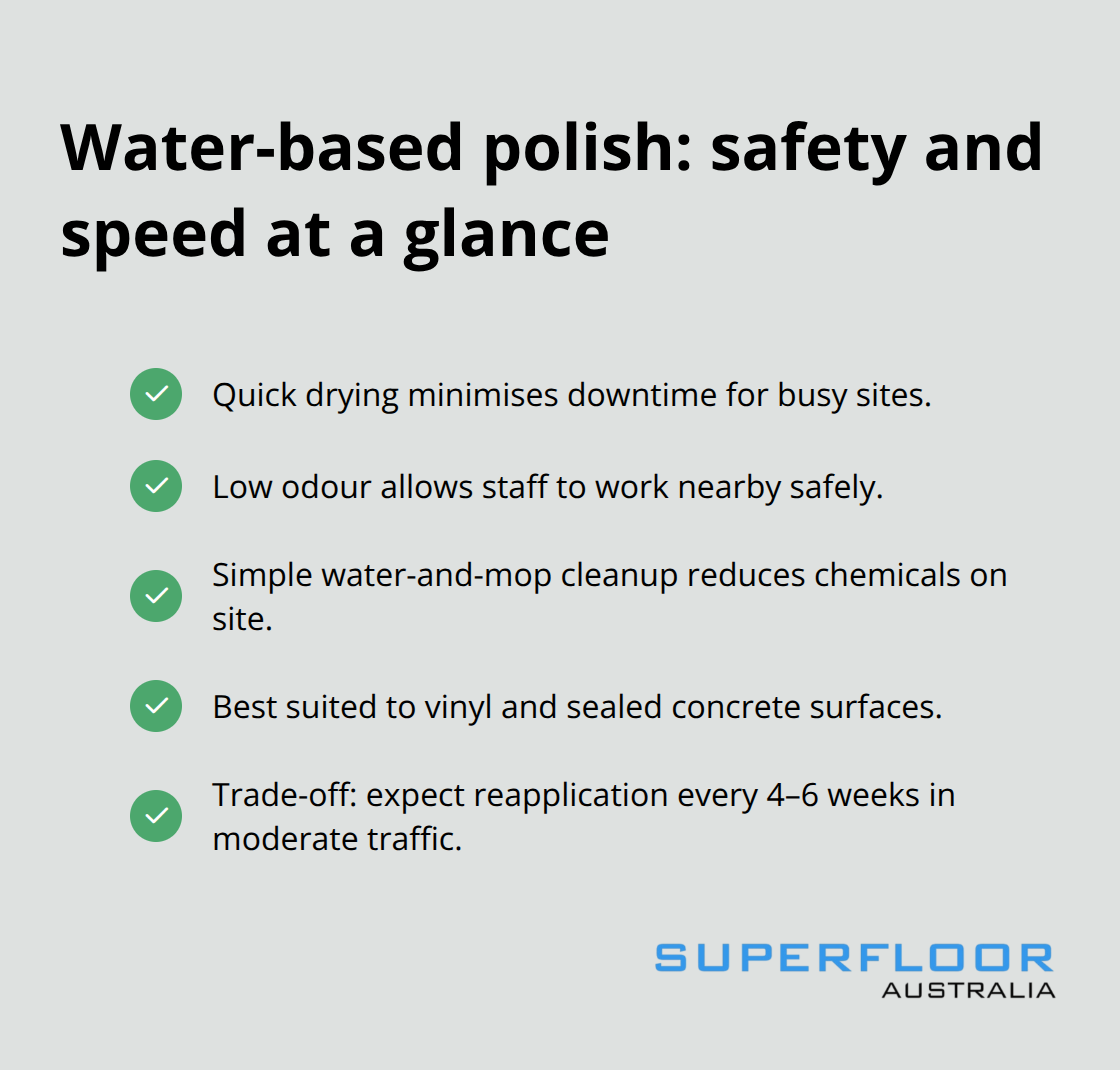
They work particularly well on vinyl and sealed concrete, where the surface already has protection underneath.
Solvent-Based Polishes: Durability for Heavy Traffic
Solvent-based polishes deliver superior shine and longevity, lasting 2 to 3 months even in heavy-traffic zones. Warehouses, manufacturing floors, and retail showrooms with constant foot traffic benefit from this extended performance window. The tradeoff is significant: solvent products emit strong fumes, require proper ventilation, and demand longer drying periods-sometimes 24 hours before the floor handles normal use. Staff exposure becomes a real concern, making these unsuitable for occupied office spaces during application. For ceramic tile and epoxy-coated concrete in industrial settings, solvent-based formulas provide the gloss retention and stain resistance that water-based options simply cannot match.
Matching Polish to Specific Floor Materials
Specialty polishes address the unique demands of specific flooring materials. Hardwood floors respond best to oil-based finishes that penetrate the wood grain and enhance natural colour, while concrete polishing involves mechanically polishing a concrete surface using diamond-encrusted floor grinding shoes. Epoxy and sealed concrete floors can accept either water or solvent polishes, but compatibility matters: applying a water-based product over solvent-based residue creates adhesion failure. Always perform a test patch in an inconspicuous corner before committing to any product.
Traffic Volume and Reapplication Frequency
The five main floor types in commercial spaces-hardwood, vinyl, concrete, epoxy, and ceramic tile-each respond differently to polish chemistry. Vinyl floors tolerate frequent reapplication and benefit from monthly polishing to combat dullness caused by heavy traffic. Ceramic tile requires sealing first, as wax-based polishes wear away quickly on porous grout lines.
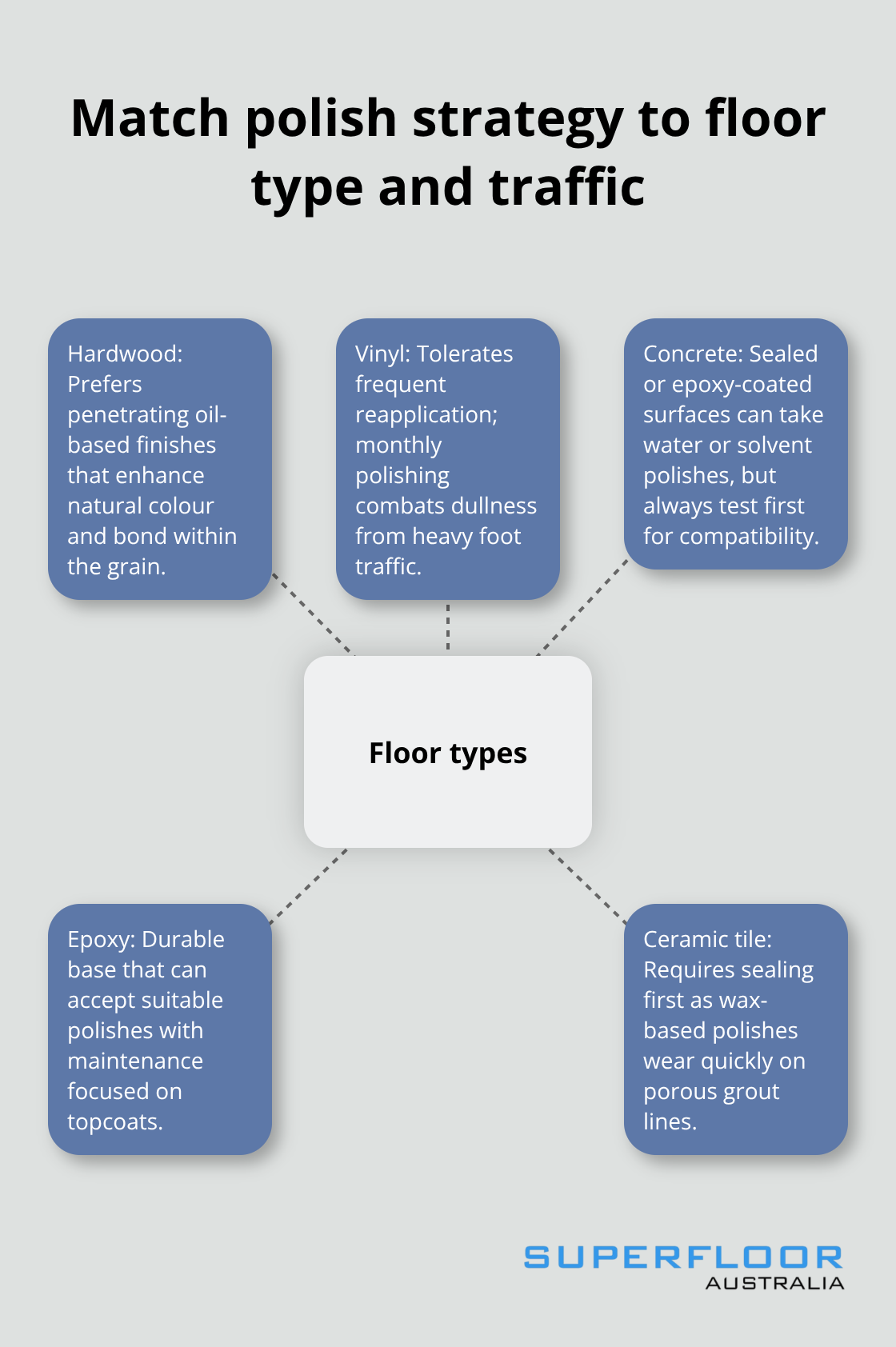
When budgeting, account for application frequency: a premium solvent polish applied quarterly may cost less annually than a budget water-based product needing monthly reapplication. Your traffic volume and downtime tolerance ultimately determine whether you need a short-lived, safe option or a long-lasting product that demands temporary facility closure.
Understanding your floor type and traffic patterns sets the foundation for selecting the right polish. The next section examines the key factors that influence this decision beyond just the polish type itself.
What Matters Most When Picking the Right Polish
Verify Compatibility With Your Existing Finish
Compatibility with your existing floor finish determines whether a polish will bond properly or peel within weeks. You need to identify what currently protects your floor-is it a water-based sealant, solvent-based varnish, epoxy coating, or bare concrete? Applying water-based polish over solvent residue causes adhesion failure, while solvent products over water-based finishes create a slippery, unstable surface. Test any new polish on a small, inconspicuous area first. For concrete, a quick field check involves wetting a patch to spot dark stains indicating oil-based contamination, which affects compatibility with some polishes. Ceramic tile requires sealing before polishing, as wax wears quickly on porous grout lines. Hardwood demands oil-based finishes that penetrate the wood grain rather than sitting on the surface. If you plan to use epoxy prior to applying varnish, be thorough to ensure proper bonding and moisture protection.
Calculate True Durability and Maintenance Costs
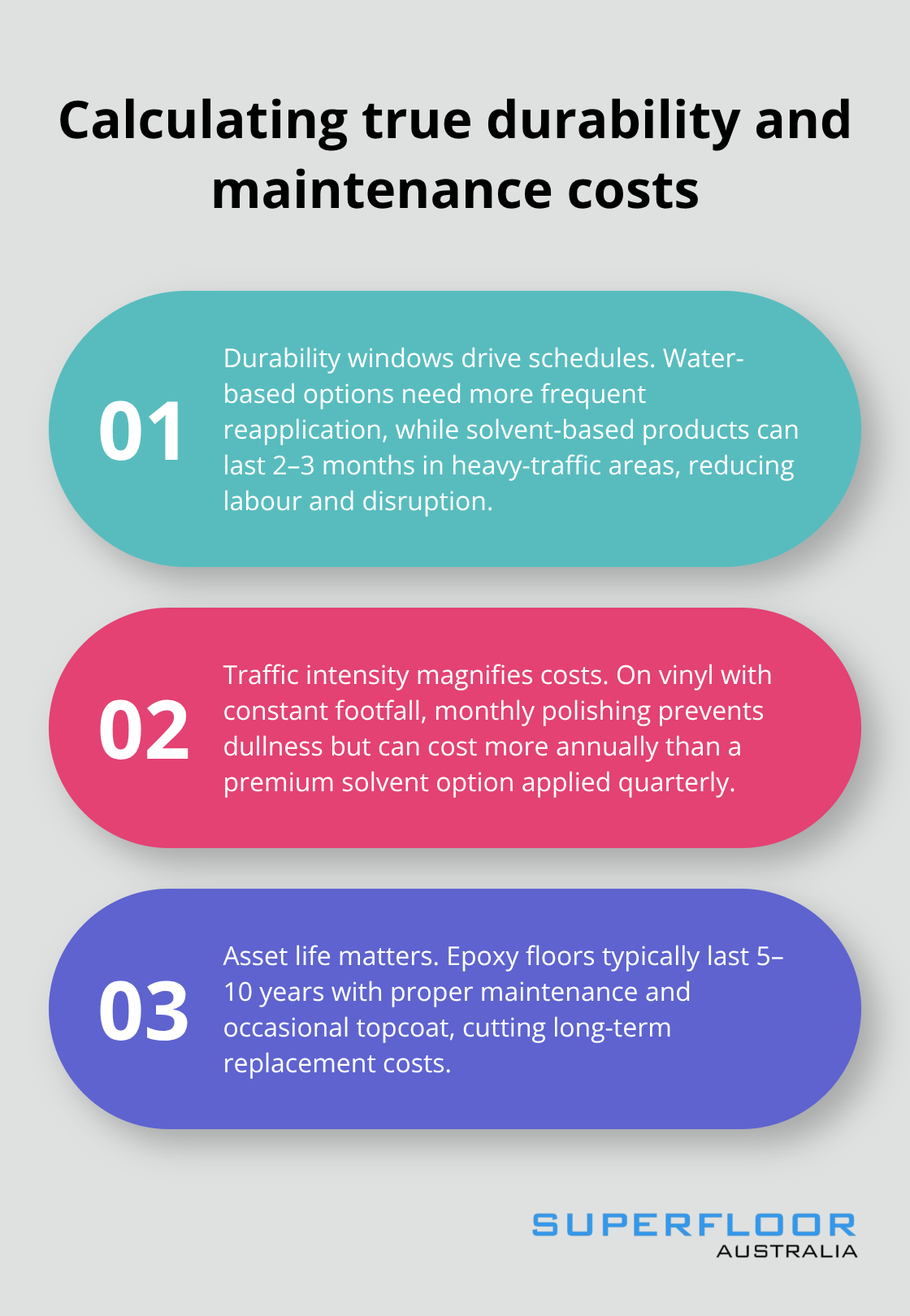
Durability and maintenance frequency form the real cost calculation. Water-based polishes require reapplication in moderate-traffic areas, while solvent-based products last 2 to 3 months in heavy-traffic zones. For vinyl floors experiencing constant foot traffic, monthly polishing prevents dullness, meaning you’ll spend more on labour and materials annually than on a premium solvent polish applied quarterly. High-traffic showrooms and retail spaces should plan for at least annual re-polishing, with heavier usage demanding more frequent schedules. In commercial settings, epoxy floors typically last 5 to 10 years with proper maintenance and occasional topcoat application, reducing long-term replacement costs.
Weigh Environmental and Health Considerations
Environmental and health factors increasingly influence decisions. Solvent-based products emit strong fumes requiring extended ventilation and 24-hour drying periods, making them unsuitable for occupied office spaces during application. Water-based alternatives allow staff to work nearby without respiratory irritation and return floors to service faster, though they sacrifice longevity. For facilities with nearby workers, prioritise low-odour, quick-drying options. Outdoor or sun-exposed areas demand UV-resistant coatings to prevent yellowing and degradation. When budgeting, factor in application frequency, labour costs, potential production halts, and cleanup requirements-a premium product lasting longer often costs less annually than frequent reapplication of budget alternatives.
These three factors-compatibility, durability, and environmental impact-form the foundation of your decision. However, many businesses overlook common pitfalls that undermine even the best polish selection, which we address in the next section.
Common Mistakes That Drain Your Budget
Businesses make three critical errors when selecting floor polish, and each one costs thousands in wasted product, labour, and downtime. Understanding these mistakes helps you avoid them.
Ignoring What Already Protects Your Floor
The first mistake is applying polish without confirming what currently protects the floor. You cannot simply grab a product off the shelf and expect results. Before you polish, you must identify the existing finish-is it water-based sealant, solvent varnish, epoxy coating, or bare concrete? Water-based polish over solvent residue creates adhesion failure within weeks, forcing you to strip and restart. Solvent products over water-based finishes produce a slippery, unstable surface that poses safety risks.
A concrete showroom polishing project typically starts with diamond-disc grinding to remove scuffs and surface imperfections, but this only works if you know what lies beneath. Test any new polish on a small, inconspicuous corner first-this single step prevents costly mistakes. For ceramic tile, you must seal before polishing because wax wears away quickly on porous grout lines, meaning unsealed tile will look dull within weeks regardless of the polish quality you select.
Choosing Price Over Total Cost of Ownership
The second mistake is choosing based purely on upfront price rather than total cost of ownership. A budget water-based polish costing half the price of a premium solvent product might seem attractive until you calculate annual expenses. Water-based options require reapplication every 4 to 6 weeks in moderate-traffic areas, meaning you pay for labour and materials roughly ten times per year. A solvent-based polish lasting 2 to 3 months in heavy-traffic zones requires only four applications annually.
Over twelve months, the premium product often costs less when you factor in staff wages, equipment rental, and production interruption. For vinyl floors experiencing constant foot traffic, monthly polishing prevents dullness, which means frequent reapplication of a cheap product costs significantly more than quarterly application of a quality alternative. The maths becomes clear: a premium product lasting longer almost always costs less annually than frequent reapplication of budget alternatives.
Overlooking Safety and Environmental Standards
The third mistake is overlooking safety and environmental standards, particularly with solvent-based products. These emit strong fumes requiring extended ventilation and 24-hour drying periods, making them unsuitable for occupied office spaces during application. Staff exposure becomes a real liability concern, and in facilities with nearby workers or guests, low-odour quick-drying options are mandatory.
Outdoor or sun-exposed areas demand UV-resistant coatings to prevent yellowing and degradation, yet many facility managers apply standard interior polish to exterior concrete, watching it fail within months. When you factor in application frequency, labour costs, potential production halts, cleanup requirements, and environmental compliance, a premium product lasting longer creates a safer, more sustainable facility while reducing your annual spending.
Final Thoughts
Selecting the right commercial floor polish requires you to make three core decisions: understanding your floor type and existing finish, calculating true durability costs rather than upfront price, and prioritising safety and environmental standards. Water-based polishes work best for occupied spaces where quick drying and low odour matter, while solvent-based products deliver superior longevity in heavy-traffic industrial settings. The floor type itself dictates compatibility-vinyl, concrete, epoxy, and ceramic tile each respond differently to polish chemistry, and applying the wrong product wastes money and creates safety risks.
Your annual budget depends entirely on reapplication frequency, so a premium polish lasting three months costs less annually than a budget alternative requiring monthly application, even when the premium product carries a higher upfront price. You must factor in labour, equipment rental, and production interruption when you calculate total cost of ownership. Environmental compliance and worker safety cannot be afterthoughts-solvent fumes in occupied spaces create liability, while UV-resistant coatings prevent outdoor concrete from yellowing within months.
Test any new commercial floor polish on a small, inconspicuous area before you commit to full application. Identify your existing finish, confirm compatibility, and calculate your true annual costs to make an informed decision. Contact Superfloor Australia to assess your specific situation and receive expert recommendations tailored to your facility’s unique requirements.