
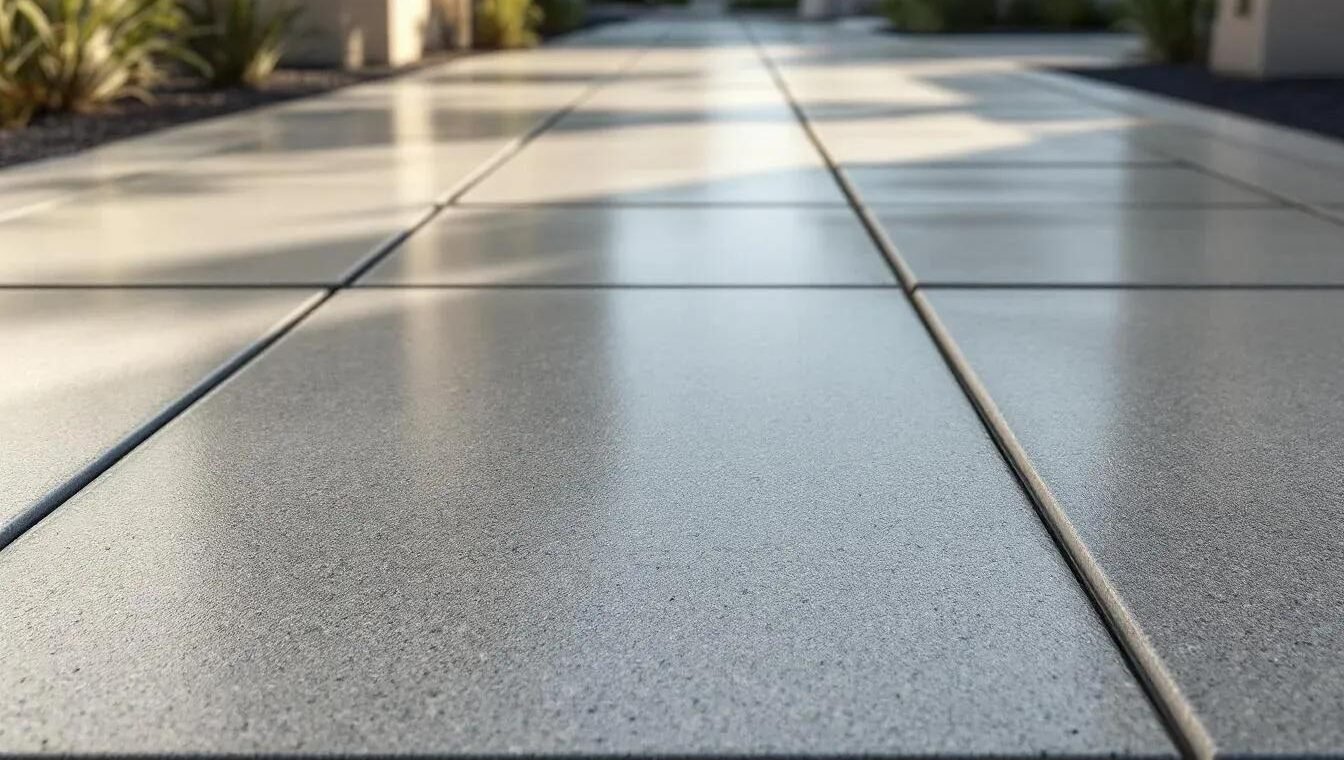
Your driveway takes a beating from Brisbane’s sun, rain, and constant traffic. Honed concrete driveways offer a practical alternative to polished finishes, delivering a sophisticated matte look that hides dirt and requires less maintenance.
At superfloor australia, we’ve helped hundreds of homeowners understand why honed concrete works so well in Queensland’s climate. This guide walks you through everything you need to know before making your decision.
What Makes Honed Concrete Different From Polished Finishes
Honed concrete and polished concrete are often confused, but they deliver distinctly different results on your driveway. Honed concrete is created by grinding the surface to reveal the underlying aggregate, stopping at a matte finish that still shows the natural stone beneath. Polished concrete continues the process much further, creating a high-gloss reflective surface that looks wet even when dry. For Brisbane driveways, this distinction matters significantly.
The Practical Differences You’ll Notice
The matte finish of honed concrete hides dust, dirt, and water spots far better than polished surfaces, which show every footprint and splash. Polished concrete also becomes dangerously slippery when wet-a real problem during Queensland’s wet season. Honed finishes maintain better traction without sacrificing aesthetics, making them the practical choice for driveways that see regular foot and vehicle traffic. You’ll spend less time cleaning and more time enjoying your outdoor space.
How Honed Concrete Handles Brisbane’s Climate
Brisbane’s intense sun, high humidity, and frequent rain put serious stress on outdoor concrete. Honed concrete performs exceptionally well in these conditions because the matte finish resists fading and yellowing under UV exposure-something polished surfaces struggle with. The texture also prevents the thermal stress that affects smooth, reflective finishes in extreme heat. A lighter stone blend in your honed concrete stays noticeably cooler underfoot during Brisbane summers, improving comfort during barefoot walking. Darker mixes absorb more heat and become uncomfortable, so light aggregates deserve your consideration. The sealing process protects against Queensland’s moisture and salt air, particularly important if you live within 5 kilometres of the coast. Properly sealed honed concrete resists staining from organic matter, leaf debris, and algae growth that plague driveways in subtropical climates.
Long-Term Performance and Durability
Honed concrete driveways in Brisbane regularly exceed 20 years of service life when properly sealed and maintained, with some installations reaching 30 years or beyond. The grinding process actually strengthens the surface by densifying the top layer, creating a finish that resists wear from vehicle tyres and foot traffic. Unlike polished concrete, which develops visible scratches and scuffing within a few years, honed surfaces absorb wear without obvious damage. Resealing every 2 to 4 years, depending on traffic intensity and sun exposure, keeps the finish protected and maintains slip resistance. This maintenance schedule is straightforward and predictable, allowing you to budget for long-term care. The durability advantage becomes clear when comparing lifecycle costs with alternatives like asphalt (which requires resurfacing every 15 years) or decorative pavers (which shift and crack under Brisbane’s soil movement and temperature fluctuations). Understanding these performance differences helps you make an informed decision about whether honed concrete truly fits your needs and lifestyle.
What Matters Most When Deciding on Honed Concrete
Brisbane’s climate demands a driveway that handles intense sun, humidity swings, and heavy tropical downpours without deteriorating. Honed concrete performs exceptionally well in these conditions, but success depends on matching the finish to your specific situation. Your driveway’s exposure level, how much traffic it handles, your willingness to maintain the surface, and what you’re prepared to spend all shape whether honed concrete is the right choice. Getting these factors right upfront prevents costly mistakes and ensures your investment lasts decades rather than becoming a maintenance headache.
Traffic Load and Durability Reality
Not all driveways experience equal wear. A single-car garage serving a retired couple operates in a completely different universe than a family home with multiple vehicles, tradies visiting weekly, and constant foot traffic. Honed concrete handles moderate to heavy foot traffic exceptionally well, but vehicle traffic tells a different story. The grinding process densifies the surface, making it resistant to tyre marks and scuffing, yet extremely heavy or frequent vehicle traffic-particularly delivery trucks or concrete trucks-can accelerate wear. If your driveway serves as a secondary parking area for a builder’s van or you regularly host gatherings where vehicles park on the surface, you’re pushing honed concrete beyond its sweet spot. Exposed aggregate performs better under these conditions because the textured surface distributes weight differently and hides wear patterns. Assess your actual usage honestly. Count how many vehicles park there daily, whether heavy vehicles access the driveway, and how many people walk across it. This clarity determines whether honed concrete will age gracefully or show visible deterioration within five to seven years. Light to moderate traffic means honed concrete thrives; heavy commercial or industrial use means you need a different approach.
Sealing and Maintenance Demands
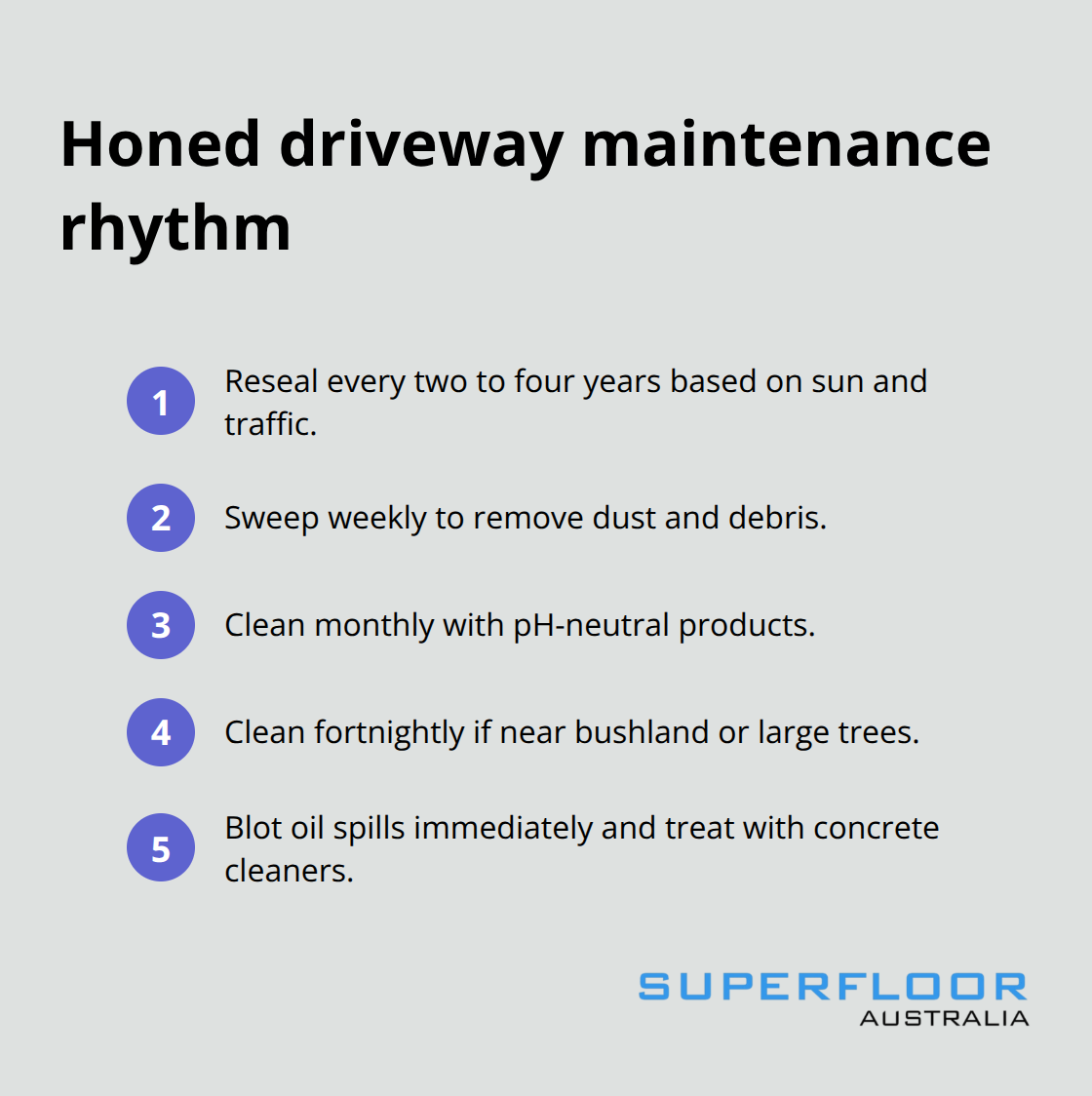
Honed concrete requires consistent maintenance that many homeowners underestimate before committing. The surface needs resealing every two to four years depending on sun exposure and traffic intensity. Brisbane’s intense UV radiation accelerates sealer breakdown, pushing the lower end of that range for driveways facing north or west. Skipping resealing allows the matte finish to dull, slip resistance to diminish, and staining to penetrate the surface. Weekly sweeping and monthly cleaning with pH-neutral products become non-negotiable routines. Organic matter from trees, algae growth in humid conditions, and leaf debris stain honed concrete faster than exposed aggregate because the smooth surface doesn’t hide discolouration. If you live near bushland or under large trees, plan on cleaning fortnightly rather than monthly. Oil stains from vehicle leaks require prompt attention-blot immediately and treat with appropriate concrete cleaners before the stain sets permanently.
Your lifestyle matters here. If you’re someone who notices dirt and wants a pristine driveway, honed concrete suits you perfectly because cleaning is straightforward. If you prefer a low-fuss surface, exposed aggregate demands less frequent attention and hides stains naturally. Honestly evaluate whether you’ll commit to this maintenance schedule. If maintenance feels like a burden, the initial cost savings versus exposed aggregate evaporate quickly when you factor in resealing expenses and cleaning time.
Brisbane Heat and Material Selection
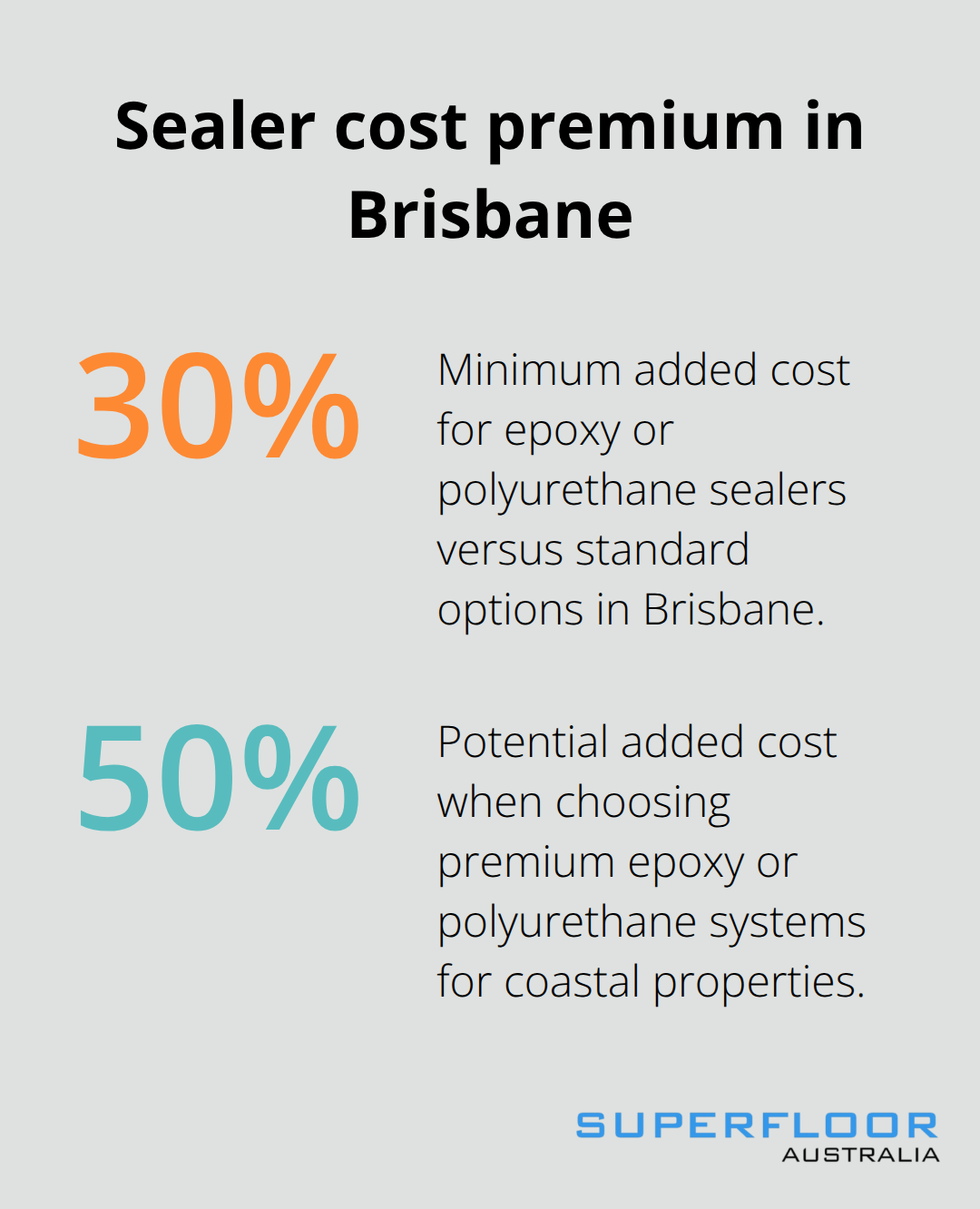
The aggregates in your honed concrete dramatically affect underfoot comfort and long-term performance in Brisbane’s climate. Light-coloured stone blends stay significantly cooler during summer, reducing thermal stress on the concrete and improving barefoot comfort. Dark aggregates absorb heat intensely, making the surface uncomfortable to walk on during peak summer months-a real problem if you have children or pets. Lighter mixes also resist colour fading better under Queensland’s relentless UV exposure. Try light granite, bluestone, or limestone aggregates rather than dark basalt or charcoal options. The cost difference is minimal but the performance difference is substantial. Coastal suburbs within five kilometres of saltwater need additional consideration. Salt air accelerates sealer degradation and can cause surface spalling if the concrete isn’t sealed with a marine-grade product. Standard acrylic sealers fail faster in these conditions; epoxy or polyurethane sealers provide superior protection but cost 30 to 50 per cent more. If you’re in a coastal location, budget for premium sealing from the start rather than discovering sealer failure after two years. Brisbane’s drainage patterns also matter. Poor drainage creates standing water that stains honed concrete and accelerates sealer breakdown. Proper slope and drainage before installation prevent water pooling on the surface.
Budget Reality and Hidden Costs
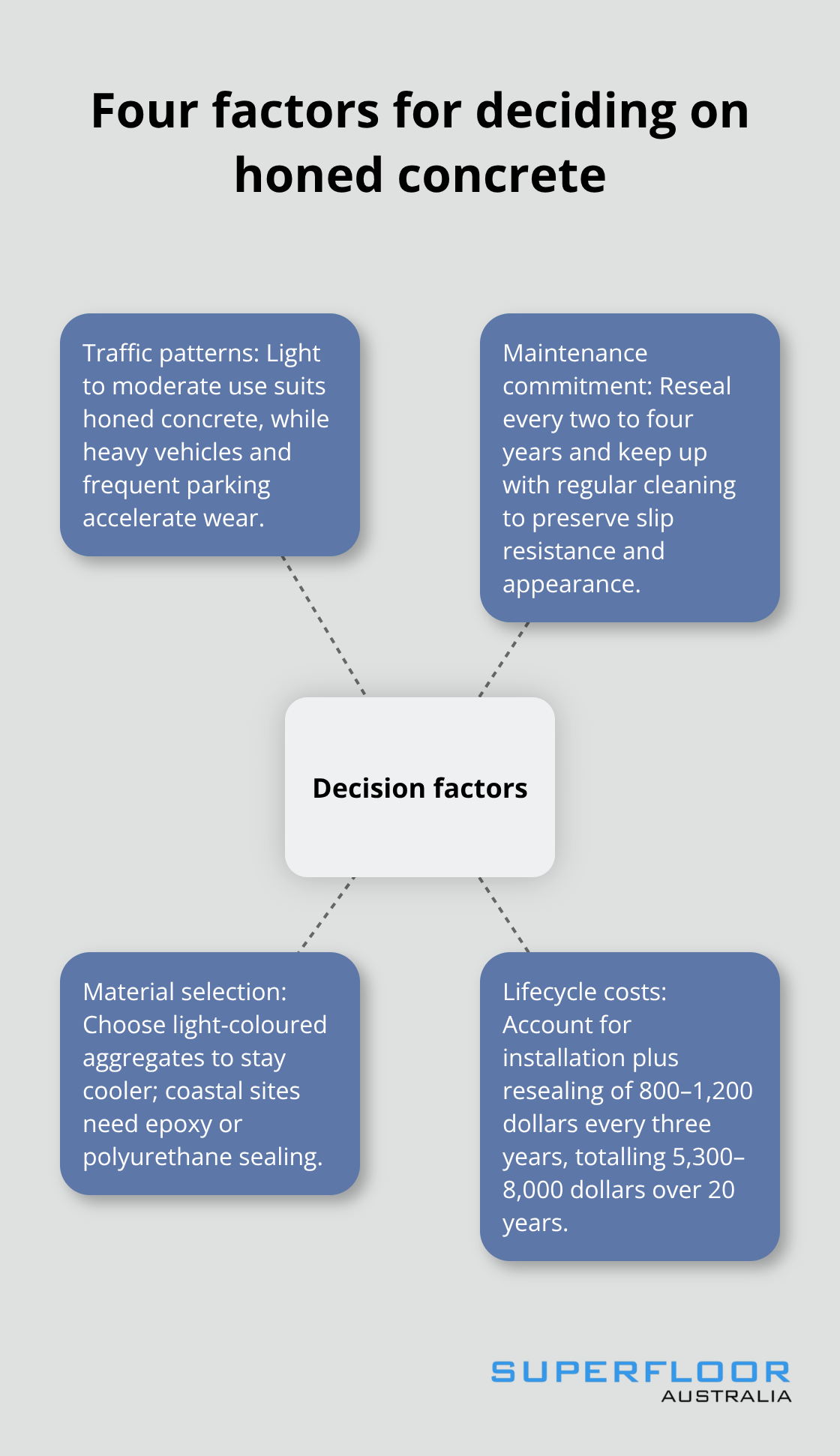
Honed concrete driveways in Brisbane typically cost 140 to 190 dollars per square metre in 2026, based on current market rates. A standard 40-square-metre driveway runs 5,600 to 7,600 dollars for installation. This price assumes straightforward preparation, standard light aggregate selection, and basic sealing. Costs increase significantly if your existing concrete requires extensive removal, if site access is difficult, or if you choose premium aggregates or decorative finishes. Many homeowners focus only on installation cost and ignore the maintenance budget. Budget an additional 800 to 1,200 dollars every three years for professional resealing. Over a 20-year lifespan, maintenance costs total 5,300 to 8,000 dollars on top of the initial installation. This reality makes honed concrete more expensive than exposed aggregate over the long term. Calculate the true lifecycle cost rather than comparing installation prices alone. If budget constraints are tight, exposed aggregate delivers better value because resealing intervals stretch to five to seven years and the surface tolerates neglect better. Honed concrete makes financial sense when you value the aesthetic and maintenance benefits enough to commit to the ongoing investment. Cheap installation often means poor-quality sealing or inadequate surface preparation, leading to premature failure. Spend appropriately on a qualified contractor with proven Brisbane experience rather than accepting the lowest quote. Understanding these four factors-traffic patterns, maintenance commitment, material selection, and true lifecycle costs-positions you to make the right decision. The next step involves finding a contractor who understands Brisbane’s specific conditions and can guide you through the selection process with expertise and transparency.
Selecting and Preparing Your Honed Concrete Driveway
Finding a Contractor With Real Honed Experience
The contractor you select matters more than any other decision for your honed concrete driveway. Brisbane has plenty of concrete specialists, but most lack the specific experience needed for honed finishes in subtropical conditions. Look for contractors with explicit honed concrete experience, not just general concrete work. Check their portfolio specifically for Brisbane driveways they’ve completed, not just polished concrete or exposed aggregate projects. Ask how long they’ve worked with honed finishes and request at least three references from homeowners whose driveways are at least three years old. This tells you whether the finish has held up through Brisbane’s climate cycles.
Google Reviews and Facebook ratings reveal real customer feedback, particularly comments about communication during the project and whether the contractor addressed issues promptly. Red flags include vague answers about the grinding process, reluctance to discuss sealing options, or unwillingness to provide a detailed written contract. Verify their licensing and insurance for Queensland work. Ask specifically about their curing methods because improper curing causes premature cracking, which is a common failure point for honed concrete driveways.
Comparing Quotes and Contract Terms
Get itemised quotes from at least three contractors. The quote should separately list labour, materials, concrete mix specification, sealing system, and any site preparation costs. Quotes varying wildly between contractors signal that someone is either overcharging or cutting corners. A realistic quote for a 40-square-metre Brisbane driveway should fall within 5,600 to 7,600 dollars for installation. Cheap quotes often mean inadequate surface preparation or low-quality sealing products that fail within two years.
Demand a written contract that outlines the exact scope of work, payment schedule, timeline including weather contingencies, and the specific products being used. Ask whether the contractor will handle site drainage to prevent water pooling, which is essential in Brisbane’s wet season. The contractor should explain their joint design strategy to minimise cracking in large slabs.
Preparing the Base and Assessing Existing Conditions
Preparation determines whether your honed concrete driveway lasts 20 years or fails within five. Before grinding starts, the existing surface must be assessed for structural issues, poor drainage, or unstable subgrade. Inadequate preparation leads to cracking that no amount of sealing can fix. Confirm the contractor will remove old concrete if necessary and compact the base properly.
Ask about their approach to slope and drainage. Your driveway needs adequate fall toward street drainage to prevent water pooling, particularly critical in Brisbane where heavy rain is common. Discuss joint placement with the contractor. Concrete expands and contracts with temperature changes, and poorly placed joints cause uncontrolled cracking. In Brisbane’s hot climate, joints should typically be placed every 4 to 5 metres maximum.
Specifying the Concrete Mix and Grinding Process
The concrete mix itself matters significantly for Brisbane conditions. Specify a mix design that includes light-coloured aggregates like granite or limestone rather than dark basalt. Ask whether they’ll add fibre reinforcement to the concrete to reduce shrinkage cracking. Once grinding starts, the process should stop at a matte finish that reveals the natural stone without over-polishing. Aggressive grinding exposes soft aggregate that wears quickly under Brisbane traffic. The surface should feel smooth to touch but not slippery.
After grinding, the surface requires thorough cleaning to remove dust and prepare for sealing. This is where many contractors cut corners. The surface must be completely dry before sealing, which can take 24 to 48 hours depending on humidity. Rushing this step causes sealer failure and poor adhesion.
Selecting and Applying the Right Sealer
The contractor should specify exactly which sealer they’re using. For Brisbane, acrylic sealers offer good UV protection and slip resistance, while epoxy sealers provide superior stain resistance but cost 30 to 50 per cent more. Coastal properties within five kilometres of saltwater absolutely need epoxy or polyurethane sealers because standard products fail faster in salt air. The sealer should cure for 24 to 72 hours before foot traffic, longer before vehicle traffic.
Ask the contractor to provide written maintenance instructions specific to the sealer they’ve applied, including recommended cleaning products and resealing intervals. This documentation becomes essential for protecting your investment over the years ahead.
Final Thoughts
Honed concrete driveways deliver a sophisticated, low-maintenance surface that performs exceptionally well in Brisbane’s subtropical climate. The matte finish hides dirt and water spots far better than polished alternatives, while the grinding process densifies the surface to resist wear from vehicle tyres and foot traffic. When properly sealed and maintained, these driveways regularly exceed 20 years of service life, making them a durable investment that justifies the initial cost.
Light-coloured aggregates keep your driveway cooler during Brisbane summers, while consistent resealing every two to four years protects the finish and maintains slip resistance. Your traffic patterns, maintenance willingness, and budget determine whether honed concrete is the right choice for your property. Heavy vehicle traffic or reluctance to commit to regular maintenance means exposed aggregate serves you better, but for homeowners who value aesthetics and prepare to maintain the surface properly, honed concrete driveways offer unmatched appeal and performance.
The right contractor makes the difference between a driveway that lasts decades and one that fails prematurely. Look for proven Brisbane experience with honed finishes specifically, verify their licensing, check references from completed projects at least three years old, and demand detailed written contracts that specify the concrete mix, sealing system, and curing methods. Contact Superfloor Australia to discuss your honed concrete driveway project and receive a detailed quote based on your specific needs and site conditions.