

Honed concrete textures offer something most flooring can’t: a finish that works equally well in a minimalist apartment or a busy retail space. The range spans from barely-there matte surfaces to high-gloss polished looks that catch light dramatically.
At superfloor australia, we’ve seen firsthand how the right honed finish transforms a property. Whether you’re after subtle elegance or striking visual impact, this guide covers everything you need to know.
Why Honed Concrete Outlasts Almost Everything Else
Honed concrete solves three problems that most flooring materials struggle with simultaneously. First, it adapts to any aesthetic without compromise. A matte honed finish works in Scandinavian minimalist spaces where texture matters more than shine, while a higher-grit honed surface suits industrial lofts or contemporary kitchens. The finish doesn’t force your design direction-it supports it. Second, the durability is genuinely exceptional. When concrete undergoes honing, the grinding process removes the weaker cement paste layer and exposes the harder aggregate beneath, which means the surface becomes stronger, not weaker. Properly sealed honed concrete lasts up to 50 years in residential settings and handles heavy foot traffic without the chipping or cracking you’d see in other materials. Third, the maintenance burden stays lighter than almost any alternative. You avoid stripping wax, refinishing timber, or regrouting tiles every few years.
The Real Cost Advantage Over Time
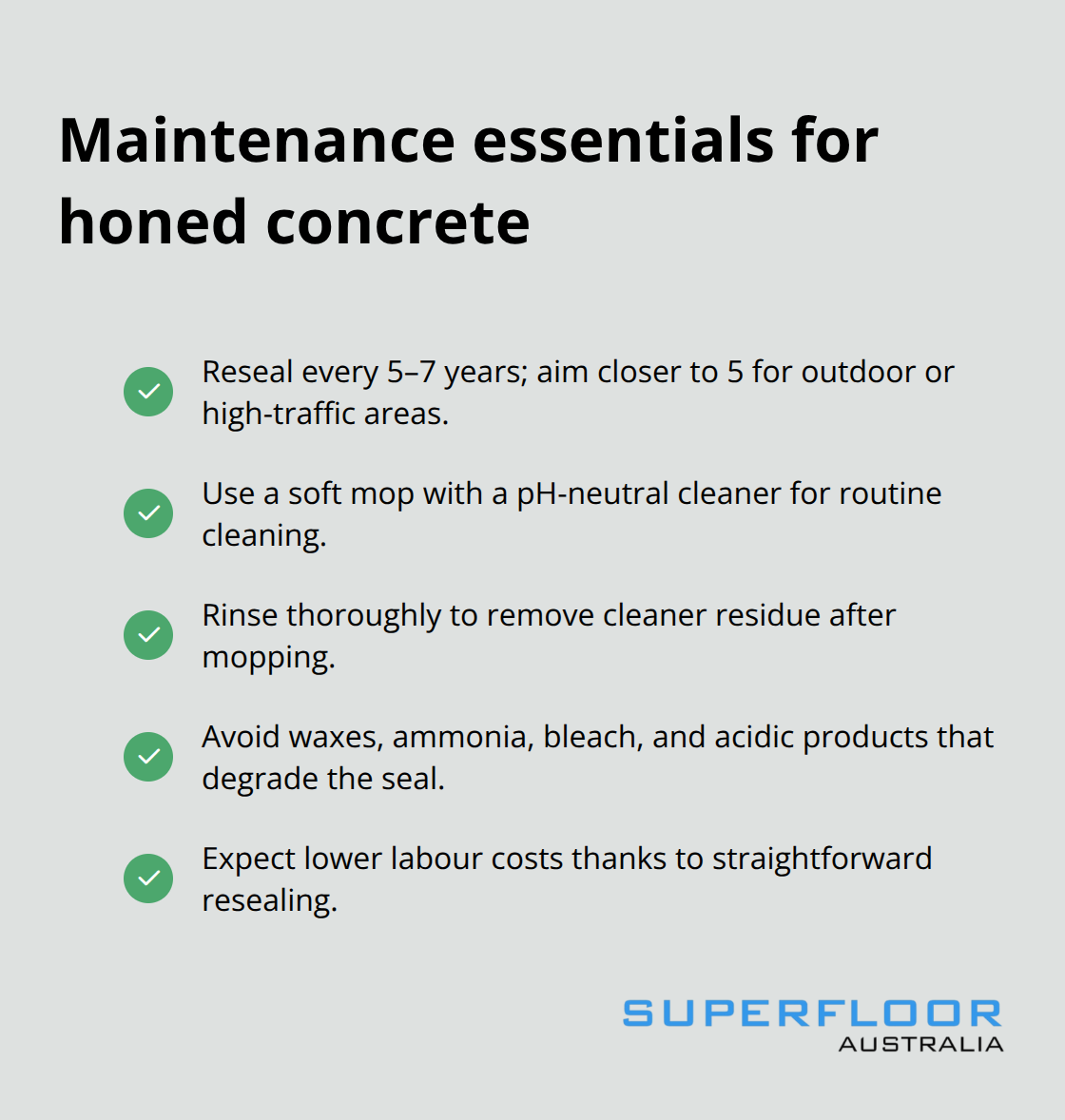
Honed concrete typically costs between 50 and 100 dollars per square metre for installation in Australia, with premium finishes reaching higher amounts. That’s significantly lower than polished options upfront, which matters for larger projects. A 50-square-metre alfresco area with medium aggregate exposure and a satin polyurethane sealer runs roughly 2,500 to 5,000 dollars total. The maintenance cost is where honed concrete genuinely wins. You reseal every 5 to 7 years-outdoor or high-traffic areas closer to 5 years-with a simple application that costs a fraction of refinishing timber or replacing worn stone. Daily cleaning requires only a soft mop, pH-neutral cleaner, and thorough rinsing. You avoid waxes, ammonia, bleach, or acidic products that degrade the seal. This simplicity translates directly to lower labour costs if you hire professionals for resealing.
Customisation Without Compromise
The finish options run deeper than most people realise. You control aggregate exposure from nil (subtle, understated look) to full (dramatic stone detail), sealer sheen from matte through satin to gloss, and colour through integral pigments mixed into the concrete itself. Non-slip additives like colloidal silica or fine quartz mix into sealers at 0.5 to 1 kilogram per 15 litres to improve grip in wet areas without changing appearance. For compliance around pools, honed finishes reach AS 4586-2013 P4 and P5 slip-resistance ratings through proper sealer selection and additive dosing. This means you choose between safety and aesthetics-you get both.
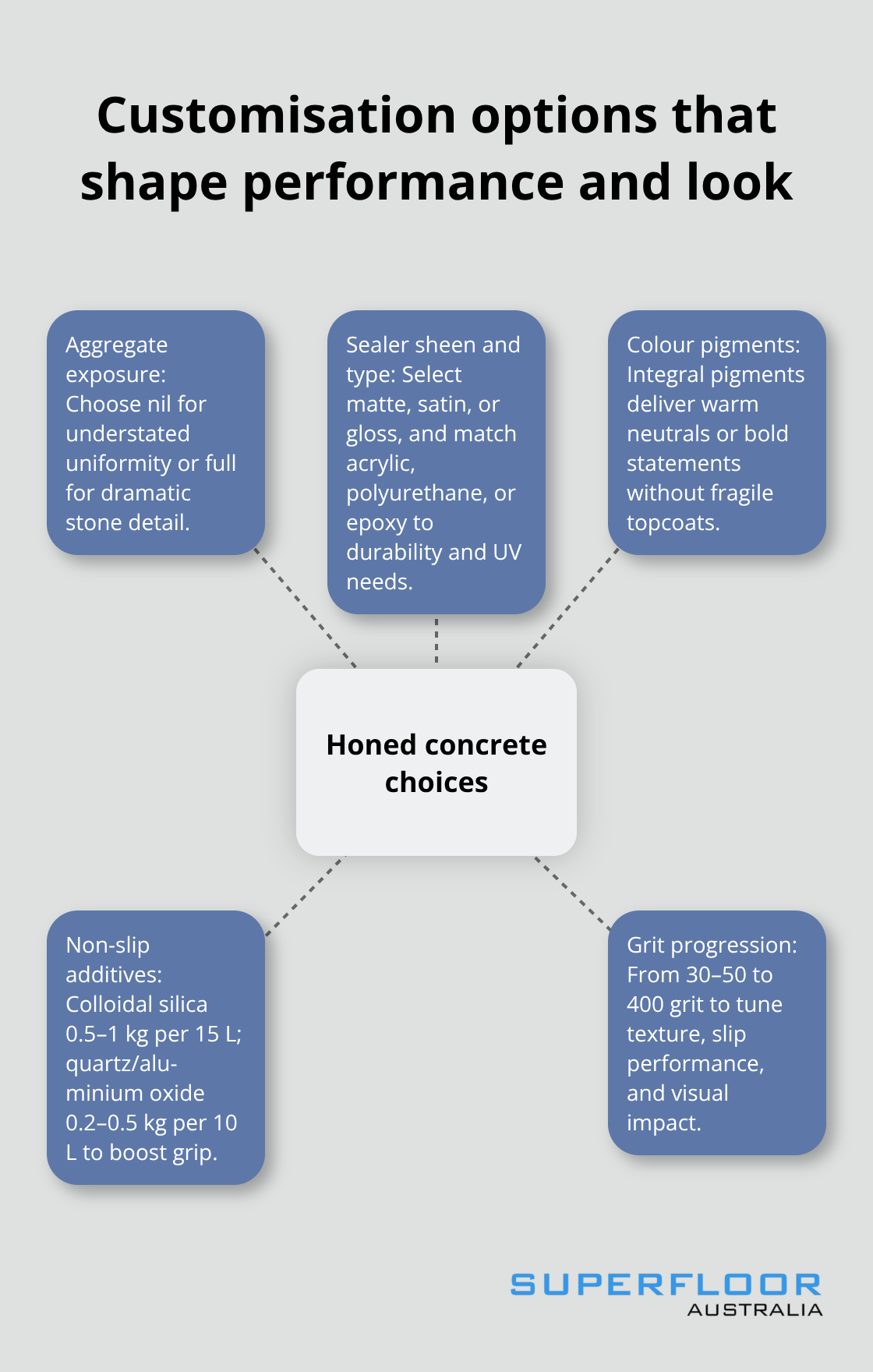
The grinding process itself uses progressive grits from 30–50 all the way to 400 grit for a velvety finish, so the final texture stays entirely within your control.
What Sets Honed Apart From Other Finishes
Honed concrete outperforms exposed aggregate because it delivers a smoother underfoot feel and easier cleaning, while exposed aggregate emphasises rustic stone textures and requires periodic maintenance of exposed stones. Compared with polished concrete, honed finishes cost less upfront, feature a satin low-gloss look, need resealing every 5–7 years, and offer superior outdoor slip resistance. Polished surfaces work best indoors and require periodic burnishing to maintain their high-gloss appearance. Liquid limestone and coloured finishes rely on top-coated layers that scratch or chip more easily and may need reapplication every 3–5 years in high-use areas, whereas honed concrete uses integral pigments and a sealed surface for lasting durability. The choice between these options depends on your space, traffic patterns, and desired aesthetic-but honed concrete delivers the best balance of performance and visual flexibility for most properties. Understanding these distinctions helps you select the right finish for your specific needs, which brings us to how different spaces demand different approaches.
Which Finish Achieves Your Exact Look
Selecting the Right Grinding Grit
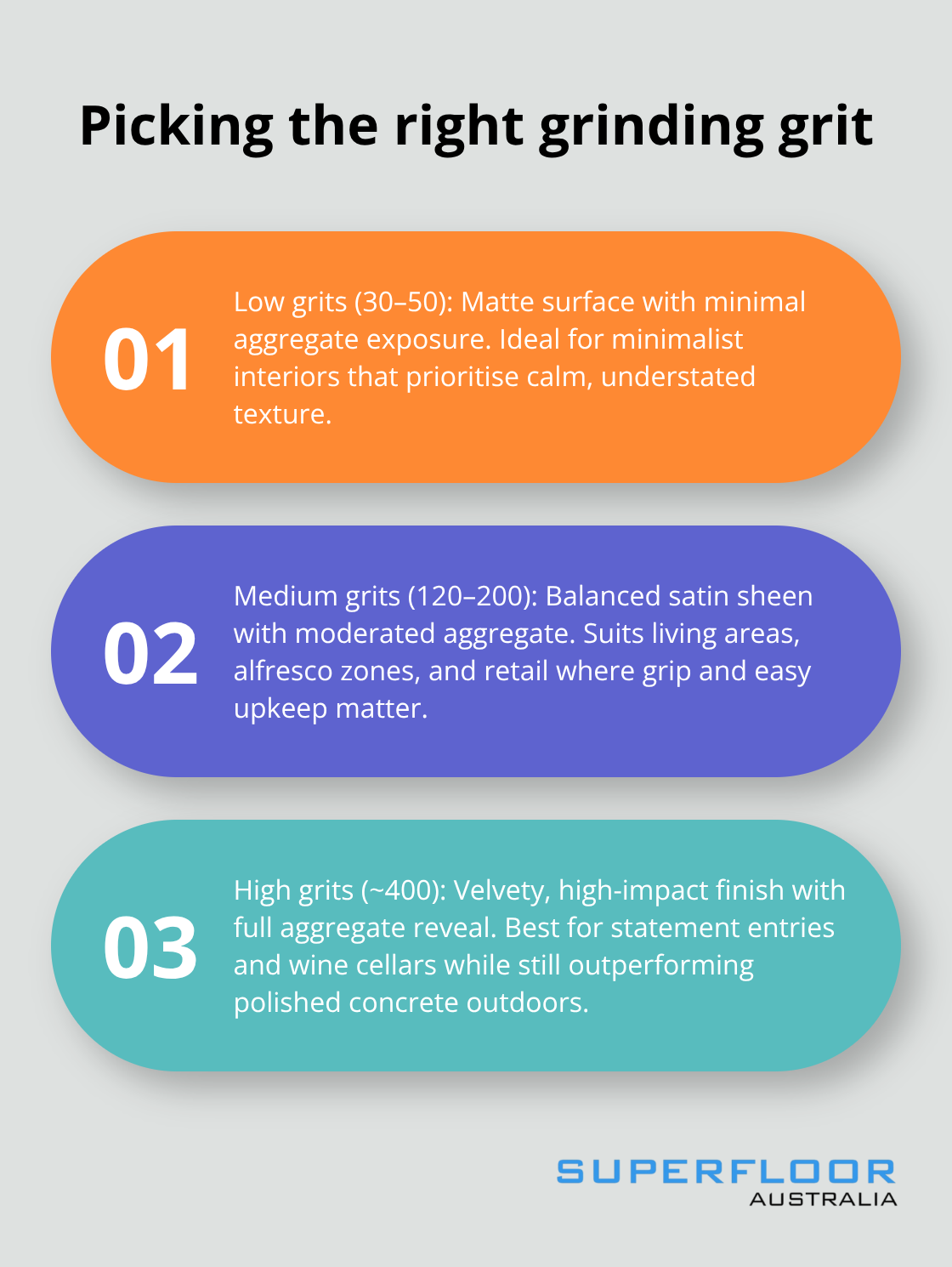
The grinding grit you select determines everything about how your honed concrete appears and performs. A 30–50 grit grind produces a matte surface with minimal aggregate exposure, delivering an almost polished concrete appearance without the gloss. This approach works exceptionally well in minimalist interiors where you want a clean, understated aesthetic that doesn’t demand attention. The surface stays subtle enough to complement Scandinavian design, contemporary kitchens, or corporate offices where visual noise matters less than functionality.
Moving to medium grits around 120–200 grit creates the sweet spot most property owners actually want. This range exposes moderate aggregate detail while maintaining a satin sheen that catches light naturally without creating glare or slipperiness. A medium-grit finish suits residential living areas, alfresco dining zones, and retail environments where you need visual interest without sacrificing practicality. The texture provides genuine grip underfoot, which matters far more than marketing promises about slip resistance.
At the high end, 400 grit produces a velvety, almost polished appearance that reveals full aggregate and delivers maximum visual impact. This finish commands attention in statement entry areas, wine cellars, or luxury residential spaces where the floor itself becomes a design feature. The higher the grit, the closer you approach polished concrete territory, but honed finishes at 400 grit maintain better outdoor performance than true polished options because they don’t develop the same slickness in wet conditions.
Choosing Your Sealer Type
Your sealer choice matters as much as the grit selection. Acrylic sealers offer the lowest cost and easiest reapplication every 5–7 years, making them ideal for budget-conscious projects or areas you might want to refresh frequently. Polyurethane sealers provide superior durability and UV stability, particularly important for outdoor installations where sun exposure yellows weaker sealers. Epoxy sealers deliver maximum wear resistance for high-traffic commercial spaces, though they cost significantly more upfront.
Non-slip additives deserve serious consideration if you’re honing outdoor areas, pool surrounds, or bathrooms. Colloidal silica mixed at 0.5–1 kilogram per 15 litres of sealer improves grip without altering colour, while fine quartz or aluminium oxide additives at 0.2–0.5 kilogram per 10 litres create more visible texture. These additives transform safety and aesthetics from competing priorities into complementary outcomes.
Customising Aggregate Exposure and Colour
Aggregate exposure customisation runs from nil exposure for a nearly uniform appearance to full exposure revealing dramatic stone detail throughout. Nil exposure costs less and suits contemporary minimalist spaces, while full exposure with integrated grout creates a polished, sophisticated look that justifies premium pricing. Colour pigments mixed into the concrete itself offer unlimited customisation possibilities, from subtle warm tones that enhance natural light to bold statement colours in commercial settings.
Matching Finish to Function
The fundamental principle remains constant: your finish selection should match traffic patterns, outdoor exposure, and desired maintenance burden before aesthetic preferences enter the equation. Spaces with heavy foot traffic demand higher grits and durable sealers regardless of design preferences, while low-traffic feature areas can prioritise visual impact over practical performance considerations. This strategic approach ensures your honed concrete performs as beautifully as it looks, setting the stage for understanding how different spaces demand different applications.
Where Honed Concrete Performs Best
Residential Spaces Demand Strategic Finish Selection
Honed concrete transforms residential kitchens and living areas through medium-grit finishes that deliver visual warmth without the glare polished surfaces produce under kitchen lighting. The satin sheen catches natural light softly, making spaces feel larger without creating the clinical brightness of high-gloss alternatives. Bathrooms benefit from honed concrete with polyurethane sealer and non-slip additives that eliminate the safety liability of polished concrete while maintaining elegant appearance. Bedrooms and home offices suit nil or low aggregate exposure because subtle texture supports focus without visual distraction. Wine cellars and statement entry areas perform best with higher grits around 300–400, revealing full aggregate detail while maintaining better grip than true polished finishes. Most property owners miss a critical insight: residential spaces rarely perform well with uniform finishes throughout. A 50-square-metre home typically performs better with medium-grit honed in main living areas, higher-grit honed in feature zones, and nil-exposure honed in utility spaces, creating visual hierarchy without jarring transitions.
Commercial Environments Require Durability Over Aesthetics
Commercial spaces demand honed concrete because foot traffic, equipment movement, and cleaning frequency eliminate polished surfaces from serious consideration. Retail spaces averaging 5,000–10,000 customer footsteps daily require medium to high-grit honed finishes with polyurethane or epoxy sealers resealed every 3–5 years instead of the residential standard of 5–7 years. Restaurants and hospitality venues benefit from full aggregate exposure with epoxy sealer because kitchen grease and wine spills demand maximum durability, and the dramatic texture masks minor staining between deep cleans. Office environments with polished concrete often report maintenance complaints within 18 months as traffic patterns create visible wear zones, whereas honed finishes in similar spaces maintain consistent appearance for 5+ years.
Outdoor Applications Make Honed Concrete Indispensable
Outdoor applications represent where honed concrete becomes genuinely indispensable rather than merely preferable. Pool surrounds must achieve AS 4586-2013 P4 or P5 slip-resistance ratings, which polished concrete cannot reach safely. Alfresco dining areas and entertaining zones suit medium to high-grit honed with UV-stable polyurethane sealer because the texture provides traction on wet surfaces while the sealer prevents sun-induced yellowing that weakens cheaper acrylic alternatives. Feature driveways in hot climates stay cooler underfoot with honed finishes than polished surfaces, a measurable comfort advantage during summer months. Outdoor pathways and garden transitions demand consistent slip resistance regardless of weather, making honed concrete the only practical choice where safety and aesthetics must coexist.
Final Thoughts
Honed concrete textures deliver what most flooring materials simply cannot: a finish that performs as well as it looks across residential, commercial, and outdoor spaces. The range from subtle matte surfaces to striking high-gloss options means you avoid compromising between aesthetics and function. A properly sealed honed concrete floor lasts up to 50 years while requiring only basic cleaning and resealing every 5 to 7 years, making it far more practical than timber refinishing, tile regrouting, or stone maintenance.
What makes honed concrete genuinely stand out is flexibility. Medium-grit finishes suit most residential living areas and retail environments, while higher grits work for statement spaces and wine cellars. Outdoor applications demand honed concrete because polished surfaces cannot achieve the slip resistance required around pools or entertaining zones-you select a finish that adapts to your specific needs rather than forcing your space into a predetermined aesthetic.
If you’re considering honed concrete for your property, contact Superfloor Australia for a site consultation. They deliver high-quality honed concrete solutions across Brisbane, with expertise in both residential and commercial applications. Most projects complete within 5 to 7 days from preparation through curing.