

Commercial concrete grinding in Brisbane transforms worn, damaged, or uneven floors into safe, polished surfaces that look professional and last longer. Whether you’re managing a warehouse, retail space, or office, understanding what the process involves helps you plan your project properly.
At superfloor australia, we’ve completed hundreds of grinding projects across Brisbane, and we know the questions that matter most to facility managers. This guide walks you through what to expect, why grinding matters, and how to choose the right service provider for your space.
What Happens During Commercial Concrete Grinding
Commercial concrete grinding in Brisbane follows a structured sequence that transforms your floor from damaged or worn to functional and visually appealing. The process starts with a thorough site assessment where we evaluate floor condition, identify cracks, check for existing coatings, and determine the concrete’s hardness. A water drop test reveals whether sealers are present; if water beads on the surface, aggressive removal is required before grinding starts. This upfront inspection prevents costly surprises later and guides equipment selection.
Surface Preparation Sets the Foundation
Surface preparation determines about 80 percent of success, so we pre-clean the area, remove oil and coatings, repair cracks with epoxy filler, and mark electrical conduits to prevent damage during work.
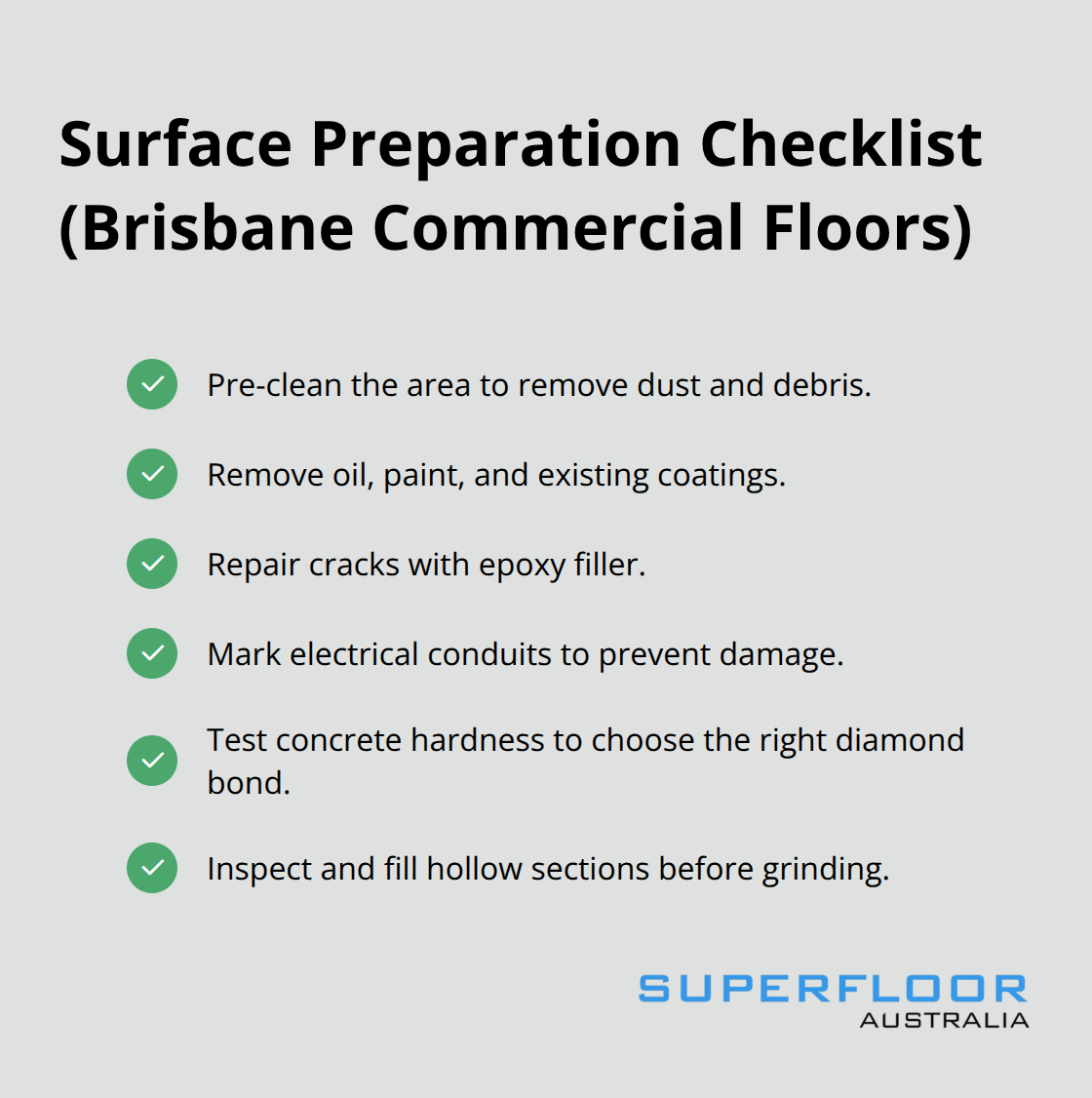
We test the concrete’s hardness using a steel nail scratch test; soft concrete suits metal-bonded diamonds, while hard concrete suits resin-bonded diamonds for better efficiency. We also inspect for hollow sections and repair them with epoxy filler before any grinding starts. This careful preparation work directly impacts the quality of your final finish.
Equipment Selection Depends on Project Size
Walk-behind grinders suit projects over 500 square metres, operating at around 1,750 RPM with 15 to 20 horsepower, covering 100 to 300 square metres per day depending on concrete hardness and site access. Ride-on planetary grinders handle larger spaces, covering 500 or more square metres daily. For smaller commercial areas under 100 square metres, handheld units work but operate roughly 40 percent slower per square metre. Diamond-embedded abrasives start coarse at 16–24 grit for heavy stock removal, then progress through 30–40 grit for surface preparation. Genuine diamond segments cost between 45 and 85 dollars each and last four to six times longer than cheap alternatives, making Makita and Bosch popular for consistent performance.
Temperature and Dust Control Matter
The grit sequence matters significantly; skipping stages creates deep scratches that show in the final finish. Temperature control in concrete grinding is critical for maintaining optimal diamond performance. Professional dust extraction systems cut airborne particles by about 95 percent, protecting equipment and inventory while maintaining site safety. We keep the working surface below 40 degrees Celsius to maintain optimal diamond performance throughout the project.
Labour Time Varies by Site Conditions
A 100 square metre commercial floor typically takes 6 to 8 hours with skilled crews. Ground-floor spaces with vehicle access achieve 150 to 200 square metres per day, while basements or tight areas yield only 30 to 50 square metres daily and incur 40 to 60 percent higher labour costs. Stairs add 40 to 70 dollars per step; landings cost 90 to 120 dollars each; edge work ranges from 10 to 60 dollars per metre. Aged concrete over five years old requires 20 to 30 percent more passes, increasing labour time and diamond wear. River-rock aggregates grind significantly faster than granite-based concrete, yet they consume diamonds more rapidly, affecting both speed and tooling costs.
Labour costs for commercial concrete grinding Brisbane vary from $15 to $80 per square metre depending on multiple factors. Hidden expenses like generator hire (200 to 400 dollars daily when three-phase power is unavailable), dust-control systems (200 to 800 dollars daily depending on HEPA requirements), and waste disposal add substantial costs that many facility managers overlook. Request itemised quotes breaking out labour, equipment rental, tooling, waste disposal, power needs, and dust-control separately to avoid surprises. Compare three to five local contractors with relevant Brisbane experience and proper insurance coverage to find the right fit for your space. Understanding these variables helps you plan realistic timelines and budgets before your project begins.
Why Commercial Concrete Floors Need Grinding
Uneven Surfaces Create Safety Risks
Worn concrete floors pose real hazards to your operations. Uneven surfaces increase trip risks, which directly impact your liability exposure and worker safety records.
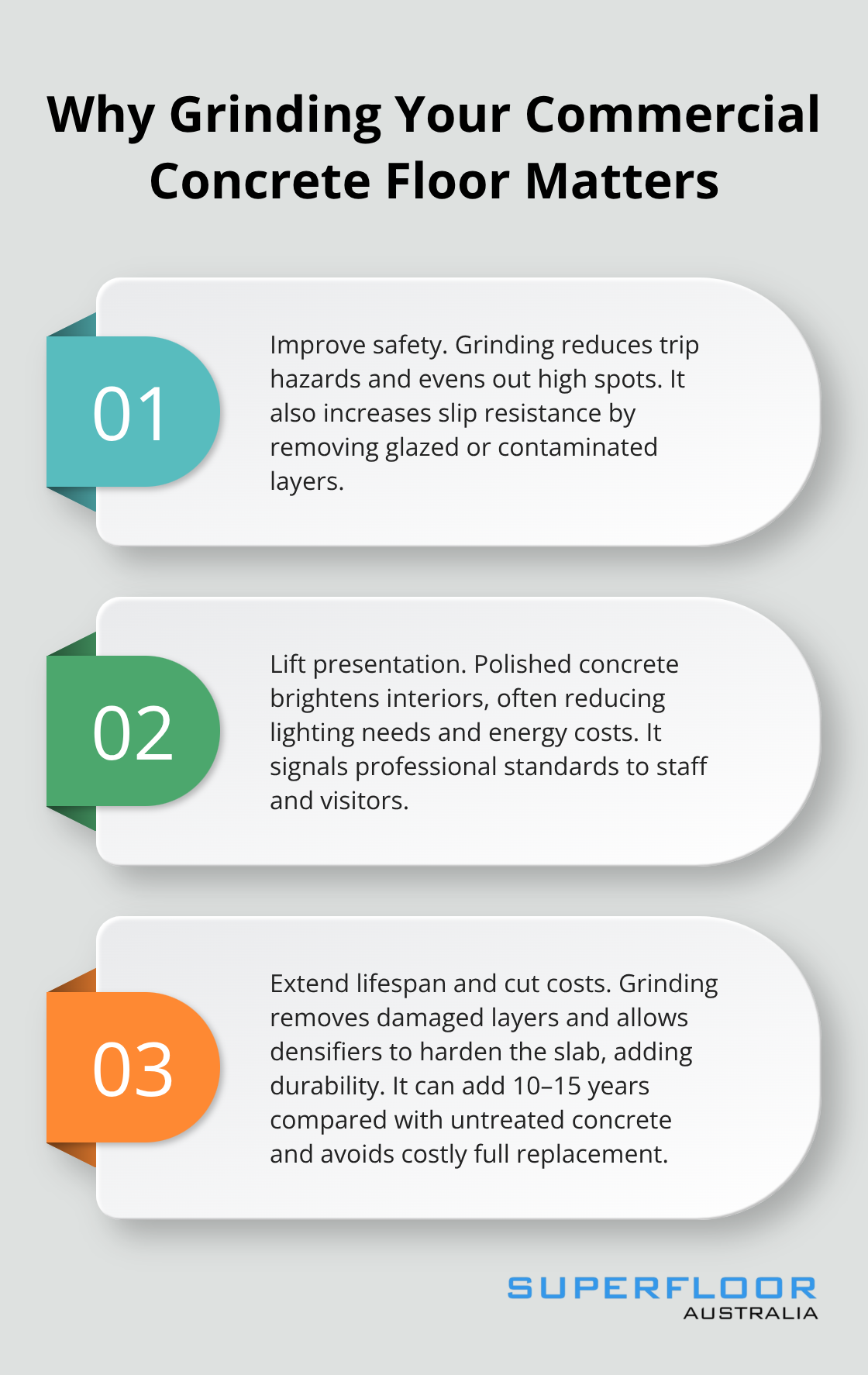
Workplace safety data shows that trip and fall incidents remain among the most common workplace injuries, and uneven flooring contributes significantly to these accidents. Grinding levels the surface and improves slip resistance by removing glazed or contaminated areas that make floors slippery. The process also eliminates sealed coatings that trap moisture and oils, exposing fresh aggregate that provides natural traction. This matters most in high-traffic areas like warehouses, retail spaces, and manufacturing floors where foot traffic is constant and equipment movement is heavy.
Professional Appearance Transforms Your Space
A professionally ground and polished floor transforms a dingy, stained workspace into a bright, professional environment that reflects your brand standards. Polished concrete reflects light effectively, reducing the need for additional lighting and lowering energy costs in the process. Grind-and-seal finishes cost less upfront than full polishing but still deliver a clean, maintained appearance that clients and staff notice immediately. The visual impact alone signals to visitors and employees that you maintain your facility to high standards.
Grinding Extends Concrete Lifespan Significantly
Damaged concrete with cracks and spalling deteriorates rapidly as water penetrates the surface, expanding with freeze-thaw cycles and breaking the slab further. Grinding removes damaged surface layers, and applying a densifier after grinding hardens the concrete, increasing its resistance to moisture, chemicals, and heavy equipment traffic. Sealed and polished concrete floors last 10 to 15 years longer than untreated surfaces in commercial settings. Grinding also prevents costly replacement projects; a 1,000 square metre commercial floor costs roughly $15,000 to $25,000 to grind and finish, compared to $50,000 to $150,000 for full replacement with new material. For facility managers facing aging concrete, grinding offers the smarter financial choice that improves safety, appearance, and durability simultaneously.
The Right Service Provider Makes the Difference
Selecting a qualified contractor ensures your project delivers these benefits without delays or hidden costs. The next section covers what to look for in a service provider and the questions that protect your investment.
How to Find the Right Grinding Contractor in Brisbane
Selecting a concrete grinding contractor is one of the most important decisions you’ll make for your commercial floor project, and it’s worth spending time on the decision rather than rushing to the cheapest quote. Too many facility managers hire based solely on price, only to face costly delays, poor finishes, and disputes over hidden charges. The right contractor brings Brisbane-specific experience, proper licensing, transparent pricing, and realistic timelines to your project.
Request Detailed Written Quotes from Multiple Contractors
Start by requesting formal written quotes from three to five local providers, not phone estimates or rough figures. Each quote must specify the area in square metres, grit progression, whether dust control is included, existing coating removal costs, labour hourly rates, equipment rental charges, waste disposal fees, power requirements, and any travel surcharges outside Brisbane’s metro area. A contractor who refuses to provide itemised breakdowns is hiding something; this format alone reveals whether they understand your project’s complexity and prevents invoice surprises. Verify that your chosen contractor holds a QBCC licence, holds public liability insurance, and can demonstrate Brisbane experience with commercial projects similar to yours. Ask directly whether they’ve completed projects in your building type or industrial sector; a contractor experienced with warehouse concrete differs from one focused on retail polishing.
On-Site Inspections Prevent Cost Blowouts
Never accept a quote without an on-site inspection. During the visit, a professional assesses concrete hardness using scratch tests, checks for oil contamination or paint that requires aggressive removal, measures slab flatness to determine grind depth, tests moisture levels if epoxy coating is planned, identifies trip hazards or utility conduits to avoid, and evaluates site access for equipment movement. These factors directly affect labour hours and tooling costs; a basement project with tight access costs 40 to 60 percent more in labour than a ground-floor warehouse with vehicle access. If a contractor quotes over the phone without visiting, their estimate will be wildly inaccurate.
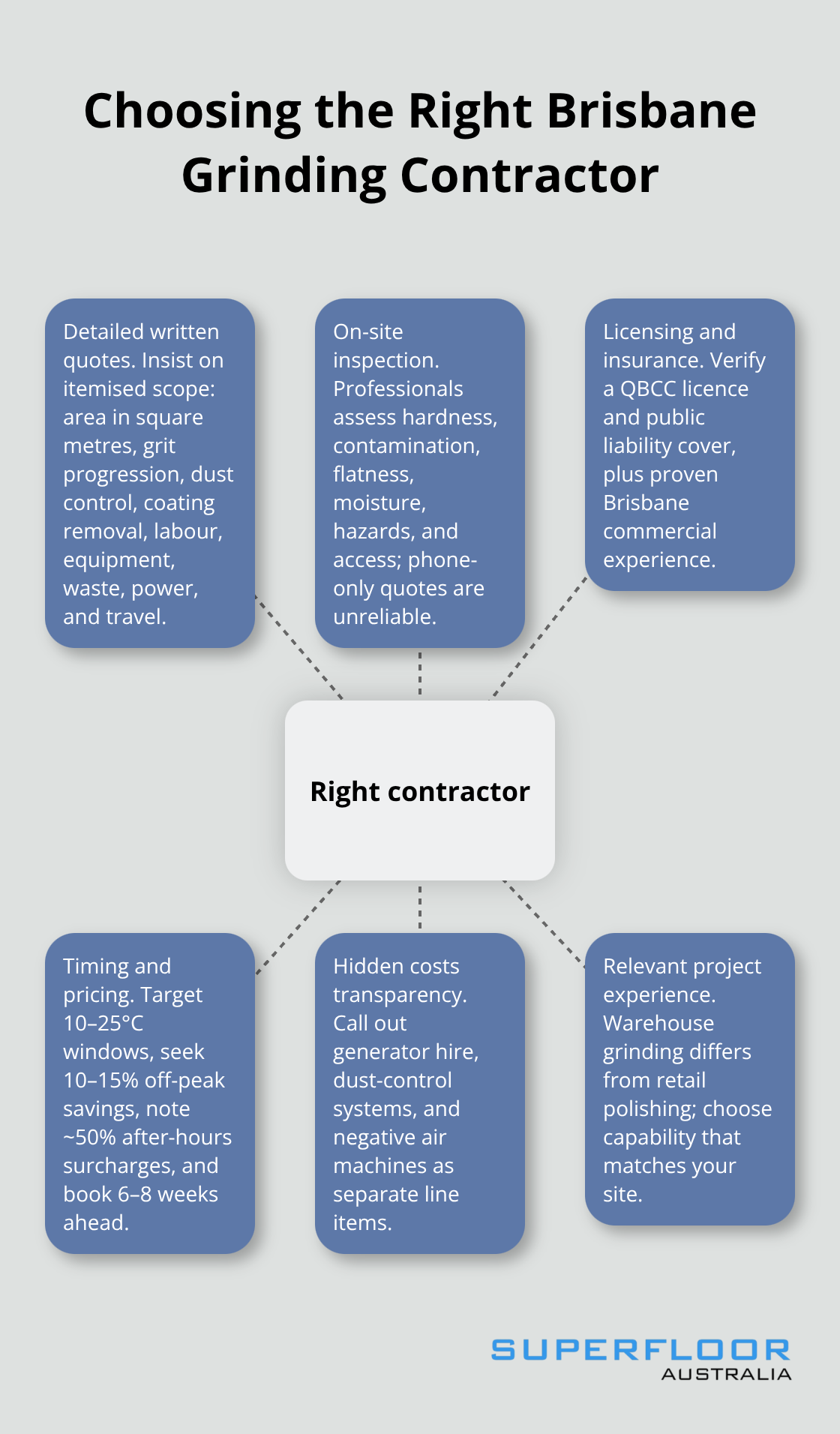
Temperature and humidity also matter; professional contractors schedule work between 10 and 25 degrees Celsius for optimal diamond performance and avoid grinding in high-humidity conditions that interfere with sealing. Ask whether the contractor offers off-peak discounts; Brisbane typically sees 10 to 15 percent savings in late autumn through early winter when demand drops. Weekend or after-hours work carries roughly 50 percent surcharges, so timing your project strategically saves thousands of dollars on labour. Plan six to eight weeks ahead to secure preferred scheduling and avoid premium rates for rush jobs.
Understand How Concrete Condition Affects Pricing
A 1,000 square metre warehouse floor costs roughly 15,000 to 25,000 dollars to grind and finish, but a 1,000 square metre space with epoxy coating removal, aged concrete requiring extra passes, and river-rock aggregate can easily exceed 30,000 to 50,000 dollars. Epoxy stripping alone adds 20 to 60 dollars per square metre depending on coating thickness. Aged concrete over five years requires 20 to 30 percent additional passes, pushing costs up accordingly. If the contractor hasn’t inspected your slab, their quote doesn’t account for these realities.
Labour costs in Brisbane range from 43 to 65 dollars per hour for skilled crews; experienced technicians complete work roughly 40 percent faster than apprentices, so a higher hourly rate often delivers genuine savings through faster completion. Hidden equipment costs include generator hire at 200 to 400 dollars daily if three-phase power is unavailable, dust-control systems at 200 to 800 dollars daily depending on HEPA requirements, and negative air machines at 150 to 300 dollars daily for enclosed commercial spaces. Request that these costs appear separately on your quote; if they’re lumped into a flat rate, you’re likely overpaying. Very low bids without detailed breakdowns signal either inexperience or intentional underquoting that leads to change orders and disputes. Compare quotes honestly; the cheapest option rarely delivers the best value when timelines, quality, and warranty coverage are factored in.
Final Thoughts
Your commercial concrete grinding Brisbane project succeeds when you request detailed written quotes from three to five local contractors with QBCC licensing and on-site inspection capabilities. Compare quotes that break out labour, equipment, dust control, and waste disposal separately, then schedule your work between 10 and 25 degrees Celsius for optimal results and plan six to eight weeks ahead to avoid rush surcharges. After grinding completes, sealed concrete floors require regular cleaning with pH-neutral cleaners and periodic resealing every 12 to 24 months to maintain protection in high-traffic commercial spaces.
Your maintenance routine determines how long the floor performs after installation. Avoid acidic or abrasive products that damage the surface, and inspect your floor quarterly for cracks or moisture issues to catch problems early before they become expensive repairs. Polished finishes demand more attention than grind-and-seal options, but the investment in proper maintenance extends your floor’s lifespan by 10 to 15 years compared to untreated concrete.
We at superfloor australia deliver high-quality polished concrete flooring that enhances both aesthetics and durability across Brisbane commercial spaces. Contact us to discuss your grinding and finishing options and transform your commercial floor into a professional, safe surface that performs for years.