

Most concrete floor failures start before any coating goes down. At superfloor australia, we’ve seen countless projects fail because the prep work was rushed or overlooked entirely.
When you prep concrete floors properly, coatings stick better and last longer. Skip this step, and you’re looking at peeling, cracking, and expensive repairs down the track.
Why Prep Work Makes or Breaks Your Floor
Up to 80 per cent of epoxy adhesion problems in commercial floors stem from inadequate surface preparation, not from the coating materials themselves. This statistic matters because it shows that most failures are preventable. When concrete isn’t prepared properly, coatings bubble, peel, and crack within months or years instead of lasting decades. In Brisbane, the majority of concrete floor failures come from rushed or incorrect preparation rather than poor installation. That’s a hard reality worth understanding before you commit time and money to any flooring project.
Poor Preparation Costs Far More Than Proper Prep
A four-week prep schedule-moisture equilibration, laser scanning, crack repair, and dust control-costs significantly less than replacing a failed floor. Self-levelling compounds run roughly 30 to 55 Australian dollars per square metre in Brisbane, and targeted grinding often proves cheaper and faster for high spots. The real expense arrives when you ignore prep work and coatings fail. Delamination, cracking, and peeling require complete removal and reinstallation, which multiplies your original costs many times over. Moisture readings above the acceptable threshold of 4.5 per cent, detected too late, can trigger bond failure and force expensive remediation. A 100 square metre grinding job typically takes 3 to 5 days depending on surface condition, but rushing this timeline increases risks of moisture pockets, misalignment, and adhesion failure that will cost thousands to fix.
Surface Quality Determines How Long Your Coating Lasts
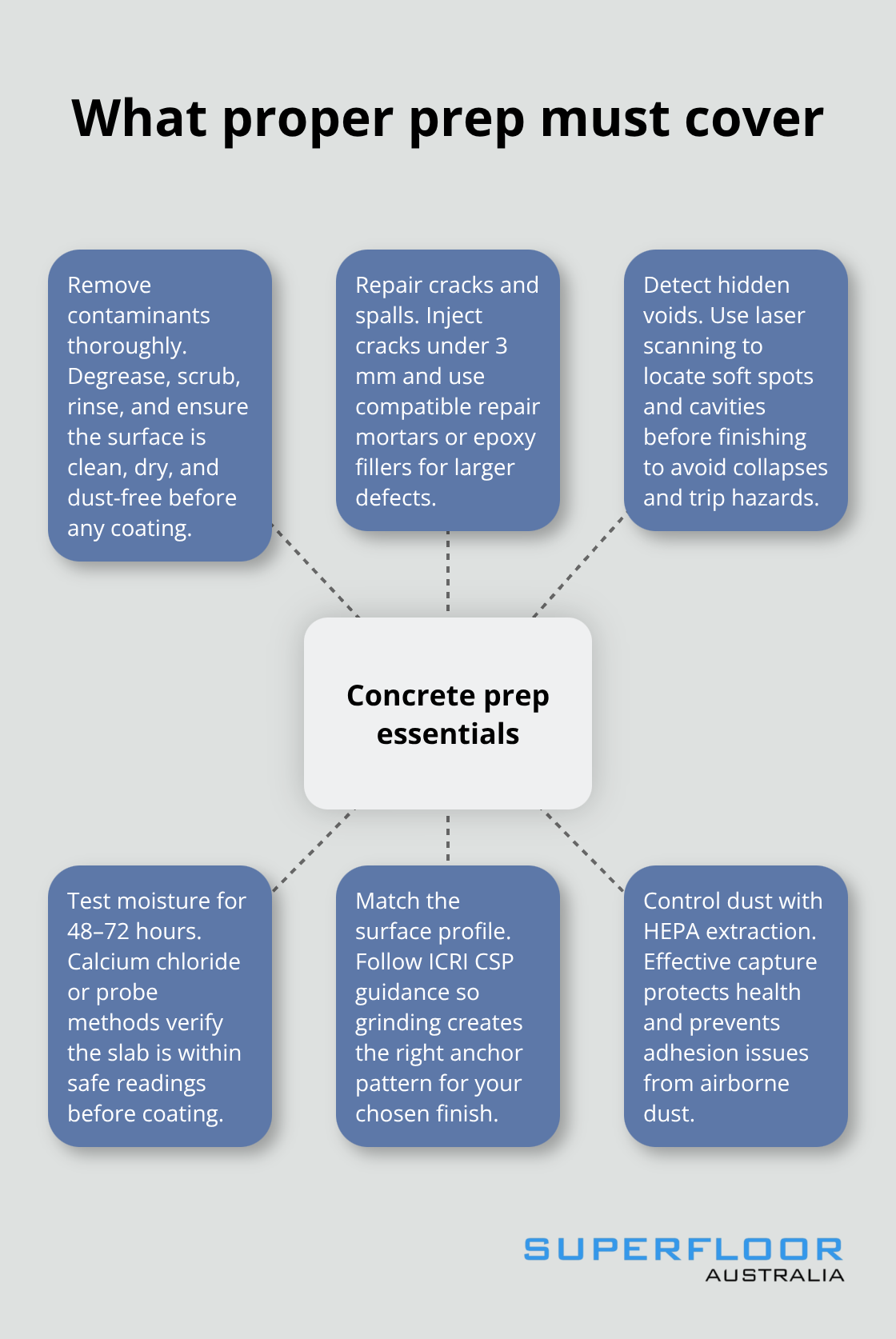
Concrete is naturally porous, uneven, and prone to contaminants like oil, grease, and old adhesives. These impurities block adhesion and create weak points where coatings separate from the substrate. Structural cracks under 3 millimetres respond to epoxy injection, while larger cracks or spalls need repair mortars or epoxy fillers matched to your coating system. Voids beneath the surface collapse under load, creating soft spots and trip hazards if left unrepaired. Laser scanning maps your slab to identify these soft spots and voids before finishing, preventing expensive disasters. When the slab is truly flat, clean, and dry, polished or epoxy finishes perform for decades with minimal maintenance. Moisture testing must run 48 to 72 hours using calcium chloride or probe methods; rushing to 24 hours increases bond failure risk significantly. Coarse diamond grinding removes laitance and prepares the substrate for epoxy, while the Concrete Surface Profile system (based on ICRI standards) guides the correct amount of material removal for your chosen finish.
How to Strip, Repair, and Level Your Concrete Surface
Remove All Old Coatings and Contaminants
Removing old coatings and contaminants is non-negotiable, and half-measures will sabotage your project. All existing coatings-epoxy, paint, sealers, tile glue, carpet adhesive, vinyl-must be completely removed to prevent delamination zones where new coatings fail. Diamond grinding removes laitance effectively, but for heavy coatings, shot blasting machines like the CB1-10E combined with dust control systems deliver faster, more aggressive material removal. Chemical strippers work for lighter coatings, though they require thorough rinsing and neutralisation to prevent residue blocking adhesion. The moment you see bubbling or peeling after application, incomplete removal of old coatings is usually the culprit.
Deep cleaning comes first: industrial vacuuming followed by washing removes oil, grease, and residues that block adhesion. Oil and grease stains demand degreasing with appropriate cleaners, scrubbing, thorough rinsing, and complete drying before any other work begins.
Address Cracks, Spalls, and Hidden Voids
Structural cracks under 3 millimetres respond well to epoxy injection, while larger cracks or spalls need repair mortars or epoxy fillers matched to your coating system. Voids beneath the surface represent serious hazards-they collapse under load, creating soft spots and trip hazards. Laser scanning identifies these hidden voids before finishing, preventing costly disasters after installation.
Self-levelling compounds cost roughly 30 to 55 Australian dollars per square metre in Brisbane, but targeted grinding often proves faster and cheaper for addressing high spots. An uneven substrate creates stress concentrations where coatings separate prematurely, so proper levelling ensures consistent coating thickness across the entire floor.
Grind and Profile the Surface Correctly
Surface grinding and levelling determine coating thickness consistency and long-term performance. The Concrete Surface Profile system ICRI standards specifies exactly how much material removal your chosen finish requires. Coarse diamond grinding prepares substrates for epoxy adhesion, while finer grits suit polished finishes.
A 100 square metre grinding job typically takes 3 to 5 days depending on surface condition, and rushing this timeline invites moisture pockets and misalignment that cost thousands to remediate. HEPA-filtered dust extraction is non-negotiable during grinding-it protects health and prevents dust contamination that sabotages adhesion.
Test Moisture and Verify Readiness
Moisture testing calcium chloride probe methods takes 72 hours; rushing to 24 hours increases bond failure risk significantly. Safe coating readings sit typically below 3.5 to 4.5 per cent, though humidity can push readings to about 4.5 per cent. When the slab is truly flat, clean, and dry, polished or epoxy finishes perform for decades with minimal maintenance, justifying every day spent on preparation. Once you confirm moisture levels and surface profile meet specifications, you’re ready to move into the application phase where coating selection and technique determine your floor’s final appearance and durability.
What Ruins Concrete Prep Work
Concrete prep fails most often because contractors and facility managers cut corners on the basic steps that actually matter. Skipping deep cleaning before any other work is a fatal mistake that happens constantly. Industrial vacuuming and washing removes oil, grease, and residues that block adhesion-without this foundation, every step that follows is compromised. Tile glue, carpet adhesive, vinyl, and old epoxy must be completely removed, not just partially stripped. When you leave residue behind, new coatings bubble and peel within months because they never bonded to the concrete in the first place.
Incomplete Removal Sabotages Everything
Chemical strippers work for lighter coatings, but they demand thorough rinsing and neutralisation to prevent residue from blocking adhesion. The moment you see bubbling or peeling after application, incomplete removal of old coatings is usually the culprit. Heavy coatings require shot blasting machines combined with dust control systems to achieve complete removal that lighter methods cannot match. Partial stripping leaves weak points where new coatings fail to bond, turning your investment into wasted money within months.
Moisture Testing Shortcuts Cause Bond Failure
Moisture testing with calcium chloride or probe methods takes 72 hours; rushing to 24 hours increases bond failure risk significantly. Safe coating readings sit typically below 3.5 to 4.5 per cent, though humidity can push readings to about 4.5 per cent. Many projects fail because moisture wasn’t tested long enough or the slab wasn’t allowed to equilibrate properly before coating. A four-week prep schedule (moisture equilibration, laser scanning, crack repair, and dust control) costs significantly less than replacing a failed floor, yet rushing timelines to save a week or two remains common practice.
Surface Grinding Done Wrong Costs Thousands
A 100 square metre grinding job typically takes 3 to 5 days depending on surface condition. Rushing this timeline invites moisture pockets, misalignment, and adhesion failure that cost thousands to remediate. The Concrete Surface Profile system based on ICRI standards specifies exactly how much material removal your chosen finish requires-coarse diamond grinding prepares substrates for epoxy adhesion, while finer grits suit polished finishes. HEPA-filtered dust extraction is non-negotiable during grinding because dust contamination sabotages adhesion and creates health hazards.
Uneven Surfaces and Hidden Damage
Uneven substrates create stress concentrations where coatings separate prematurely, so proper levelling ensures consistent coating thickness across the entire floor. Structural cracks under 3 millimetres respond well to epoxy injection, while larger cracks or spalls need repair mortars or epoxy fillers matched to your coating system. Voids beneath the surface represent serious hazards-they collapse under load, creating soft spots and trip hazards. Laser scanning identifies these hidden voids before finishing, preventing costly disasters after installation.
Final Thoughts
Concrete floor preparation isn’t glamorous, but it separates floors that last decades from those that fail within months. Up to 80 per cent of epoxy adhesion failures stem from inadequate surface prep, not coating quality, which means your investment in proper preparation pays dividends for years. A four-week prep schedule costs far less than replacing a failed floor, yet many projects still rush through moisture equilibration, laser scanning, crack repair, and dust control as if they were optional extras.
When you prep concrete floors correctly, you invest in durability, aesthetics, and peace of mind that lasts. Removing old coatings completely, repairing structural damage, grinding to the correct profile, testing moisture thoroughly, and controlling dust at every stage determines whether your floor performs flawlessly or fails prematurely. The statistics prove this reality: proper preparation work matters more than the coating materials themselves, and skipping corners on cleaning, moisture testing, or grinding guarantees problems down the track.
We at superfloor australia bring the expertise and precision your project deserves through advanced technology and craftsmanship tailored to Brisbane’s conditions. Contact superfloor australia to discuss your floor preparation and finishing requirements.