

Brisbane’s climate is brutal on concrete floors. Heat, humidity, and moisture create conditions that break down poorly prepared surfaces fast.
At Superfloor Australia, we’ve seen countless floor failures that could have been prevented with proper preparation. The difference between a floor that lasts 20 years and one that fails in five comes down to what happens before the coating goes on.
This floor preparation Brisbane guide walks you through the steps that matter, the mistakes to avoid, and why cutting corners now costs thousands later.
Why Preparation Determines Your Floor’s Lifespan
Brisbane’s heat and humidity attack concrete relentlessly. Temperatures swing between 15°C and 35°C annually, and humidity regularly exceeds 70%, creating moisture pressures that weak subfloors cannot resist. Moisture trapped beneath a floor coating becomes a silent destroyer-it causes delamination, blistering, and coating failure within months rather than years. Epoxy systems bubble off concrete when moisture testing is skipped. Concrete grinding and levelling create the foundation that prevents this damage, but only when done to the correct Concrete Surface Profile standard.
Moisture Testing Stops Expensive Failures
Failing to test moisture before preparation leads to expensive rework. A floor that delaminates two years after installation requires complete removal and re-preparation, costing three to five times more than getting it right initially. The relative humidity of a concrete slab should be less than 75% before installation of resilient flooring. Many property owners discover this the hard way after spending thousands on a new finish that fails.
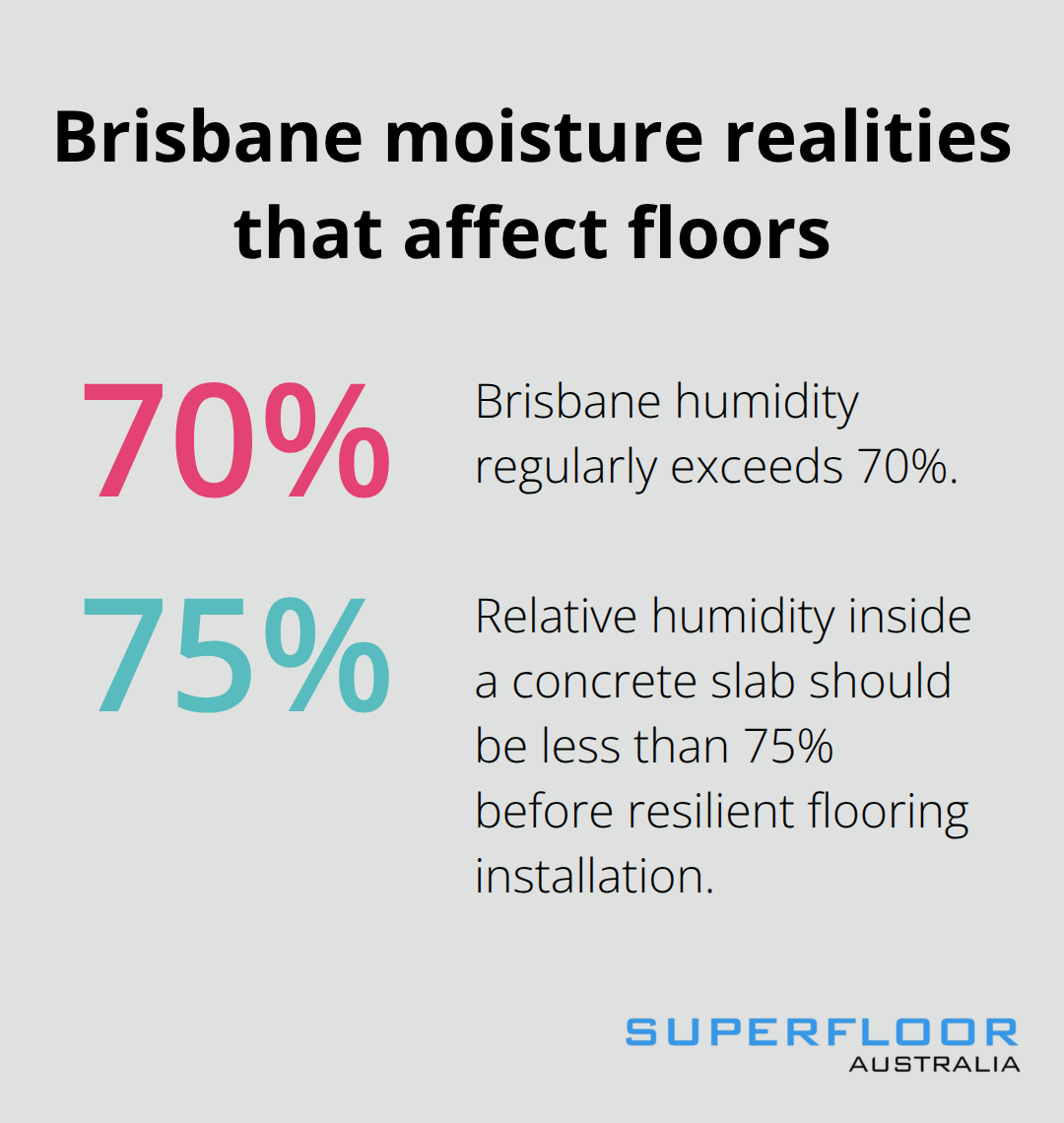
Moisture management in Brisbane’s climate is not optional-it’s the single most important factor in floor longevity.
Subfloor Flatness Prevents Joint Failure
Uneven concrete surfaces telegraph through thin vinyl planks and hybrid flooring, creating visible imperfections and stress points where joints fail. A straight edge across your floor reveals high and low spots that look invisible to the eye. Concrete with variations greater than 3mm over a 3-metre span needs grinding and levelling before any flooring goes down. Skipping this step means creaks, clicks, and gaps appear within months as the floor settles unevenly.
Professional Preparation Creates a Surgical-Grade Foundation
Old coatings, contaminants, and surface irregularities all compromise the bond between concrete and new finishes. Professional floor preparation removes these obstacles and creates a stable base that supports whatever finish you choose for the next 15 to 20 years. The right preparation method depends on your specific flooring type and Brisbane’s moisture conditions-which is why the next section covers the essential steps that protect your investment.
Getting Your Concrete Ready for Installation
Start with a straight edge across your entire floor. Place a 3-metre steel straight edge flat against the concrete and measure gaps underneath. Anything larger than 3mm means grinding and levelling are non-negotiable before flooring goes down. Most Brisbane property owners skip this step because the surface looks flat to the eye, but hidden undulations cause joint failure in glue-down luxury vinyl plank and SPC hybrid floors within months. Subfloor flatness determines whether your floor lasts 15 years or becomes a creaking, clicking liability.
Understand Concrete Surface Profile Standards
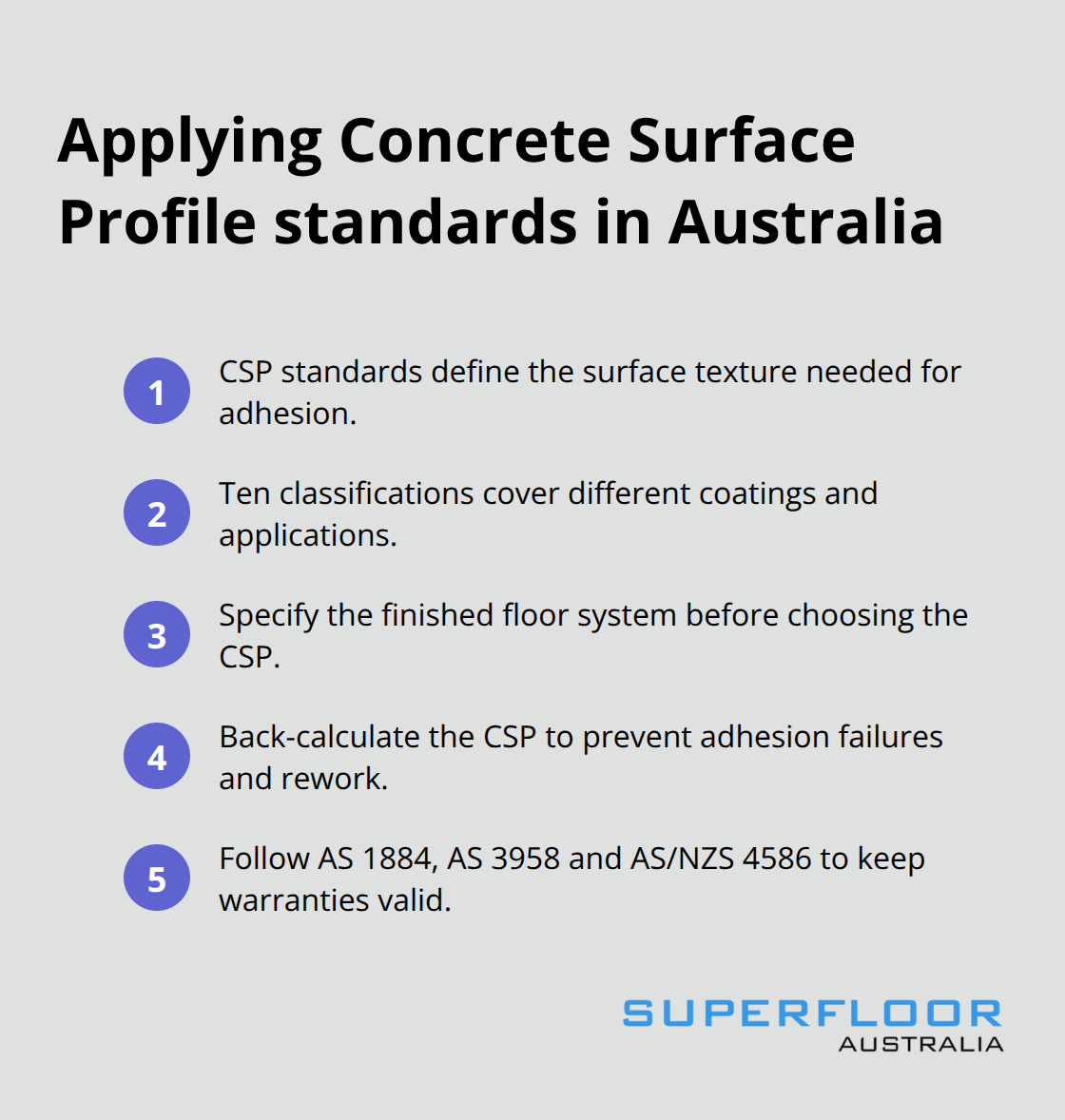
Concrete Surface Profile (CSP) standards define the exact surface texture needed for adhesive bonding. These standards are divided into ten classifications (CSP 1-10) that suit different applications and coating types. Specify your finished floor system first, then back-calculate the required CSP to prevent adhesion failures and costly rework. Australian Standards AS 1884, AS 3958, and AS/NZS 4586 mandate these specifications, and skipping them voids warranties with most manufacturers.
Strip Old Coatings and Contaminants
Old epoxy, paint, sealers, and contaminants must go completely. Grinding removes these obstacles and creates the mechanical profile that new adhesives grip. Diamond grinding handles thin epoxy and sealers efficiently. Shot blasting reaches deeper for industrial coatings. Scarifying strips thick overlays and prepares surfaces for bonded toppings. Each method targets a specific CSP outcome, so matching the right technique to your floor type prevents rework and delays.
Control Dust and Protect Air Quality
Dust-controlled preparation with H-class HEPA extraction protects indoor air quality and meets silica safety requirements. Uncontrolled dust during grinding spreads contaminants throughout your property and creates health hazards for workers and occupants. Professional dust control systems capture particles at the source, leaving your space clean and safe for the next phase of work.
Test Moisture Before Final Finishing
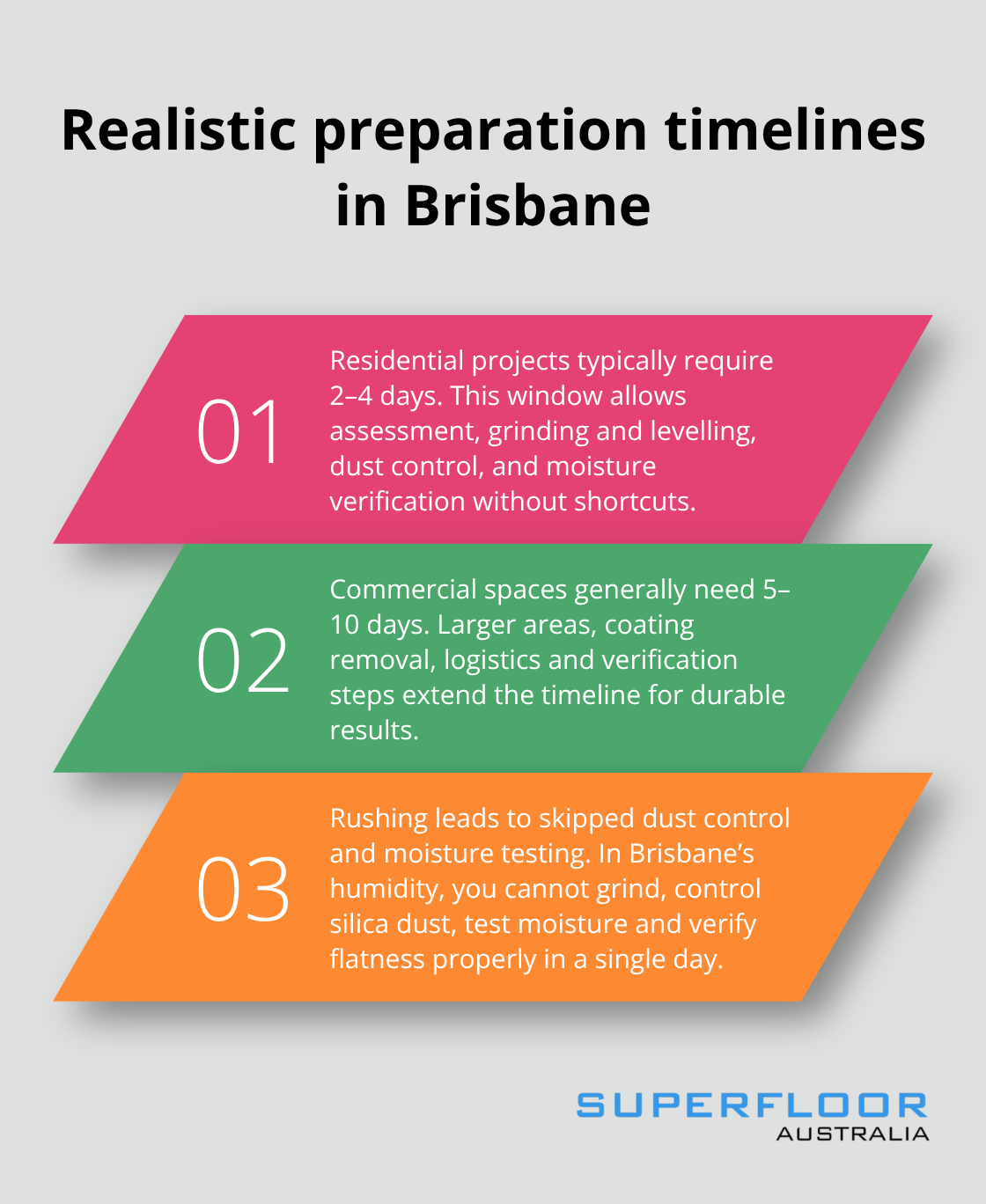
Moisture testing happens before final finishing because trapped moisture beneath coatings causes delamination and blistering. Concrete moisture content should be tested to ensure it meets acceptable levels before any resilient flooring installation. Brisbane’s humidity regularly exceeds 70%, so testing is not optional. A floor that delaminates two years after installation costs three to five times more to fix than getting preparation right initially. Typical residential projects take 2–4 days depending on floor size and contamination levels. Commercial spaces often need 5–10 days. Professional assessment, equipment selection, progressive grinding, dust control, and final verification before handover all factor into your timeline and budget.
The next section covers the mistakes that derail floor preparation projects and how to spot them before they become expensive problems.
Common Floor Preparation Mistakes That Cost Thousands
Most Brisbane property owners underestimate what happens during preparation because they cannot see the real work. The mistakes made in this phase do not announce themselves immediately-they emerge as creaks, clicks, blistering, and delamination months or years after installation. The most expensive errors share one thing in common: they skip the testing and assessment steps that reveal whether a concrete floor is actually ready for finishing.
Surface Analysis Determines Everything
A straight edge across your concrete takes five minutes. Skipping this step costs thousands. Surface analysis reveals flatness problems and moisture issues that visual inspection cannot detect. Without measurement, you never identify whether a concrete floor meets the standards required for your flooring type. Property owners often assume a concrete slab that looks dry is actually dry, but this assumption leads to failures within two years.
Moisture testing before final finishing is equally non-negotiable in Brisbane’s climate. Concrete moisture content must be verified before any resilient flooring goes down because trapped moisture beneath coatings causes delamination, requiring complete removal and re-preparation at three to five times the original cost. The relative humidity inside a concrete slab should measure less than 75% for most resilient flooring installations. Without this test, you gamble with thousands of dollars on a finish that may fail.
Equipment Selection Determines Project Success
Equipment selection matters more than most contractors admit. A diamond grinder handles thin epoxy and sealers efficiently, while shot blasting reaches deeper for industrial coatings and completes heavy jobs in half the time. Conversely, shot blasting on thin epoxy over-profiles the surface and creates unnecessary expense. The right equipment matches the specific Concrete surface profiles outcome your flooring type requires (CSP 1–3 for thin coatings, CSP 4–6 for high-build systems, CSP 7–9 for overlays and repairs).
Selecting the wrong tool wastes time and money while delivering poor results. Professional contractors assess your concrete first, then choose equipment that targets your specific CSP requirements rather than applying a one-size-fits-all approach.
Timeline Pressure Creates Quality Problems
Rushing preparation is the third killer mistake. Typical residential projects need 2–4 days, and commercial spaces require 5–10 days. Contractors who promise faster timelines either cut corners on dust control, skip moisture testing, or under-prepare the surface. You cannot grind concrete properly, control silica dust with H-class HEPA extraction, test moisture levels, and verify surface flatness in one day.
Brisbane’s humidity and temperature swings demand respect during preparation. Moisture management is not an afterthought-it determines whether your floor survives the next decade or becomes a liability within months. Adequate time allows professionals to assess your concrete thoroughly, select equipment that matches your specific floor type, control dust safely, and test moisture before final finishing.
Final Thoughts
Professional floor preparation separates floors that last 15 years from those that fail within months. We at Superfloor Australia have completed thousands of Brisbane projects, and the pattern is clear: property owners who invest in proper preparation avoid costly rework, while those who cut corners face delamination, blistering, and complete removal within two years. Moisture testing catches hidden water before it destroys your finish, surface analysis with a straight edge reveals flatness problems that visual inspection misses, and equipment selection ensures the right technique reaches the correct Concrete Surface Profile for your flooring type.
Your next move is straightforward: measure your concrete with a straight edge across the entire floor, test moisture levels before any finishing work starts, and assess whether your existing surface has old coatings, contaminants, or flatness problems that need addressing. These three actions take a few hours and reveal exactly what your floor needs. We at Superfloor Australia handle preparation with precision and expertise tailored to your specific flooring type, delivering high-quality results that enhance both aesthetics and durability.
Contact Superfloor Australia for a free assessment of your Brisbane floor. Our floor preparation Brisbane guide approach starts with thorough assessment, moves through professional grinding and levelling, controls dust with H-class HEPA extraction, and finishes with moisture testing before your final floor goes down. The investment in preparation now prevents thousands in repairs later.