

Concrete surfaces in Brisbane take a beating from the sun, rain, and constant use. Over time, cracks, stains, and wear become unavoidable.
The good news is that Brisbane concrete resurfacing options can transform tired surfaces without a complete replacement. At superfloor australia, we’ve helped countless property owners restore their concrete to look and perform like new.
What Damages Brisbane Concrete Most
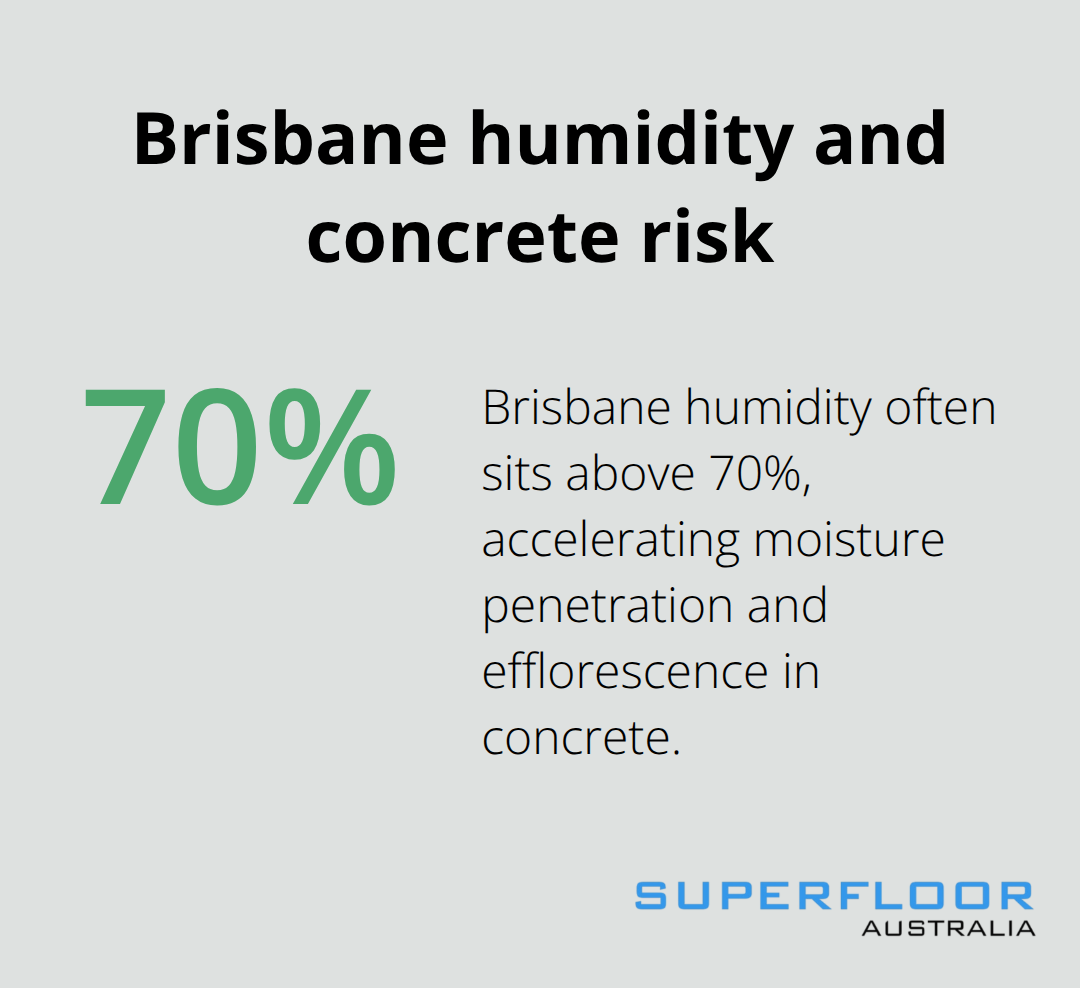
Brisbane’s subtropical climate creates a perfect storm for concrete deterioration. The sun’s UV rays break down the cement binder, causing fading and surface softening within just a few years of exposure. Queensland’s intense summer heat-often exceeding 30°C-expands concrete, while heavy monsoon rains cool it rapidly, triggering stress cracks that widen over time. Humidity levels regularly climb above 70%, accelerating moisture penetration that leads to efflorescence, the white powdery bloom that appears when salts migrate to the surface. High-traffic areas like driveways and commercial entryways experience accelerated wear; concrete typically loses 2–3mm of surface thickness annually under constant vehicle or foot traffic, particularly in areas exposed to oils, chemicals, or salt spray near coastal properties.
UV and Weather Impact on Concrete Lifespan
Unsealed concrete in Brisbane shows visible wear within 3–5 years, with UV degradation and moisture damage leading the charge. The sun’s ultraviolet radiation breaks chemical bonds in the concrete matrix, weakening the top 5–10mm of material. Temperature cycling and micro-fractures expand into visible cracks. Moisture trapped beneath the surface causes concrete to spall, where chunks of material flake away and expose deeper layers to further damage. Resurfacing addresses this by applying a protective barrier that blocks UV penetration and seals out moisture, extending the concrete’s functional life by 10–15 years when properly maintained.
Traffic Wear and Chemical Damage
Driveways and commercial floors in high-traffic zones deteriorate faster because repeated loading compresses the concrete and opens micro-cracks. Vehicle tyres deposit oils and brake dust that stain concrete and weaken adhesion, while garages exposed to petrol spills or industrial spaces with chemical exposure face accelerated breakdown. Chloride from road salt corrodes internal reinforcement, causing structural weakening. Resurfacing with epoxy or microcement systems creates a hard, chemical-resistant top layer that prevents these substances from reaching the base concrete and protects the underlying structure for decades.
Moisture and Salt Damage in Brisbane’s Climate
Efflorescence-that white powdery coating-signals that water has penetrated your concrete and salts have migrated to the surface. Brisbane’s high humidity (often above 70%) accelerates this process, particularly in coastal areas where salt spray adds extra chloride exposure. Once moisture reaches the concrete’s interior, it triggers spalling, corrosion of reinforcement, and structural weakening that spreads rapidly.
Professional resurfacing systems seal out moisture before it causes irreversible damage, protecting your investment and preventing costly repairs down the track.
Understanding these damage mechanisms helps you recognise when resurfacing becomes the smart choice over waiting for problems to worsen. The next section explores the resurfacing methods available to restore your Brisbane concrete surfaces.
Resurfacing Methods That Transform Brisbane Concrete
Polished Concrete for a Sleek Modern Finish
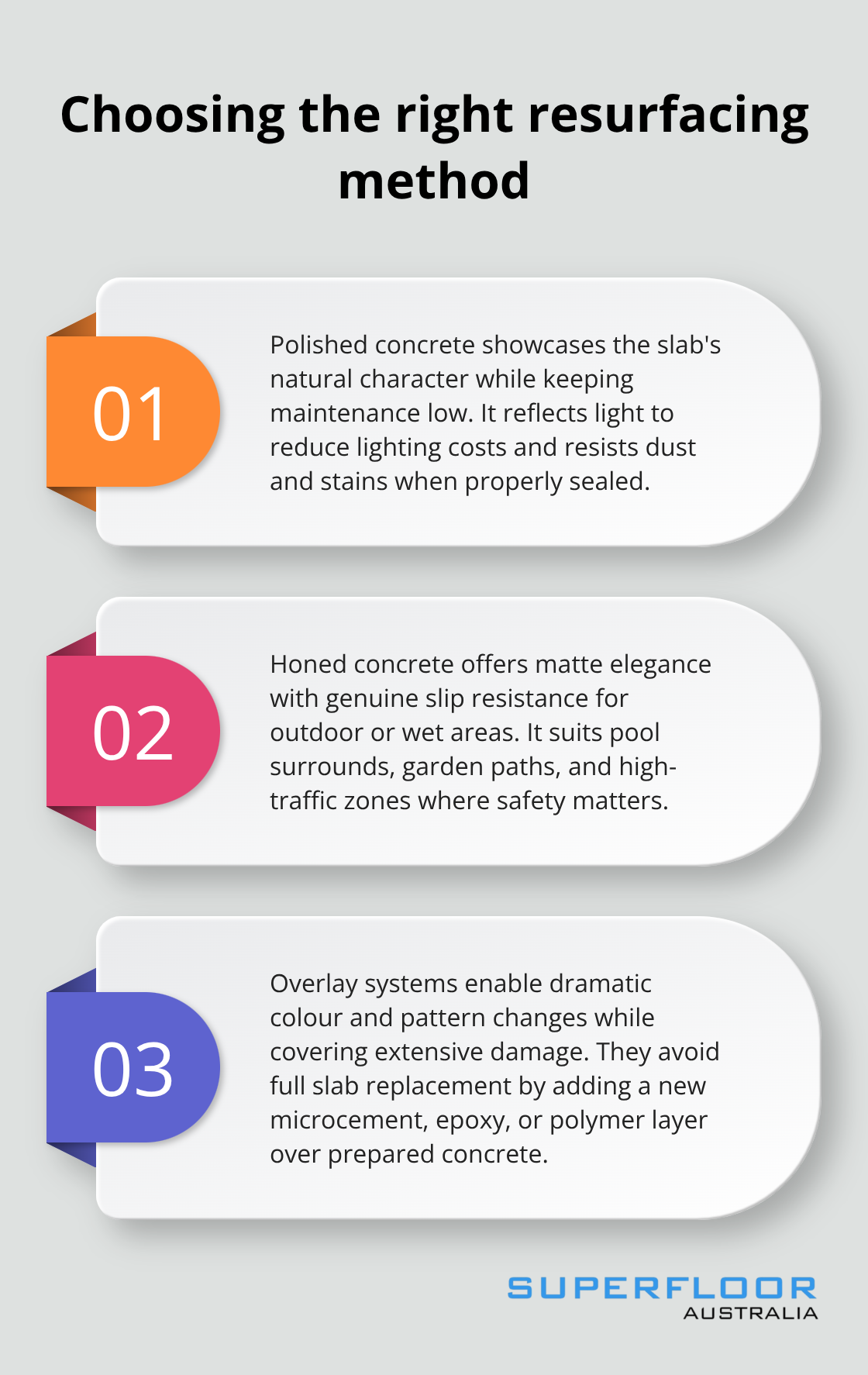
Polished concrete delivers a sleek, modern aesthetic that works across homes, commercial spaces, and industrial facilities. The polishing process grinds the concrete progressively finer, typically starting with coarse 30-grit diamonds and advancing through finer grits up to 3000-grit for mirror-like finishes, to expose aggregates and create a high-gloss finish that reflects light and improves visibility in commercial settings. This approach suits Brisbane properties because the reflective surface reduces lighting costs, and the sealed finish prevents UV damage and moisture penetration that would otherwise cause deterioration. Polished concrete typically lasts 10–15 years with proper sealing every 2–3 years, and reseal costs run significantly lower than reapplying overlay systems. The dust, stain, and allergen-resistant surface requires minimal maintenance, making it ideal for low-maintenance and allergy-friendly environments.
Honed Concrete for Matte Elegance and Safety
Concrete honing offers an alternative when you want the elegance of polished concrete without the glossy shine. Honing reveals aggregate and creates a matte, textured surface that suits both indoor and outdoor spaces. For pool surrounds and garden areas, honed concrete provides genuine slip resistance without coating layers, meeting safety requirements while maintaining aesthetic appeal. This method works particularly well in Brisbane’s climate, where slip resistance matters around water features and high-traffic outdoor zones.
Overlay Systems for Complete Transformation
Overlay systems take a different approach entirely: they apply microcement, epoxy, or polymer layers directly over existing concrete to completely transform the surface. Microcement finishes like X-Bond start from $200 + GST per m² for floor installations, bond chemically to prepared substrates and work indoors and outdoors, even over underfloor heating systems. Epoxy overlays deliver flake or metallic finishes with full customisation, though they perform better in controlled indoor environments and require professional application to cure properly.
Cost Comparison and Installation Process
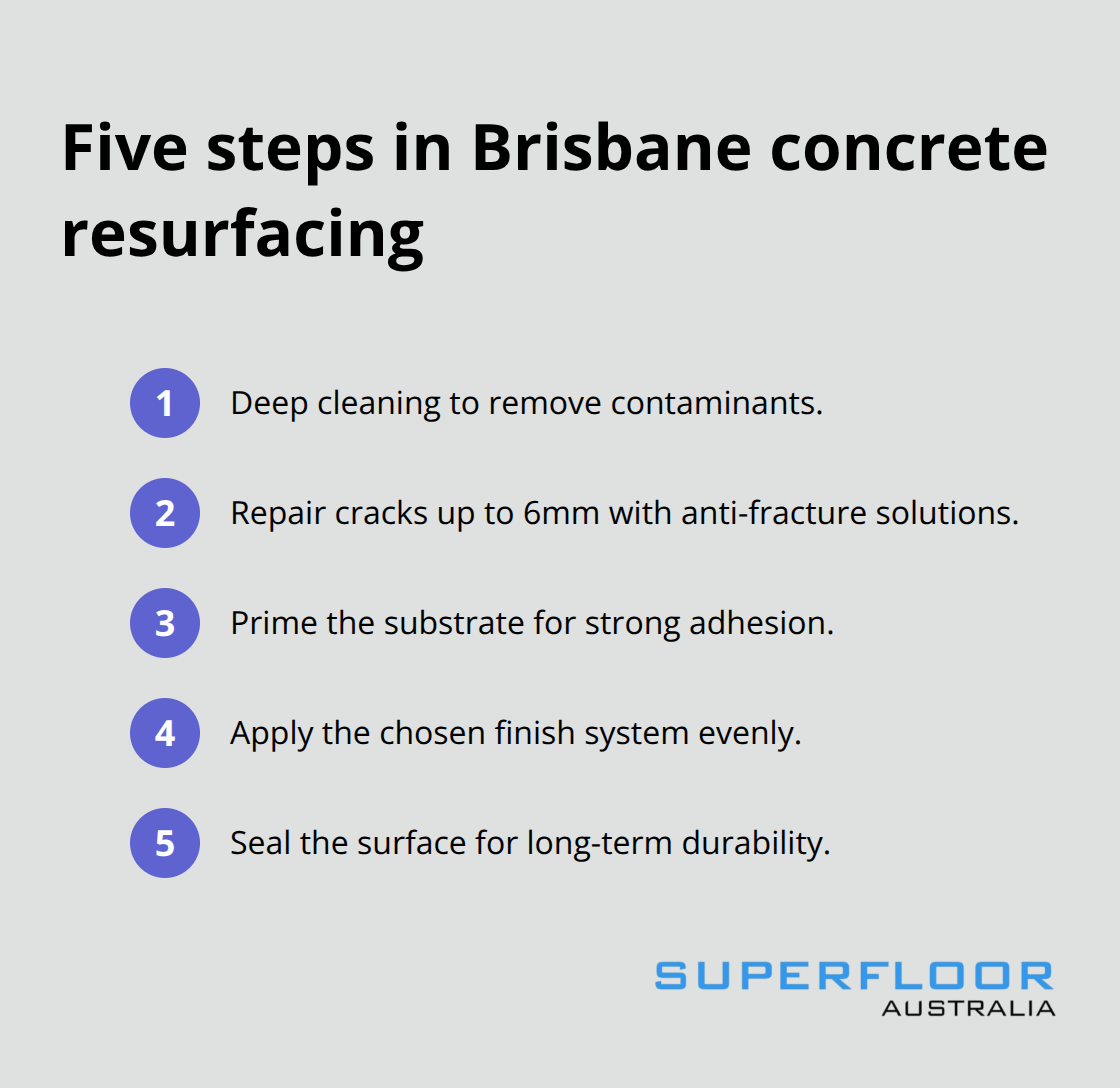
Concrete resurfacing costs in Brisbane range from 65–100 dollars per square metre depending on surface preparation, finish selection, and site conditions. Overlay methods cost less than full demolition and replacement, which can exceed 150 dollars per square metre, making resurfacing the financially smart choice for most Brisbane properties. The resurfacing process involves five steps: deep cleaning to remove contaminants, repairing cracks up to 6mm with anti-fracture solutions, priming the substrate for adhesion, applying your chosen finish system, and sealing for durability.
Selecting Your Ideal Resurfacing Method
Polishing works best when you want to showcase the concrete’s natural character and minimise long-term maintenance. Honing suits slip resistance and matte elegance in outdoor or wet areas. Overlay systems handle extensive damage or dramatic colour and pattern changes without replacing the entire slab.
Your choice depends on the current condition of your concrete, the look you want to achieve, and how much you’re willing to spend on installation and ongoing care. Once you’ve identified which method fits your needs, assessing your specific surface condition becomes the next critical step.
Matching Your Concrete to the Right Solution
Assess Damage Level and Surface Condition
Walk the damaged area in daylight and document what you see. Hairline cracks under 6mm respond well to DIY anti-fracture solutions before sealing, which saves hundreds on professional work. Cracks wider than 6mm, spalling chunks, or widespread staining signal that overlay systems or polishing become necessary because patching alone won’t hold. Take photos from multiple angles and note whether damage clusters in high-traffic zones or spreads across the entire surface. Localised damage suggests the concrete’s base is sound and resurfacing will deliver 10–15 years of life, while pervasive cracking indicates the slab itself may be failing and requires professional assessment before you commit to any method. If uncertainty remains, contact a professional who can inspect the site and tell you exactly what’s salvageable and what isn’t.
Match Aesthetics to Your Functional Needs
Polished concrete delivers a sleek, modern look that works for homes, retail spaces, and commercial floors, but it requires resealing every 2–5 years at roughly $3–8 per square metre to maintain the gloss and protection. Honed concrete eliminates the shine and provides genuine slip resistance without additional coatings, making it the smarter choice for pool surrounds, garden paths, or outdoor zones where safety matters more than aesthetics. Overlay systems like microcement handle dramatic transformations-if your concrete is heavily stained, severely cracked, or you want a specific colour or pattern-but they cost $200+ per square metre for installation and demand professional application because improper prep leads to delamination within months.
Calculate Total Cost Over Time
Budget honestly: resurfacing runs $65–100 per square metre depending on prep work and finish, but full replacement exceeds $150 per square metre, so resurfacing almost always wins financially unless the slab is structurally unstable. Calculate your total spend (including sealing costs over the next decade), then decide which method delivers the look you want without stretching your budget beyond comfort. If you plan to sell within five years, resurfacing with polishing or microcement raises curb appeal and property value, making it a worthwhile investment. If you’re staying long-term, try the method that requires the least maintenance because you’ll live with it for years.
Final Thoughts
Brisbane concrete resurfacing options transform worn surfaces without the cost and disruption of full replacement. Polished concrete delivers a sleek, modern finish that reduces lighting costs through light reflection and demands minimal maintenance over 10–15 years. Honed concrete provides slip resistance and matte elegance for outdoor spaces and pool surrounds where safety matters most. Overlay systems like microcement handle severe damage and dramatic transformations, working indoors and outdoors even over underfloor heating systems. Each method costs significantly less than demolition-resurfacing runs $65–100 per square metre versus $150+ for replacement-making it the financially smart choice for most Brisbane properties.
Professional installation separates successful projects from costly failures. Improper surface preparation leads to delamination within months, while expert contractors repair cracks, prime substrates correctly, and allow finishes to cure properly. We at superfloor australia understand Brisbane’s climate demands precision, and our team delivers high-quality polished concrete and concrete honing with expert craftsmanship tailored to your needs. Whether you want a dust-resistant, allergen-free polished finish for your home or slip-resistant honed elegance for your garden, professional installation guarantees results that last.
Start by assessing your concrete’s current condition and deciding which finish matches your aesthetic and functional needs. Document damage with photos, calculate your total budget including sealing costs over the next decade, and contact superfloor australia for a professional assessment. We’ll inspect your site, explain exactly what’s salvageable, and recommend the resurfacing method that delivers the look you want within your budget.