

Polished concrete floors transform Brisbane homes and businesses, but pricing can feel overwhelming without proper guidance. At superfloor australia, we’ve helped hundreds of property owners understand Brisbane polished concrete costs and make informed decisions.
This guide breaks down exactly what influences your investment, from surface preparation to finish quality. You’ll learn real pricing ranges and how to get genuine value from your project.
What Really Drives Your Polished Concrete Price
The condition of your existing concrete slab is the single biggest factor determining your final bill. A slab with hairline cracks, old adhesive residue, or moisture issues requires extensive surface preparation work before polishing even begins. We’ve seen repair and prep costs push grind-and-seal pricing from around $50 per square metre up to $145 per square metre on damaged slabs. If your concrete shows signs of unevenness, staining, or previous coatings, a professional site assessment is non-negotiable-it’s the only way to avoid budget surprises later. Fresh, sound concrete requires minimal prep, which is why new pours typically cost less than existing slabs needing remediation.
How Project Size Affects Your Per-Square-Metre Cost
Project size per-square-metre pricing directly impacts your per-square-metre cost, and not always in the direction you’d expect. A 500-square-metre warehouse might cost $30,000 to $60,000 at commercial rates, but a small 20-square-metre bathroom often costs more per square metre due to setup and mobilisation expenses. Smaller areas under 100 square metres cost significantly more per square metre due to equipment setup time and detailed edge work requirements. Bundling multiple areas into one job significantly reduces your per-square-metre cost, so if you’re considering polishing both your living room and entryway, schedule them together.
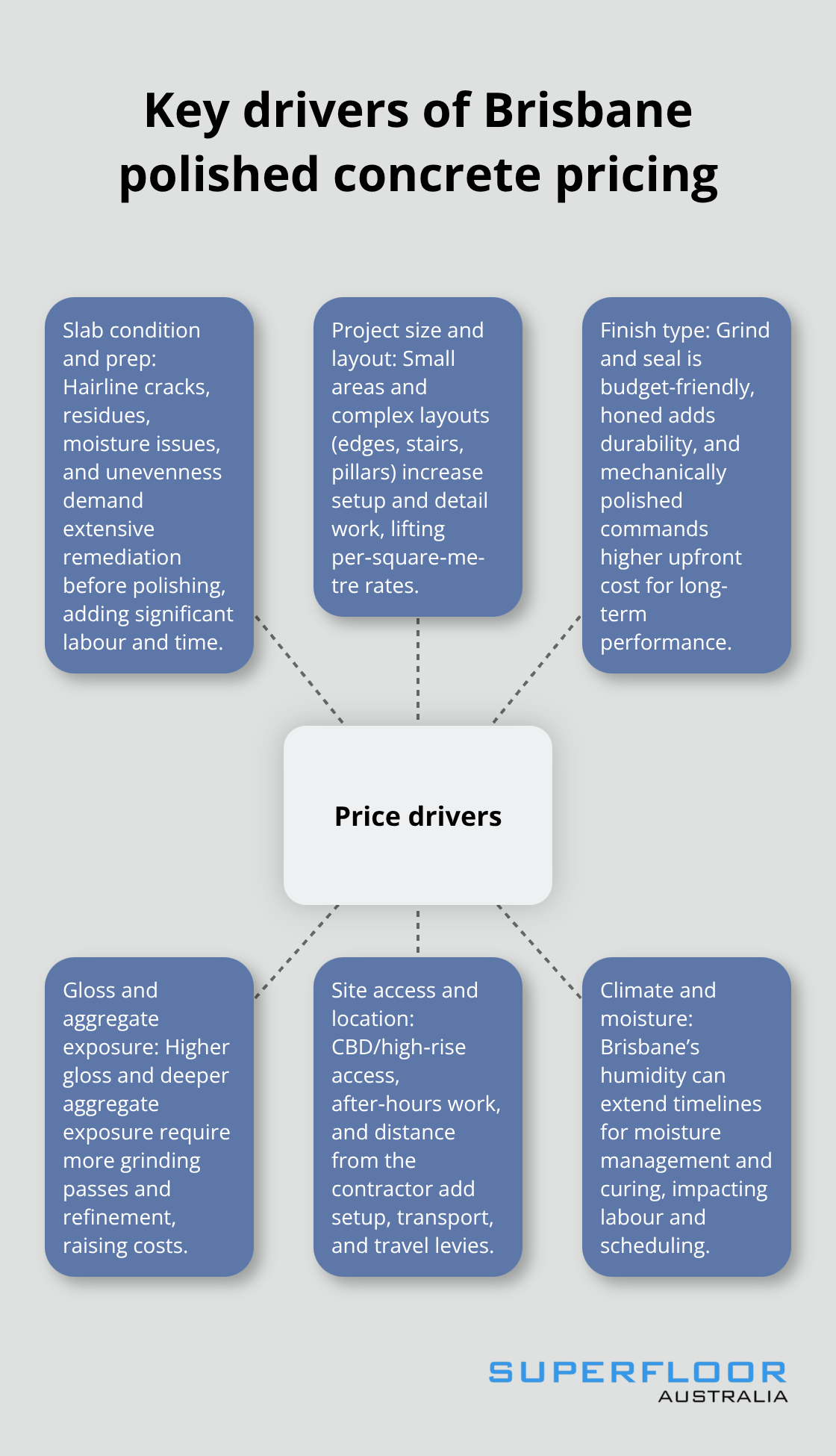
Complex layouts with stairs, pillars, or intricate edges add labour hours and specialised techniques that increase pricing beyond simple open-plan spaces.
Finish Type Sets Your Baseline
Your finish choice establishes the foundation of your quote. Grind and seal, the most budget-conscious option at around $50 per square metre, involves a non-penetrating sealer but requires refinishing every 5 to 10 years. Honed concrete costs approximately $75 per square metre and uses a penetrating sealer for greater durability than grind and seal. Mechanically polished concrete starts at $100 per square metre and involves multiple grinding steps with finer grits plus a densifier, delivering a long-lasting, glossy finish that outperforms both cheaper alternatives. Your choice here determines not just upfront cost but maintenance frequency and longevity over the next decade.
Gloss Level and Aggregate Exposure
Higher gloss finishes demand more polishing passes and refinement labour, pushing costs upward. A cream polish with nil stone exposure is the least labour-intensive and most affordable, while full stone exposure requiring deeper grinding costs substantially more because each aggregate level demands additional grinding steps. Salt and pepper exposure falls in the middle range. Brisbane’s humid subtropical climate means moisture management during polishing becomes critical, potentially extending project timelines and labour costs if environmental conditions aren’t ideal during application.
Site Access and Location Factors
Accessibility influences your price significantly-CBD sites, high-rise buildings, or locations requiring after-hours work incur additional setup, transport, and labour charges that can add 10 to 20 per cent to your total investment. Travel distance from your contractor’s base also matters, as fuel and travel levies apply to jobs beyond a certain radius. Difficult site access (narrow doorways, multiple levels, or confined spaces) requires more time and specialised equipment, further increasing your final quote.
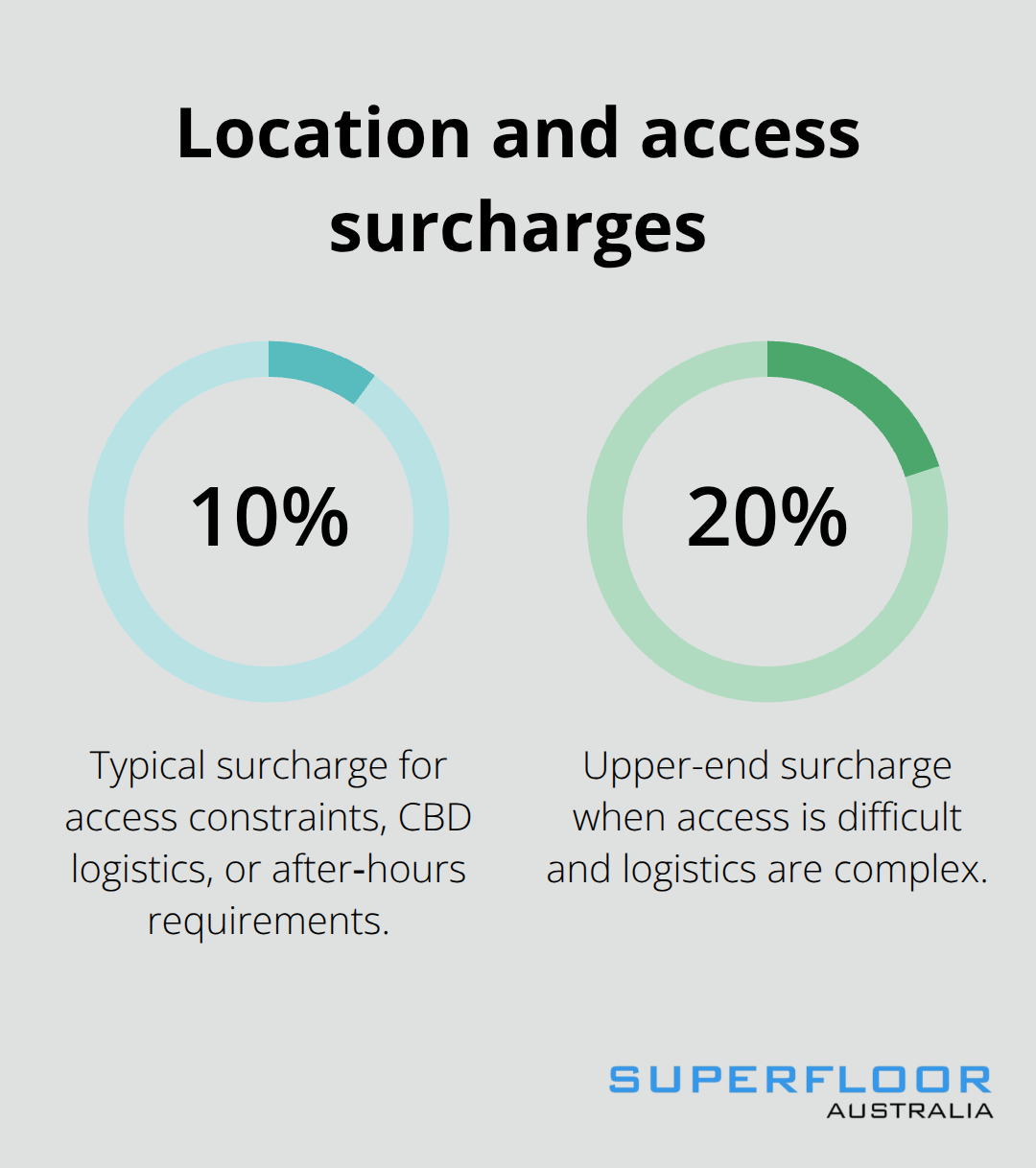
Understanding these location-based costs helps you anticipate the true scope of your investment before you commit.
With these pricing drivers mapped out, you’re ready to see what actual costs look like across different property types and project scales in Brisbane.
What You’ll Actually Pay for Polished Concrete in Brisbane
Residential Polished Concrete Pricing
Residential polished concrete costs between $50 and $65 per square metre in Brisbane, though this range shifts significantly based on the factors we’ve covered. A 20-square-metre living room at these rates lands between $1,000 and $1,300, while a double garage requiring grind-and-seal runs $2,500 to $3,500 depending on slab condition. Small spaces like bathrooms or entryways often exceed the upper end of per-square-metre pricing despite lower total costs because edge work and detailed preparation consume disproportionate labour time.
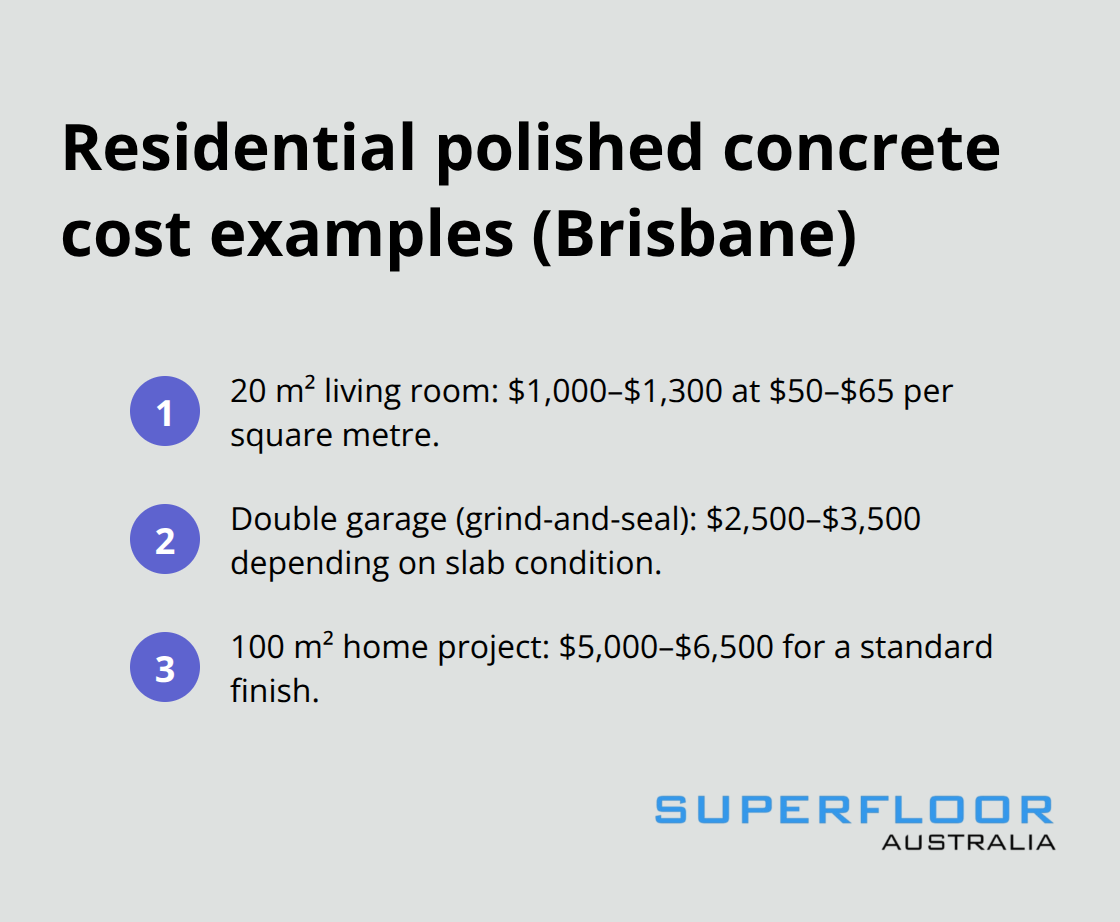
A 100-square-metre home project typically costs $5,000 to $6,500 for a standard finish, but add complex layouts or significant surface repairs and you’ll pay the higher end or beyond. Residential projects under 50 square metres almost always cost more per square metre than larger spaces, so if you’re considering multiple rooms, polishing them simultaneously cuts your per-square-metre expense substantially.
Finish Type and Long-Term Costs
Your finish choice directly affects both upfront expense and total cost of ownership. Mechanically polished finishes at the premium end deliver superior longevity, often lasting more than 10 years, while grind-and-seal requires refinishing every 5 to 10 years-a factor that meaningfully affects your total investment over two decades. This distinction matters far more than the initial price difference suggests.
Commercial and Industrial Pricing
Commercial and industrial spaces operate under different economics entirely, ranging from $60 to $120 per square metre because durability standards are higher and logistics prove more complex. A 500-square-metre warehouse typically costs $30,000 to $60,000 at these commercial rates, with larger projects benefiting from economies of scale that lower per-square-metre pricing. High-traffic retail or hospitality venues demand mechanically polished finishes rather than budget options, immediately pushing you toward the $100-plus-per-square-metre range.
Customisation and Hidden Costs
Additional customisation-staining, coloured concrete, or decorative aggregate exposure-adds $7 to $12 per square foot on top of base polishing costs. Sealing, often overlooked in initial quotes, typically costs $3 to $8 per square metre and proves essential for longevity; a quality sealer extends surface life and reduces maintenance expenses over time. Long-term maintenance budgets should account for repolishing every 5 to 10 years at $10 to $20 per square metre and resealing every 2 to 5 years at the same $3-to-$8 range.
Hidden costs emerge frequently: generator rentals for sites lacking proper power infrastructure run $100 to $200 daily, waste removal adds significantly if you don’t provide your own skip, and difficult access can inflate total costs by 10 to 20 per cent. Request a detailed written quote specifying surface preparation scope, moisture management approach, dust control measures, and all exclusions before you commit-this protects your budget and prevents unpleasant surprises mid-project.
Understanding these actual costs positions you to make smart decisions about which finish level delivers the best value for your specific situation and timeline.
How to Get the Best Value for Your Polished Concrete Investment
Compare Quotes from Multiple Local Providers
Comparing quotes from three to five local providers isn’t optional-it’s the only way to understand what genuine value looks like in your market. When you request quotes, specify identical project parameters across all contractors: exact square metreage, current slab condition, desired finish type, and gloss level. A detailed quote should break down surface preparation costs separately from polishing labour, sealing expenses, and any travel or equipment fees. If one quote sits dramatically below the others, that’s a red flag-contractors underbidding usually cut corners on surface prep or use inferior sealers that fail within 2 to 3 years.
Ask each provider for portfolio photos of completed projects, client references you can contact directly, and proof of insurance and licensing. A contractor willing to schedule a site visit before quoting takes their work seriously; quotes issued without seeing your slab typically hide nasty surprises. Once you’ve gathered all quotes, compare not just the total price but the timeline, crew size, and what happens if unexpected damage emerges during the job. The cheapest option rarely delivers the best value over the life of your floor.
Understand What’s Included in Your Quote
Your written quote must specify whether surface preparation, crack repair, moisture testing, dust control measures, and protective coverings for adjacent areas are included or charged separately. Ask directly how control joints and transitions to other flooring types are handled-poor joint work undermines the entire installation. Clarify whether the quoted price includes the sealer application, as some contractors treat this as an add-on. Request specifics on the sealing product being used; penetrating sealers cost more but outlast non-penetrating options significantly.
Hidden costs emerge frequently: generator rentals for sites lacking proper power infrastructure run $100 to $200 daily, waste removal adds significantly if you don’t provide your own skip, and difficult access can inflate total costs by 10 to 20 per cent. Request a detailed written quote specifying surface preparation scope, moisture management approach, dust control measures, and all exclusions before you commit-this protects your budget and prevents unpleasant surprises mid-project.
Plan for Long-Term Maintenance and Care
Mechanically polished floors lasting 10 years cost far less per year than grind-and-seal requiring refinishing every 2 to 10 years, despite higher upfront pricing. Budget $10 to $20 per square metre for repolishing when gloss fades and $3 to $8 per square metre for resealing every 2 to 10 years depending on foot traffic and sealer quality. High-traffic commercial spaces need resealing more frequently; residential living areas typically stretch longer between applications.
Clean regularly with a microfiber mop and pH-neutral cleaner designed for polished concrete-acidic or abrasive products dull the finish and damage the sealer. Use felt pads under furniture and place protective mats at entryways to reduce scratching. These simple practices extend your floor’s lifespan and maintain its appearance without significant expense. When unexpected damage emerges during the job, your written agreement should specify how costs are handled and who makes decisions about remediation scope.
Final Thoughts
Brisbane polished concrete costs range from $50 per square metre for grind-and-seal finishes to $100-plus for mechanically polished options, but your slab condition, project size, finish type, and site accessibility shift this baseline dramatically. Surface preparation expenses often exceed the polishing itself on damaged slabs, while smaller projects under 100 square metres consistently cost more per square metre than larger installations. Your finish choice determines not just upfront expense but maintenance frequency over the next decade-mechanically polished floors lasting 10 years deliver far better value than budget options requiring refinishing every 5 years, despite higher initial pricing.
Quality installation protects your budget far more effectively than chasing the lowest quote, as contractors who cut corners on surface preparation or use inferior sealers create expensive problems within 2 to 3 years. A detailed written quote specifying surface prep scope, moisture management, sealing products, and all exclusions prevents hidden costs from derailing your budget mid-project. Professional site assessments before quoting reveal potential complications early, allowing you to make informed decisions rather than discovering surprises after work begins.
Requesting quotes from three to five local providers using identical specifications, verifying insurance and licensing, and reviewing portfolio photos of completed work all position you to select the right contractor for your needs. Once you’ve selected your provider, establish a maintenance schedule-regular cleaning with pH-neutral products, resealing every 2 to 5 years, and protective measures like felt pads under furniture extend your floor’s lifespan and maintain its appearance without significant ongoing expense. Contact Superfloor Australia today to discuss your Brisbane polished concrete project and receive a detailed quote that protects your investment.