

Brisbane polished concrete has become the go-to choice for property owners who want a floor that actually works for their lifestyle. It’s durable, looks sharp, and won’t drain your wallet like traditional flooring options.
At superfloor australia, we’ve seen firsthand how polished concrete transforms spaces across Brisbane-from family homes to busy commercial offices. This guide walks you through why it’s the smart choice for Queensland properties.
Why Polished Concrete Outperforms Other Brisbane Flooring
The Maintenance Advantage That Actually Matters
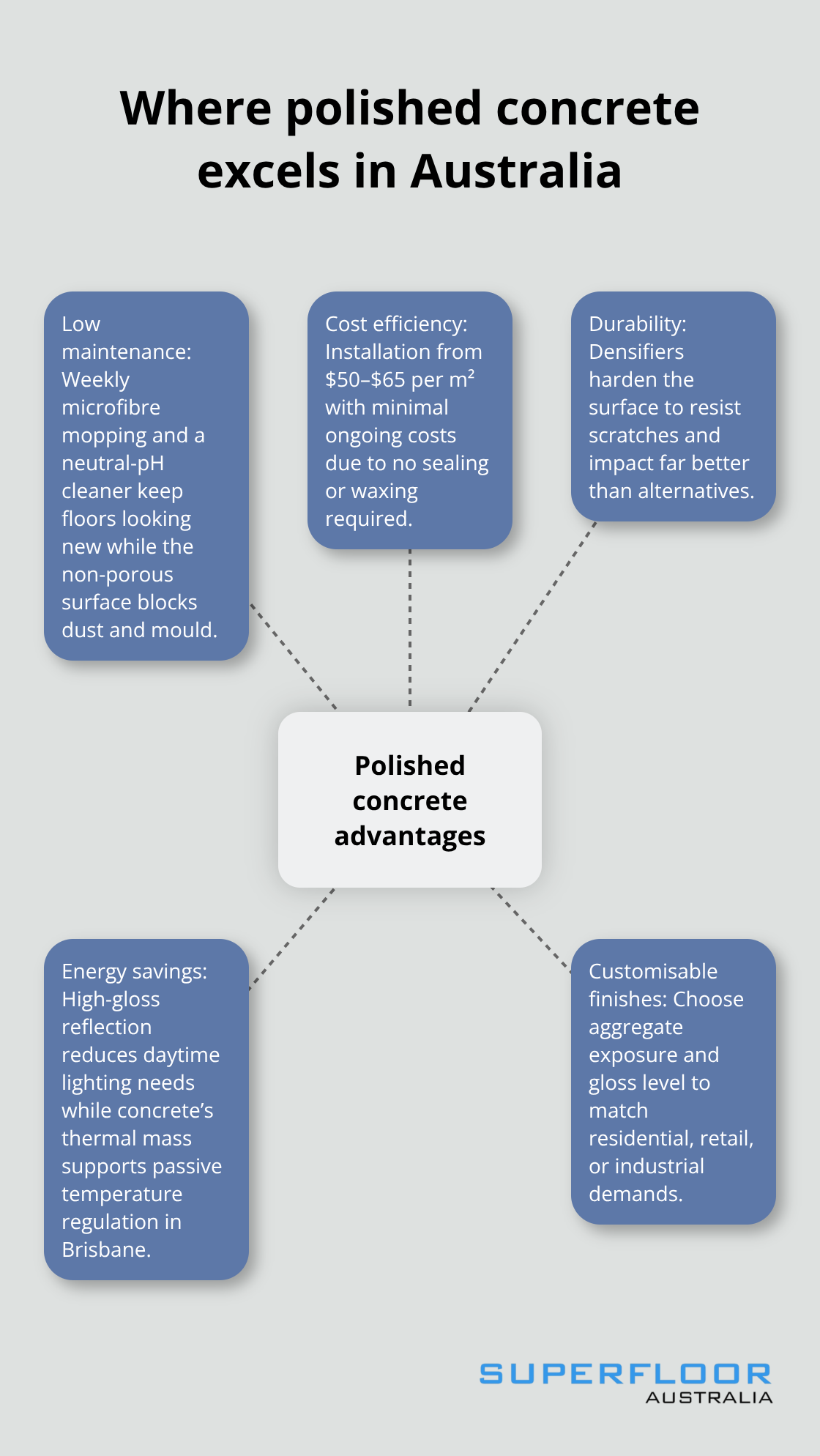
Polished concrete wins the maintenance game because it strips away everything that makes other floors frustrating. You won’t vacuum up dust clouds every week or deal with water stains that set permanently into grout lines. The non-porous surface prevents mould and allergens from embedding themselves into your floor-a real benefit if anyone in your home struggles with allergies or respiratory sensitivities. Most homeowners clean polished concrete with nothing more than a microfiber mop and neutral-pH cleaner, taking maybe ten minutes per week.
Hardwood floors demand regular refinishing, tile grout requires constant scrubbing, and carpet needs professional cleaning every few months. The densifier applied during polishing closes the concrete’s pores, so spills sit on the surface rather than soaking in and staining. You actually have time to wipe up accidents instead of watching them become permanent marks.
Installation and Long-Term Costs
Polished concrete typically ranges between $50 and $65 per square metre to install, often cheaper than quality hardwood or ceramic tile. Once installed, your maintenance costs drop to nearly zero because no sealing, waxing, or special treatments are required. Polished concrete floors last ten years or more with proper care, and since you use your existing concrete slab rather than replacing it, you avoid the waste and expense of removal.
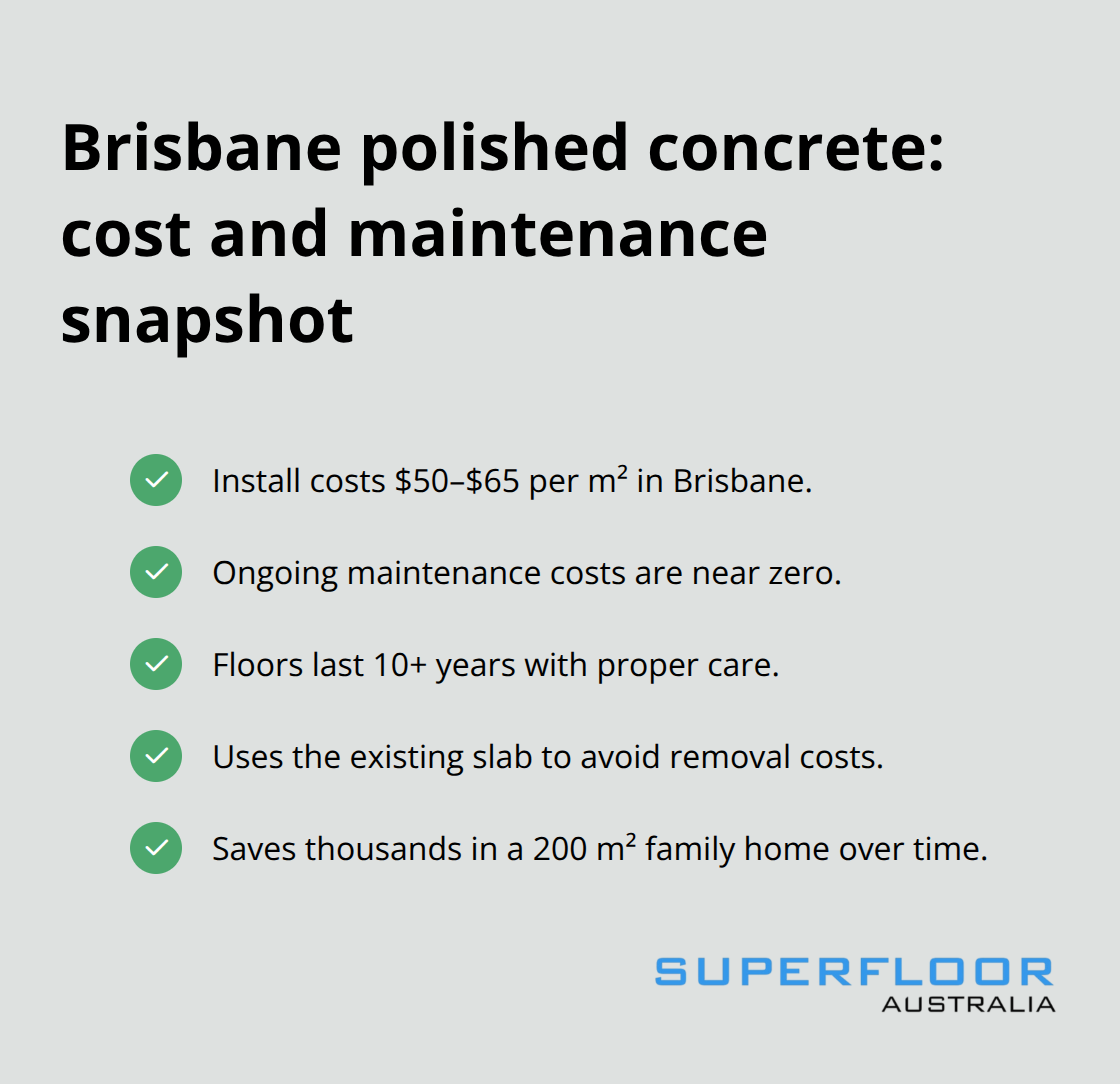
A family living in a 200-square-metre home with polished concrete saves thousands compared to replacing traditional flooring every five to seven years or maintaining carpet and tile monthly.
Energy Efficiency and Climate Performance
The high-gloss finish reflects light effectively, which reduces your reliance on artificial lighting during the day and genuinely lowers energy bills. In Brisbane’s climate, thermal mass of concrete absorbs and stores heat, supporting passive temperature regulation. These savings compound over years of ownership, making polished concrete a financially smart decision for Queensland properties.
The durability and low-maintenance nature of polished concrete create the foundation for spaces that perform as hard as you do. Understanding how different areas of your home or business benefit from this flooring type reveals where polished concrete truly shines.
Where Polished Concrete Performs Best
Polished concrete adapts to different demands without compromising on durability or appearance across residential, commercial, and industrial settings. The real value emerges when you match the finish to the specific demands of each environment. A family home needs something different from a retail showroom, which needs something entirely different from a warehouse floor. The patterns are clear: choosing the right aggregate exposure and gloss level for your space determines whether you get a floor that simply looks good or one that performs hard for years.
Residential Spaces Demand Low-Maintenance Elegance
Homes benefit most from high-gloss polished concrete because residential spaces prioritise aesthetics alongside practicality. A high-gloss finish in a 150-square-metre home creates the illusion of more space through light reflection, which matters in Brisbane’s variable weather patterns where maximising daylight reduces daytime lighting costs. Residential installations typically use either a Cream Finish or Salt and Pepper aggregate exposure, which complements modern interiors without overwhelming the space. The non-porous surface prevents dust accumulation, meaning allergy-prone households spend less time cleaning and more time living. Parents with young children particularly appreciate how quickly spills wipe away-no grout lines trap bacteria or stain permanently. Concrete curing takes 28 days before polishing begins, so plan your renovation timeline accordingly. Once complete, the floor requires nothing more than weekly microfiber mopping and immediate spill cleanup. The densifier applied during polishing closes the concrete’s pores, making the floor resistant to moisture and pet accidents, which directly impacts long-term maintenance costs and property value.
Commercial and Retail Environments Thrive with Customisable Finishes
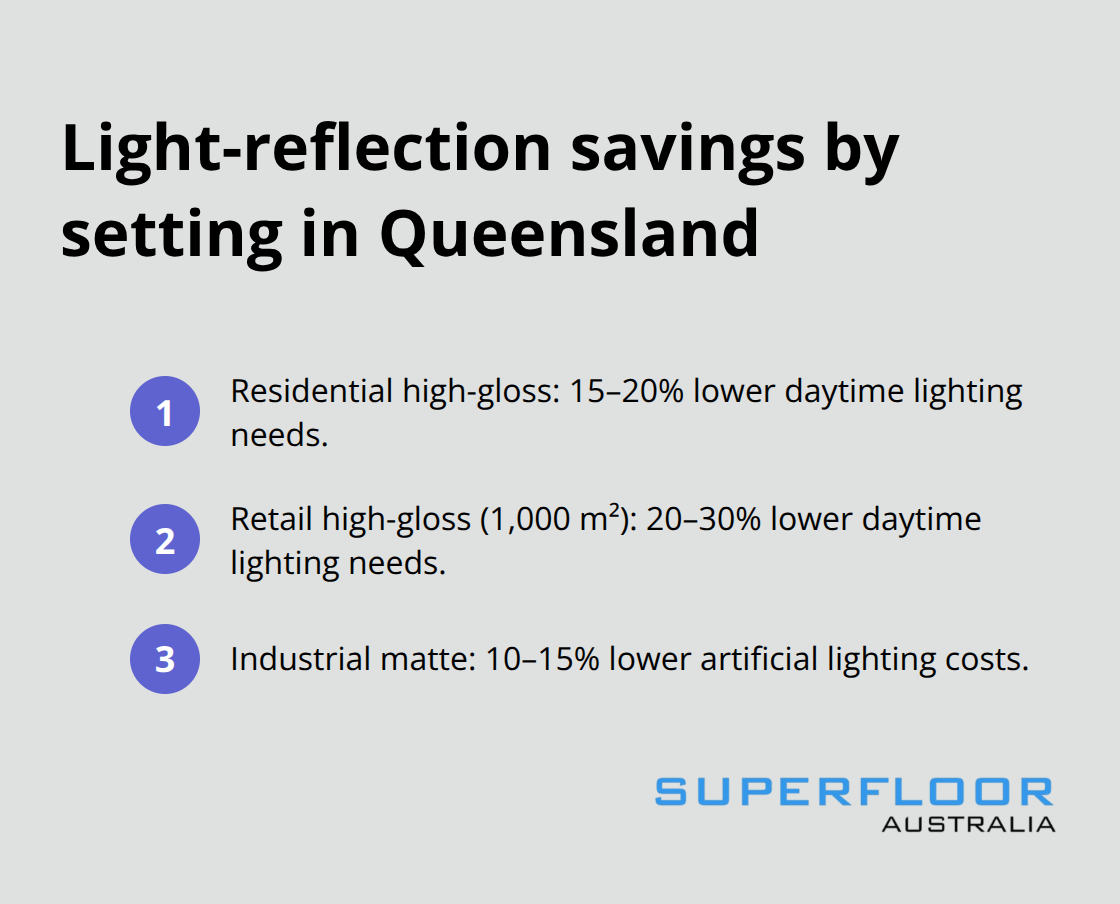
Retail spaces and commercial offices in Brisbane use polished concrete differently than homes because foot traffic patterns vary dramatically. A showroom displaying furniture or vehicles benefits from a high-gloss finish that draws attention to products through light reflection, while an office environment might prefer a Matte or Satin finish that reduces glare on screens and creates a professional atmosphere. Aggregate exposure becomes a branding opportunity-Full Stone Exposure creates visual interest and texture, while Minimal Aggregate delivers a sleek, uniform look that photographs well for marketing. Commercial installations typically span 500 to 2,000 square metres, and projects this size qualify for special pricing that reduces per-square-metre costs significantly. Grinding and polishing take 2–3 days for standard projects, meaning your business closes for a long weekend rather than weeks of disruption. High-traffic retail areas experience immediate payback because polished concrete resists scratches and maintains appearance through heavy foot traffic without visible wear patterns. The energy savings from improved light reflection compound over time-a 1,000-square-metre retail space reduces daytime lighting needs by 20–30% through the reflective properties of a high-gloss finish.
Industrial Facilities Prioritise Durability and Slip Resistance
Warehouses, factories, and industrial spaces in Queensland demand flooring that withstands heavy equipment, forklifts, and chemical spills without degrading. Polished concrete delivers this performance because the densifier applied during polishing hardens the surface to resist impact and abrasion far better than unsealed concrete. A Matte or Satin finish works better than high-gloss in industrial settings because the slightly lower reflectivity actually improves slip resistance-critical in areas where workers stand for extended periods or move equipment rapidly. Industrial projects over 200 square metres receive special pricing, making polished concrete more cost-efficient than epoxy coatings or specialised industrial flooring systems. The non-porous surface prevents oil and chemical absorption, meaning accidental spills stay on the surface where workers can clean them immediately rather than seeping into concrete and creating permanent stains or safety hazards. Floor levelling services address uneven substrates before polishing starts, ensuring a completely flat surface that prevents equipment tipping and worker fatigue. The floor’s thermal mass helps regulate temperature in warehouses, reducing cooling costs in Brisbane’s hot months-a measurable financial advantage over months and years of operation.
Each environment presents distinct opportunities to optimise performance through finish selection and surface preparation. Understanding how aggregate exposure and gloss levels influence both aesthetics and functionality reveals where your specific space gains the most advantage from polished concrete installation.
How Polished Concrete Stacks Up Against Traditional Flooring
Durability and Long-Term Cost Comparison
Polished concrete outlasts hardwood, tile, and carpet by a significant margin when you factor in both durability and total cost of ownership. Hardwood floors typically last 20–30 years but require refinishing every 3–5 years, adding thousands in labour and material costs over time. Ceramic tile lasts 25–30 years, yet grout lines degrade within 5–10 years, forcing costly regrouting and replacement in high-traffic areas. Polished concrete lasts 20+ years with zero refinishing, zero regrouting, and zero replacement of damaged sections because the densified surface resists scratches and impact far better than these alternatives.
The financial reality favours polished concrete decisively. A 150-square-metre Brisbane home with hardwood floors costs $2,250–$3,600 to refinish every five years, totalling $9,000–$14,400 over 20 years. Polished concrete installed at $50–$65 per square metre costs $7,500–$9,750 once, with maintenance expenses under $200 annually for microfiber mops and neutral cleaners. Over 20 years, you spend roughly $11,500 total on polished concrete versus $17,250–$24,150 on hardwood refinishing alone, not counting initial installation costs.
Carpet demands professional cleaning every 6–12 months at $150–$300 per visit, plus replacement every 7–10 years at $4–$8 per square foot. Polished concrete eliminates these recurring expenses entirely because the non-porous surface traps nothing and requires only basic mopping.
Aesthetic Flexibility Without Replacement
The aesthetic flexibility of polished concrete surpasses tile and hardwood because you control aggregate exposure, gloss level, and finish type without replacing the entire floor. A Salt and Pepper aggregate exposure works for modern homes, Full Stone Exposure suits contemporary showrooms, and Minimal Aggregate delivers sleek commercial aesthetics-all from the same concrete slab. High-gloss finishes in residential spaces reduce daytime lighting needs by 15–20% through superior light reflection compared to matte tile or sealed concrete.
Tile cannot achieve this flexibility without complete removal and reinstallation, which costs $5–$10 per square foot and generates significant waste. Hardwood offers limited customisation and darkens over time, reducing light reflection in Brisbane homes where maximising natural light matters for both energy efficiency and mental wellbeing.
Performance in Queensland’s Climate
Polished concrete’s thermal mass actively regulates temperature in Queensland’s climate, absorbing heat during hot days and releasing it at night, lowering HVAC costs year-round. Tile provides no thermal benefit and actually conducts heat away from living spaces, making it feel cold underfoot and forcing higher cooling costs in summer.
Industrial facilities benefit from Matte finishes that maintain slip resistance while still reflecting enough light to reduce artificial lighting costs by 10–15%. The durability advantage compounds when you consider that polished concrete resists staining from everyday spills, pet accidents, and chemical exposure better than any sealed flooring system because the densifier closes pores permanently rather than relying on surface coatings that wear away.
Final Thoughts
Brisbane polished concrete demands precision at every stage, from substrate preparation through final polishing, and we at superfloor australia understand that surface preparation determines whether your floor performs for decades or shows wear within years. Uneven concrete substrates create real problems-equipment tips in warehouses, furniture sits unevenly in homes, and high-traffic areas wear faster than surrounding sections. Floor levelling services address these issues before polishing starts, and the grinding and polishing process itself requires expertise because moving from coarse diamond pads through progressively finer grits demands consistent technique and proper equipment.
Queensland’s climate presents specific challenges that generic flooring solutions cannot handle, and Brisbane polished concrete’s thermal mass actively regulates temperature swings between hot days and cooler nights, reducing HVAC strain year-round. The densifier applied during polishing closes concrete pores permanently, preventing moisture absorption during humid months and protecting against flood damage-a real concern in Queensland properties. High-gloss finishes reflect Brisbane’s abundant natural light, reducing daytime lighting costs while creating brighter, more welcoming interiors.
We at superfloor australia have completed projects across Brisbane’s diverse environments, from residential homes in Bulimba to commercial spaces in Surfers Paradise and industrial facilities in Toowoomba, and this local experience means we understand how different neighbourhoods experience weather patterns and foot traffic demands. Our QBCC License No: 15230781 confirms compliance with Queensland standards and demonstrates our commitment to quality assurance. When you choose superfloor australia for your Brisbane polished concrete project, you select a team that combines expert craftsmanship with deep local knowledge and proven results.