

Brisbane polished concrete finishes have transformed how homeowners think about flooring. The combination of high-gloss shine, minimal maintenance, and long-term durability makes polished concrete a practical choice for modern homes.
At Superfloor Australia, we’ve helped Brisbane residents discover why this flooring option outperforms traditional alternatives. This guide covers everything you need to know about polished and honed finishes, how we deliver results, and why so many locals are making the switch.
What Makes Polished Concrete the Smarter Brisbane Choice
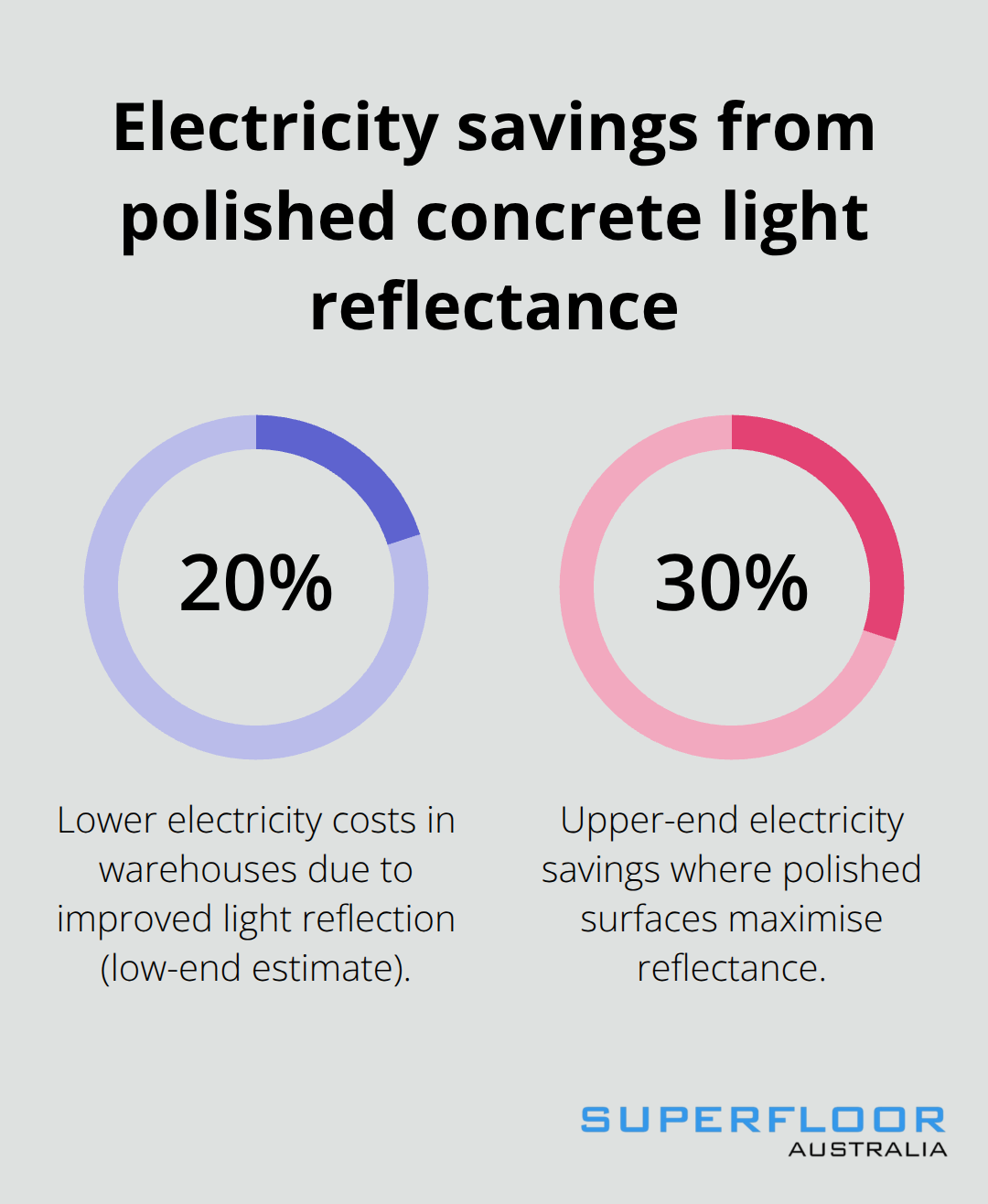
Brisbane’s heat and humidity create real problems for traditional flooring. Timber warps when temperatures exceed 30°C and humidity sits between 70–80%, while tile grout deteriorates and requires regrouting every few years. Polished concrete sidesteps these issues entirely. A densified polished surface reduces porosity significantly, lowering moisture absorption and protecting against water damage during Queensland’s flood seasons. The thermal mass of concrete absorbs heat during the day and releases it at night, lowering air-conditioning costs in Brisbane’s hot summers. This isn’t theoretical-it’s physics that works for your wallet. Polished concrete provides excellent light reflection properties, which reduces electricity costs by 20 to 30 per cent in warehouse applications.
Climate Performance That Matters
Brisbane’s humidity and heat don’t degrade polished concrete because the finish is the floor itself-there’s no coating to peel or fail. Stains resist easily on a properly sealed surface, and scratches remain superficial on a floor this hard. Polished concrete can last up to 10-12 years with proper installation and maintenance, outperforming timber and tile replacement cycles. The surface tolerates heat, humidity, and UV exposure far better than alternatives that require constant restoration.
Maintenance Simplicity
Polished concrete resists dust and allergens because it’s non-porous and sealed. Carpet and vinyl trap particles; polished concrete doesn’t. For families with allergies or asthma, this makes a tangible difference. Daily upkeep requires only a microfibre mop and neutral pH cleaner-wipe spills immediately to prevent staining. Over 20 years, polished concrete remains low-maintenance, while tile grout requires regrouting and timber needs repeated sanding and sealing.
The Real Cost Picture
Installation costs run about $50–$65 per square metre, typically cheaper upfront than hardwood or tile. Long-term savings come from skipping waxing, resealing every few years, and grout maintenance. Residential projects typically pay premium rates of $75 to $90 per square metre due to access limitations and detailed finish requirements.
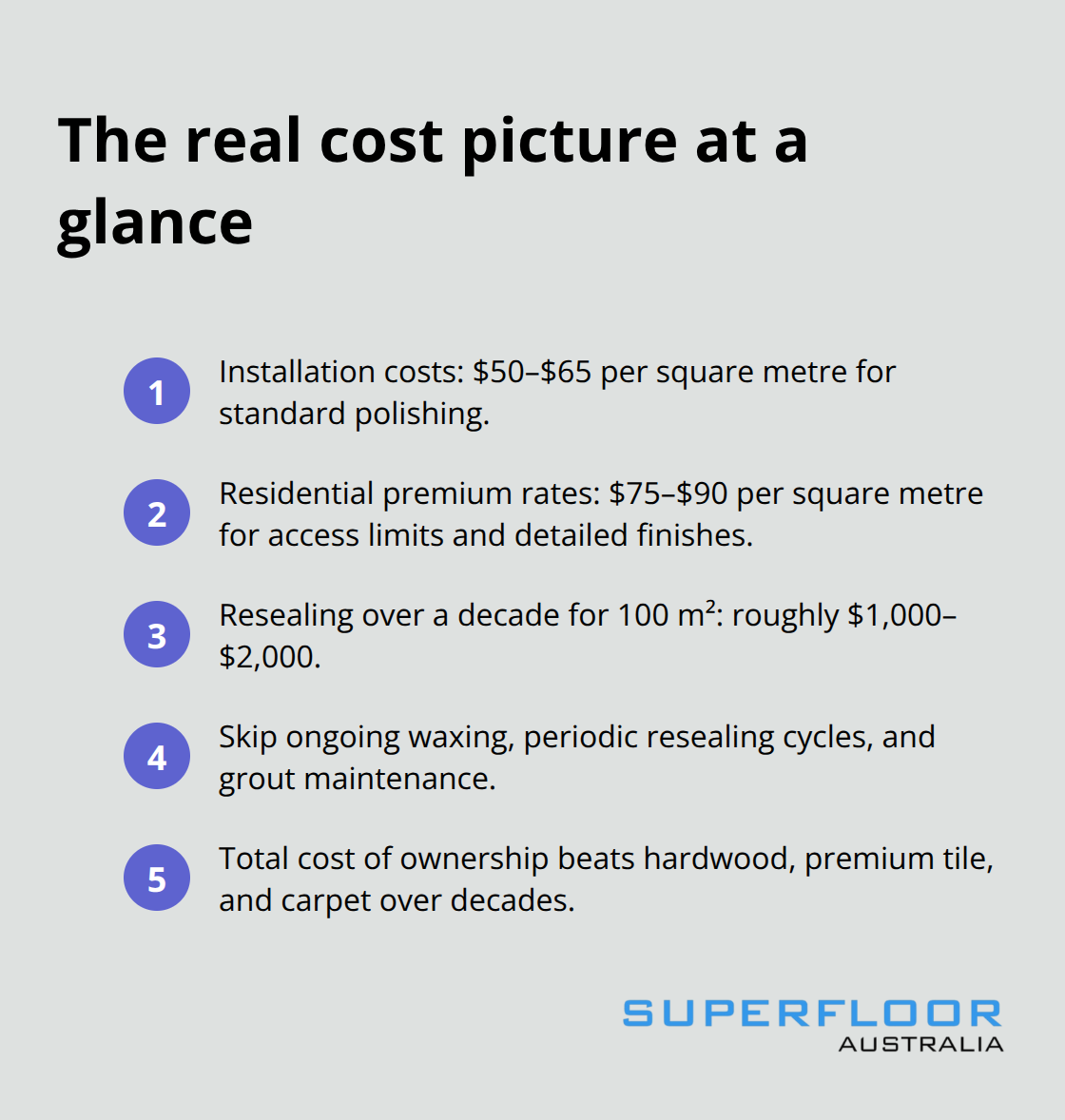
A 100 square metre floor requires roughly $1,000–$2,000 in resealing over a decade-far cheaper than carpet replacement or timber restoration. These savings add up significantly when you compare total cost of ownership across decades.
The choice between finishes-polished versus honed-affects both appearance and maintenance demands, which we’ll explore next.
Polished vs Honed: Which Finish Wins for Your Space
Polished concrete dominates Brisbane’s residential market because it delivers what homeowners actually want: a mirror-like surface that reflects light and looks striking in modern interiors. High-gloss polished finishes reflect up to 90 per cent of light, brightening spaces and cutting artificial lighting needs substantially. This matters in Brisbane where summer days are long and electricity costs climb. The finish arrives after 6–12 grinding passes with progressively finer abrasives, followed by densification and a final polish that creates that unmistakable gleam. Polished concrete resists scratches and stains more aggressively than honed alternatives because the surface is harder and sealed to resist moisture penetration. Installation costs typically run $50–$65 per square metre for standard polishing, making it cheaper upfront than hardwood or premium tile.
The High-Gloss Trade-Off
High-gloss surfaces show dust, footprints, and water spots immediately, demanding frequent cleaning to maintain that pristine appearance. In kitchens and laundries where spills happen constantly, you’ll spend more time buffing than you’d spend maintaining other finishes. The visual payoff appeals to homeowners who prioritise aesthetics and can commit to regular maintenance schedules.
Why Honed Concrete Wins for Practicality
Honed concrete offers a fundamentally different proposition that deserves serious consideration, particularly for spaces where practicality outweighs showroom aesthetics. The honing process stops before the final polish, leaving a matte or semi-gloss surface that hides dust, dirt, and minor wear far better than glossy alternatives. Slip resistance ranges from 0.5 to 0.7, and anti-slip additives can boost grip without altering appearance-critical for pool surrounds, outdoor wet areas, and households with elderly residents or young children. Installation costs fall between $50–$100 per square metre, and resealing runs just $10–$20 per square metre every 2–5 years, keeping long-term maintenance budgets predictable.
Long-Term Value Comparison
Over a decade, a 100 square metre honed floor requires roughly $1,000–$2,000 in resealing versus potentially higher costs for polished surfaces requiring more frequent buffing and restoration. Honed concrete delivers a 25–50 year lifespan with proper care, matching polished durability while demanding substantially less attention. For commercial spaces like retail shops and hospitality venues, the dirt-hiding texture reduces cleaning frequency, lowering labour costs.
Making Your Choice
Honed finishes lack the visual impact of a high-gloss polish, and matte surfaces appeal to contemporary design preferences rather than all aesthetic directions. Polished surfaces work best when visual impact and light reflection justify frequent maintenance; honed finishes work best when durability, slip resistance, and low-touch upkeep align with how you actually use the space. The next section explores how professional installation transforms either choice into a floor that performs for decades.
Why Surface Preparation Separates Good Floors from Great Ones
The difference between a polished concrete floor that lasts 30 years and one that fails within a decade starts long before the grinding begins. Most homeowners assume the polish itself determines quality, but surface preparation determines everything. Moisture trapped beneath the slab causes concrete to fail catastrophically-the finish peels, cracks spread, and you’re looking at expensive remedial work. Queensland’s humidity and flood risk demand rigorous moisture assessment before any project starts. A concrete slab sitting above 3 per cent moisture content will reject densifiers and sealers, making the entire polish worthless. Proper preparation means identifying and fixing moisture sources, removing contaminants that prevent bonding, and establishing control joints that manage the natural expansion and contraction Brisbane’s heat creates.
The Grinding Process Determines Surface Quality
The grinding process itself requires precision-6 to 12 passes with progressively finer abrasives remove the previous grit’s scratches while exposing aggregate at the depth you’ve chosen. Rushing this phase to save time produces uneven finishes where some areas shine while others remain dull. Each pass must follow a consistent pattern to avoid creating low spots or high ridges that compromise the final appearance.
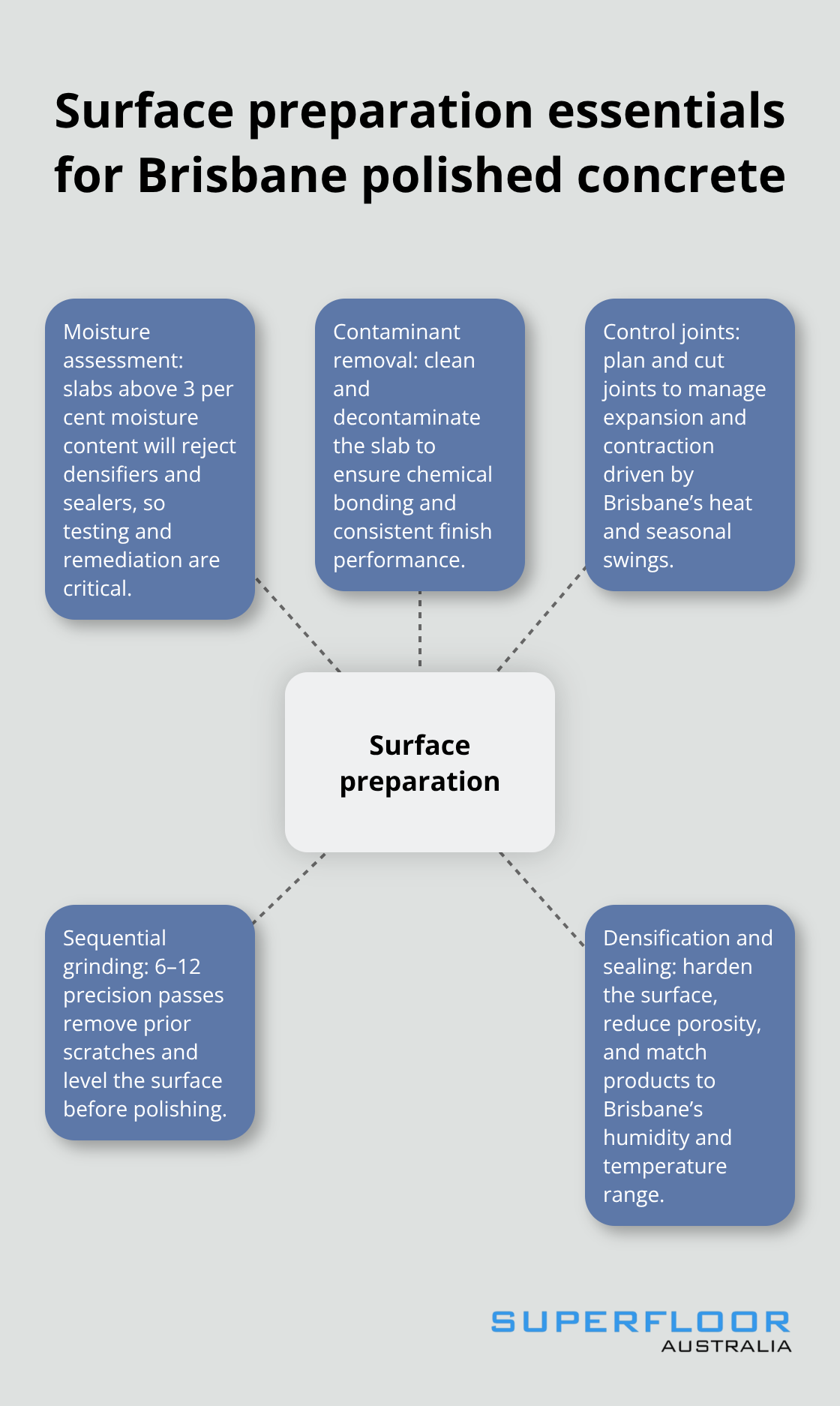
The abrasive selection matters significantly because coarser grits cut faster but leave deeper scratches that finer grits must remove. This sequential approach takes time, but it’s the only way to achieve a truly professional result.
Densification and Sealing Lock in Performance
The densifier applied after grinding hardens the concrete’s surface and reduces porosity, making the final polish actually adhere and last. Without proper densification, you’re polishing a floor that will wear quickly under foot traffic. Sealing applied after densification prevents moisture penetration and protects against stains, but improper application allows water to seep beneath the surface, undoing all the preparation work. The sealer must match both the concrete’s porosity and Brisbane’s climate conditions to perform effectively over decades.
Climate-Specific Installation Matters
Expert installation means understanding how Brisbane’s specific conditions affect concrete behaviour. Summer heat causes concrete to expand; winter cooling contracts it. Inadequate control joints or incompatible sealers amplify this movement, leading to surface failure. Densifiers and sealers must perform in Brisbane’s humidity and temperature swings because generic products fail in this climate. The final polish uses progressively finer grits to create either high-gloss surfaces that reflect 90% of light or semi-gloss and matte finishes that hide dust better.
Matching Finish to Your Space’s Demands
Gloss level isn’t just aesthetic-it affects maintenance demands and long-term durability. High-gloss finishes require more frequent buffing but deliver maximum visual impact; matte finishes hide wear but sacrifice some light reflection. Your space’s traffic patterns, moisture exposure, and design preferences determine which finish actually performs best for your situation. A kitchen with constant spills demands different sealing and finish choices than a bedroom or commercial showroom. Professional consultation before committing ensures your floor matches your home’s actual conditions and your household’s realistic maintenance capacity.
Why Brisbane Homeowners Switch to Polished Concrete
Brisbane homeowners choose polished concrete because it solves real problems that traditional flooring creates. The upfront cost sits at $50–$65 per square metre, undercutting hardwood and premium tile significantly. Over a decade, a 100 square metre floor costs roughly $1,000–$2,000 in resealing, while carpet replacement, timber restoration, and tile regrouting drain budgets far faster. The financial advantage compounds across 25–50 years when polished concrete outlasts multiple replacement cycles of competing materials.
Sustainability matters increasingly to Brisbane families, and polished concrete finishes deliver genuine environmental benefits without compromise. The process uses your existing concrete slab, eliminating the raw material extraction and manufacturing waste that new flooring generates. Resealing an existing floor costs $10–$20 per square metre every 2–5 years, avoiding the landfill impact of carpet disposal or timber replacement. The decades-long lifespan means fewer replacements across your home’s lifetime, reducing your environmental footprint substantially.
Design flexibility sets Brisbane polished concrete finishes apart from rigid alternatives. High-gloss surfaces brighten kitchens and living areas while reflecting up to 90% of light, cutting electricity costs, while matte finishes work beautifully in bedrooms and studies, hiding dust and reducing glare without sacrificing durability. Aggregate exposure options range from subtle salt-and-pepper textures to dramatic terrazzo-like finishes, and decorative scoring creates borders and patterns without grout lines. Contact Superfloor Australia to discuss how polished concrete transforms your space while delivering genuine long-term value.