
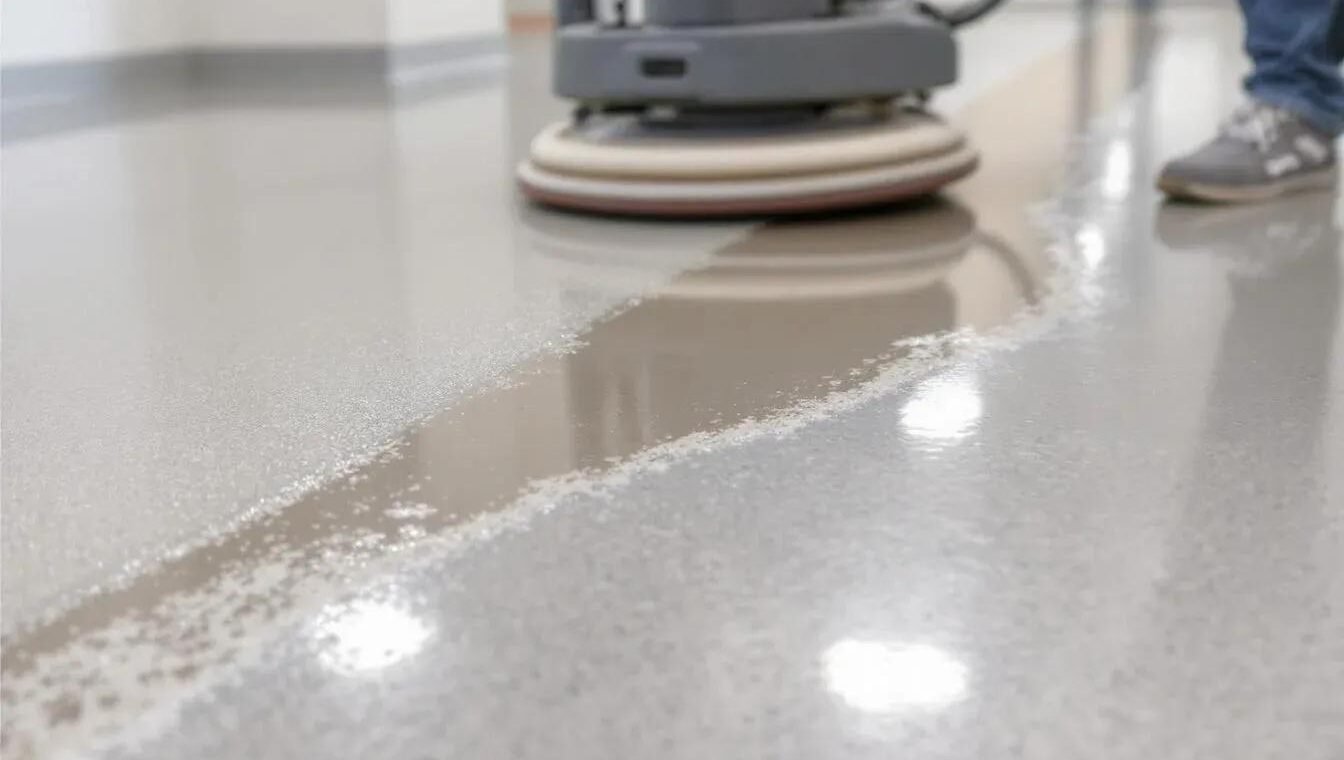
Not every concrete surface is ready for polishing. The answer depends on several technical factors that determine success.
We at Superfloor Australia evaluate age, structural condition, and surface quality before starting any project. Poor concrete mix or extensive damage can make polishing impossible.
Understanding these requirements saves time and money while achieving the best results.
Understanding Concrete Floor Requirements for Polishing
Age and Curing Time Standards
Concrete requires at least 28 days to cure properly before polishing can begin. Most contractors wait 30-60 days for optimal results. Fresh concrete contains excess moisture that interferes with equipment and creates uneven surfaces. The concrete must achieve minimum compressive strength, though higher strength delivers superior outcomes for high-traffic areas.
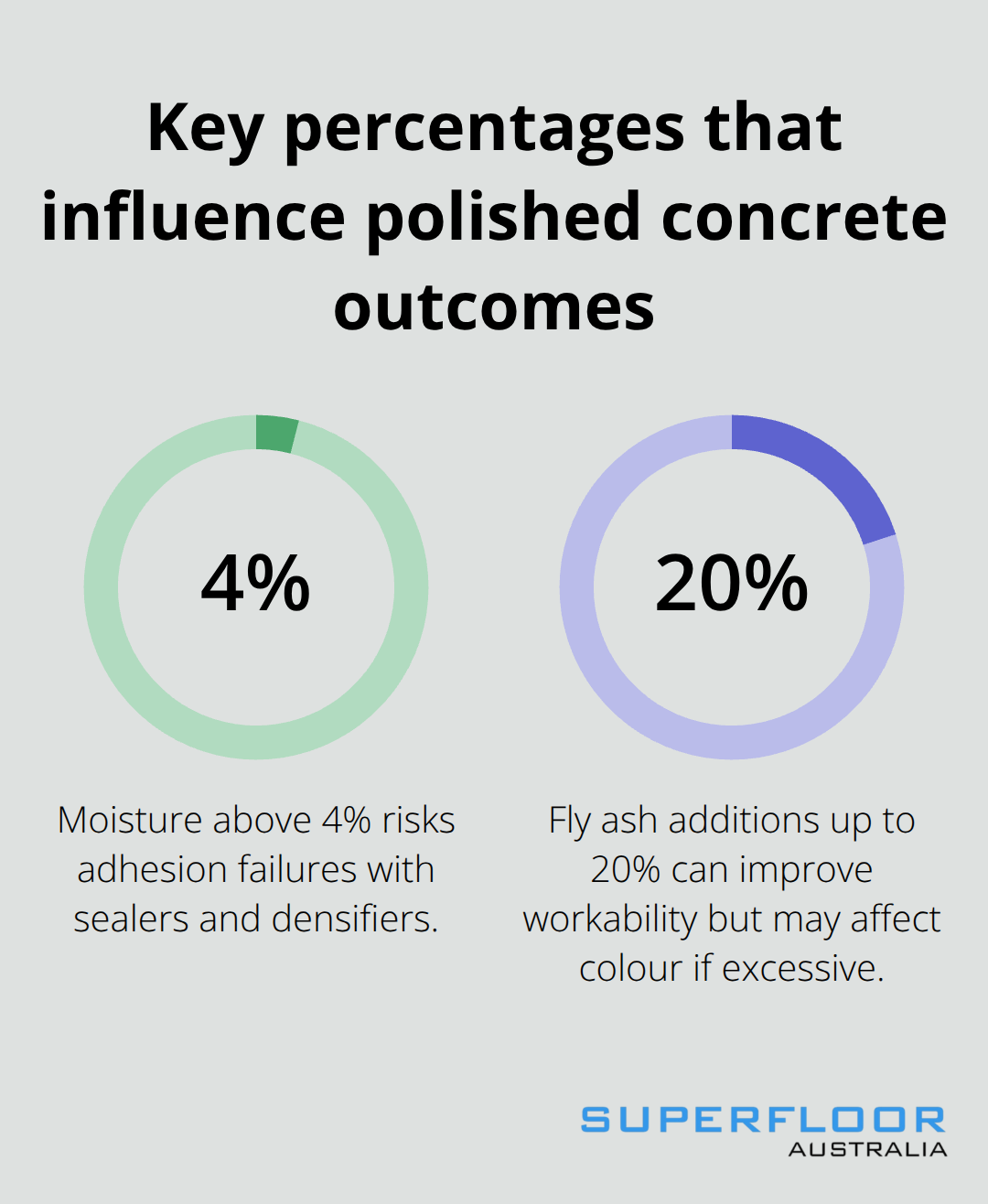
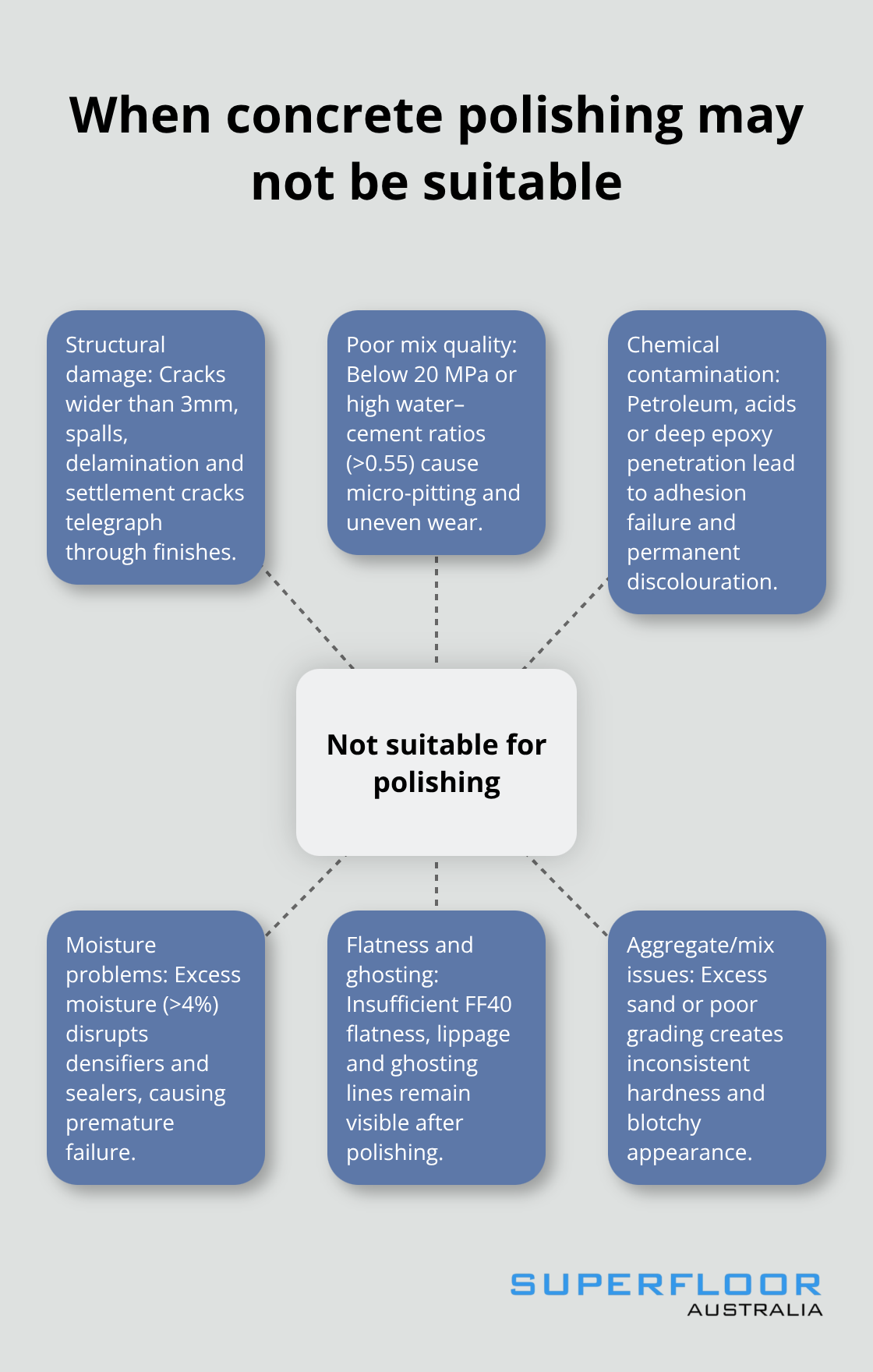
Moisture level tests become critical during assessment. Concrete with moisture content above 4% will cause adhesion problems with sealers and densifiers. Professional moisture meters provide accurate readings, while visual indicators like efflorescence or surface dampness signal excessive moisture retention.
Surface Condition Assessment Criteria
The concrete surface must be structurally sound without major cracks, spalls, or delamination. Hairline cracks under 2mm width can often be addressed, but wider structural cracks require repair before polishing begins. Surface contamination from oils, adhesives, or paint needs complete removal through chemical treatment or mechanical preparation.
Floor flatness specifications require FF40 ratings to prevent uneven patterns during the process. Surfaces with significant lippage between concrete pours create challenges that increase project costs. Previous floor coverings leave residue patterns called ghosting, which becomes visible after polishing and affects final appearance quality.
Structural Integrity Evaluation
Concrete strength tests use rebound hammers or core samples to reveal whether the slab can withstand equipment loads. Weak concrete below 20 MPa often experiences micro-pitting during the process, which creates tiny holes that ruin the polished finish. Proper aggregate distribution throughout the mix affects both performance and final appearance consistency.
The concrete mix design plays a vital role in determining success rates. High-quality concrete with proper water-cement ratios (typically 0.45 or lower) provides the density needed for superior results. Poor mix designs with excessive water content create weak surfaces that cannot achieve the mirror-like finish clients expect.
These technical requirements separate suitable floors from problematic ones, but even concrete that meets these standards may face other challenges that prevent successful polishing.
Types of Concrete That Work Best for Polishing
New Concrete Specifications for Optimal Outcomes
New concrete pours offer complete control over mix design, which makes them the superior choice for polished floors. Concrete with 24 MPa minimum compressive strength provides the foundation that industrial applications need, while residential projects succeed with 25-30 MPa strength levels. Water-cement ratios must stay below 0.45 to prevent weak surface layers that cause micro-pitting when operators grind the surface.
Fresh concrete requires specific aggregate combinations for best results. Hard aggregates like granite or quartzite create stunning exposed aggregate finishes, while softer limestone produces cream-coloured surfaces. The aggregate size affects final appearance – 10mm maximum aggregate size works well for most applications, though 20mm aggregates can create dramatic visual effects in large commercial spaces.
Existing Floor Challenges and Solutions
Existing concrete floors present unique obstacles that affect polish success rates. Floors that contractors installed before 1990 often contain inadequate mix designs with high water content, which makes them unsuitable for high-gloss finishes. Construction joints and cold joints create visible lines that remain prominent after workers complete the process (these lines require careful planning to minimise their visual impact).
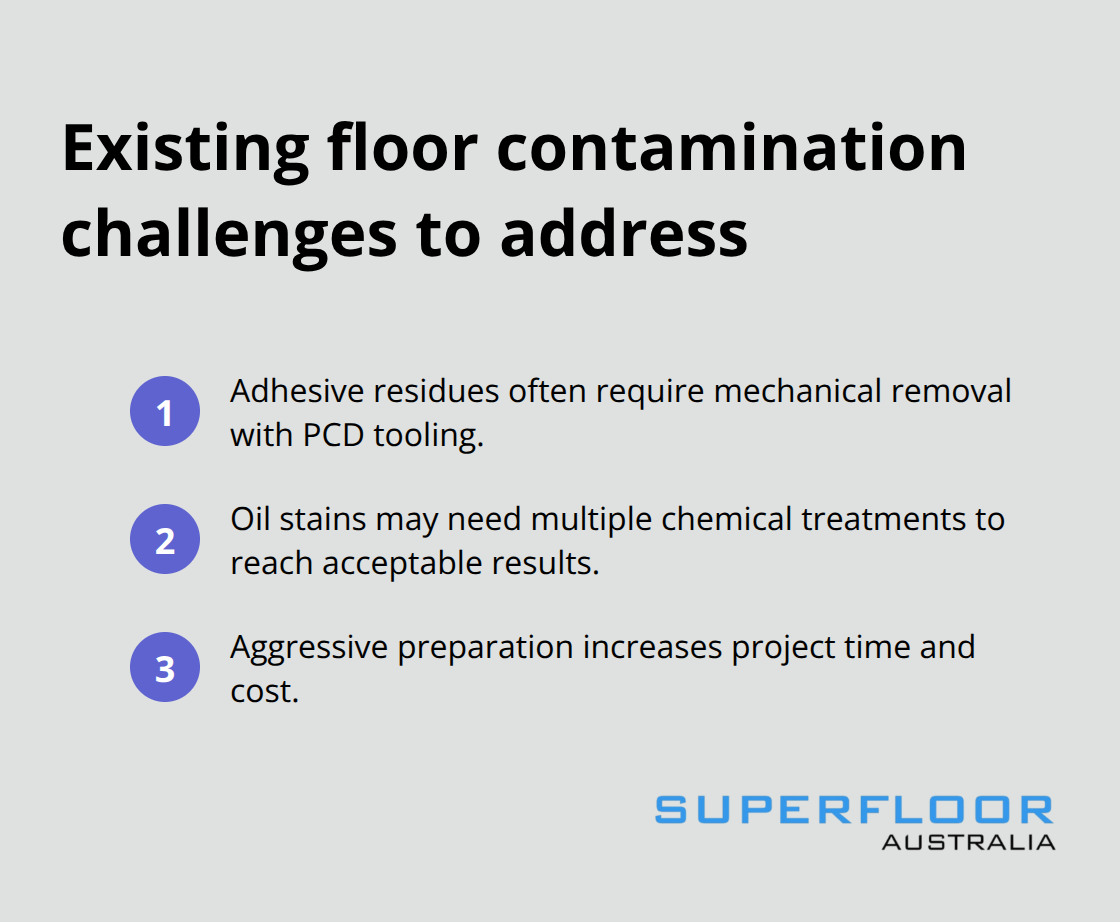
Surface contamination from previous floor coverings demands aggressive preparation methods. Adhesive residue from vinyl tiles or carpet requires mechanical removal with polycrystalline diamond tools, which adds significant time and cost to projects. Oil stains penetrate deep into concrete pores and may require multiple chemical treatments before workers achieve acceptable results for polish applications.
Mix Design Impact on Final Results
The concrete mix design determines both durability and appearance quality in the finished floor. High cement content creates the dense surface that polished concrete requires. Fly ash additions up to 20% improve workability and reduce permeability, though excessive amounts can create colour variations that become visible after workers expose the surface.
Aggregate-to-cement ratios affect both strength and visual appeal. Well-graded aggregates with proper distribution create consistent patterns, while poorly mixed concrete produces blotchy appearances that no amount of skilled work can correct. Even concrete that meets basic strength requirements may fail to deliver the results clients expect when the mix design lacks proper proportions.
However, not all concrete floors can achieve successful results, regardless of their initial quality or proper preparation methods.
When Concrete Polishing May Not Be Suitable
Severe Structural Damage
Concrete floors with cracks wider than 3mm cannot achieve acceptable polish results. These structural defects show through any surface treatment and create weak points that worsen under equipment pressure. Spalled concrete where the surface layer separates from the substrate makes polished floors impossible because damaged areas continue to break away during the process. Delamination between concrete layers creates hollow sounds when tapped and indicates bond failure that no preparation can fix.
Settlement cracks that run through entire slabs signal foundation problems that require attention before any work begins. Freeze-thaw damage in older structures creates surface scaling that removes the concrete cream layer needed for proper polish adhesion. These floors need complete replacement rather than surface restoration.
Poor Mix Quality Issues
Concrete with compressive strength below 20 MPa fails during the process because the surface cannot withstand diamond equipment pressure. Weak concrete creates micro-pits that appear as thousands of tiny holes across the finished surface. High water-cement ratios above 0.55 produce porous concrete that absorbs sealers unevenly and creates blotchy appearances that professional techniques cannot correct.
Concrete mixed with excessive sand content lacks the cement paste needed for proper densification. These floors feel gritty underfoot even after multiple passes and never achieve the smooth finish that quality polished concrete provides. Poorly mixed concrete with aggregate separation creates inconsistent hardness levels that cause uneven wear patterns.
Chemical Contamination Problems
Floors contaminated with petroleum products, acids, or industrial chemicals often cannot be restored to polish-ready condition. Oil penetration requires concrete removal and replacement because surface treatments cannot reach contaminated areas. Acid damage from battery spills or harsh cleaners creates rough surface textures that prevent proper sealer adhesion and cause premature failure.
Previous epoxy coatings that penetrated into concrete pores create adhesion problems that cause new treatments to fail within months. Chemical stains from rust or metal oxidation create permanent discolouration that becomes more prominent after the process exposes the affected concrete. These contamination issues make the process economically unfeasible compared to replacement options.
Final Thoughts
Can you polish any concrete floor? The answer depends on multiple technical factors that determine project success. Concrete age, structural integrity, mix quality, and contamination levels all play decisive roles in whether polished concrete will deliver the results you expect. Professional assessment becomes essential before you start any project.
Moisture tests, strength evaluation, and surface condition analysis reveal whether your floor meets the requirements for successful work. Floors with severe damage, poor mix designs, or chemical contamination often require alternative solutions. We at Superfloor Australia conduct thorough evaluations to determine the best approach for each project (whether your floor needs treatment, repair, or complete replacement).
The next step involves a professional inspection of your concrete surface. Expert evaluation provides accurate information about your floor’s condition and the most effective treatment options. Superfloor Australia delivers comprehensive assessments that guide informed decisions about your investment.