

Commercial floor preparation is one of the most overlooked aspects of building maintenance in Brisbane. Most business owners don’t realise that skipping proper preparation can cost thousands in repairs down the track.
At superfloor australia, we’ve seen firsthand how the right preparation protects your investment and keeps your team safe. This guide walks you through the practices that actually work in Brisbane’s climate.
Why Floor Preparation Determines Your Bottom Line
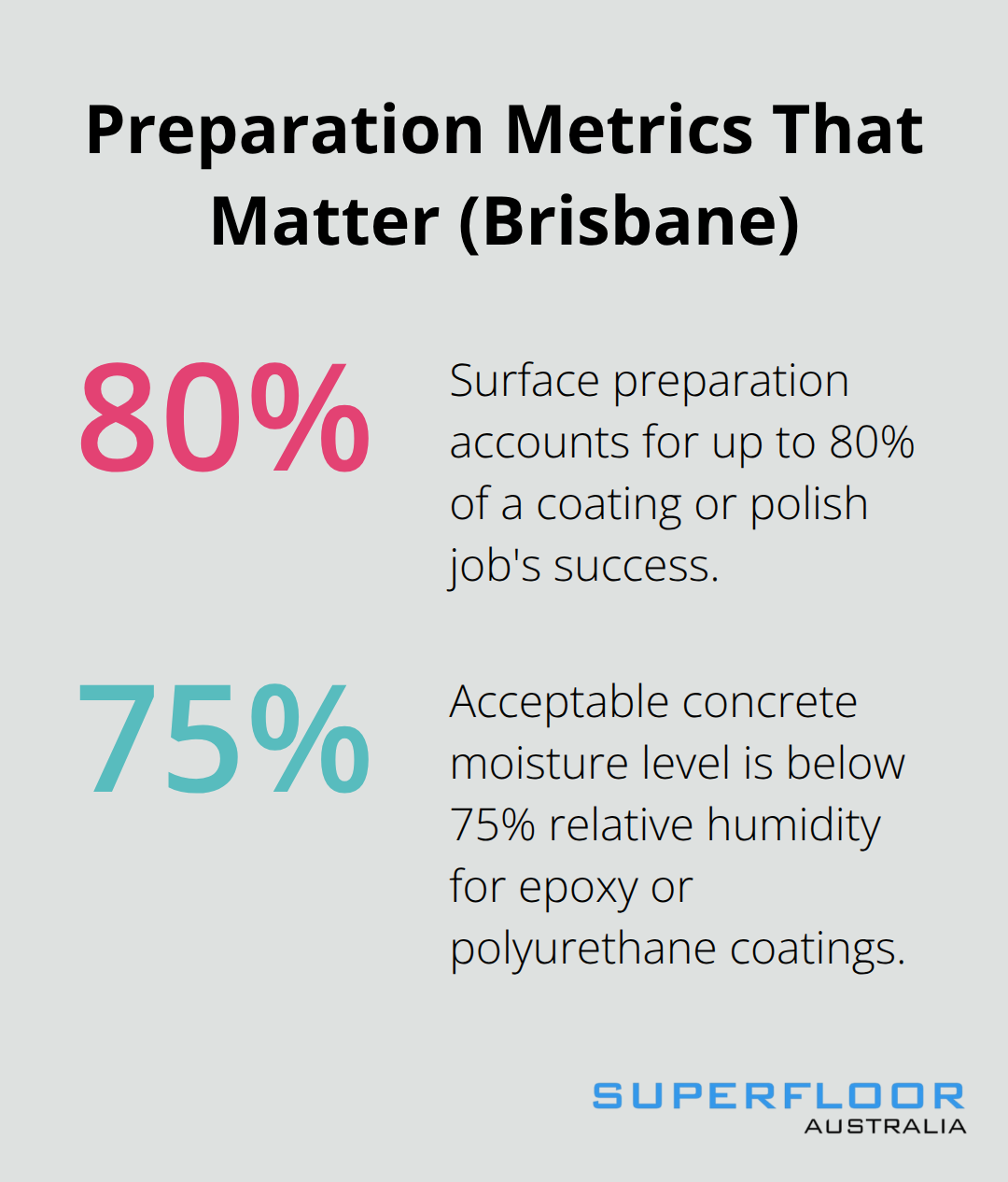
Proper floor preparation protects your business from expensive failures-it’s far more than an aesthetic concern. Floor failures in Brisbane commercial spaces almost always trace back to inadequate preparation. A polished concrete floor that lasts 15 years instead of 5 costs significantly less per year, yet many business owners skip the grinding, moisture testing, and surface cleaning that make this longevity possible. The concrete industry recognises that surface preparation accounts for up to 80% of a coating or polish job’s success. Without it, even premium products fail prematurely.
Brisbane’s humid subtropical climate presents a particular challenge. Moisture acts as a silent killer when concrete hasn’t been properly tested and dried before coating application. Trapped moisture underneath a finish causes peeling, blistering, or delamination within months. A moisture test costs under $500, but repairing a failed floor runs $10,000 or more. Skipping this step creates a false economy that catches business owners off guard.
Safety Hazards and Liability Exposure
A poorly prepared floor creates genuine safety risks that expose your business to liability claims. Uneven surfaces, moisture-related slips, and deteriorating finishes lead to falls and injuries. Flooring assessment for slip resistance happens before installation under AS 4586 testing methods, which classify flooring based on performance in dry, wet or greasy environments. If your floor wasn’t properly prepared and someone sustains an injury, your liability insurance may deny the claim if preparation shortcuts emerge during investigation.
High-traffic Brisbane commercial spaces experience constant foot traffic, equipment movement, and spills. Floors that were ground incorrectly, sealed over dirt, or left with moisture issues develop worn patches, slippery spots, and trip hazards faster than properly prepared floors. Maintenance costs spike when you’re constantly patching and repairing. Correct preparation-including moisture barriers, proper grinding to remove weak concrete layers, and thorough cleaning-creates a stable foundation that resists these problems.
What Proper Preparation Prevents
Concrete grinding removes laitance and old coatings, combined with moisture testing and crack repair before coating application, prevents the bulk of floor failures. When subfloor moisture receives attention upfront through testing and remediation, your floor won’t fail in 2 years. When concrete receives grinding to expose a sound surface and cleaning to remove all contaminants, coatings bond properly and last their intended life.
In commercial kitchens, workshops, and industrial spaces where chemical spills occur regularly, a properly prepared floor with the right protective coating resists damage that would otherwise require expensive resurfacing. The upfront cost of thorough preparation (typically $2–5 per square metre for grinding and moisture testing in Brisbane commercial projects) saves tens of thousands in premature replacement and repair. Business owners who invest in professional preparation see their floors perform reliably for years, maintaining safety standards and avoiding the downtime that failed floors create.
Moving Forward With Professional Preparation
Understanding why preparation matters sets the stage for implementing the right techniques in Brisbane’s specific climate. The next section walks you through the essential floor preparation methods that work in humid subtropical conditions and how to execute them properly.
How to Prepare Concrete for Brisbane’s Humid Climate
Test Moisture Before Any Coating Touches Your Concrete
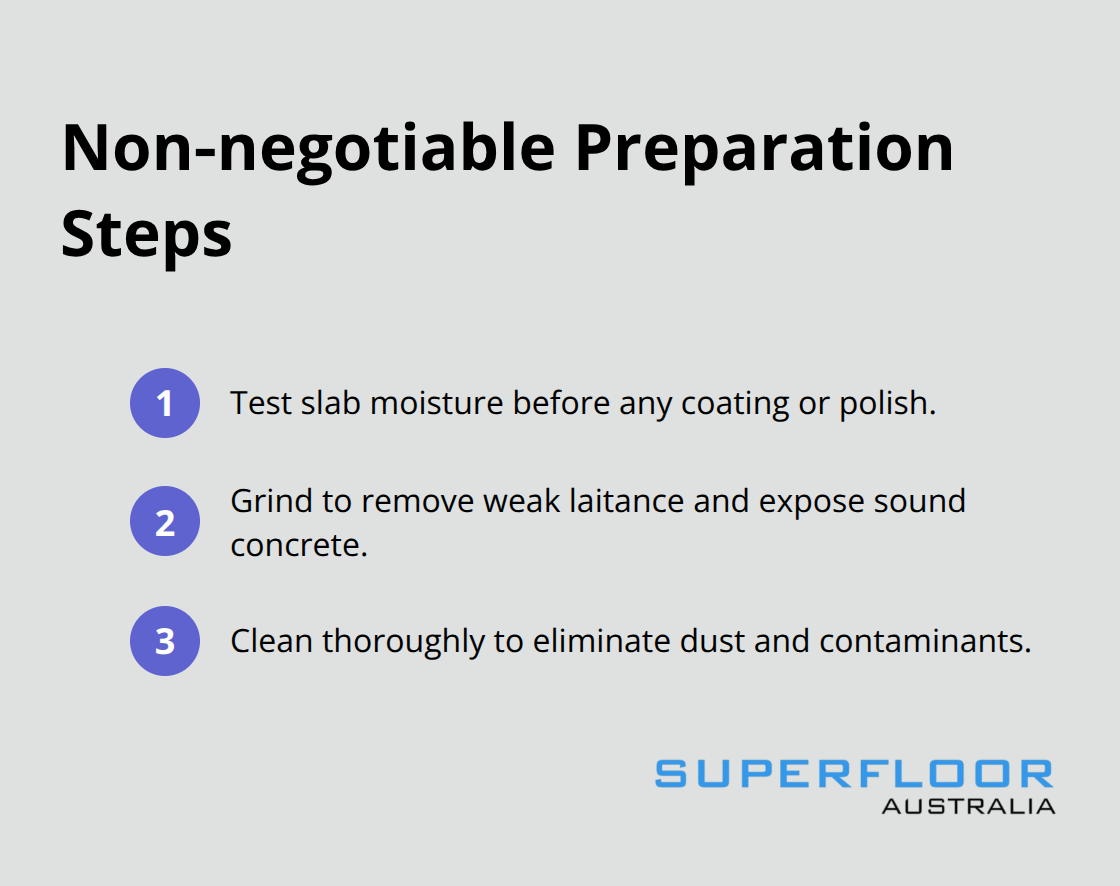
Moisture testing must happen before any coating or polish touches your concrete, and in Brisbane’s subtropical environment, this step separates floors that last from floors that fail within months. The concrete industry standard requires moisture testing via calcium chloride or relative humidity meters before application, and results should show moisture levels below 75% relative humidity for epoxy or polyurethane coatings. A moisture test costs $300–$500 but reveals whether your concrete has absorbed water from the humid air or ground. If moisture levels exceed acceptable thresholds, you need moisture barriers or extended drying time before proceeding. Skipping this test guarantees failure; trapped moisture causes blistering, peeling, and complete coating breakdown within weeks in Brisbane’s climate.
Ground-level and below-grade spaces absorb moisture constantly, so testing here is non-negotiable. Once you know your moisture status, you can plan the right remediation-whether that’s applying a moisture barrier, extending the drying schedule, or installing vapor barriers before coating application. This upfront investment prevents thousands in repair costs later.
Assess Your Surface and Identify Problem Areas
Surface assessment determines what preparation method your concrete actually needs, and rushing this step leads directly to poor results. Visual inspection identifies cracks, spalling, and weak concrete layers, but you need mechanical testing to assess bond strength and surface integrity. Concrete grinding removes the top layer of weak, porous concrete (called laitance) that prevents proper adhesion, and this process typically removes 1–2mm of surface material. Professional grinding equipment creates a uniform texture across the entire floor, exposing sound concrete underneath.
In high-traffic Brisbane commercial spaces, targeted grinding removes weak layers that would otherwise cause premature failure. The grinding process also prepares the surface to accept coatings, polishes, or sealers reliably.
Clean Thoroughly After Grinding
After grinding, thorough cleaning removes all dust and contaminants-vacuum extraction during grinding prevents silica dust from settling back onto the surface, and follow-up cleaning with pH-neutral cleaners removes any remaining residue. This final step ensures that coatings bond properly to the concrete rather than adhering to a layer of dust or debris.
The combination of moisture testing, targeted grinding to remove weak layers, and complete cleaning creates a foundation that accepts coatings, polishes, or sealers reliably. These three steps form the non-negotiable foundation for any floor coating or polish in Brisbane’s climate. Without them, even premium products fail prematurely, leaving you with costly repairs and operational downtime that could have been prevented.
With your concrete properly assessed, dried, ground, and cleaned, you’re ready to select the right finishing system for your specific commercial application and traffic demands.
Common Mistakes That Ruin Commercial Floor Preparation
Rushing Preparation When Time Pressure Mounts
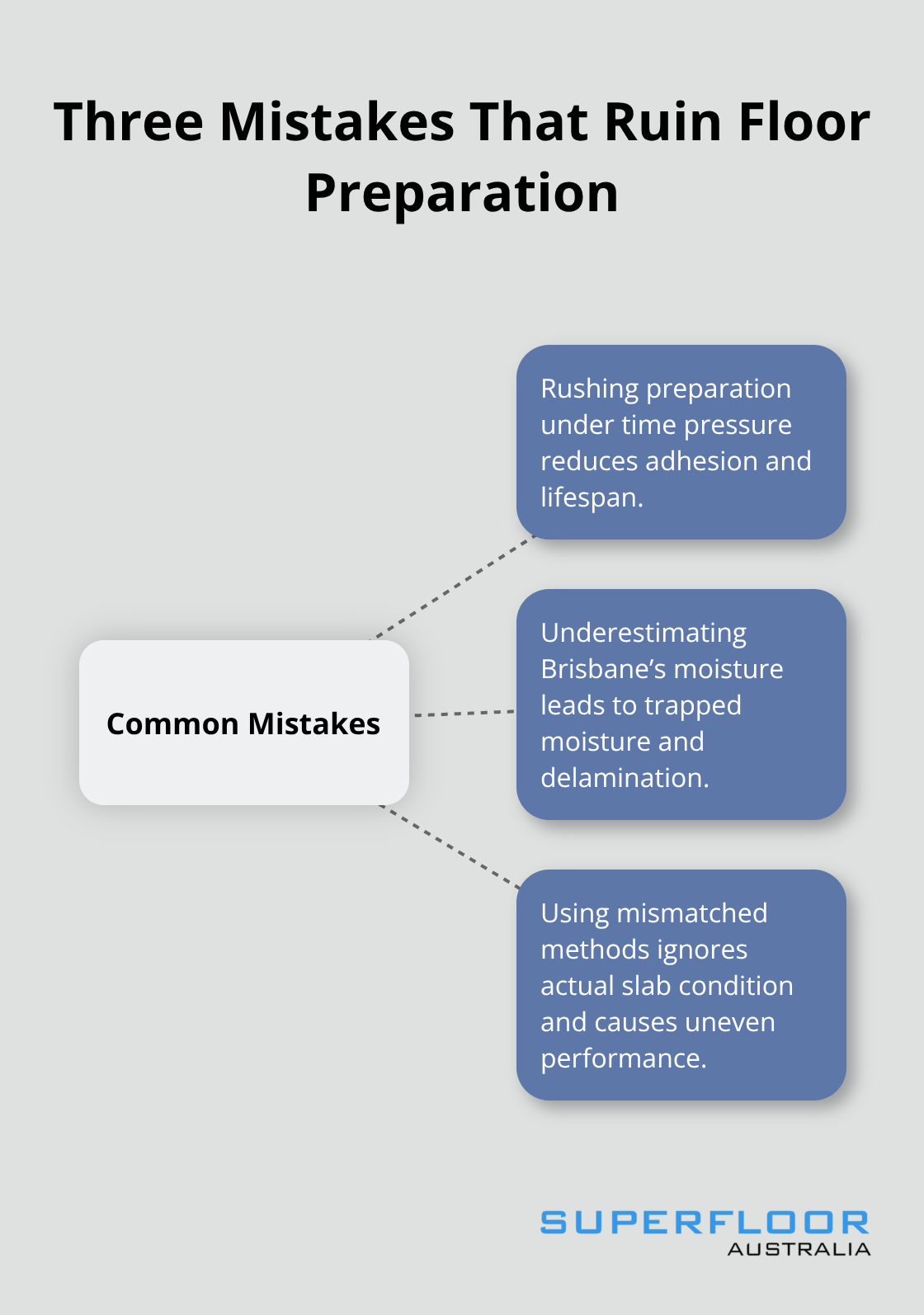
Most commercial floor failures in Brisbane trace directly to three preventable mistakes that business owners make under time or budget pressure. The first mistake is treating preparation as a box to tick rather than the foundation of your entire project. Contractors who promise to complete grinding and coating in a single day cut preparation time dangerously short.
Proper grinding for a 500-square-metre Brisbane commercial space takes 2–3 days minimum, depending on concrete condition and laitance thickness.
Compressing this into one day means incomplete laitance removal, inconsistent surface texture, and weak adhesion for whatever coating or polish follows. The concrete industry standard allocates 30–40% of project time to preparation because skipping this percentage directly causes premature failure. Business owners who insist on faster timelines essentially choose to accept higher failure risk and future repair costs.
Underestimating Brisbane’s Moisture Challenge
The second critical mistake is underestimating Brisbane’s moisture challenge. Humidity levels in Brisbane average 60–70% annually, with subtropical conditions creating constant moisture absorption in concrete, especially in ground-level spaces. Many contractors perform a single moisture test at the start of the project and assume the result holds throughout preparation. This approach misses the reality that concrete continues absorbing moisture from humid air during the grinding and cleaning process if the workspace lacks proper environmental controls.
Moisture barriers applied over damp concrete trap moisture underneath, causing the exact delamination and blistering that preparation is meant to prevent. Adequate drying time between moisture testing and coating application is non-negotiable in Brisbane’s climate. If your moisture test shows 75% relative humidity or higher, extending the drying schedule or installing temporary dehumidification is not optional-it’s the cost of avoiding a failed floor.
Selecting Preparation Methods That Don’t Match Your Concrete
The third mistake is selecting preparation methods that don’t match your concrete’s actual condition. Generic preparation specifications work poorly in Brisbane because concrete age, exposure history, and existing coatings vary dramatically. A 20-year-old industrial warehouse with multiple failed coating layers requires different grinding depth and technique than a newly exposed concrete slab in a new commercial building.
Surface assessment that identifies the specific weak layers, cracks, and contamination present on your floor determines the right preparation approach. Skipping this assessment and applying a standard preparation method creates situations where grinding removes too little material in some areas and too much in others, resulting in inconsistent coating adhesion and premature wear patterns.
Final Thoughts
Commercial floor preparation in Brisbane isn’t a cost to minimise-it’s an investment that determines whether your floor performs reliably for years or fails within months. The practices outlined in this guide address the specific challenges of Brisbane’s humid subtropical climate, from moisture testing and concrete grinding to thorough cleaning before any coating or polish touches your surface. A polished concrete floor that lasts 15 years instead of 5 costs significantly less per year, and this longevity depends entirely on preparation quality.
Professional preparation protects your team’s safety and shields your business from liability exposure. Properly prepared floors resist the uneven surfaces, moisture-related slips, and deteriorating finishes that cause injuries and claims. Moisture testing under $500 prevents repair bills exceeding $10,000, while grinding that removes weak laitance and creates consistent surface texture ensures coatings bond properly and resist wear in high-traffic commercial spaces.
Schedule a site assessment with Superfloor Australia to evaluate your concrete’s actual condition and moisture status. This step determines the specific commercial floor preparation approach your floor requires and prevents costly mistakes before they happen. Your floor’s performance over the next decade depends on the preparation decisions you make today.