

Commercial floor preparation in Brisbane can make or break your project timeline. Poor preparation leads to costly rework, surface failures, and downtime that drains your budget fast.
At superfloor australia, we’ve seen businesses lose thousands per day due to rushed or inadequate prep work. The right approach cuts downtime dramatically while protecting your flooring investment.
What Happens When Floor Prep Goes Wrong
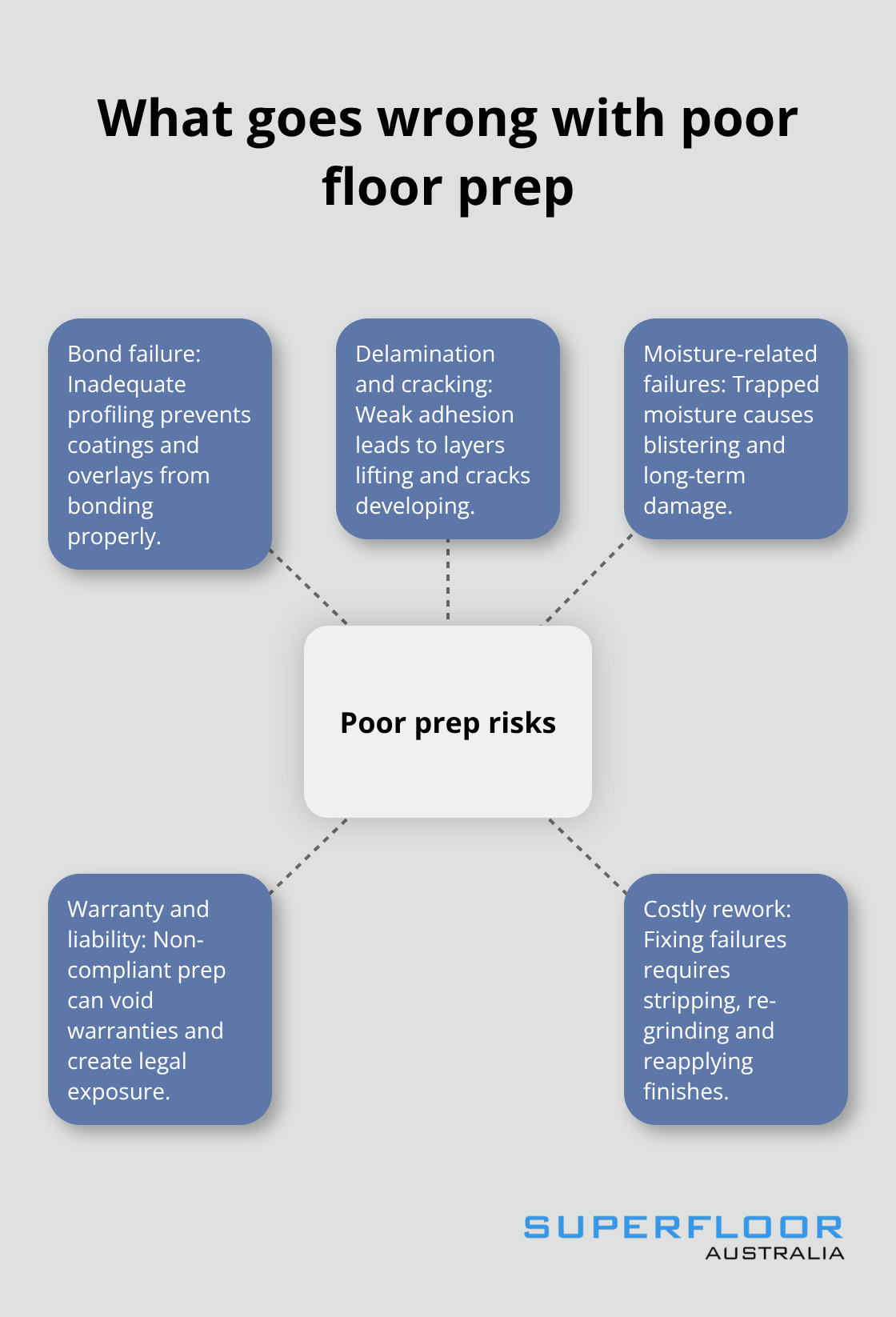
Skipping proper floor preparation is like building on sand. Contractors who rush through surface assessment or use inadequate grinding techniques create problems that multiply fast. A concrete surface that isn’t properly profiled won’t bond with epoxy coatings, toppings, or overlays. This leads to delamination, cracking, and moisture-related failures that force expensive rework months later. The Australian Building Standards & Tolerances Code explicitly requires floor preparation to meet specific standards before any finish application. Ignoring this creates liability issues and voids warranties on flooring systems.
Uneven Surfaces Create Safety and Performance Problems
Uneven concrete floors demand diamond grinding and levelling before coatings go down. If you skip this step, your final floor won’t be level, creating trip hazards and water ponding that violates workplace safety requirements. Shot-blasting machines like the CB1-10E paired with dust control systems remove contaminants and achieve the correct Concrete Surface Profile (CSP) without generating excessive downtime. Poor surface preparation can reduce the strength and longevity of your finish, according to industry standards. This means your flooring investment fails prematurely, forcing costly replacements and operational disruptions.
Dust Control Protects Your Workforce and Timeline
Inadequate dust control during prep work spreads silica and concrete particles throughout your facility, affecting air quality and worker health. Modern dust extraction systems like the CD-556B manage silica exposure during concrete grinding floor preparation and keep your site clean, allowing other trades to work simultaneously without delays. Proper substrate cleanliness is non-negotiable for bonding reliability. Advanced equipment preparation services across Brisbane complete floors quickly while maintaining site standards, reducing the preparation window from weeks to days. Your staff can return to normal operations faster, and your bottom line stays protected.
The Cost of Rework Multiplies Quickly
Failed floor prep doesn’t just waste time-it multiplies your expenses. Contractors must strip failed coatings, re-grind surfaces, and reapply finishes (a process that can cost 2–3 times more than proper initial prep). Moisture problems that develop under poorly prepared floors create ongoing maintenance headaches and potential structural concerns. The right preparation approach eliminates these expensive cycles and protects your investment from day one. Understanding what goes wrong helps you make informed decisions about your floor prep strategy and contractor selection.
How to Get Your Concrete Surface Ready for Coating
Diamond grinding and shot-blasting represent the two most effective methods for preparing commercial concrete in Brisbane, and your choice depends entirely on your surface condition and timeline. Diamond grinding works best for relatively sound concrete with minor unevenness or existing coatings that need removal. Grinding removes weak laitance, old adhesives, contaminants and high spots, while refining the slab to a uniform Concrete Surface Profile (typically CSP 1–3). Shot-blasting removes contaminants faster and achieves a more aggressive concrete surface profile in a single pass, making it ideal when you’re working against tight deadlines. Grinding produces a finer finish suitable for polished concrete or epoxy applications, whereas shot-blasting creates a rougher profile that bonds exceptionally well with coatings. For uneven floors, levelling toppings and self-levellers accelerate the process dramatically by filling low spots before coating application, cutting overall downtime by days on larger projects.
Assess Your Concrete Before Equipment Arrives
A qualified inspector must assess your existing flooring condition, moisture levels, and concrete strength before any equipment arrives on site. This 2–3 hour assessment identifies hidden problems like trapped moisture, old adhesive residue, or weak concrete that would derail your project mid-way. Your coating manufacturer specifies whether you need CSP 1 (minimal profile for sealers), CSP 2–3 (standard for epoxy), or CSP 4–5 (aggressive for heavy-duty industrial floors). Contractors who skip this assessment often guess at preparation depth, resulting in under-preparation that causes coating failure within months. The assessment also reveals whether you need tile lifting, vinyl removal, or scarifying to expose a clean substrate ready for treatment.
Choose the Right Surface Profile for Your Coating System
Concrete surface profile targets matter enormously because they determine how well your coating bonds to the substrate. Different coating systems demand different profiles-epoxy requires a moderately aggressive surface, while polyurethane systems often need less aggressive preparation. Your prep method must match both your surface condition and your coating specification to avoid adhesion failures. Shot-blasting achieves aggressive profiles quickly (CSP 4–5) in a single pass, while diamond grinding typically produces CSP 2–3 finishes suitable for most commercial applications. Mixing preparation methods-combining diamond grinding with shot-blasting or adding floor scarifying-tailors the result to your specific substrate and coating system requirements.
Control Dust to Keep Operations Running Parallel
Dust control throughout prep work isn’t optional in Brisbane’s commercial spaces because silica particles affect worker health and contaminate your facility. Modern extraction systems capture silica particles immediately, protecting your workforce and keeping your facility clean enough for other trades to work simultaneously. This parallel scheduling compresses your total project window significantly. The Makinex Mixing Station MS 150 ensures your coating mixture remains perfectly uniform before application, eliminating batch inconsistencies that cause uneven finishes or adhesion failures. Proper substrate cleanliness is non-negotiable for bonding reliability, and advanced dust control systems maintain site standards while other work continues around the prep zone.
Plan Your Preparation Sequence for Maximum Efficiency
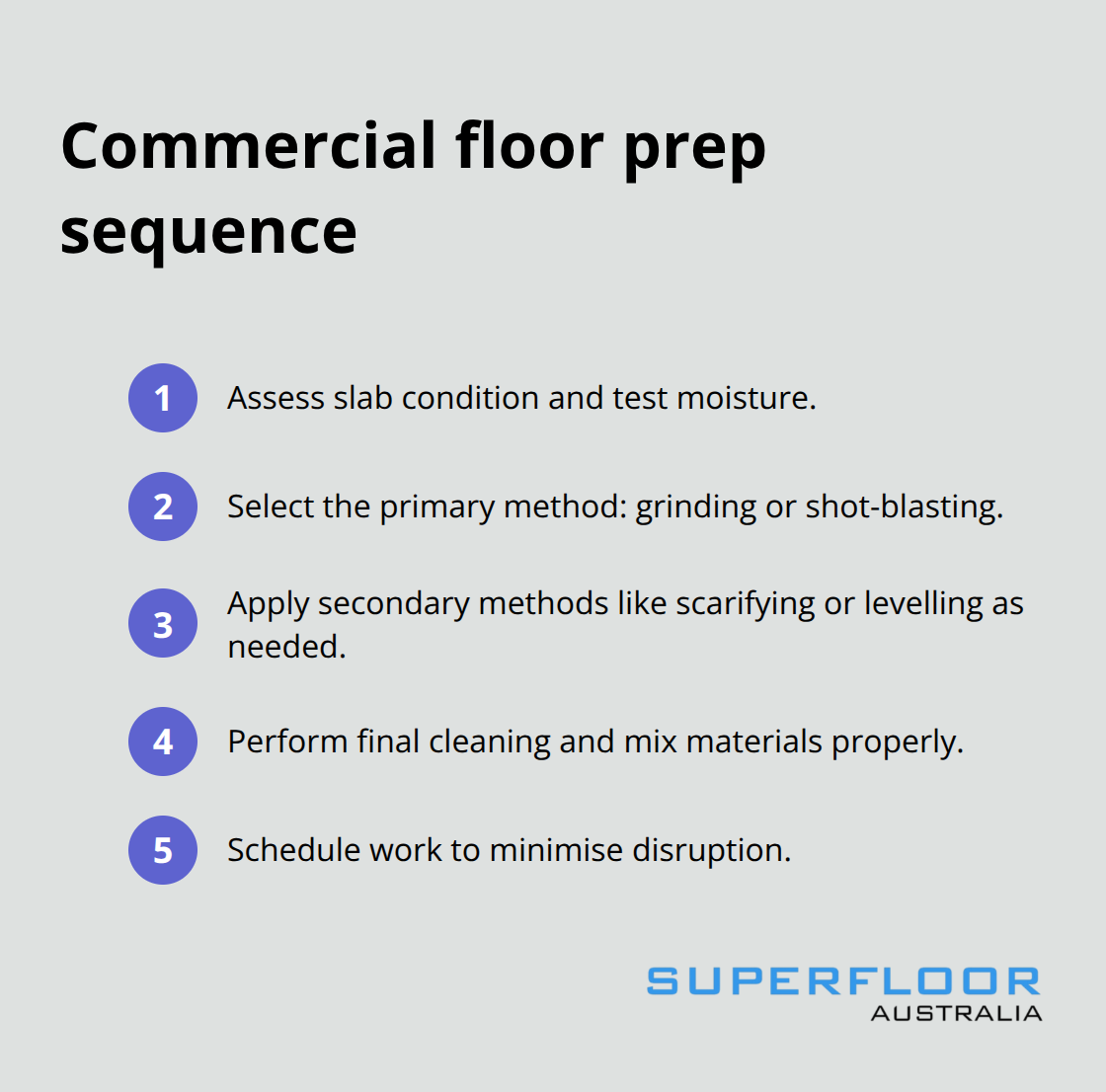
Your preparation sequence determines how quickly you move from raw concrete to coating-ready surface. Start with assessment and moisture testing, then select your primary prep method (grinding or shot-blasting), follow with any secondary methods needed (scarifying or levelling), and finish with final cleaning and mixing station preparation. Equipment rental options allow you to minimise capital outlay and speed project ramp-up without purchasing machines outright.
Scheduling prep work during off-peak hours or weekends reduces disruption to your operations while allowing your team to return to normal activities faster. With the right sequence and equipment in place, your concrete surface reaches optimal condition for coating application, setting the stage for a flooring system that performs reliably for years.
Timing Your Floor Prep to Minimise Business Disruption
Schedule Prep Work Outside Operating Hours
Scheduling floor preparation during off-peak hours or weekends isn’t just convenient-it’s the difference between losing thousands per day and maintaining normal operations. Most Brisbane commercial spaces benefit from Friday evening through Sunday morning scheduling, allowing your facility to resume Monday operations without interruption. If your business runs 24/7 (like food processing or pharmaceutical facilities), split prep into smaller zones across multiple weekends rather than attempting a full facility shutdown. The CB1-10E shot-blasting machine with CD-556B dust control completes large commercial floors in 2–3 days when scheduled intensively, versus 1–2 weeks of part-time work that disrupts daily operations repeatedly.
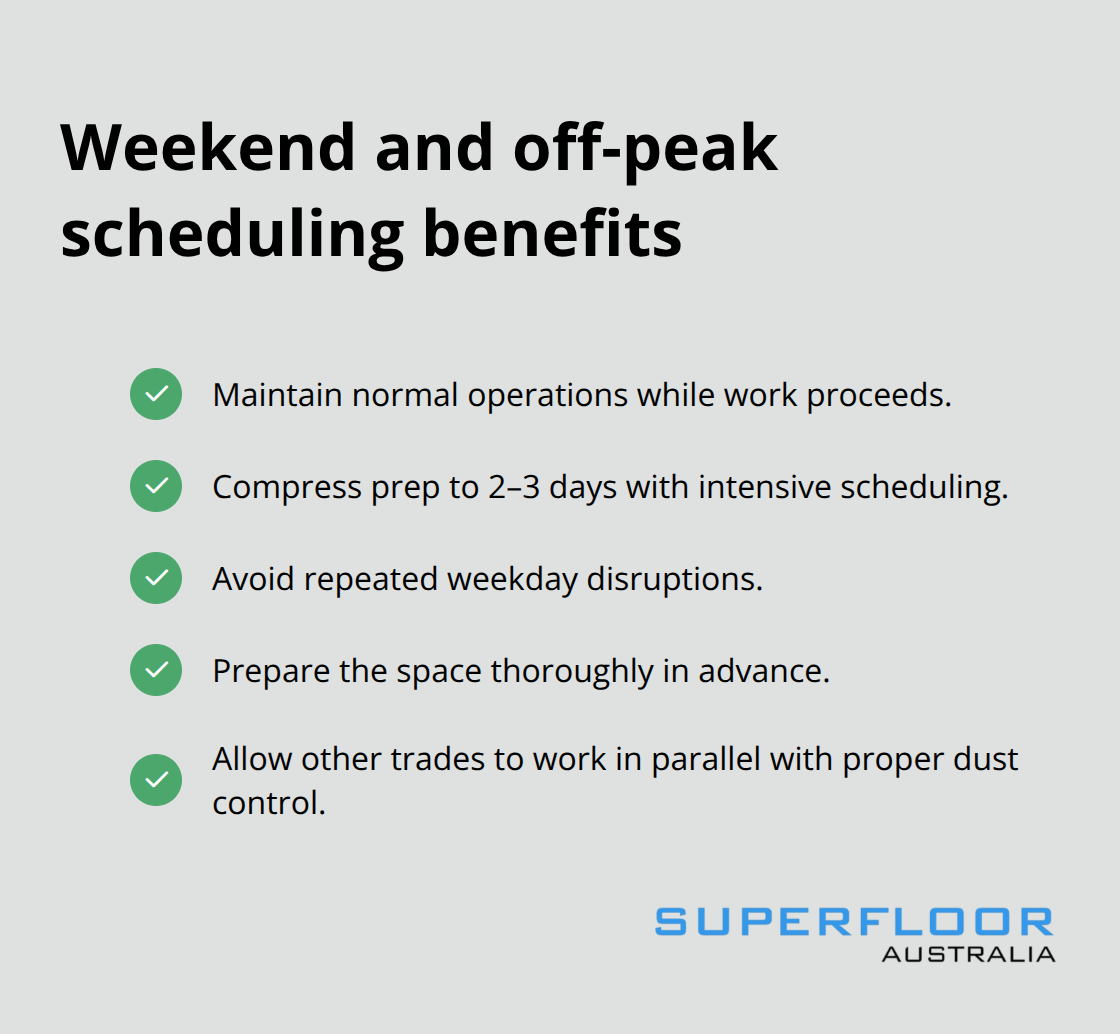
Weekend scheduling also lets your team prepare the space thoroughly in advance-clearing furniture, securing utilities, and addressing obstacles without rushing staff around active equipment. Advanced equipment like the Rubicon 250mm Single Phase Concrete Floor Grinder paired with efficient dust extraction systems cuts actual prep time dramatically, meaning you compress a two-week project into a single weekend window. This concentrated approach eliminates the constant disruption of equipment arriving and departing throughout the week.
Divide Large Facilities Into Manageable Zones
Phased preparation across different zones transforms large facilities from a single disruptive project into manageable sections that keep most operations running. For a 5,000-square-meter warehouse, divide the space into three zones and complete one zone per weekend, allowing your team to maintain shipping and receiving in unaffected areas. Smaller facilities benefit from front-to-back phasing, where you prep the entry zone first, then move progressively deeper into the space as teams relocate operations forward.
Equipment rental options let you access professional-grade grinders and shot-blasting machines without capital investment, reducing the pressure to complete everything quickly and allowing flexible scheduling around your actual business needs. The Makinex Mixing Station MS 150 stays on site between phases, eliminating setup delays when you move from one zone to the next.
Coordinate Realistic Timelines for Each Zone
Coordinate directly with your prep contractor about realistic timelines for each zone-most Brisbane contractors complete 800–1,200 square metres per day with proper dust control, so a 3,000-square-metre facility typically needs 3–4 prep days spread across 2–3 weekends. This phased approach also reveals any unexpected substrate issues (trapped moisture, weak concrete, old adhesive residue) in earlier zones, giving you time to address them before moving into subsequent areas rather than discovering problems mid-project. Early detection prevents costly surprises and keeps your schedule on track.
Final Thoughts
Commercial floor preparation Brisbane demands serious investment upfront, but the payoff protects your flooring system and your operational timeline. Rushed or inadequate prep work costs thousands in rework, failed coatings, and business disruption that drains your budget fast. The businesses that invest in proper assessment, select the right preparation methods, and schedule strategically protect their flooring investment while maintaining productivity throughout the project.
Quality preparation forms the foundation that determines whether your flooring lasts years or fails within months. Professional preparation services deliver measurable results because they combine the right equipment, proven techniques, and realistic timelines tailored to your specific facility. At superfloor australia, we understand that every Brisbane commercial space has unique requirements-whether you need polished concrete flooring that enhances aesthetics while remaining dust and stain-resistant, or concrete honing that reveals the strength and beauty of your surface.
The difference between a flooring project that runs smoothly and one that spirals into costly delays comes down to preparation. Contact superfloor australia to discuss your commercial floor preparation requirements and lock in a timeline that works for your business.