

Concrete surfaces take a beating in Brisbane’s climate. Cracks, stains, and uneven patches develop quickly, making your floors look worn and creating safety risks.
At superfloor australia, we’ve seen how concrete grinding Brisbane transforms properties. A properly ground concrete surface is the foundation for any polished floor, sealed driveway, or industrial workspace that lasts.
What Concrete Grinding Actually Fixes
Concrete surfaces take a beating in Brisbane’s climate. Cracks, stains, and uneven patches develop quickly, making your floors look worn and creating safety risks. Concrete grinding removes the weak surface layer that deteriorates fastest in Brisbane’s heat and humidity.
Moisture and Contaminant Assessment
Moisture penetration above 4% dramatically reduces diamond cutting performance, which is why calcium chloride tests or electronic moisture metres matter before any serious work begins. You must verify concrete moisture first because a damp slab wastes time and tooling. Oil stains penetrate up to 6 mm deep and require chemical degreasing before grinding to prevent accelerated tool wear and glazing that leaves your floor looking streaky and uneven.
Paint layers, epoxy coatings, and adhesive residues from old carpet or tile installations clog your tooling and cause heat buildup if not treated properly. Surface hardeners and sealers cut grinding efficiency, so identifying them through water absorption tests guides the correct tooling choice. Structural cracks wider than 2 mm signal foundation problems that must be repaired first, and hollow areas detected by hammer tapping indicate delamination risk that grinding alone cannot fix.
Eliminating Trip Hazards Through Precision Levelling
Trip hazards from raised edges and uneven patches create genuine safety risks in commercial and residential settings. Grinding removes these obstacles systematically, bringing high spots down to meet low spots across the entire slab. Pattern control determines success here: you must overlap each pass by 2 to 3 inches, mark every 10 feet, and check flatness with a straightedge to prevent gaps over 3 mm that indicate technique failures.
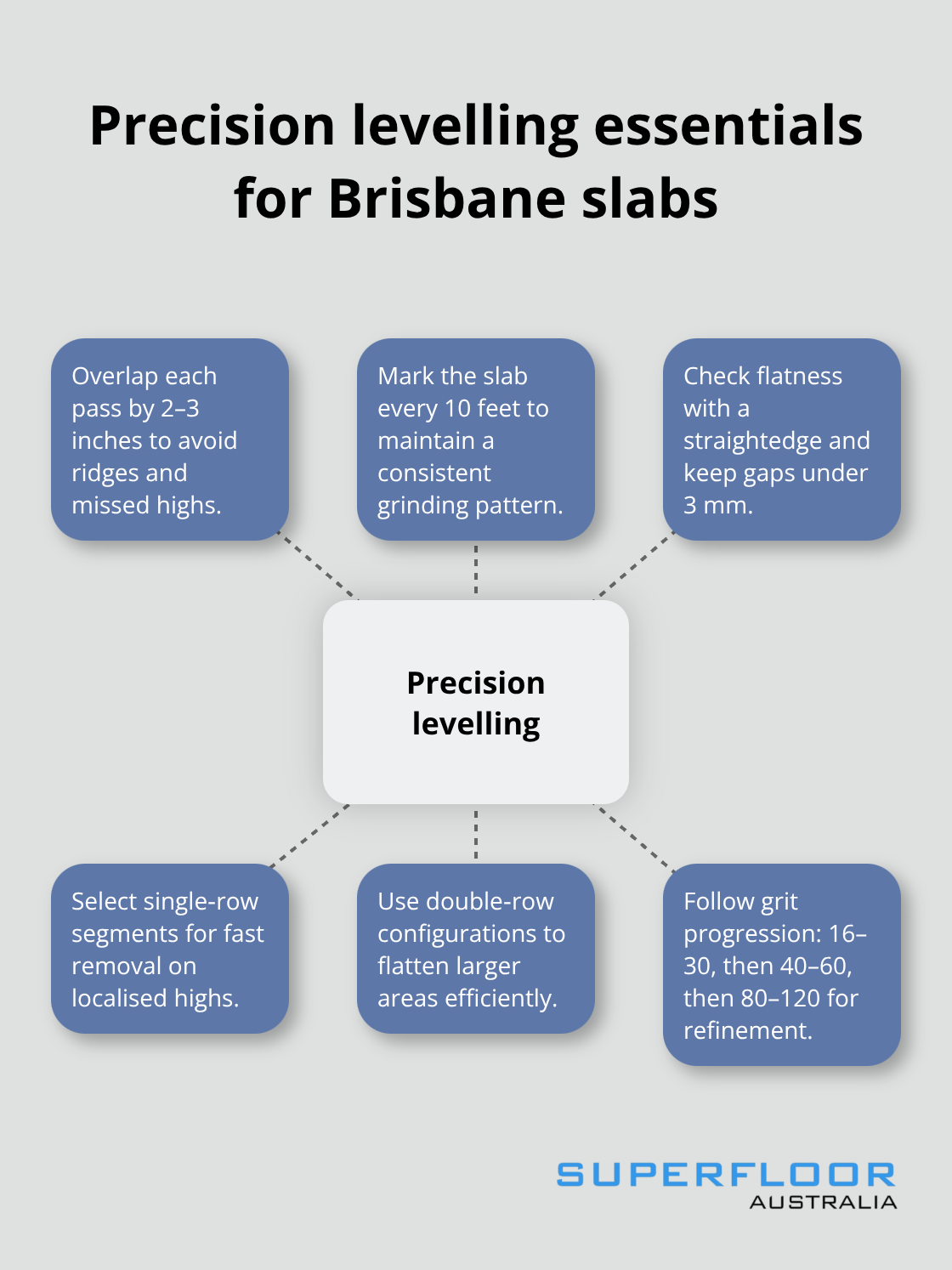
Single-row segments excel at removal work, while double-row configurations flatten larger areas more effectively. Grit progression matters fundamentally to this process-start with 16 to 30 grit for aggressive removal, advance to 40 to 60 grit for levelling, then 80 to 120 grit for refinement. Skipping grits creates scratches that require extra passes and waste time.
Managing Dust and Moisture During Grinding
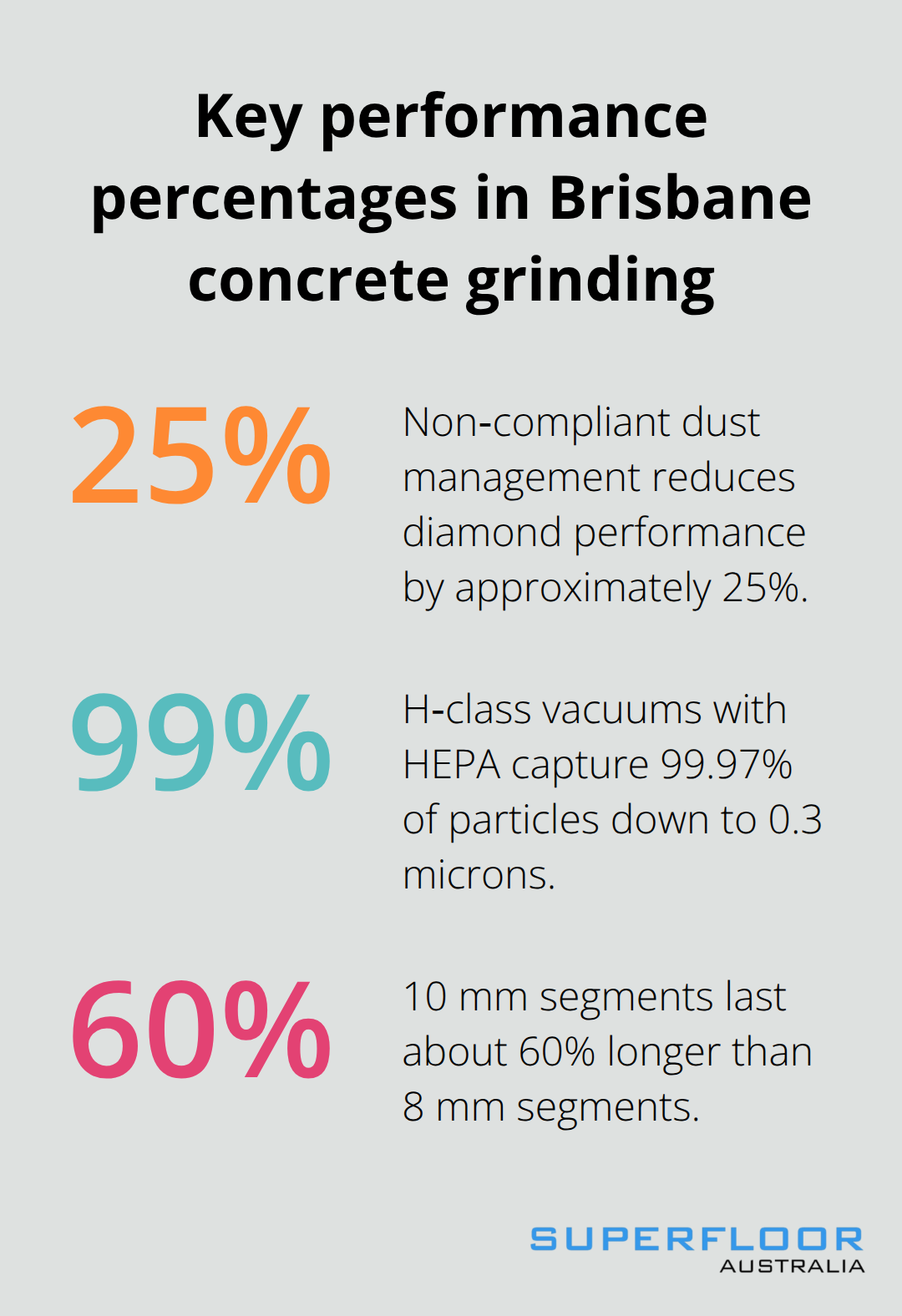
Dust control during this phase is critical: non-compliant dust management reduces diamond performance by approximately 25%, so you must use P2 respirators, H-class vacuums, and HEPA filtration with at least 200 CFM per head. Wet grinding eliminates dust but extends drying time by 24 to 48 hours, making dry grinding faster for indoor Brisbane projects where moisture is already a concern.
The choice between wet and dry methods depends on your location, current floor condition, and timeline constraints.
These preparation steps determine whether your floor ends up smooth and level or develops new problems within months. Once you’ve addressed moisture, contaminants, and surface defects, your concrete is ready for the next critical phase: selecting the right equipment and techniques to achieve the precision finish your Brisbane property demands.
How Professional Grinding Delivers Precision Results
Selecting the Right Equipment for Your Project
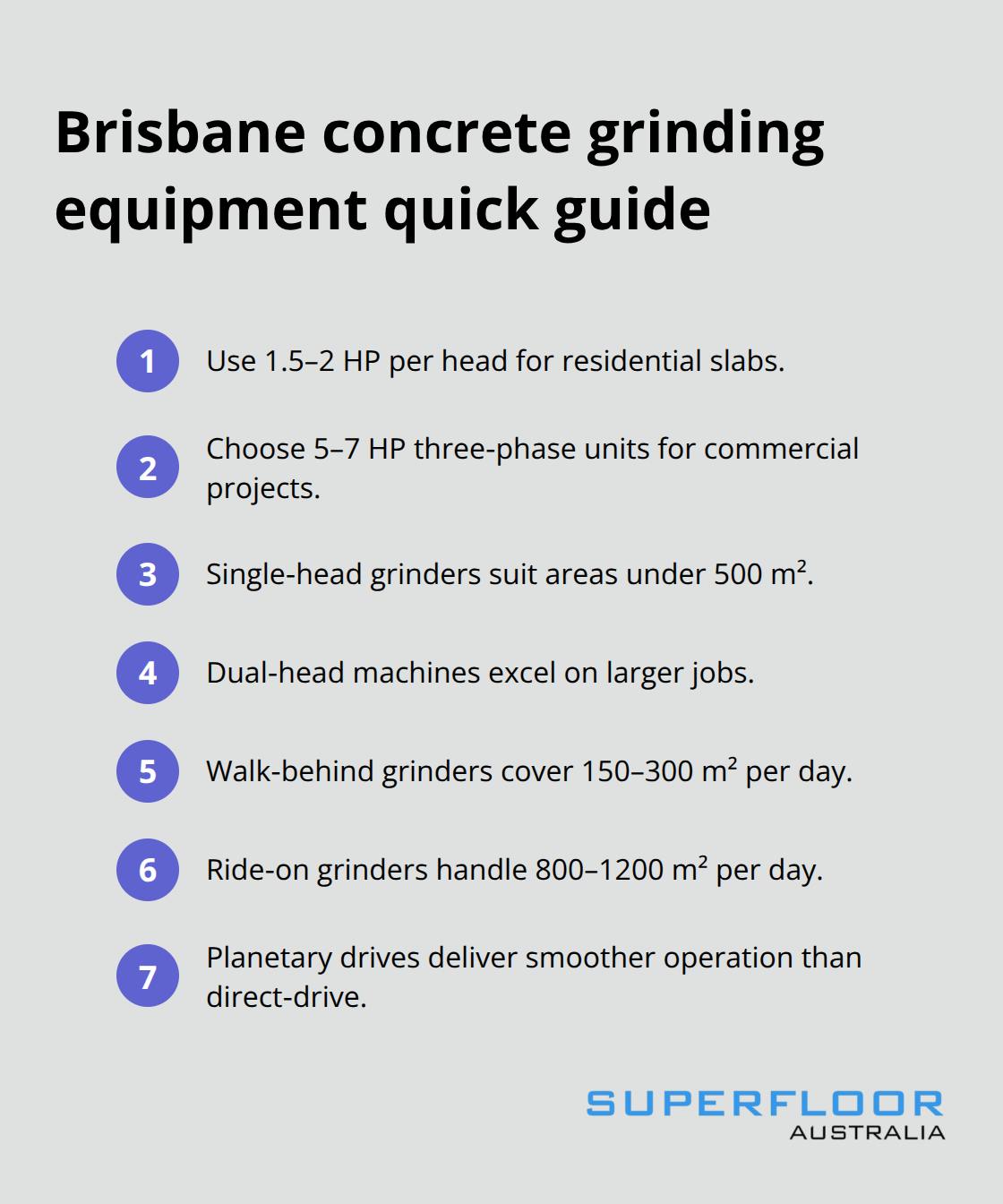
The equipment you select determines whether your concrete ends up perfectly level or develops costly problems down the line. Planetary drive grinders outperform direct-drive machines because they deliver smoother operation across the entire project. For residential slabs, 1.5 to 2 horsepower per grinding head suffices, but commercial projects demand 5 to 7 HP units with three-phase power to maintain consistent cutting force. Single-head grinders work efficiently on areas under 500 square metres, while dual-head machines excel on larger commercial jobs. Walk-behind machines cover 150 to 300 square metres daily, and ride-on grinders handle 800 to 1200 square metres daily, so matching your equipment to the slab size prevents wasted time and energy.
Diamond Tooling and Segment Selection
Diamond tooling choices depend on concrete hardness: for moderate hardness between 25 and 35, use medium-bond diamonds with 30 to 50 grit, but switch to soft-bond segments for harder concrete above 45. Metal-bond diamonds outperform resin-bond on aggregate-heavy surfaces because they tolerate higher speeds better than resin options that break down under excessive heat. Segment height matters significantly-10 millimetre segments last about 60% longer than 8 millimetre segments, though they require higher horsepower and proper machine sizing to avoid damage.
Operating Speed, Pressure, and Temperature Control
Speed and pressure determine the quality of your finish, not effort. Operate within 50 to 200 feet per minute traverse speed while maintaining 60 to 80 pounds of downward pressure per head, adjusting both based on concrete hardness and bond strength. Monitor surface temperature with an infrared thermometer because overheating damages the concrete; if temperatures rise, ease pressure by 20 to 30% and increase traverse speed to distribute heat across a wider area. Wet grinding keeps water-assisted temperatures below 120 degrees Fahrenheit but extends drying time by 6 to 12 hours, so dry grinding remains faster for Brisbane’s indoor projects where moisture already poses challenges.
Quality Verification and Grit Progression
After completing each grit stage, verify texture depth with replica tape before advancing to finer grits-this simple step prevents the costly mistake of missing shallow scratches that require multiple extra passes to fix. Heat management and consistent traverse speed prevent ridges that ruin an otherwise professional finish. The most expensive mistakes occur when contractors skip grits, choose undersized equipment, or fail to account for moisture conditions before starting. Brisbane’s heat and humidity demand respect for these technical details because rushing through preparation stages leads to surface failures within months. Once your grinding achieves the desired flatness and texture, the concrete stands ready for sealing, polishing, or whatever finishing treatment your Brisbane property requires.
Where Concrete Grinding Works Best in Brisbane
Residential Properties and Specific Problem Areas
Residential properties across Brisbane benefit most when grinding addresses specific problems rather than serving as a generic upgrade. Garages develop oil stains that penetrate 6 mm deep, requiring chemical degreasing before grinding to prevent tool wear and glazing that leaves streaky finishes. Living areas and bedrooms often hide old tile adhesive or carpet glue that clogs tooling and causes heat buildup during grinding. Patios and driveways crack under Queensland’s heat cycles, creating trip hazards that grinding eliminates systematically by bringing high spots down to meet low spots. Most residential grinding projects complete within a single day, though larger homes with multiple problem areas may need two sessions. The real value emerges when you prepare the slab properly before applying new finishes-a ground concrete surface accepts sealers and polishes far more effectively than a neglected slab, extending the lifespan of whatever coating you choose.
Commercial Retail and Office Spaces
Commercial retail floors and office spaces demand grinding because foot traffic compounds existing surface problems. Concrete hardness in commercial buildings typically ranges between 25 and 45 on the rebound hammer scale, requiring medium-bond diamonds with 30 to 50 grit for moderate hardness or soft-bond segments for harder surfaces. Dual-head machines excel on larger commercial jobs because they cover more area consistently than single-head equipment, which works efficiently only under 500 square metres. Walk-behind machines handle 150 to 300 square metres daily, while ride-on grinders cover 800 to 1200 square metres daily, so matching equipment to your space prevents wasted time and inconsistent results. Dust control becomes non-negotiable in commercial settings-H-class vacuums with HEPA filtration capture 99.97% of particles down to 0.3 microns, protecting both your workers and the finished surface.
Industrial Warehouses and Manufacturing Facilities
Industrial warehouses and manufacturing facilities benefit from grinding because machinery vibration and heavy vehicle traffic accelerate surface deterioration. These spaces require 5 to 7 horsepower units with three-phase power to maintain consistent cutting force across extended grinding sessions. Segment height selection matters more in industrial applications-10 millimetre segments last approximately 60 percent longer than 8 millimetre alternatives, though they demand higher horsepower and proper machine sizing to avoid damage during operation.
Final Thoughts
Concrete grinding Brisbane isn’t a luxury upgrade-it’s the foundation that determines whether your floor investment lasts years or fails within months. Every crack sealed, every stain removed, and every uneven patch levelled during the process prevents costly problems down the road. The technical precision required-from moisture testing to grit progression to temperature control-separates professional results from amateur mistakes that leave surfaces streaky, uneven, or prone to rapid deterioration.
Brisbane properties face unique challenges through moisture penetration, heat cycles, and heavy traffic that demand respect for technical fundamentals. Rushing through preparation stages or cutting corners on dust control creates surface failures that compound over time. The most expensive mistakes happen when property owners skip professional concrete grinding entirely, assuming their concrete is ready for finishing work when it isn’t.
Quality results come from understanding your specific concrete conditions, selecting appropriate equipment and diamonds for your hardness level, and executing each grit stage with precision. Whether you’re preparing a residential garage, commercial retail space, or industrial warehouse, the process determines everything that follows. Superfloor Australia delivers the expertise and precision your Brisbane property deserves, transforming rough concrete into surfaces ready for polished finishes, honed elegance, or slip-resistant outdoor solutions.