

Brisbane’s high-traffic commercial spaces demand flooring that can handle constant wear without breaking the bank. Durable concrete floors deliver exactly that-they’re built tough, cost less than most alternatives, and require minimal upkeep.
We at Superfloor Australia have spent years helping Brisbane businesses find flooring solutions that actually perform. This guide walks you through why concrete stands out, how it compares to other options, and what you need to know to keep your floors in top shape.
Why Concrete Outperforms Everything Else in Brisbane’s Busiest Spaces
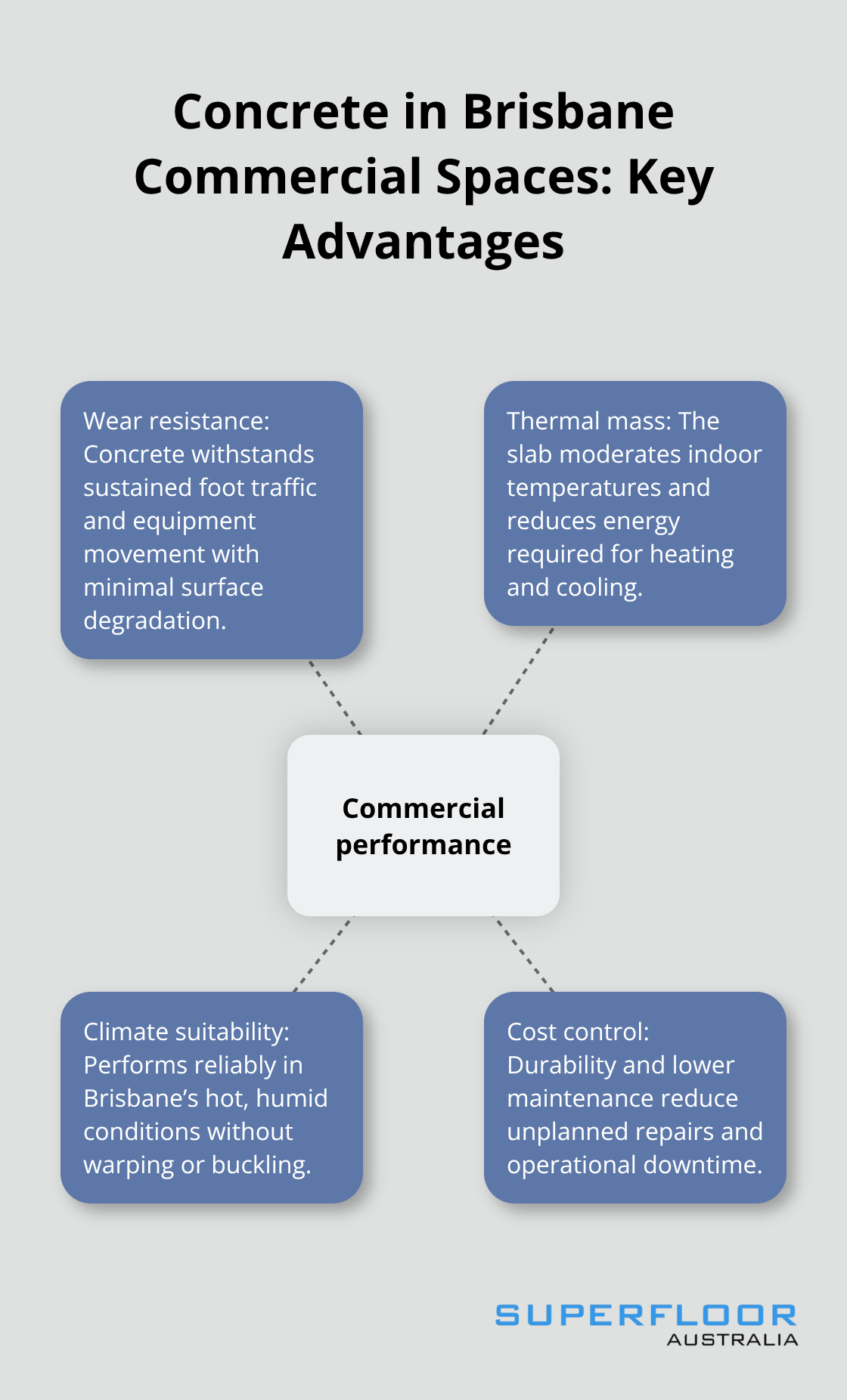
Concrete floors don’t just survive heavy foot traffic-they thrive under it. A Brisbane family of five installed polished concrete seven years ago and still enjoys the floor’s original lustre despite constant foot traffic and furniture movement. That’s not luck; it’s material science. Polished concrete resists wear and heavy foot traffic because the surface hardens as it cures, and the sealing process locks in that durability. Unlike carpet, which requires replacement every 5–7 years, or hardwood, which needs refinishing about every decade, concrete maintains its integrity for 10 to 30 years with proper installation and maintenance.
How Concrete Handles Commercial Demands
Commercial spaces in Brisbane see dramatic results-retail environments, warehouses, and high-use facilities report minimal surface degradation even after years of constant activity. The thermal mass of concrete also contributes to energy efficiency, helping reduce heating and cooling costs in dense urban environments. This matters for Brisbane businesses operating in hot, humid conditions where air conditioning costs cut into margins.
Maintenance That Stays Simple
The low-maintenance claim isn’t marketing speak-it’s measurable. Routine care involves sweeping or vacuuming and damp mopping with a pH-neutral cleaner. Thorough cleaning every 1–3 months maintains shine and protection, but that’s it. No stripping, no refinishing cycles, no specialist treatments. The non-porous surface resists bacteria, mould, and allergens, which means kitchens and bathrooms stay cleaner longer and healthier. Resealing every few years protects against wear and maintains shine, extending both appearance and longevity, but this represents preventative maintenance, not emergency repair. Carpet deep-cleaning services and hardwood refinishing contractors demand ongoing professional intervention-concrete simply doesn’t.
The Financial Case for Concrete
The numbers favour concrete overwhelmingly. Polished concrete floors offer about life-cycle cost than traditional flooring solutions. At typical installation costs ranging from $25 to $100 per square metre, a 100-square-metre commercial space in Brisbane costs $2,500 to $10,000 upfront. That same space with carpet replacement every five years at current market rates, plus hardwood refinishing costs every decade, or tile maintenance and grout sealing, exceeds concrete’s total cost of ownership by a significant margin over 30 years. Energy savings add another layer-the high light reflectivity of polished concrete reduces the need for overhead lighting, lowering energy consumption in Brisbane spaces. For businesses operating on tight budgets, this combination of low installation costs, minimal maintenance expense, and energy savings makes concrete the rational choice.
Choosing the Right Concrete Solution
Selecting the right finish matters. Polished concrete delivers a sleek, high-gloss appearance that suits modern commercial environments, while honed concrete provides a matte finish that works equally well in contemporary or industrial spaces. Both options resist dust, stains, and allergens-critical for maintaining healthy indoor air quality in busy facilities. The choice depends on your aesthetic preferences and the specific demands of your space. Understanding these differences helps you make an informed decision that aligns with both your budget and your vision for the space.
How Polished Concrete Stacks Up Against Traditional Commercial Flooring
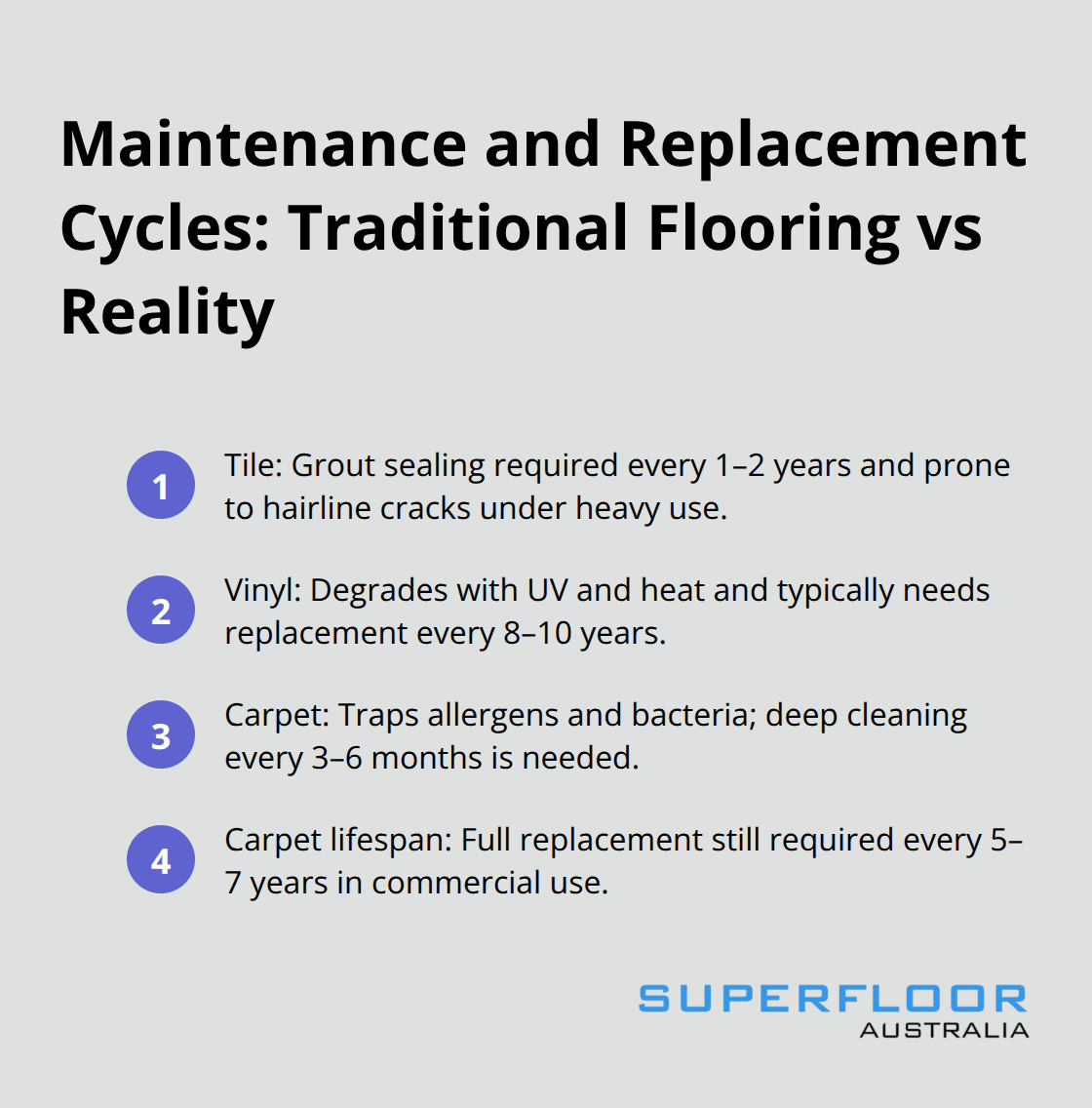
Polished concrete outperforms tile, vinyl, and carpet in commercial spaces because it eliminates the hidden costs that drain budgets year after year. Tile requires grout sealing every 1–2 years and develops hairline cracks under heavy machinery or constant foot traffic, forcing expensive repairs. Vinyl degrades under UV exposure and heat, common in Brisbane’s climate, and typically needs replacement every 8–10 years. Carpet traps allergens and bacteria, necessitating professional deep cleaning every 3–6 months, and still requires full replacement every 5–7 years.
Why Polished Concrete Resists Failure
Polished concrete resists all of these failure modes. The surface hardens progressively through the polishing process, which uses diamond abrasives for grinding and progressive polishing stages, creating a non-porous finish that actively repels contaminants. Wear resistance is measurable: polished concrete maintains structural integrity for 10–15 years with proper sealing, and resealing every few years costs a fraction of what tile grout maintenance or carpet replacement demands. A Brisbane retail environment running 24/7 with heavy foot traffic experiences zero surface degradation on polished concrete where tile would show visible wear patterns within 2–3 years.
Aesthetics That Deliver Professional Impact
The aesthetic advantage is equally decisive. Polished concrete delivers a sleek, high-gloss finish that reads as modern and professional, while simultaneously offering design flexibility through stains, aggregate exposure, and custom patterns. Honed finishes provide a matte alternative for spaces where gloss feels too reflective, revealing the floor’s character without the shine. Both finishes accommodate the Brisbane climate’s humidity and heat without warping, fading, or buckling like hardwood does.
Maintenance That Eliminates Contractor Dependency
Maintenance separates polished concrete from everything else in the market. Daily upkeep requires only sweeping or vacuuming and damp mopping with pH-neutral cleaner-no specialist equipment, no contractors, no downtime. Thorough cleaning every 1–3 months maintains both appearance and protection. Tile demands grout scrubbing and sealing. Vinyl needs stripping and rewaxing. Carpet demands extraction cleaning. Polished concrete demands none of this. The high light reflectivity of the surface reduces overhead lighting needs, lowering energy bills directly.
Energy Efficiency and Long-Term Value
Thermal mass of concrete contributes to energy efficiency, helping reduce heating and cooling costs in dense urban environments (a significant advantage in Brisbane’s hot, humid climate). For commercial operators, polished concrete eliminates the maintenance treadmill entirely while delivering durability and aesthetics that other flooring cannot match. This combination of low ongoing costs, minimal labour demands, and superior performance makes the comparison straightforward-when you examine what each flooring type actually costs over a decade, concrete’s advantage becomes undeniable.
Understanding these performance differences helps you assess which option truly serves your Brisbane commercial space. The next step involves selecting the specific concrete finish and maintenance approach that aligns with your facility’s unique demands.
Matching Your Concrete Choice to What Your Space Actually Demands
Assess Your Space’s Real Traffic Patterns
Picking the right concrete finish starts with understanding what your Brisbane space actually endures. A retail environment with constant foot traffic, shopping trolleys, and outdoor dirt tracked inside demands different specifications than a corporate office with controlled traffic patterns. Walk your space during peak hours and count foot traffic patterns-if you handle 500+ people daily, polished concrete with a sealer rated for heavy commercial use becomes non-negotiable. Honed finishes work equally well but require honest assessment of your cleaning capacity; they hide dirt better than polished surfaces, which matters if your team cannot commit to weekly deep cleaning.
The Brisbane climate adds another layer: humidity between 60–80% year-round means moisture management during installation directly impacts curing quality and long-term durability. A warehouse storing heavy equipment needs maximum wear resistance and slip prevention, while a showroom prioritises aesthetic impact and light reflection to reduce electricity costs. Document your current flooring failures-if your existing tile shows stress cracks in high-traffic zones after three years, concrete’s monolithic surface eliminates that weak point entirely.
Plan Installation Around Your Operations
Installation timelines matter significantly for your business continuity. Residential projects typically take a few days, while larger commercial jobs may take longer depending on scope. Factor this into your planning before committing to the work. Coordinate with your team to identify low-traffic periods when installation disruption affects operations minimally. This advance planning prevents costly downtime and ensures smoother project execution.
Establish Daily Maintenance Routines
Daily maintenance determines whether your investment stays pristine or deteriorates rapidly. Sweep or vacuum every morning before peak traffic, then damp mop with pH-neutral cleaner three times weekly in high-traffic areas. Thorough cleaning every 1–3 months maintains both shine and protective sealing. This isn’t optional-skipping maintenance accelerates degradation despite concrete’s durability reputation.
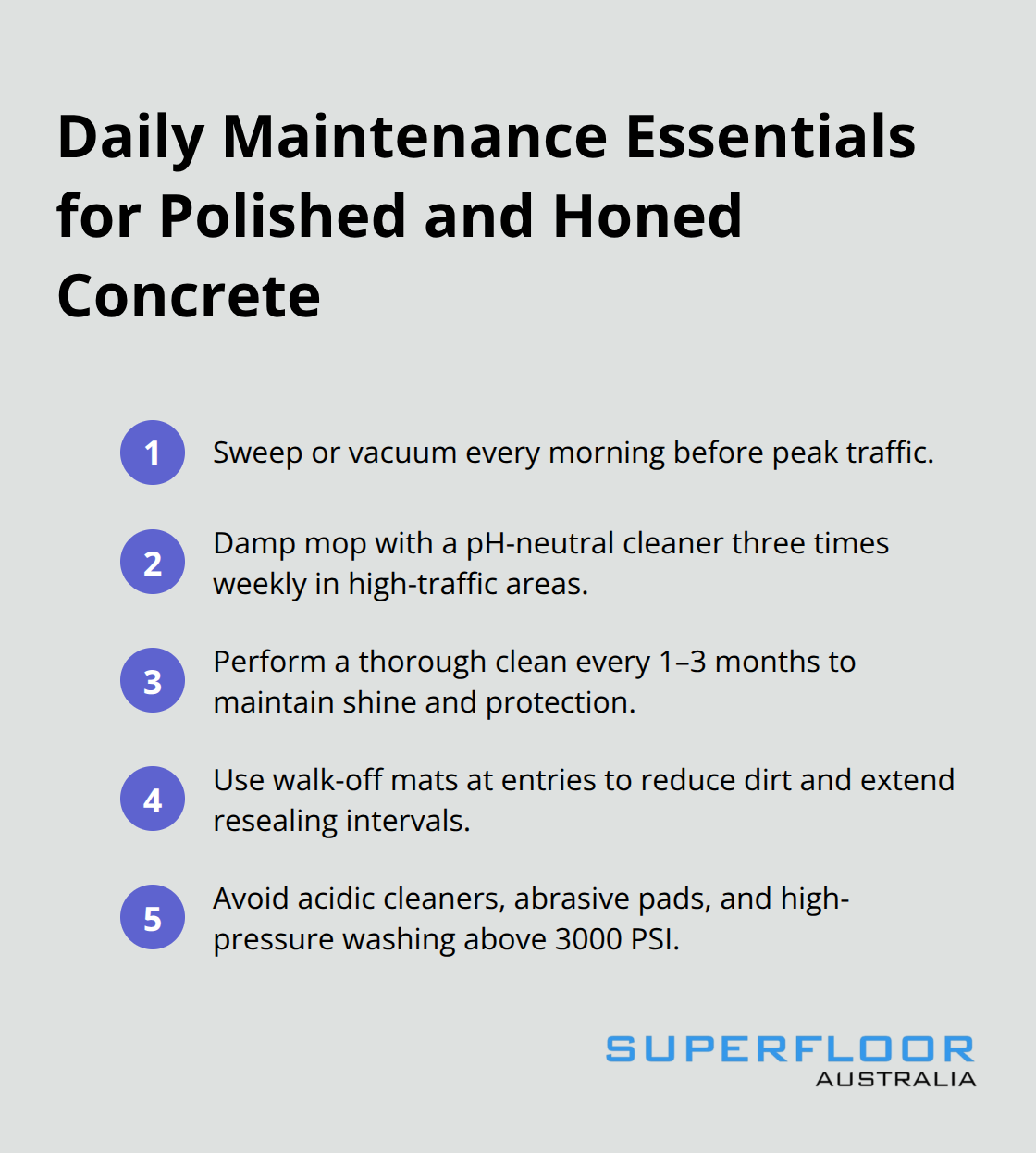
Keep entryways equipped with walk-off mats to reduce dirt and moisture entering the main space-this single practice extends resealing intervals by 12–18 months. The non-porous surface resists bacteria and mould growth, but moisture pooling in corners still causes problems, so ensure drainage around perimeter areas. Train your cleaning team on what damages concrete: acidic cleaners destroy sealing, abrasive scrubbing scratches polished surfaces, and pressure washing above 3000 PSI can degrade the finish.
Schedule Resealing and Stain Management
Resealing every 2–5 years costs between $3 to $8 per square metre depending on your finish type and current condition, a fraction of what tile grout sealing or carpet replacement demands. Stains happen in commercial spaces; address them immediately with appropriate stain removers followed by resealing to restore shine rather than waiting weeks. Schedule resealing during low-traffic periods; typical curing takes 24–48 hours before normal use resumes.
Establish a simple checklist system so responsibility doesn’t fall to one person. This straightforward maintenance approach keeps concrete floors performing at peak condition for 10–30 years, making the financial case even stronger than initial installation costs suggest.
Final Thoughts
Brisbane’s busiest commercial spaces need flooring that performs without constant intervention, and durable concrete floors deliver exactly that combination. They withstand heavy foot traffic, resist stains and allergens, and cost significantly less than tile, vinyl, or carpet over their lifespan. A 100-square-metre commercial space saves thousands in maintenance labour, resealing costs, and replacement cycles compared to traditional flooring, while energy savings from reduced lighting needs and thermal mass benefits add another layer of value that spreadsheets often miss.
Polished concrete maintains structural integrity for 10–30 years with proper maintenance, while tile develops stress cracks, vinyl degrades under Brisbane’s heat and humidity, and carpet requires replacement every five to seven years. Your team spends less time managing flooring problems and more time running your business. Daily maintenance takes minutes, not hours, and resealing happens every few years, not annually.
We at Superfloor Australia understand what Brisbane businesses actually need. Our polished concrete flooring delivers the sleek, high-gloss finish that reads professional while eliminating the maintenance treadmill, and we specialise in concrete honing as well, revealing the floor’s natural character with a matte finish that suits different aesthetic preferences. Contact Superfloor Australia to discuss how durable concrete floors can transform your Brisbane facility.