

Most flooring projects fail before the concrete is even poured. Poor floor prep methods are the silent killer of expensive installations, and we see it happen in Brisbane regularly.
At Superfloor Australia, we’ve learned that skipping or rushing preparation costs far more in rework than it saves in time. This guide walks you through the exact steps that separate professional results from costly mistakes.
Reading Your Concrete Before You Start
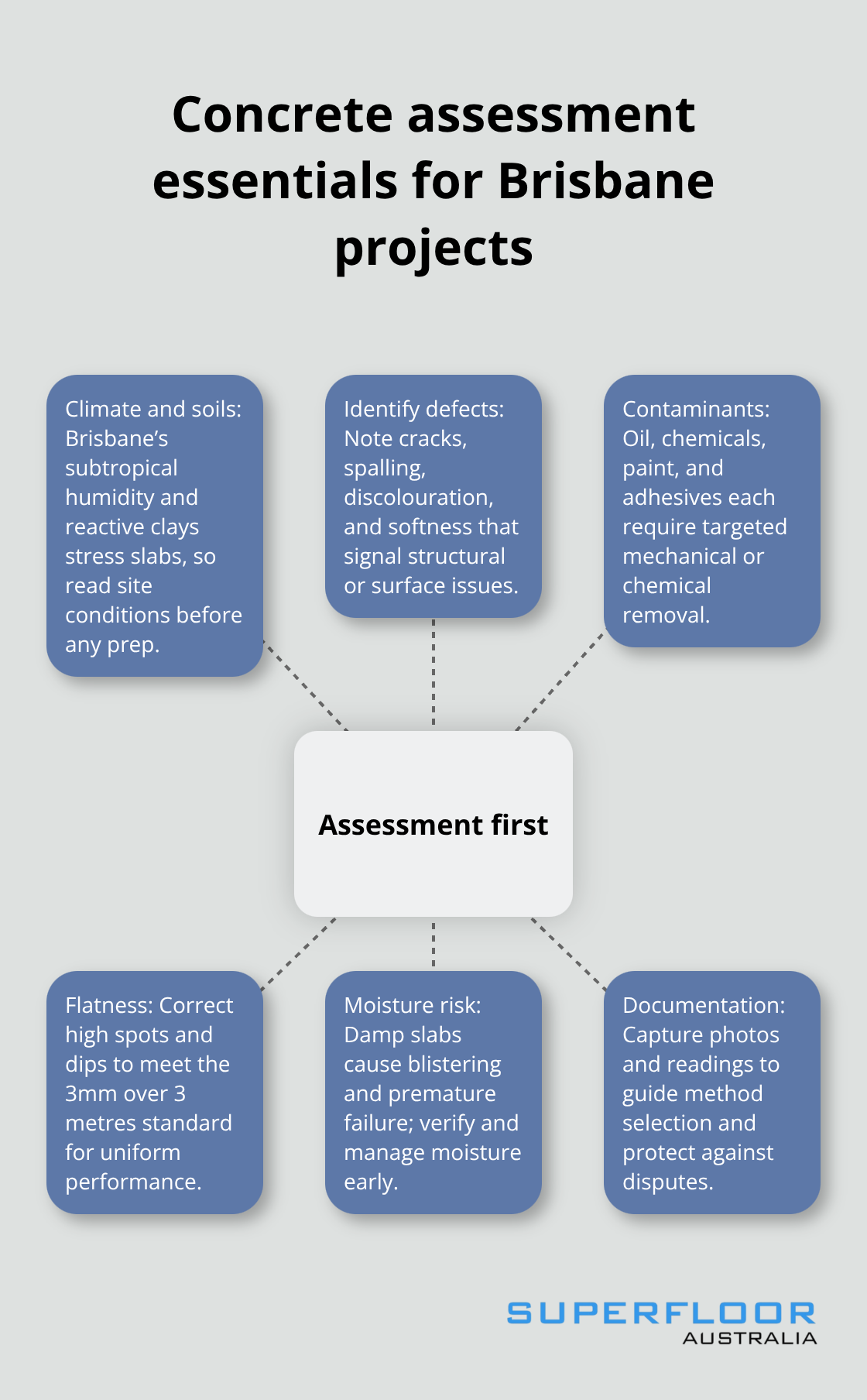
Brisbane’s subtropical climate and reactive clay soils place extraordinary stress on concrete surfaces, which is why understanding what you’re working with matters far more than most people realise. The main reason floor coatings fail in Brisbane isn’t the coating itself-it’s inadequate surface preparation rooted in a poor read of the existing concrete. Before any grinding, shot blasting, or moisture barrier goes down, you need to know exactly what condition your slab is in, what contaminants are present, and whether structural issues will undermine your entire project. This assessment phase separates professionals from amateurs and determines whether your floor will last ten years or fail within two.
What to Look For in Your Concrete
Start with a visual inspection of the entire surface, paying attention to cracks, spalling, discolouration, and any areas where the concrete appears soft or powdery. Structural cracks deeper than 3mm or those showing signs of movement indicate a foundation problem that preparation alone cannot fix-you’ll need engineering assessment before proceeding. Laitance, a thin layer of cement and fine particles that rises to the surface during curing, creates a weak bond and must be removed; if your concrete feels chalky or dusty to the touch, laitance is present. Oil stains, chemical residues, paint, and adhesive residues are common in industrial and commercial spaces, and each requires different removal techniques. In Brisbane warehouses and distribution centres, forklift traffic leaves embedded contaminants that basic cleaning won’t address. Surface flatness matters too-if your slab has high spots exceeding 3mm over a 3m straightedge, grinding and levelling will be necessary. Moisture is the silent threat; wet or damp concrete won’t accept coatings properly and can trap moisture beneath the surface, causing blistering and failure months after application.
Testing That Protects Your Project
Moisture testing is non-negotiable in Brisbane’s humid climate. Concrete moisture content must be tested using calcium chloride or relative humidity testing before any coating goes down; Australian Standards require this step, and skipping it is one of the fastest paths to coating failure. Pull-off adhesion testing on existing surfaces shows how strongly any old coating bonds and whether removal will be necessary. pH testing reveals whether acidic or alkaline contaminants are present and need neutralisation. Contamination analysis identifies what you’re dealing with; some residues require targeted acids or alkaline treatments, while others need mechanical removal.
Documentation Creates Your Roadmap
Document everything with photographs and measurements-this creates a record that guides your preparation strategy and protects you if issues emerge later. A detailed assessment report (including moisture readings, pH levels, and contamination findings) becomes your blueprint for selecting the right preparation method. Professional testing equipment and trained technicians catch problems that visual inspection alone will miss, preventing costly failures after coating application. This documentation also helps you communicate with contractors about exactly what needs to happen next, removing guesswork from the preparation process.
How to Prepare Your Surface the Right Way
Grinding: The Foundation of Professional Prep
Grinding forms the core of most floor prep work in Brisbane, and it cannot be skipped. Professional diamond grinding creates consistent surface profiles while removing surface contamination and laitance layers effectively. Variable diamond grit allows precise control-light grits for gentle texturing, aggressive grits for heavy removal-which means your contractor can match the grinding intensity to what your concrete actually needs. In Brisbane’s humid climate, this control matters because over-grinding wastes time and money, while under-grinding guarantees coating failure.
Shot blasting with steel shot creates deeper mechanical profiles than grinding alone and works better for heavy industrial contamination, which is why warehouses and distribution centres often require it instead of grinding. The choice between grinding and shot blasting depends on what sits on your concrete: light contamination and old coatings respond to grinding, but oil penetrations, embedded residues, and severe contamination demand shot blasting.
Levelling for Uniform Performance
Levelling comes next if your slab has high spots or dips. Self-levelling compound fills low areas and creates a uniform base across the entire surface, which prevents coating thickness from varying and ensures consistent performance. This step requires precision-try for flatness within 3mm over 3 metres, which is the standard that separates professional results from patchy, premature failure.
Dust Removal: Where Amateurs Fail
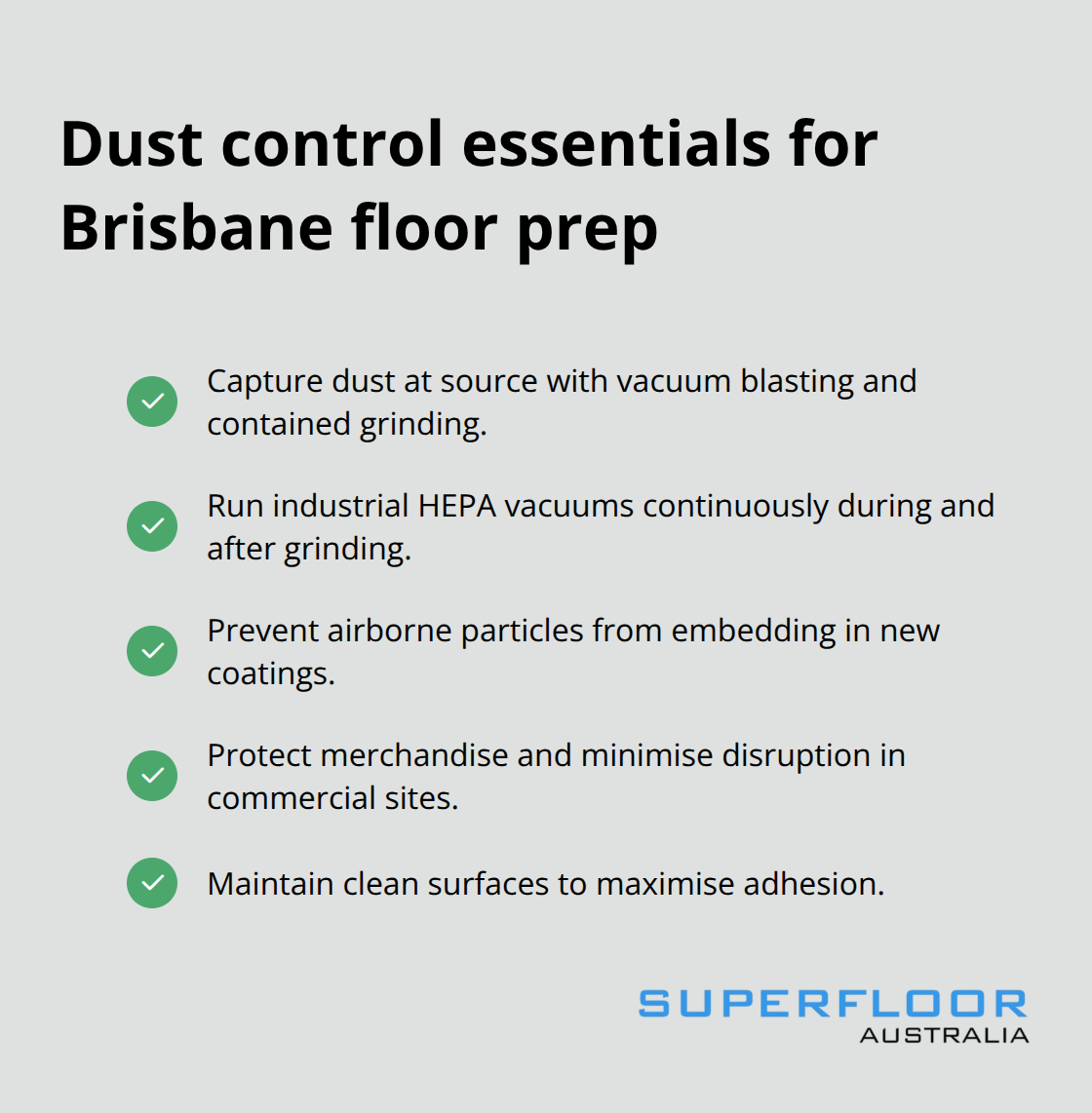
Dust removal separates amateurs from professionals because airborne particles will embed in your new coating and destroy adhesion. Vacuum blasting and contained grinding methods capture dust as it’s created, which is why commercial and retail facilities use these techniques to avoid coating merchandise and minimise business disruption. If you’re not using dust-free methods, industrial vacuums with HEPA filters must run continuously during and after grinding to pull particles from the air and off the concrete surface.
Moisture Management in Brisbane’s Climate
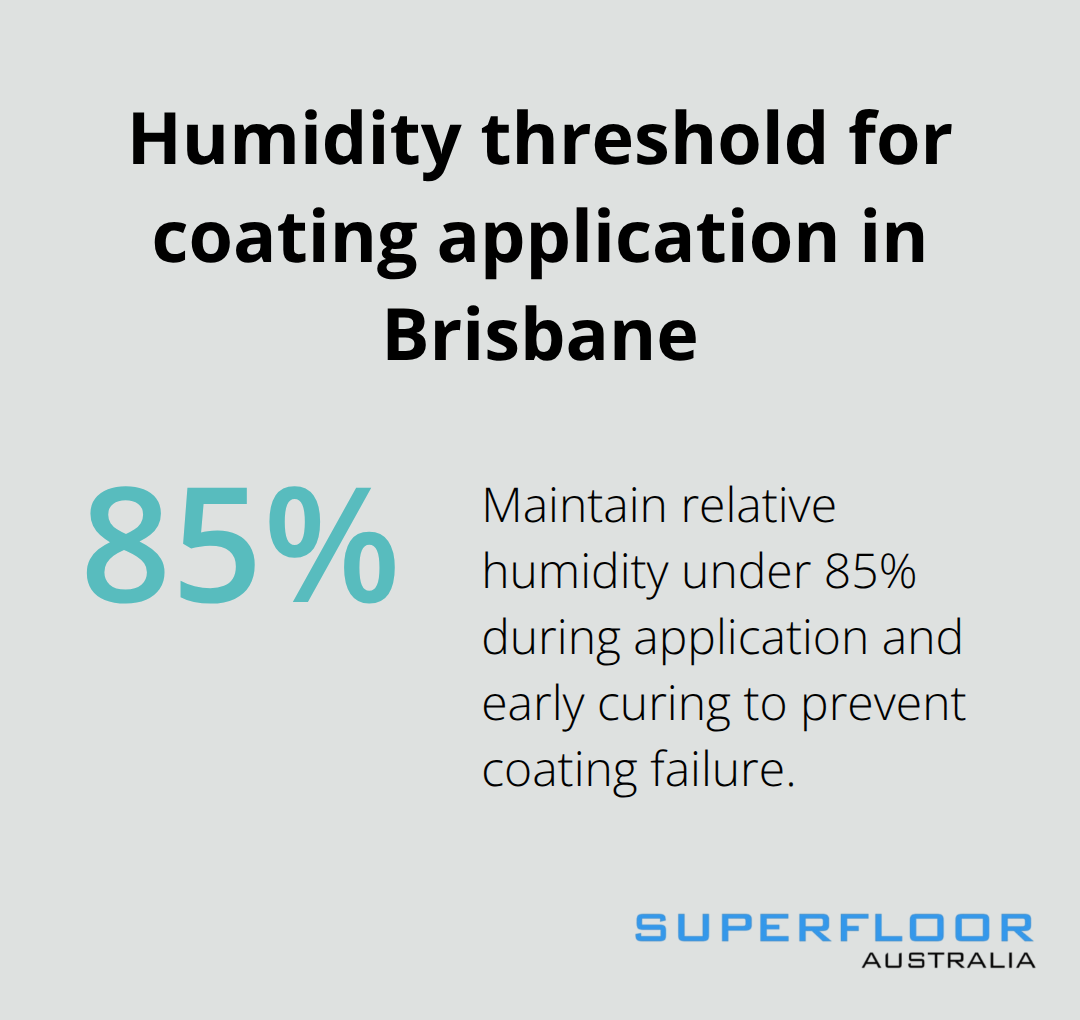
Moisture management in Brisbane’s subtropical climate isn’t something you do once-it’s something you monitor throughout preparation and right up to coating application. Concrete in Brisbane absorbs moisture from the air and ground, and humidity under 85% during application and early curing is essential to prevent coating failure. Dehumidification equipment and weather-aware scheduling are non-negotiable; pour your coating on a dry day after a dry period, not during or immediately after Brisbane’s wet season.
Calcium chloride or relative humidity testing shows your actual moisture content, and Australian Standards require readings below specific thresholds before coating goes down. If your testing shows high moisture, you’ll need to delay the pour and run dehumidifiers, which adds time and cost but prevents complete coating failure months later. This preparation phase determines whether your coating bonds permanently or fails within months, making the next critical step-understanding which coating system matches your prepared surface-essential to your project’s success.
Common Mistakes That Cost Thousands
Surface Assessment Cannot Be Skipped
Skipping surface assessment is the fastest route to a failed floor, yet Brisbane contractors take this gamble regularly. You cannot grind a surface you haven’t tested, cannot choose the right preparation method without knowing what contaminants sit on your concrete, and cannot predict whether moisture will sabotage your coating without surface assessment and testing. The assessment phase costs between AUD 500 and 1,500 depending on site complexity, but inadequate surface preparation triggers coating failures that lead to complete removal and re-application, often costing up to three times the original project investment.
Structural cracks deeper than 3mm or those showing movement demand engineering evaluation before any prep work begins; pushing forward without this assessment guarantees failure. Laitance testing is simple-run your hand across the concrete surface and check whether it feels chalky or dusty, which indicates this weak cement layer is present and must be removed through grinding. Pull-off adhesion testing on existing coatings shows whether old finishes will bond properly or need complete removal.
Contamination Analysis Determines Your Method
pH testing and contamination analysis identify whether you’re dealing with oil penetrations, chemical residues, paint, or adhesives-each requires different removal techniques. Documentation with photographs and moisture readings creates your preparation roadmap and protects you if issues emerge after coating application. Professional testing equipment catches problems that visual inspection alone will miss, preventing costly failures after coating application.
Dust Control Separates Professionals From Shortcuts
Dust removal separates professionals from those cutting corners, because airborne particles embed in your new coating and destroy adhesion within months. Dust-free grinding and vacuum blasting capture dust as it’s created, which is why commercial and retail facilities use these techniques to protect merchandise and maintain business continuity. If you’re not using dust-free methods, industrial vacuums with HEPA filters must run continuously during and after grinding to pull particles from the air and off the concrete surface.
Moisture Management in Brisbane’s Subtropical Climate
Moisture barriers and dehumidification decisions made during preparation determine whether your coating bonds permanently or fails within months in Brisbane’s subtropical climate. Concrete in Brisbane absorbs moisture from the air and ground, and humidity under 85% during application and early curing is essential to prevent coating failure. Dehumidification equipment and weather-aware scheduling are non-negotiable; pour your coating on a dry day after a dry period, not during or immediately after Brisbane’s wet season.
Calcium chloride or relative humidity testing shows your actual moisture content, and Australian Standards require readings below specific thresholds before coating goes down. If your testing shows high moisture, you’ll need to delay the pour and run dehumidifiers, which adds time and cost but prevents complete coating failure months later.
Final Thoughts
Floor prep methods determine whether your Brisbane flooring project succeeds or fails, and there’s no middle ground. The concrete surface you prepare today becomes the foundation for a floor that either lasts a decade or fails within months. Every step matters-from assessing your concrete condition and testing for moisture to removing dust and managing humidity.
We at Superfloor Australia understand Brisbane’s unique challenges, and we know that subtropical humidity, reactive clay soils, and contamination patterns specific to our region demand preparation methods that account for local conditions. Our approach combines professional surface assessment, precision grinding and levelling, dust-free techniques, and rigorous moisture management to create a base that accepts coatings permanently. We don’t rush preparation because we know that’s where failures start.
Contact Superfloor Australia to discuss your project and receive a detailed assessment of your concrete surface. We’ll test your moisture levels, identify contaminants, evaluate structural integrity, and recommend the exact floor prep methods your slab needs to perform reliably for years to come.