

Garden concrete flooring has become the go-to choice for outdoor spaces that need to handle both style and safety. Wet surfaces, foot traffic, and changing weather conditions demand surfaces that won’t compromise on grip or durability.
At superfloor australia, we’ve seen firsthand how the right concrete finish transforms gardens into functional, attractive areas. This guide covers slip-resistant solutions and practical design strategies for patios, pools, and entertaining spaces.
Why Outdoor Concrete Transforms Gardens
Durability That Defeats Traditional Paving
Concrete solves the core problem that traditional paving creates: instability. Pavers shift over time, gravel scatters, and decking rots. Decorative concrete, poured as a seamless monolithic surface, eliminates these failures entirely. When properly finished and sealed, a concrete garden floor lasts decades without the movement and cracking that plague individual units scattered across soil. Brisbane’s subtropical climate accelerates deterioration of most outdoor surfaces, which is precisely why concrete’s durability matters.
A well-installed honed concrete finish maintains its slip resistance even when saturated-something polished concrete cannot do. Polished concrete becomes a skating rink when wet, making it unsuitable for outdoor pool decks and patios. This distinction shapes material choice fundamentally. Honed concrete preserves both grip and aesthetic appeal in wet conditions. The texture options within concrete finishing allow you to achieve contemporary elegance without sacrificing safety, something paving struggles to deliver. Lighter tones work better for areas receiving intense afternoon sun, as darker concrete colours absorb more heat. The seamless design also reduces joints and trip hazards in garden spaces, improving safety for children and elderly guests.
Functional Zones and Long-Term Value
Concrete creates functional zones that define how your garden works. A continuous surface flows naturally from indoors to outdoors, establishing clear entertaining and relaxation areas without visual interruption. Exposed aggregate finishes provide maximum texture and grip, ideal for pool surrounds and high-traffic zones, while honed concrete suits alfresco dining areas where both safety and refinement matter.
Proper grading with about 0.25 inch per foot slope away from buildings promotes drainage and prevents pooling, which extends surface life and maintains safety. Sealing every 2–3 years locks in slip resistance and protects against moisture intrusion in Brisbane’s heavy rainfall. Maintenance involves pressure washing to remove debris and prevent algae growth, plus promptly fixing any cracks before water penetrates. This straightforward upkeep contrasts sharply with pavers, which require weeding between joints, dirt removal, and potential releveling or replacement of shifted units. The long-term value of decorative concrete typically exceeds paving because lower maintenance, longer service life, and potential property uplift offset the initial installation cost. A continuous concrete surface reduces movement risk, enhancing durability in variable climates where soil shifts create foundation stress.
Selecting Your Finish for Safety and Style
The right finish determines both safety performance and visual impact. Honed concrete offers a smooth, slip-resistant surface suitable for alfresco areas with water exposure, while exposed aggregate provides maximum grip for high-traffic zones. Your choice depends on how you plan to use the space and what aesthetic direction suits your home. These finishes work together with proper sealing to create surfaces that perform in Brisbane’s demanding climate. Once you’ve selected your finish, the next step involves understanding how to design these surfaces around your specific features-pools, patios, and landscaping elements that define your outdoor entertaining areas.
Making Outdoor Concrete Safe in Wet Conditions
How Honing Creates Grip Without Sacrificing Style
Honed concrete surfaces work because they create micro-texture without sacrificing appearance. The honing process removes the top layer of concrete to expose aggregate and establish natural grip. Unlike polished finishes that turn slippery when wet, honed concrete maintains traction even when saturated-a critical distinction in Brisbane’s climate where rainfall is frequent and pools are standard. The texture comes from grinding stones progressively finer to achieve a matte or satin appearance while leaving enough aggregate exposed to catch water and feet. This approach costs between $50–$100 per square metre and delivers both safety and contemporary aesthetics simultaneously.
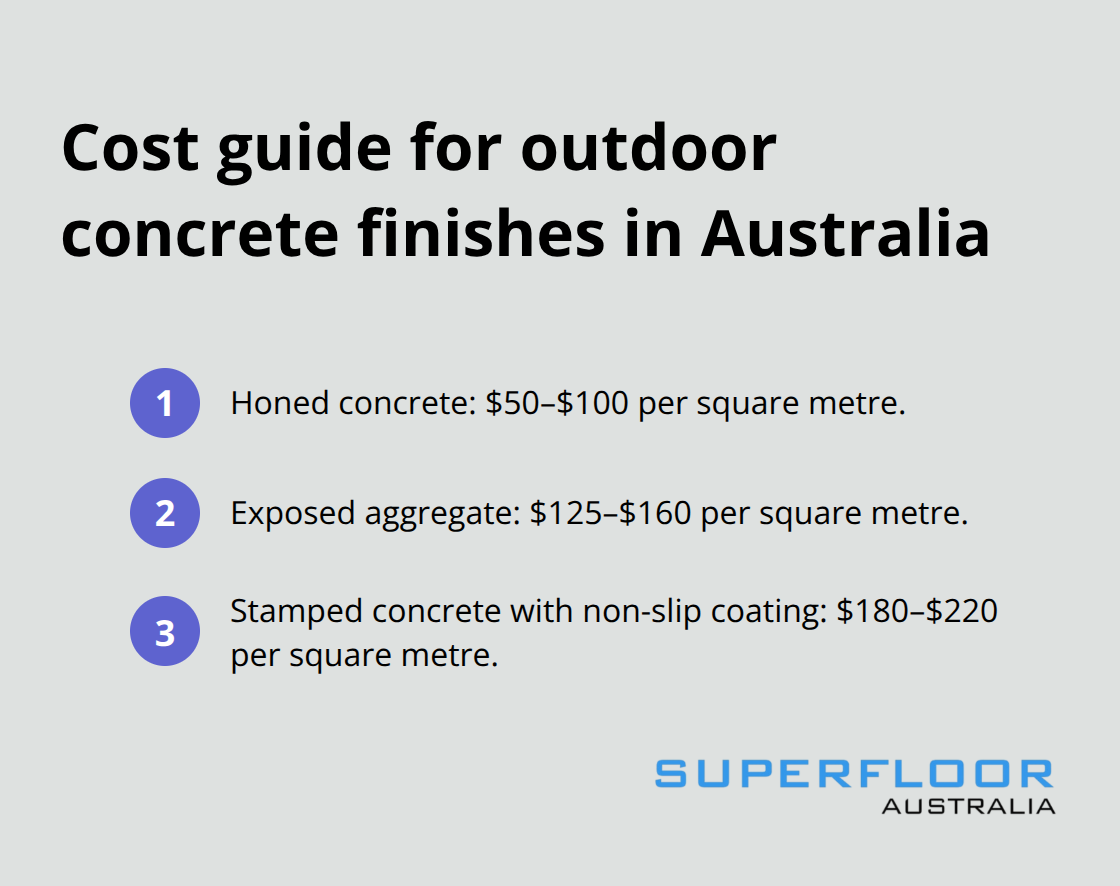
Exposed aggregate finishes go further by removing more surface material to reveal larger stones, providing maximum grip for high-traffic pool surrounds and entertaining zones. This option sits at $125–$160 per square metre and suits areas where people move barefoot or wear thongs. Water-based stains add colour without compromising the grip you’ve built into the texture, so you’re not trading safety for visual appeal. Stamped concrete with non-slip coatings runs $180–$220 per square metre and mimics patterns like slate or cobblestone while maintaining traction-useful if you want decorative detail without the maintenance burden of actual pavers.
Sealing Strategies That Preserve Traction
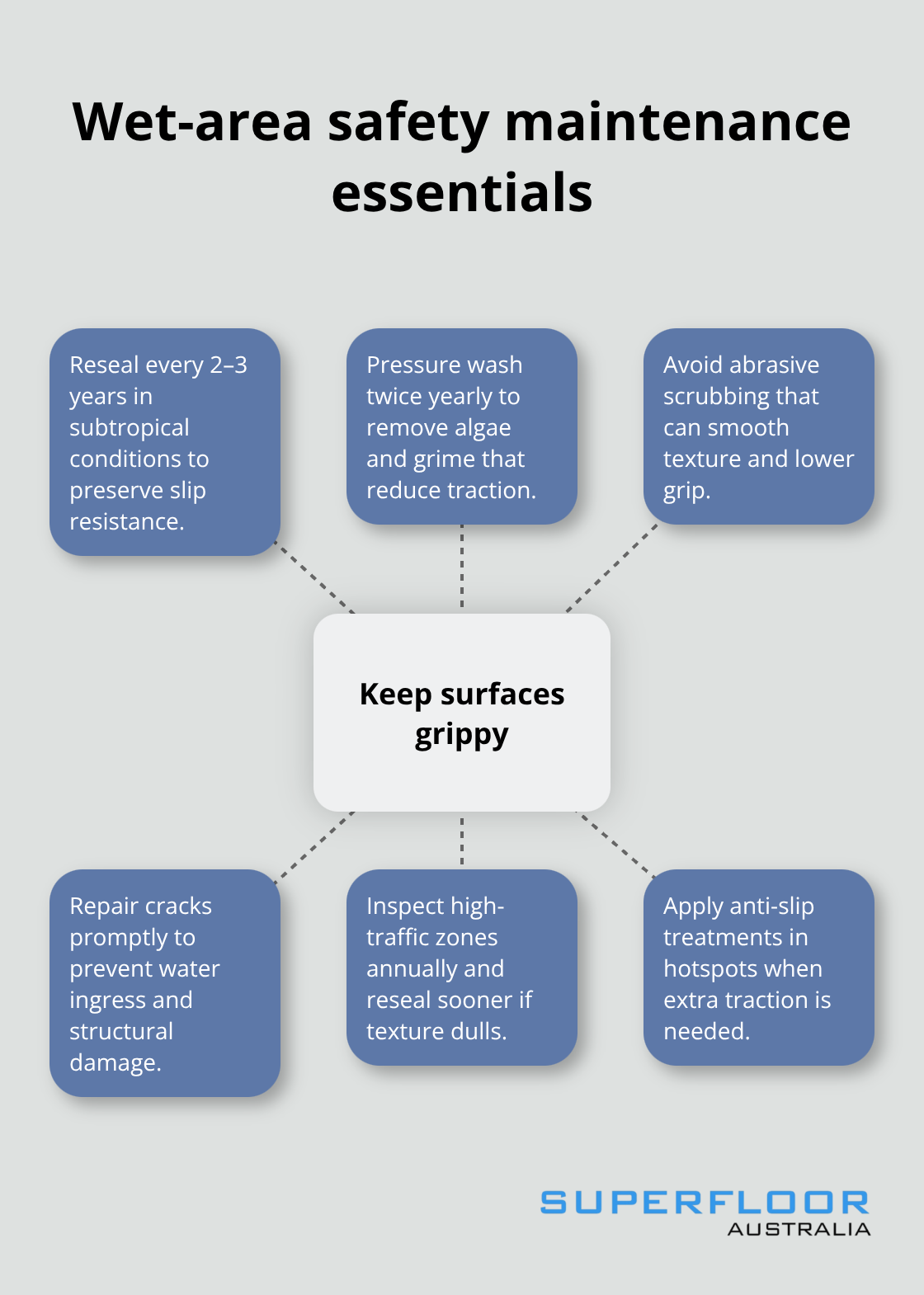
Maintaining grip over time requires a specific sealing strategy. Penetrating or topical sealers protect honed surfaces from stains while preserving texture and slip resistance-a distinction that separates effective protection from sealers that create glossy finishes and reduce grip. Reseal every 2–3 years in Brisbane’s subtropical conditions, as moisture intrusion and UV exposure degrade protection faster than in drier climates. This regular maintenance schedule keeps your surface performing safely without the ongoing attention that traditional paving demands.
Cleaning and Inspection Routines
Pressure wash the surface twice yearly to remove debris, algae, and grime that accumulate and reduce traction. Avoid abrasive scrubbing that damages the texture you’ve invested in. Fix any cracks immediately before water penetrates beneath the surface, which accelerates deterioration and compromises structural integrity. If your garden experiences heavy foot traffic or hosts regular entertaining, inspect the surface annually for wear patterns and seal sooner if texture appears dulled.
Reinforcing Grip in High-Traffic Zones
Anti-slip treatments like Stone Grip create additional micro-treads within minutes of application and work on concrete, porcelain, stone, and ceramic without altering appearance-a practical backup if your honed finish needs reinforcement in specific zones. Deck Grip offers a clear, semi-gloss water-based acrylic alternative that’s UV- and chemical-resistant, ideal for pool decks and patios. Both products are waterproof, low-maintenance, and backed by 2-year warranties. Before applying any coating, clean thoroughly with a pressure washer and detergent to remove dirt and grease, then allow 24–48 hours drying time before foot traffic resumes.
These maintenance routines protect your investment, but the real challenge emerges when you design the layout itself. How you grade the surface, position drainage, and integrate concrete with landscaping features determines whether your garden flooring performs safely for years or develops problems that compromise both function and aesthetics.
Designing Pool Decks and Patios That Perform
Pool decks and patios demand finishes that handle constant moisture, bare feet, and heavy entertaining traffic without compromising safety or appearance. Exposed aggregate finishes excel in these zones because they provide maximum grip where people move barefoot or in wet thongs. The exposed stones catch water and create natural traction that persists even during heavy rainfall. Honed concrete suits entertaining patios adjacent to pools where guests wear shoes and you want a refined aesthetic without the slip risk of polished finishes. Your choice between these two depends entirely on foot traffic patterns and whether the space functions as a barefoot zone or a shod entertaining area. Stamped concrete with non-slip coatings works if you want decorative patterns like slate or cobblestone while maintaining traction, though this option requires sealing every 2–3 years to preserve both appearance and grip.
Building Foundations That Last
The foundation beneath any finish determines longevity far more than the surface itself. A stable base with 4–6 inches of compacted crushed stone or gravel prevents premature surface failure and shifting that creates trip hazards around pools. Grade the area with roughly 0.25 inch per foot slope away from buildings and away from pool edges to promote drainage and prevent pooling, which accelerates deterioration and creates standing water that breeds algae and reduces traction.
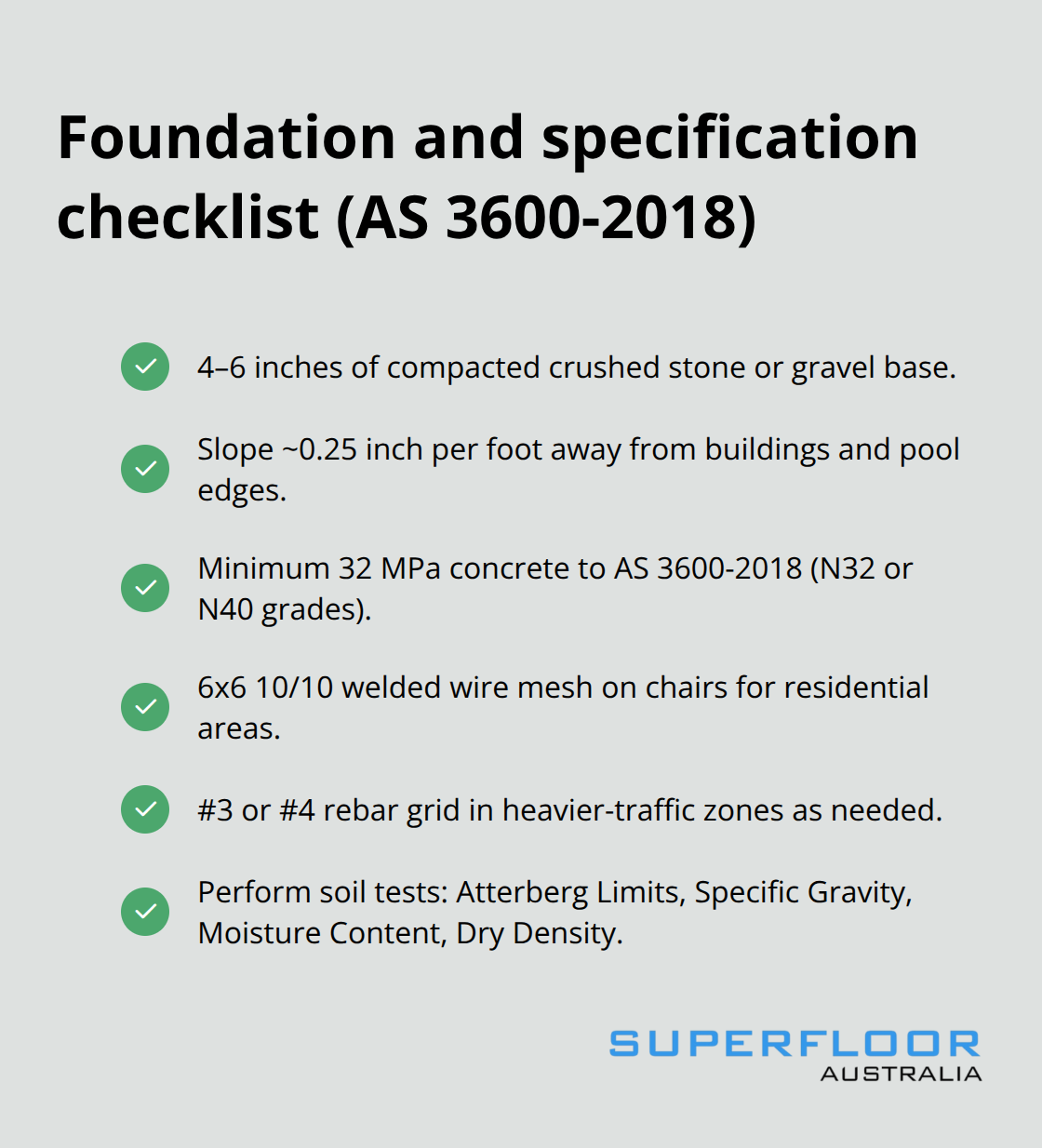
Concrete used for exterior floors must meet a minimum strength of 32 MPa according to Australian Standard AS 3600-2018, using N32 or N40 exterior grades. For residential entertaining areas, reinforce with 6×6 10/10 welded wire mesh on chairs to distribute loads and prevent cracking. Heavier traffic zones near pool entries or entertaining areas may require number 3 or 4 rebar in a grid pattern for additional durability. These specifications matter because undersized reinforcement and low-strength concrete fail rapidly in Brisbane’s subtropical climate where moisture penetration accelerates deterioration.
Ground assessment before pouring shapes the entire project. Soil tests measuring Atterberg Limits, Specific Gravity, Moisture Content, and Dry Density anticipate drainage needs and preparation depth, preventing foundation problems that emerge years after installation. Professional installation handles these technical requirements correctly, whereas DIY approaches often miss environmental controls that determine long-term performance and safety.
Integrating Concrete with Landscaping Elements
Seamless concrete flooring creates visual continuity from indoors to outdoors while reducing joints and trip hazards that traditional paving introduces. Plant beds, retaining walls, and feature stones integrate cleanly with decorative concrete because you control edges and contours during the pour. Design concrete zones that fit your site’s natural drainage and soil conditions, then position planting beds and landscaping features around these functional areas. This approach avoids the problem of modifying soil structure dramatically to accommodate rigid paving layouts, which destabilizes plant health and reduces garden resilience.
Water-based stains add colour to concrete without compromising grip, so you can match tones to surrounding pavers, decking, or rendered walls without trading safety for visual appeal. Darker concrete colours absorb more heat in full sun, making them uncomfortable for barefoot use in Brisbane’s intense afternoon conditions. Lighter tones perform better in high-sun entertaining zones and feel more pleasant underfoot during summer entertaining. The continuous monolithic surface of decorative concrete reduces movement and cracking risk compared to individual pavers that shift with soil movement and temperature changes, enhancing durability in variable climates.
Final Thoughts
Garden concrete flooring outperforms traditional paving across durability, maintenance, and property value when you select the right finish for Brisbane’s subtropical climate. Honed concrete maintains traction even when saturated, the seamless monolithic design eliminates trip hazards, and straightforward maintenance costs far less than managing shifting pavers or deteriorating decking over decades. While exposed aggregate and honed finishes require initial investment between $50–$160 per square metre, the absence of weeding, releveling, and unit replacement saves thousands in labour and materials over time.
Professional assessment and installation determine whether your concrete performs safely for decades or develops problems within years. Ground testing, proper reinforcement to AS 3600-2018 standards, and correct grading for drainage shape the entire project’s success, and DIY approaches often miss these technical requirements, leading to premature failure and safety issues that cost far more to remedy than professional installation from the start. Sealing every 2–3 years preserves both grip and appearance without the ongoing attention that traditional surfaces demand.
We at Superfloor Australia specialise in outdoor honed concrete solutions that deliver slip-resistant elegance for gardens and poolside areas. Our precision preparation and expert craftsmanship ensure lasting results tailored to your space and entertaining needs-contact us for a consultation and quote on garden concrete flooring that combines safety, durability, and contemporary style.