

Polished concrete flooring has become a smart choice for Australian homes and businesses looking for durability without breaking the bank. Understanding the polished concrete flooring cost upfront helps you make an informed decision about whether this option suits your budget and needs.
At superfloor australia, we’ve helped countless customers navigate pricing across residential, commercial, and industrial projects. This guide breaks down what you’ll actually pay and why polished concrete delivers exceptional long-term value.
What Drives Polished Concrete Flooring Costs
The price you pay for polished concrete depends on four interconnected factors, and understanding each one stops you from overpaying or selecting the wrong finish for your space. Project size creates the biggest swing in per-square-metre pricing. A 15 m2 kitchen costs between $900 and $1,800, while commercial spaces over 100 m2 typically enjoy economies of scale that bring the rate down significantly. Labour represents 60 to 70 per cent of your total cost, so smaller areas absorb that overhead across fewer square metres, inflating the per-m2 price.
The Finish Level Decision
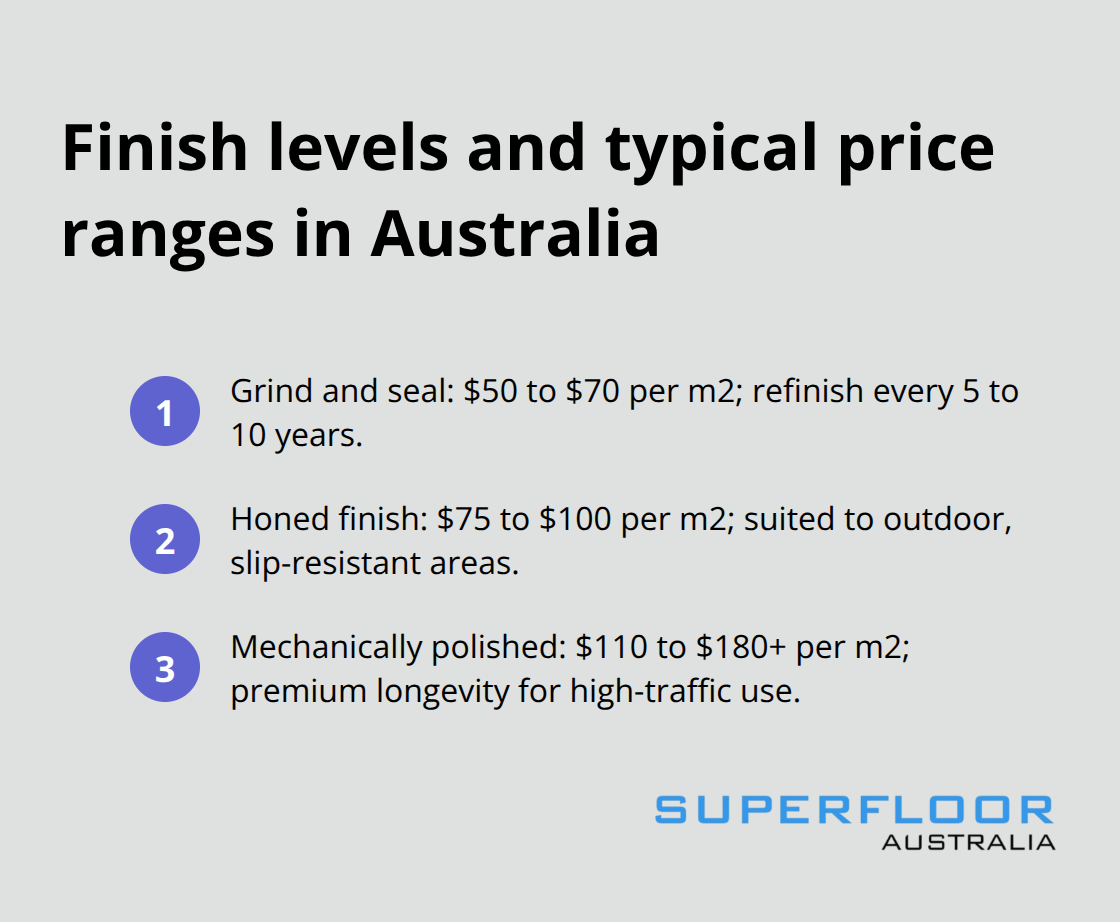
The finish level you select creates the second major price difference. Grind and seal sits around $50 to $70 per m2, honed finishes run $75 to $100 per m2, and mechanically polished floors start at $110 per m2 and exceed $180 per m2 in some cases. Each step up in finish requires finer diamond abrasives and more labour time. Grind and seal offers the lowest entry point but requires refinishing every 5 to 10 years in residential settings. Honed finishes last longer and suit outdoor areas where slip resistance matters, making them popular for gardens and poolside installations. Mechanically polished floors deliver the longest lifespan and handle high-traffic commercial and industrial environments without degradation.
High-gloss finishes cost more than satin or matte because they demand additional processing stages and finer grits. Your gloss choice affects not just price but maintenance frequency and durability too.
Concrete Condition and Preparation Costs
The existing concrete condition matters far more than most people realise. New slabs need minimal prep, but aged floors with cracks, stains, or uneven surfaces require repairs before polishing begins. Crack repairs cost roughly $50 to $100 per m2 based on surface condition. Moisture testing adds $4 to $7 per m2, and if you need a mitigation system, that’s another $10 to $25 per m2. These prep costs stack quickly on neglected floors.
Sealing and Customisation Options
Sealing adds $5 to $15 per m2 but extends floor life significantly by protecting against moisture and stains. Decorative elements like staining, dyeing, or exposed aggregate exposure range from $10 to $40 per m2 depending on complexity. These customisations transform polished concrete from a utilitarian surface into a branded or aesthetically distinctive feature.
Site-Specific Factors That Affect Pricing
Site accessibility and power supply also influence costs. If your location lacks 32-amp, 3-phase power with a 5-pin outlet, generator hire adds extra charges. Waste removal costs apply if no skip is provided on site.

Distance from the contractor’s office can trigger travel levies, and projects requiring more than one hour of travel typically incur additional fees. These variables mean that two similar-sized projects in different locations can carry significantly different price tags.
Understanding these four cost drivers-project size, finish level, concrete condition, and site factors-allows you to anticipate where your budget will stretch and where unexpected expenses might emerge. Once you’ve identified which finish level suits your space and traffic patterns, the next step involves calculating what you’ll actually pay across different property types.
Average Cost Breakdown for Polished Concrete Flooring
Residential Installation Costs
Residential polished concrete floors in Australia typically cost between $50 and $90 per square metre, with most installations landing around $70 per m2. A standard 60 m2 living area runs roughly $4,200 to $6,000 depending on finish selection and concrete condition. Grind and seal residential jobs sit at $60 to $70 per m2 and suit homeowners willing to accept refinishing every 5 to 10 years. Honed finishes cost $80 to $100 per m2 and work well for kitchens, bathrooms, and outdoor entertaining areas where durability and slip resistance matter. Mechanically polished residential floors range from $110 to $180 per m2 and represent a premium investment for those prioritising longevity and a high-gloss aesthetic.
Most residential customers choose honed or mechanically polished finishes because the durability justifies the upfront expense over 20 to 30 years of ownership. The high-gloss finish resists dust, stains, and allergens, making it ideal for low-maintenance environments.
Commercial Spaces Command Different Economics
Commercial polished concrete typically costs $60 to $120 per m2, with larger retail and office installations benefiting from economies of scale. A 200 m2 retail showroom might cost between $12,000 and $24,000, but the per-square-metre rate drops as area increases. Warehouses and logistics facilities often add protective coatings on top of the base polish, pushing total costs to $90 to $155 per m2. This extra protection handles forklift traffic, chemical spills, and heavy equipment without surface degradation.
Commercial spaces justify mechanically polished finishes because high foot traffic and operational demands require maximum durability. The real advantage emerges over time: polished concrete eliminates grout line maintenance that tiled floors demand, saving $15 to $25 per m2 annually on cleaning and repairs.
Industrial Floors Demand Premium Specifications
Industrial applications range from $100 to $150 per m2 and represent the highest performance tier. Food processing facilities, manufacturing plants, and heavy equipment storage areas need floors that resist moisture, chemicals, and extreme wear. These projects often include epoxy topcoats or specialised sealers that add $20 to $40 per m2. A 500 m2 manufacturing facility could cost $50,000 to $75,000 installed, but the investment prevents costly floor failures and production downtime.
Industrial customers prioritise mechanically polished finishes exclusively because anything less fails under operational stress. Site conditions matter enormously in industrial settings: moisture testing becomes non-negotiable at $4 to $7 per m2, and mitigation systems at $10 to $25 per m2 prevent substrate failure. Labour costs spike in industrial work because precision matters and crews must work around active operations or coordinate shutdown schedules. These performance demands and site complexities set the stage for understanding how polished concrete stacks up against alternative flooring materials in terms of total investment and long-term returns.
Cost Comparison With Other Flooring Options
Timber Flooring: The Hidden Maintenance Trap
Timber flooring costs $85 to $110 per square metre upfront, which appears competitive until you examine the true cost of ownership. Timber demands refinishing every 7 to 10 years at $15 to $25 per square metre, plus moisture management in kitchens and bathrooms, and replacement of damaged planks that run $50 to $100 each. Over 20 years, a 100 m2 timber floor accumulates $3,000 to $5,000 in refinishing costs alone, before repairs. Polished concrete at $70 per m2 costs less initially and requires only resealing every 2 to 5 years at $3 to $8 per m2. A 100 m2 polished concrete floor costs roughly $7,000 installed, then $300 to $800 total over two decades in maintenance. Timber fails in high-moisture zones like bathrooms and kitchens without expensive moisture barriers, while polished concrete thrives in these spaces because it resists moisture naturally.
Tile and Stone: Premium Pricing With Ongoing Headaches
Natural stone runs $25 to $250 per m2, ceramic tiles $118 to $235 per m2, and installation adds 30 to 40 per cent to material costs due to underlayment and membrane requirements. A 100 m2 tiled kitchen costs $12,000 to $25,000 installed before you add grout maintenance at $15 to $25 per m2 annually. Grout cracks, stains, and deteriorates in humid environments, forcing expensive regrouting every 5 to 10 years. Stone surfaces chip under impact and require sealing every 1 to 2 years. Polished concrete delivers the same durability at one-fifth the cost with zero grout maintenance and superior slip resistance when honed.
Epoxy Coatings: A Temporary Solution
Epoxy coatings fall between polished concrete and tile in pricing at $30 to $150 per m2, but epoxy yellows under ultraviolet light, peels in high-traffic areas, and requires complete replacement rather than refinishing when it fails. Polished concrete lasts 20 to 30 years with proper maintenance, while epoxy typically survives 5 to 10 years before replacement becomes necessary. This longevity difference transforms the initial cost advantage of epoxy into a long-term liability that polished concrete avoids entirely.
Final Thoughts
Polished concrete flooring cost represents just the opening chapter of your flooring story. What matters far more is what happens over the next two decades-polished concrete floors last 20 to 30 years with proper maintenance, while timber needs refinishing every 7 to 10 years and epoxy coatings fail within 5 to 10 years. This longevity means you invest once and enjoy the results for decades, not replace your floor three times over.
The maintenance advantage compounds your savings year after year. Polished concrete requires only resealing every 2 to 5 years at $3 to $8 per m2, compared with timber’s $15 to $25 per m2 refinishing costs or tile’s $15 to $25 annual grout maintenance. A 100 m2 floor saves you $300 to $800 over 20 years in maintenance alone, with no grout lines to crack, no planks to replace, and no coatings that peel away.
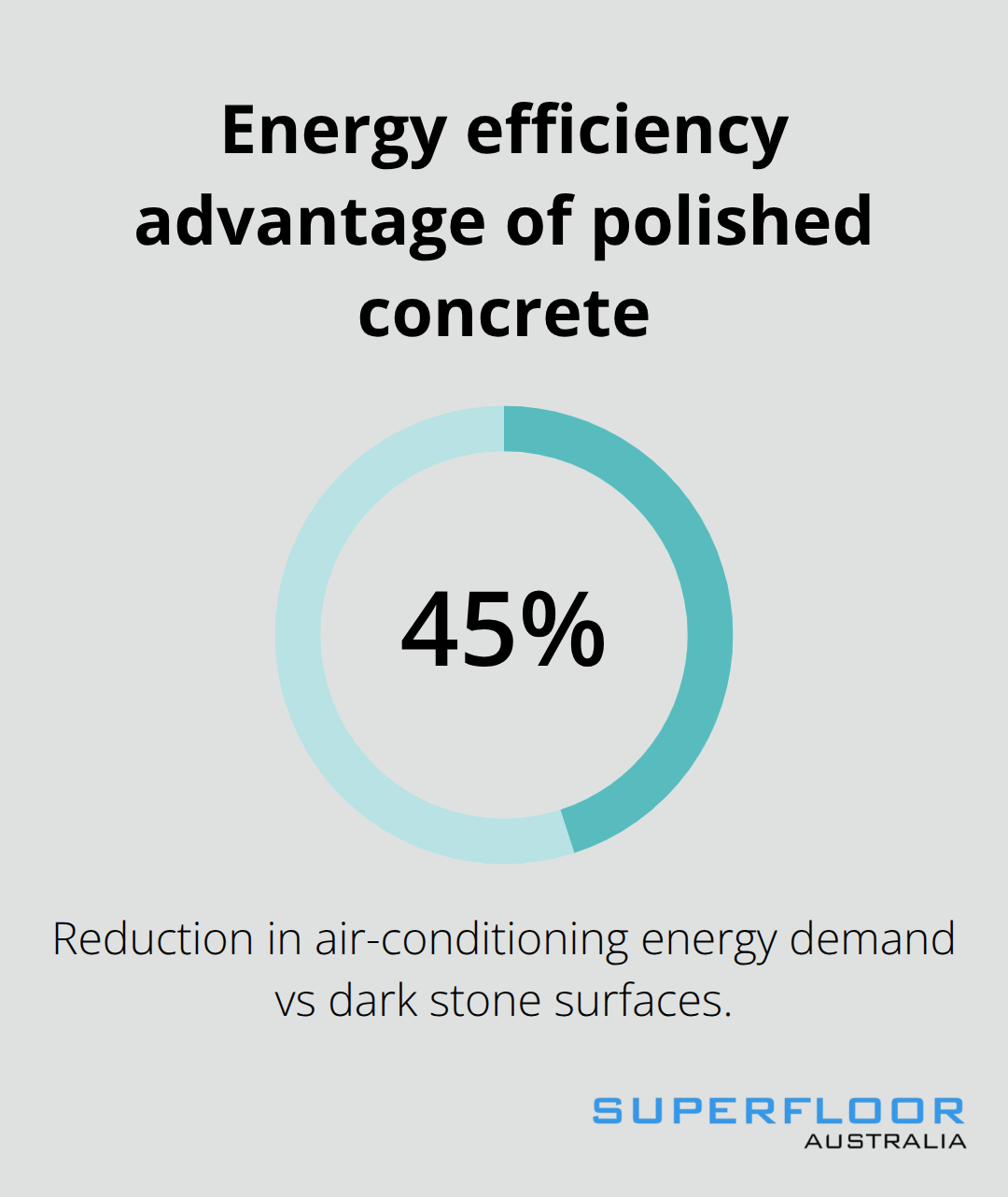
Energy efficiency delivers another hidden benefit-polished concrete’s high thermal mass and reflective surface can reduce air-conditioning energy demand by around 45 per cent compared with dark stone surfaces. Over 20 years, this translates to thousands of dollars in reduced cooling costs, particularly in Australian climates where summer temperatures spike regularly.
Contact Superfloor Australia today to discuss how polished concrete delivers exceptional value for your specific space and budget.