
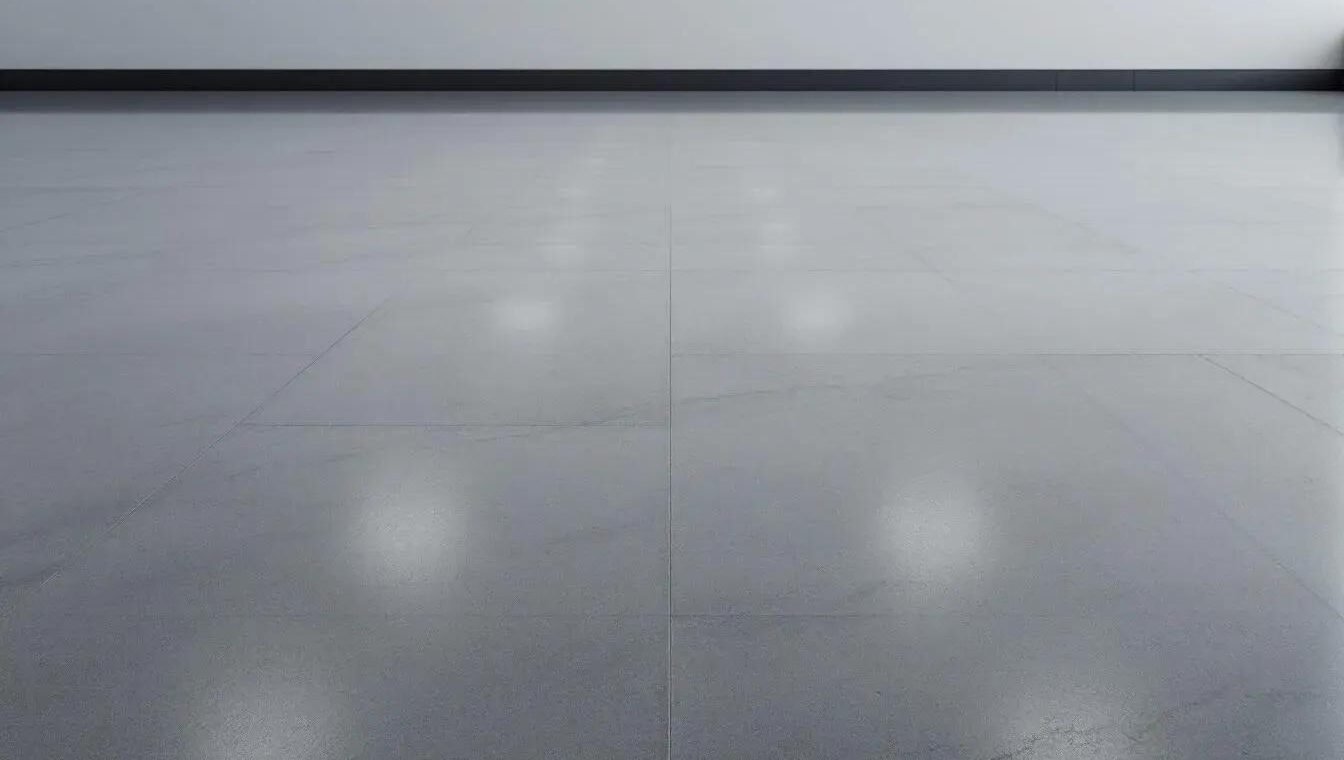
Polished grey concrete has become the go-to flooring choice for homeowners and businesses wanting a modern, durable surface that actually looks good. At superfloor australia, we’ve seen firsthand how this finish transforms spaces while keeping maintenance simple and costs down.
Whether you’re renovating a home, upgrading a commercial space, or planning an industrial installation, polished grey concrete delivers the performance and aesthetic you need. This guide walks you through everything from the polishing process to design choices that work for your specific situation.
Why Grey Concrete Works for Any Space
Grey polished concrete has earned its reputation because it solves real problems that other flooring materials create. The colour itself matters more than most people realise.
Neutral Design That Adapts to Any Style
Grey pairs with virtually any design style-minimalist, industrial, contemporary, or traditional-without competing with furniture, artwork, or brand identity. This neutrality means your floor stays relevant across design trends rather than locking you into a specific aesthetic. The reflective surface amplifies natural light, which cuts daytime lighting needs and reduces energy costs in spaces where that matters. In retail environments, better lighting perception influences how customers move through and perceive a space.
Durability That Outlasts Traditional Flooring
The surface is genuinely hard and durable, with a reported service life exceeding 100 years when properly executed and sealed, compared to 10–20 years for most timber or tile alternatives. This lifespan difference fundamentally changes the economics of your investment. Polished grey concrete resists chipping and scratching far better than polished timber, slate, or tiles in high-traffic scenarios. For commercial kitchens, warehouses, or busy retail floors, this durability translates to fewer repairs and replacement cycles over the floor’s lifetime.
The Real Cost Advantage
The upfront cost sits around $120 per square metre for full polish in Brisbane, which appears expensive against carpet or basic tile. However, the maintenance and replacement costs over 20 years tip the equation heavily in concrete’s favour. Cleaning requires only a weekly sweep or vacuum followed by mopping with pH-neutral cleaner-no stripping, resealing every few years like timber, or grout maintenance like tile. The non-porous surface resists most spills and stains, and oil stains that do occur respond to alkaline degreasers applied 24 hours before cleaning.
Health and Environmental Benefits
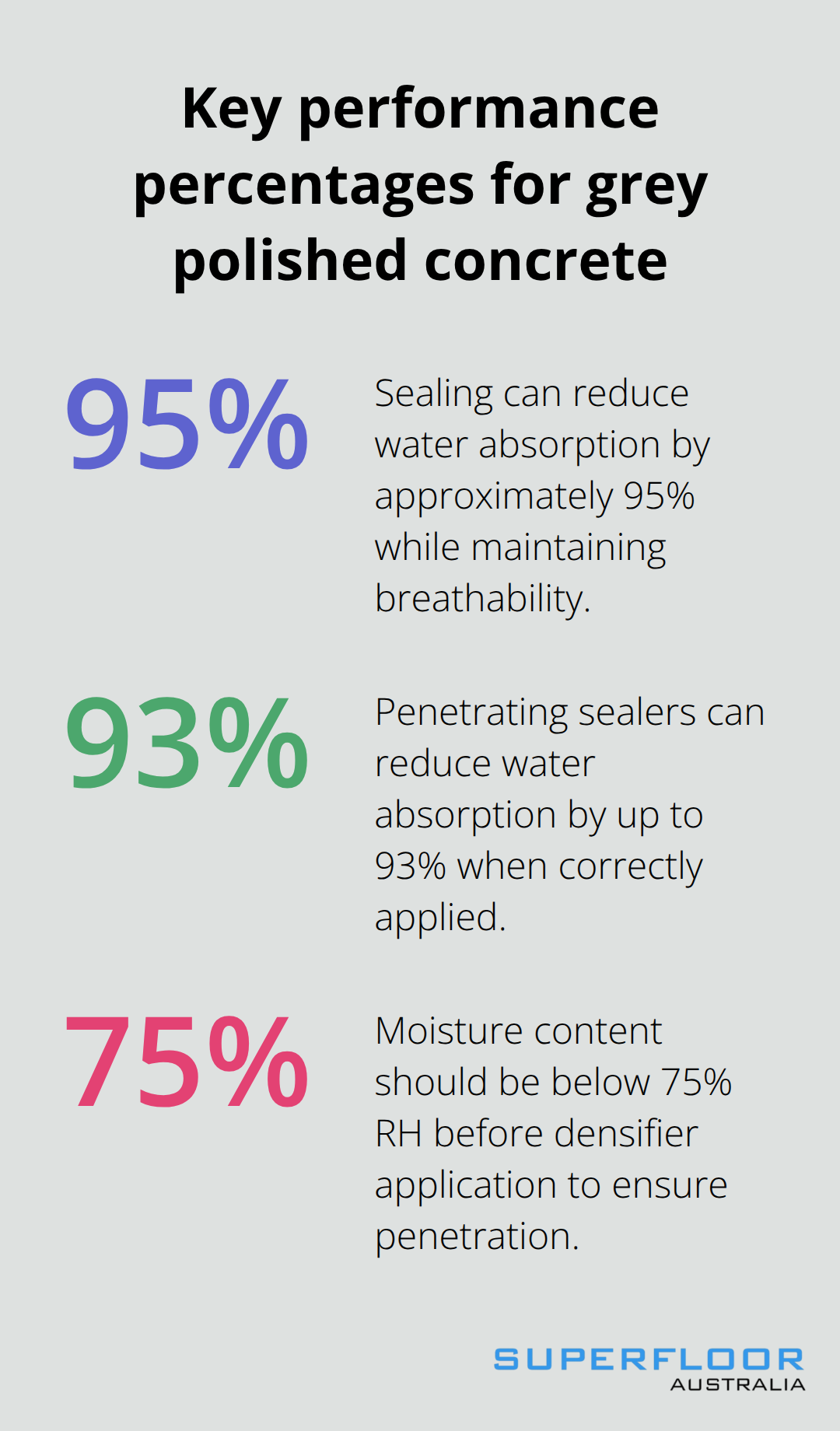
Allergies drop significantly because organic materials like pollen struggle to adhere to a polished, sealed surface, which matters in homes with asthma or dust sensitivities. The sealing process reduces water absorption by approximately 95 percent while preserving surface breathability, preventing moisture-related mould or mildew that plagues poorly sealed concrete. For industrial or commercial spaces handling chemicals, the chemical resistance across both acidic and alkaline conditions means spills don’t permanently damage the floor. These advantages compound over time, making grey polished concrete the practical choice for anyone serious about minimising ongoing maintenance costs and creating a healthier indoor environment.
The decision to install polished grey concrete hinges on understanding how the surface actually performs in your specific space-which is where the polishing process itself becomes critical to achieving those long-term benefits.
The Polishing Process for Grey Concrete Floors
Surface Preparation Sets the Foundation
The difference between a polished grey concrete floor that lasts 20 years and one that fails in five comes down to what happens before the polishing actually starts. The condition of the existing concrete slab determines roughly 70 percent of the final quality, which means surface preparation isn’t something to rush or cut corners on. Moisture content must sit below 75% relative humidity when tested via ASTM F2170, because any higher and the densifier won’t penetrate properly during polishing. For slabs older than five years, moisture testing becomes non-negotiable. Soft concrete with compressive strength below 25 MPa requires treatment before polishing can begin, so a Mohs hardness test tells you exactly what you’re working with.
The initial grinding removes the top 1–2 millimetres of laitance using a 16-grit metal bond pad, which exposes the aggregate underneath and creates a surface ready for the polishing stages that follow. Oil stains demand specific attention: apply alkaline degreasers 24 hours before work starts and always test on a small area first to verify the stain actually lifts. This prep work takes time, but skipping it means your polished finish will never achieve the reflectivity or durability you paid for.
Multi-Stage Grinding and Polishing
The actual polishing moves through distinct stages, each one building on the previous finish. After the initial 16-grit pass removes laitance, you progress through 30-grit, 60-grit, and 120-grit grinding to expose the aggregate to the level you want-medium exposure at 120-grit gives balanced visual interest without excessive maintenance demands. Resin polishing then takes over, moving from 220-grit through 400, 800, 1500, and 3000-grit depending on your target gloss level.
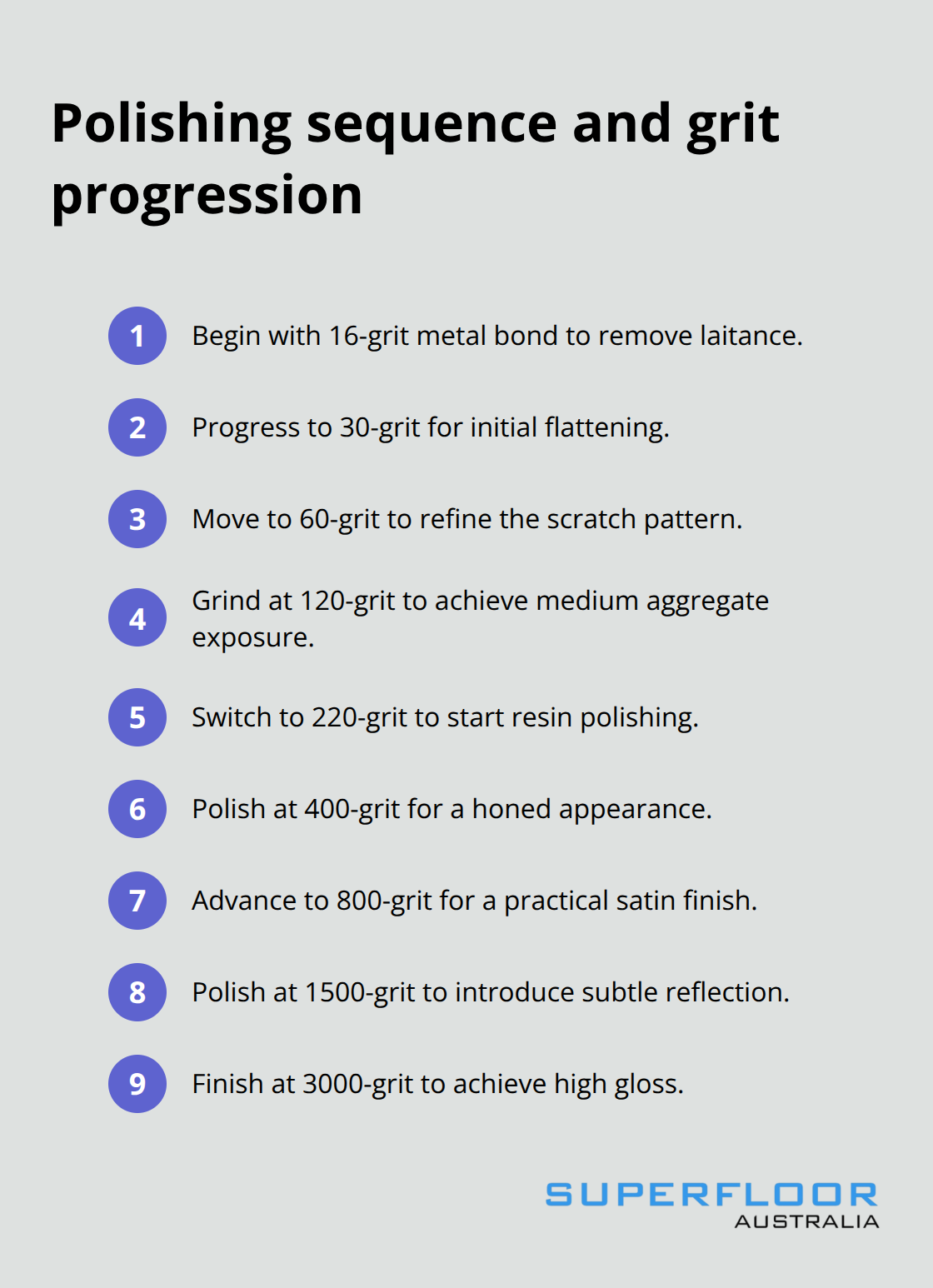
A 400-grit finish delivers a honed look, 800-grit produces a satin appearance, 1500-grit creates subtle reflection, and 3000-grit achieves high gloss.
Water during resin polishing keeps temperatures below 40 degrees Celsius and controls dust effectively. The densifier-typically lithium silicate-penetrates during the 400–800-grit stage and hardens the concrete matrix while improving stain resistance, with the chemical reaction completing in 24–48 hours before final polishing continues.
Sealing Protects Your Investment
Penetrating sealers reduce water absorption by up to 93 percent while letting the concrete breathe, whereas film-forming acrylic sealers add stain protection but require reapplication every 3–5 years. Apply sealers with microfibre applicators at 150–200 square metres per litre for proper penetration. The entire process typically spans several days depending on floor size and existing condition, and the final result should be a durable surface that reflects light beautifully while resisting stains and requiring minimal maintenance.
Once your grey concrete floor reaches this polished state, the choices you make about gloss level and design details determine how well it performs in your specific environment.
Making Gloss and Substrate Choices That Match Your Space
Selecting the Right Gloss Level for Your Environment
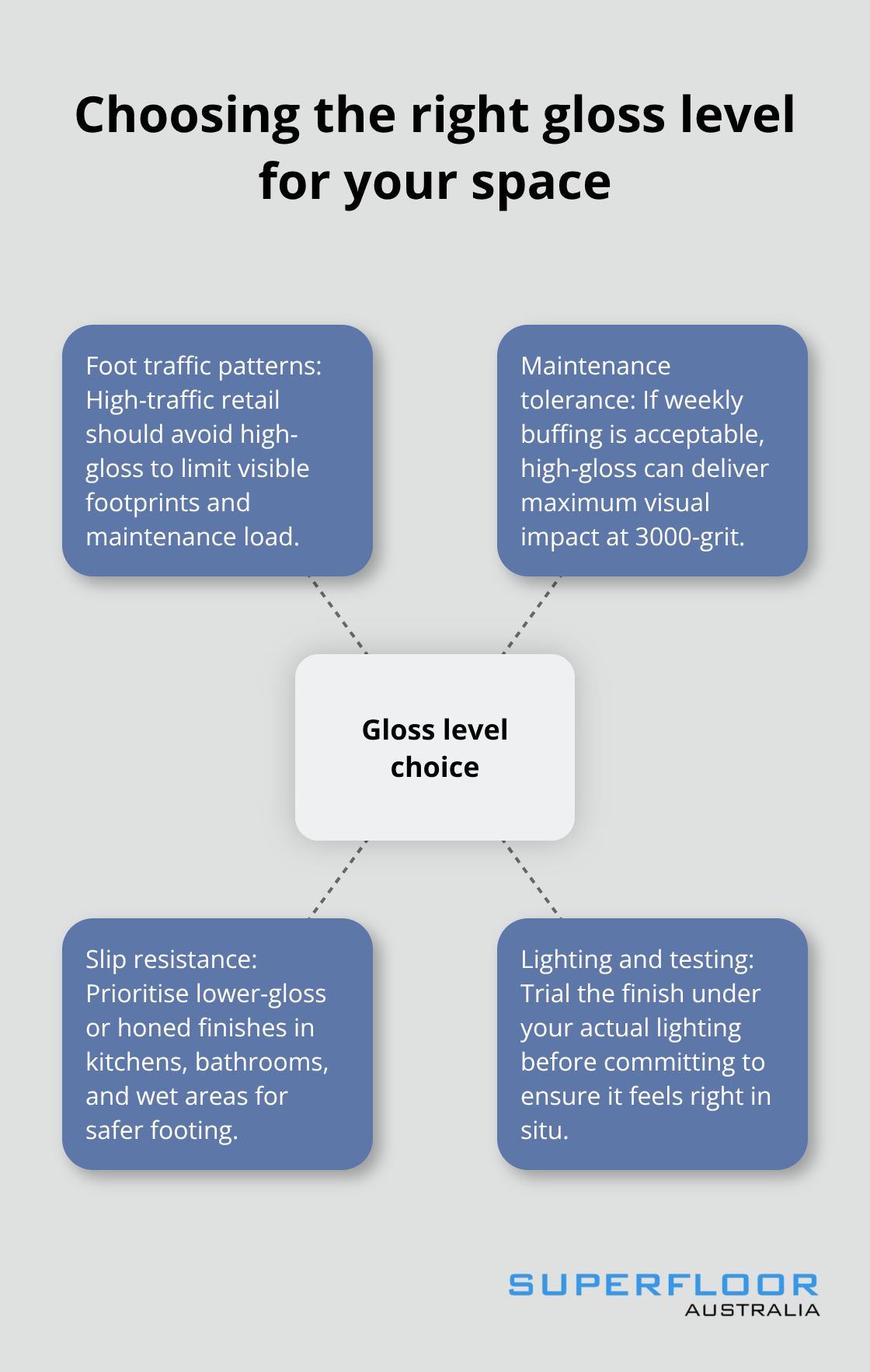
Gloss level determines how your polished grey concrete performs in daily use, and this choice matters far more than most people realise. High-gloss finishes at 3000-grit reflection amplify light beautifully and make spaces feel larger, but they show footprints and dust more readily, requiring weekly buffing with a high-speed burnisher to maintain that mirror-like appearance. Satin finishes around 30–40% gloss at 800-grit offer the practical middle ground: they reflect enough light to brighten a space without demanding constant maintenance, and footprints fade into the background. A honed finish suits spaces where slip resistance matters more than reflectivity-kitchens, bathrooms, and wet areas benefit from the lower gloss and improved grip underfoot.
Three factors should drive your choice: foot traffic patterns, maintenance tolerance, and whether the space demands slip resistance. A busy retail environment with high foot traffic should avoid high-gloss because the constant footprint visibility becomes a maintenance headache. Conversely, a residential living area with moderate traffic and someone willing to buff weekly can absolutely justify the visual impact of high-gloss. Test your chosen gloss level in your actual space under both natural and artificial lighting before committing to the full floor-what looks stunning in a showroom under perfect conditions may feel wrong in your specific environment.
Assessing Subfloor Condition Before Polishing
Subfloor condition determines whether your polished grey concrete succeeds or fails, and this assessment must happen before any polishing work starts. Concrete slabs older than five years almost always need moisture testing via calcium chloride tests to confirm levels sit below 4% before densifier application; skipping this step invites mould, mildew, and adhesion failure that no amount of sealing fixes afterward. The slab must also be structurally sound with no active cracks wider than hairline thickness-anything larger needs epoxy filling and smoothing with the initial 16-grit grinding pass.
If you install over an existing floor, assess whether removing the old surface is necessary or whether installing directly over it works; direct installation saves material costs and time but only functions if the base is stable and level. Hire experienced professionals for moisture testing and structural assessment on older slabs or complex projects exceeding 200 square metres, because the condition of the existing concrete slab determines roughly 70 percent of the final quality according to industry standards.
Final Thoughts
Polished grey concrete floors work across residential homes, commercial offices, retail spaces, and industrial warehouses because the material adapts to different demands without compromise. A family kitchen benefits from allergen resistance and easy cleaning, while a manufacturing facility gains chemical resistance and durability that outlasts traditional flooring by decades. Retail environments use the reflective surface to enhance lighting and perception of space, directly influencing customer experience and reducing energy costs.
The performance gap between polished grey concrete and traditional alternatives widens over time. Timber requires refinishing every 5–7 years and struggles with moisture, tile demands grout maintenance and cracks under impact, and carpet traps allergens while degrading within 10 years. Polished concrete resists chipping and scratching far better than these options, handles rapid temperature changes without damage, and maintains its appearance with only weekly sweeping and occasional mopping.
The upfront investment around $120 per square metre in Brisbane disappears against 20 years of minimal maintenance, zero replacement cycles, and no refinishing costs. A polished grey concrete floor that lasts over 100 years when properly sealed and maintained fundamentally changes how you think about flooring investment. Contact Superfloor Australia to transform your space with polished grey concrete that combines beauty, durability, and genuine long-term value.