

Polished concrete floors look stunning, but they need the right care to stay that way. At superfloor australia, we’ve seen too many beautiful floors damaged by incorrect cleaning methods.
The good news is that cleaning polished concrete doesn’t have to be complicated. With the right approach, you can keep your floors protected and looking pristine for years.
Daily Cleaning Routine for Polished Concrete
Start your day with a dry microfibre dust mop, not a vacuum. Vacuums grind dust and grit into the surface rather than lift it away. A microfibre mop captures dust particles effectively without scratching. In high-traffic areas like kitchens and entrances, perform this sweep twice daily-once in the morning and again in the evening. This habit prevents dirt from accumulating and being pushed around by foot traffic. Wipe spills immediately with a soft microfibre cloth, especially oils, wine, fruit juice, and urine, which etch the surface if left sitting.
Mop with pH-Neutral Cleaner and Microfibre Cloth
Weekly wet cleaning requires a pH-neutral cleaner in the 7 to 9 pH range. This matters because harsh chemicals like bleach, ammonia, and vinegar strip the protective finish and leave white patchy marks that are difficult to reverse. Dilute your cleaner properly with warm water and apply it to a flat microfibre mop. Work in small sections using a figure-eight motion, letting the solution sit for a few minutes to break down grease before mopping. Rinse your mop frequently in clean water to avoid spreading dirty water across the floor. Never let cleaning solution dry on the surface, as this causes discolouration and residue build-up. After mopping, buff the floor immediately with a dry microfibre cloth to prevent water spots and streaks.
Choose the Right Equipment for Your Space
For larger residential or commercial spaces, an automatic floor scrubber with non-abrasive pads delivers superior results, though the manual approach works perfectly for homes and smaller areas. Avoid steam cleaners entirely-they trap dirt rather than remove it and can damage the polish. For quick touch-ups between weekly deep cleans, a spray-and-wipe approach with a pH-neutral cleaner and microfibre cloth handles light soiling without wasting water or time.
Dry Immediately to Prevent Water Spots and Streaks
Water spots and streaks appear when moisture sits on the surface too long. Buff your floor with a dry microfibre cloth right after mopping to eliminate this problem. This final step takes only minutes but makes a significant difference in how your floor looks and feels. Once your daily and weekly routine becomes habit, you’ll notice your floors maintain their shine with minimal effort.

When stubborn stains do appear-and they will in any active household or workplace-you need to know which cleaning solutions actually work.
Deep Cleaning Methods for Stubborn Stains
Oil and Grease Stains Require Immediate Action
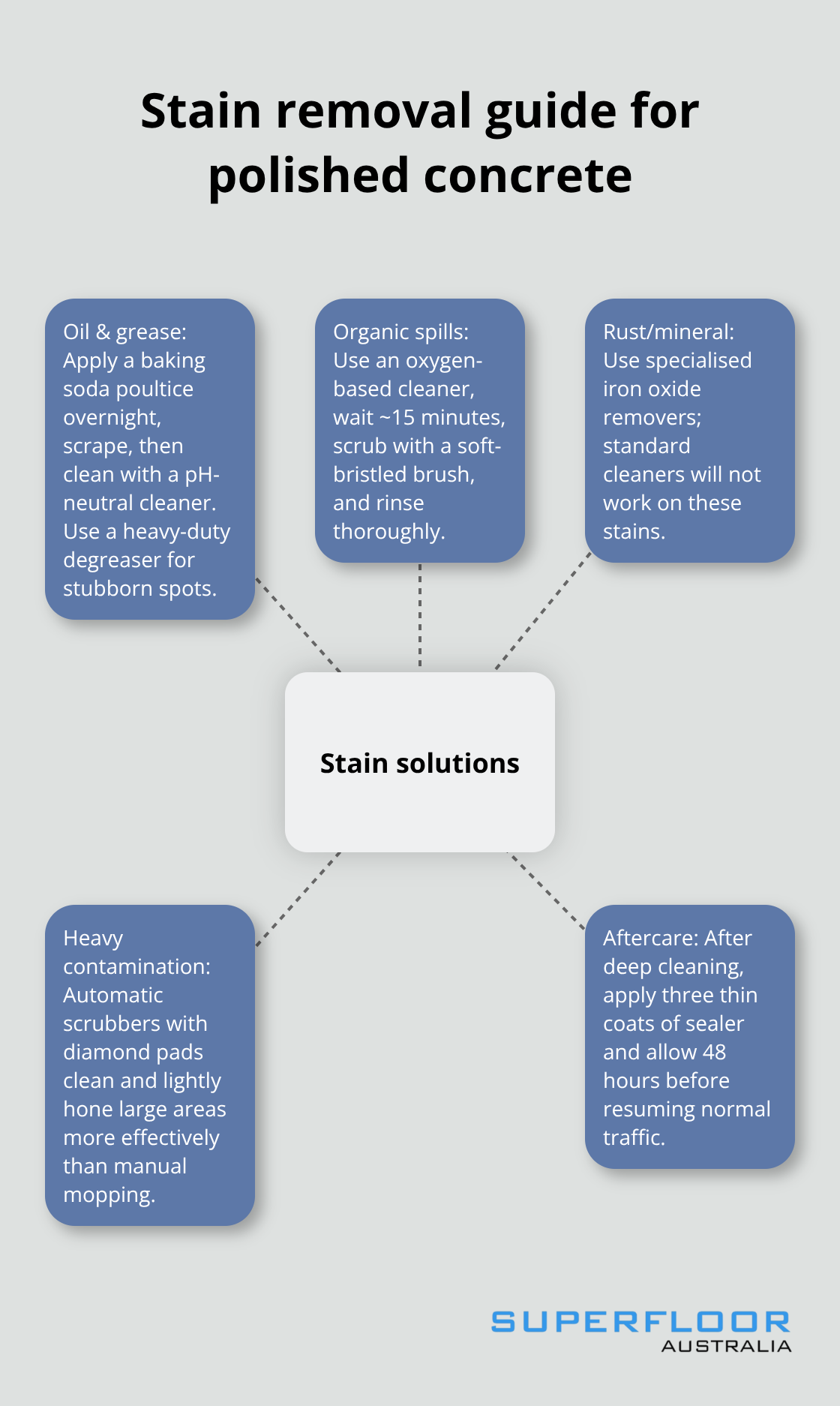
Oil and grease stains penetrate quickly and become harder to remove the longer they sit. Apply a baking soda and water poultice directly to the affected area, cover it with plastic wrap, and leave it overnight to draw out the oils. The next morning, scrape away the dried poultice and clean the spot with your standard pH-neutral cleaner. For stubborn greasy patches that resist this method, pre-treat with a heavy-duty degreaser before mopping, allowing it to sit for several minutes so the chemicals can break down the build-up.
Organic and Mineral Stains Need Targeted Solutions
Organic stains from coffee, wine, fruit juice, and food respond to oxygen-based cleaners rather than enzymatic solutions. Apply the oxygen-based cleaner, wait about fifteen minutes for it to work, then scrub gently with a soft-bristled brush and rinse thoroughly. Always test any new cleaner on a hidden corner first-white patchy marks from incorrect chemicals are nearly impossible to reverse without professional intervention. Rust and mineral stains from metal fixtures or hard water require specialised removers; these stains won’t respond to standard cleaners and need targeted products designed specifically for iron oxide removal.
Professional Equipment for Heavy Contamination
For large areas with heavy contamination or multiple stubborn stains, automatic floor scrubbers with diamond cleaning pads deliver results that manual mopping cannot achieve. These machines both clean and lightly hone the surface in one pass, removing embedded dirt and product film that dulls the polish. High-traffic commercial spaces benefit most from this approach because the machine’s consistent pressure and speed outperform hand-cleaning significantly.
Resealing After Deep Cleaning Restores Protection
After deep cleaning with professional equipment, your floor needs resealing to restore protection and shine. Apply three thin coats of concrete sealer rather than one thick coat, allowing proper drying between applications. Allow 48 hours of complete curing before resuming normal traffic or moving furniture back onto the floor. For residential spaces in good condition, a light machine clean with a white cleaning pad and neutral cleaner often brightens and refines the surface without requiring full reseal.
Market Growth Reflects the Value of Proper Maintenance
The global concrete floor coatings market continues growing, reflecting increased awareness that proper stain removal and protection extend floor life significantly. This investment in maintenance protects your polished concrete for decades. Once you master stain removal, the next step involves protecting your floors from future damage through strategic placement of mats and rugs in high-traffic zones.
Protecting Your Polished Concrete Investment
Sealers form the foundation of long-term floor protection. We recommend applying a high-gloss sealer immediately after installation and then annually thereafter, with more frequent applications in high-traffic commercial spaces. A concrete sealer creates a protective barrier that repels liquids, prevents etching, and maintains the reflective finish that makes polished concrete worth the investment in the first place. In spaces with heavy foot traffic, add a sacrificial wax coating every three to six months over the sealant for an extra protective layer that you can strip and reapply without disrupting the underlying seal. This approach costs far less than repolishing when the finish deteriorates. When you apply sealers or wax, ensure the floor is completely dry, apply thin even coats with a microfibre applicator, and allow 48 hours of curing before resuming normal traffic.
Mats and Rugs Prevent Damage Before It Starts
Place felt-backed mats and rugs in high-traffic zones like kitchen entrances, hallways, and reception areas where dirt and moisture accumulate most. Felt alternatives trap moisture and debris before they reach the polished surface, reducing your cleaning frequency and protecting the seal from constant foot traffic and spill exposure. Change or clean mats weekly in busy areas and monthly in moderate-traffic zones. High-quality entrance mat systems cost between two hundred and five hundred dollars but pay for themselves within months through reduced cleaning time and extended floor life.

Soft Brushes Preserve the Polish During Cleaning
When you encounter stubborn stains that require gentle scrubbing, always use soft-bristled brushes rather than stiff alternatives. Hard bristles scratch the polished surface and create dull patches that spread visually across the floor. Soft-bristled brushes work effectively on organic stains when paired with oxygen-based cleaners and provide sufficient agitation to lift dirt without compromising the finish. For routine maintenance, microfibre cloths and mops eliminate the need for brushes entirely, but you should keep a soft brush on hand for targeted stain treatment. This prevents the temptation to use harsh scrubbing tools that damage the polish permanently.
Final Thoughts
Consistency and the right products determine whether cleaning polished concrete floors succeeds or fails. Daily dry mopping with microfibre, weekly wet cleaning with pH-neutral solutions, and immediate spill response form the foundation that works. When stubborn stains appear, oxygen-based cleaners or degreasers remove them without damaging the polish, provided you act quickly and test any new product on a hidden area first.
Long-term maintenance protects your investment far better than reactive cleaning. Annual sealing and sacrificial wax coatings every three to six months in high-traffic areas extend your floor’s life by years, while felt-backed mats at entry points prevent damage before it starts. These preventative steps cost significantly less than repolishing when the finish deteriorates, and polished concrete floors last for decades with proper care.
Professional help becomes necessary when heavy contamination spreads across large areas, stubborn stains resist standard treatments, or your floor needs shine restoration after years of wear. Diamond cleaning pads and commercial-grade equipment remove embedded dirt and product film that manual mopping cannot address, preventing further deterioration from etching, deep scratches, or widespread dullness. Contact Superfloor Australia when you need installation, honing, or expert guidance on maintaining your existing floors.