

Clean polished floors transform any space and create lasting impressions on visitors. Yet many homeowners struggle with maintaining that pristine shine without causing damage.
We at Superfloor Australia see countless floors lose their lustre due to improper cleaning methods. The right approach makes all the difference between floors that gleam and those that deteriorate over time.
What Daily Steps Keep Polished Floors Spotless
Dirt particles act like sandpaper on polished surfaces and create microscopic scratches that dull the finish within weeks. Daily sweeps with a microfibre dust mop remove these particles before they embed into the surface. Vacuum cleaners work effectively but only with brush bars turned off to prevent scratches.
The Right Products Preserve Your Floors
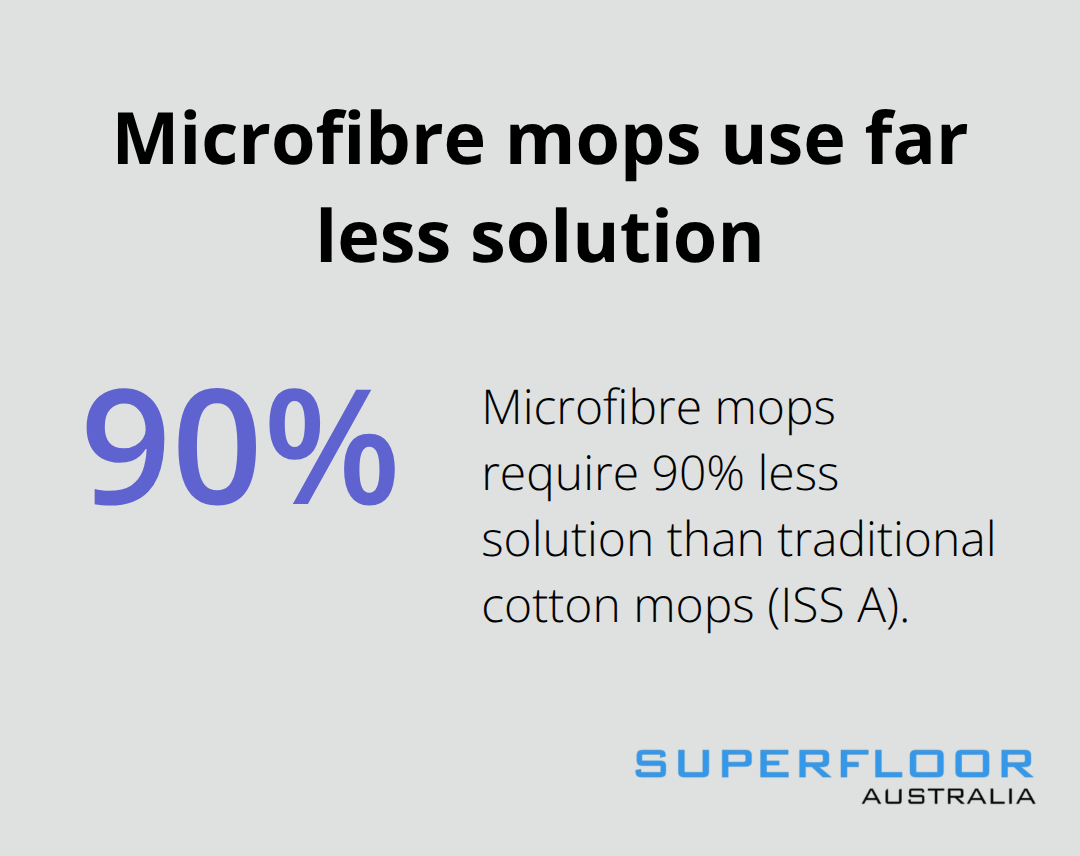
pH-neutral cleaners preserve floor finishes while they remove grime effectively. Acidic products below pH 6 strip protective coatings, while alkaline cleaners above pH 9 leave residue that attracts more dirt. Mix one tablespoon of pH-neutral cleaner per gallon of warm water for optimal results. Microfibre mops trap particles without scratches and require 90% less solution than traditional cotton mops (according to the International Sanitary Supply Association).
Speed Protects Your Investment
Spills cause permanent stains or discolouration on polished surfaces. Coffee, wine, and acidic liquids etch floors in under five minutes on sensitive materials. Keep absorbent cloths nearby and blot spills immediately rather than wipe them (which spreads the liquid). Follow with a damp microfibre cloth that uses your regular solution, then dry thoroughly to prevent water spots.
Equipment Maintenance Extends Floor Life
Clean mops and vacuum filters prevent dirt redistribution across your floors. Dirty equipment spreads grime rather than removes it and can scratch delicate surfaces. Wash microfibre mops after each use and replace them every 200 washes for maximum effectiveness. Check vacuum filters monthly and replace them when they appear grey or clogged (clean filters maintain proper suction power).
While daily care forms the foundation of floor maintenance, weekly deep treatments address buildup that regular routines miss.
How Often Should You Deep Clean Polished Floors
Weekly deep clean sessions remove buildup that daily maintenance cannot address and restore the original shine to polished surfaces. Start with a thorough sweep, then use a damp mop with two tablespoons of pH-neutral cleaner per gallon of warm water. Research shows that proper maintenance significantly extends floor life compared to daily-only maintenance. Wring the mop until barely damp – excess water seeps into seams and causes swells or warps in sensitive materials.
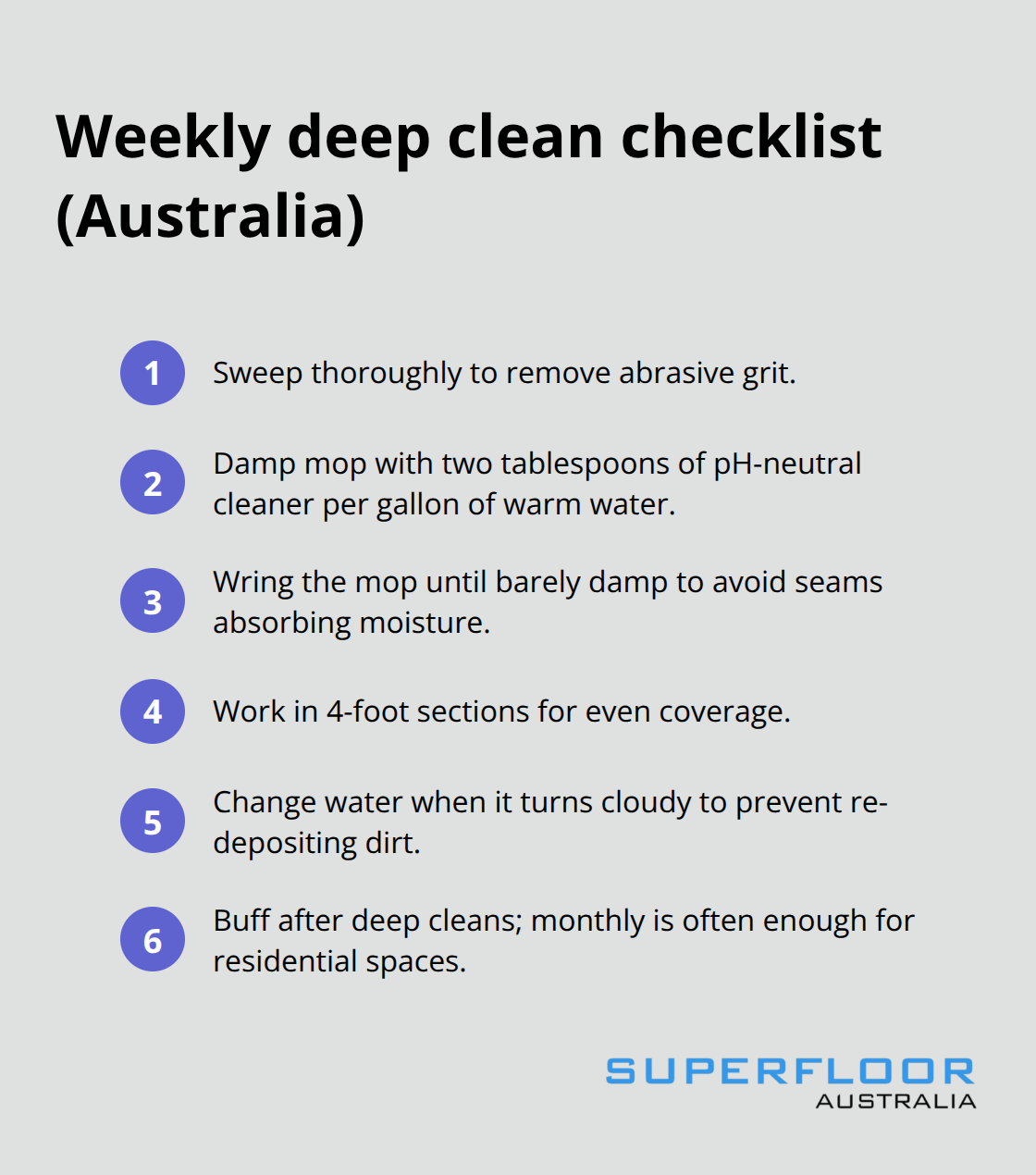
Work in 4-foot sections and change water when it becomes cloudy to prevent dirt redistribution across clean areas.
Buff Techniques That Restore Professional-Grade Shine
High-speed buffs with a microfibre cloth remove micro-scratches and restore reflectivity after deep cleans. Use circular motions with proper technique for optimal results – slower speeds leave streaks while faster speeds generate heat that damages finishes. Focus extra attention on high-traffic zones where foot traffic dulls the surface fastest. Commercial facilities maintain regular buffing schedules, but residential spaces need buffs only monthly unless they experience heavy use.
Target Stubborn Marks With Precision Methods
Scuff marks require immediate spot treatment with isopropyl alcohol on a soft cloth – standard cleaners often spread the mark instead of removal. For crayon or marker stains, apply nail polish remover sparingly and work from the outside edge inward to prevent spread. Grease stains respond best to ice treatment: place ice cubes over the stain for 10 minutes, scrape away solidified grease with a plastic scraper, then clean residue with window cleaner. Test any aggressive treatment on an an inconspicuous area first to prevent permanent damage to your floor finish.
Weekly Schedule Maintenance Prevents Long-Term Issues
Establish a consistent weekly routine that addresses different floor zones systematically (kitchens need extra attention due to grease exposure). Document problem areas that require frequent spot treatment to identify patterns in wear or damage. Professional cleaners recommend alternates between different cleaner types to prevent residue buildup that dulls surfaces over time.
Even the most diligent weekly routines cannot prevent all floor damage when homeowners unknowingly use harmful products or techniques.
What Cleaning Mistakes Destroy Your Polished Floors
Bleach and ammonia-based cleaners strip protective coatings from polished surfaces within minutes of contact. The National Wood Flooring Association reports that acidic cleaners cause permanent etching on concrete and natural stone floors. Vinegar solutions popular on social media platforms damage limestone and marble surfaces through acid erosion. Steam cleaning generates temperatures that exceed 200°F and penetrate floor seams to cause warping in laminate materials. Wax-based products create buildup that attracts dirt and requires aggressive methods that damage underlying finishes.
Excess Water Creates Permanent Structural Damage
Laminate floors absorb moisture through edges and cause irreversible swelling when you expose them to standing water for more than 30 minutes. Research shows that moisture exposure during cleaning causes significant laminate failures. Soaking mops deposit water into microscopic gaps between planks and create breeding grounds for mould within 48 hours. Natural stone surfaces develop white mineral deposits from hard water that penetrate porous materials and require professional restoration. Polished concrete floors lose their reflective properties when excess water dilutes protective sealers and leaves permanent cloudy patches.
Dirty Equipment Spreads Contamination Across Clean Surfaces
Unwashed mop heads redistribute bacteria and grime rather than remove contaminants from floors. Studies from the International Sanitary Supply Association show that dirty tools spread pathogens to 90% more surface area than they clean. Clogged vacuum filters reduce suction power by 40% and blow dust particles back onto freshly cleaned floors. Worn mop fibres scratch delicate finishes and create permanent marks that require professional buffing to repair. Replace vacuum filters monthly to maintain effectiveness and protect your floor investment.
Wrong Tools Cause Irreversible Surface Damage
Steel wool and abrasive scrubbers create deep scratches that penetrate protective coatings and expose vulnerable substrate materials. Hard-bristled brushes leave permanent marks on soft surfaces like luxury vinyl and engineered wood. Generic cleaning cloths with rough textures act like sandpaper on polished finishes and dull reflective properties within weeks of use. Choose soft microfibre materials specifically designed for delicate surfaces to prevent costly repairs.
Final Thoughts
Proper maintenance transforms ordinary floors into stunning surfaces that last decades. Daily sweeps remove abrasive particles, while pH-neutral cleaners preserve protective finishes without damage. Weekly deep cleans with controlled moisture levels prevent buildup and maintain professional-grade shine.
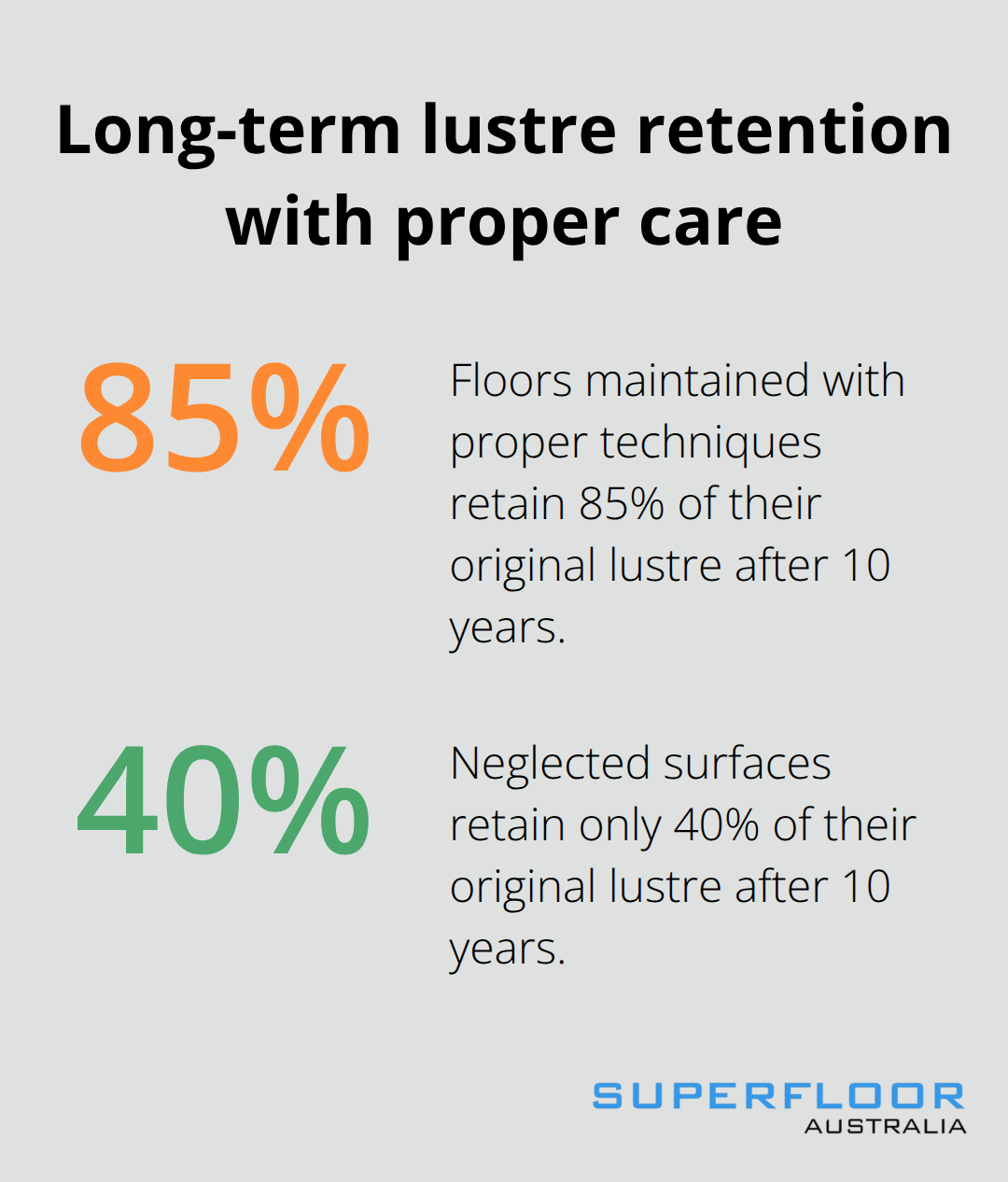
Consistent routines save thousands in replacement costs over time. Clean polished floors maintained with proper techniques retain 85% of their original lustre after 10 years (compared to 40% for neglected surfaces).
Regular care prevents permanent stains, scratches, and structural damage that require expensive restoration.
Professional services become necessary when daily maintenance cannot restore original appearance. We at Superfloor Australia create durable finishes that withstand heavy traffic while they maintain elegant aesthetics. Quality practices pay dividends through extended floor life and sustained property values that enhance any environment for years to come.