

Polished concrete floors look stunning, but they demand consistent care to maintain that shine. At superfloor australia, we’ve seen firsthand how the right cleaning routine makes all the difference between floors that look fresh and those that lose their lustre.
The good news is that keeping clean polished floors doesn’t require complicated techniques. We’ll walk you through daily habits, smart maintenance practices, and when to call in the professionals.
Your Daily Cleaning Routine
Polished concrete floors have a smooth and shiny surface that prevents the accumulation of dust and dirt. We recommend sweeping or vacuuming at least once daily in high-traffic areas, with weekly coverage for the entire floor. A standard vacuum works, but a microfibre dust mop captures fine particles without scratching the polished surface-something a broom simply cannot do as effectively. Consistency matters; skip even two days and dust settles, becoming harder to remove. Microfibre cloths trap debris without requiring water or chemicals, making them your best tool for daily maintenance. When you spot spills, wipe them immediately with a slightly damp microfibre cloth. Water cannot be applied on polished concrete floors for the first three days after the floor polishing is complete, and water left sitting on the surface can create dull spots.
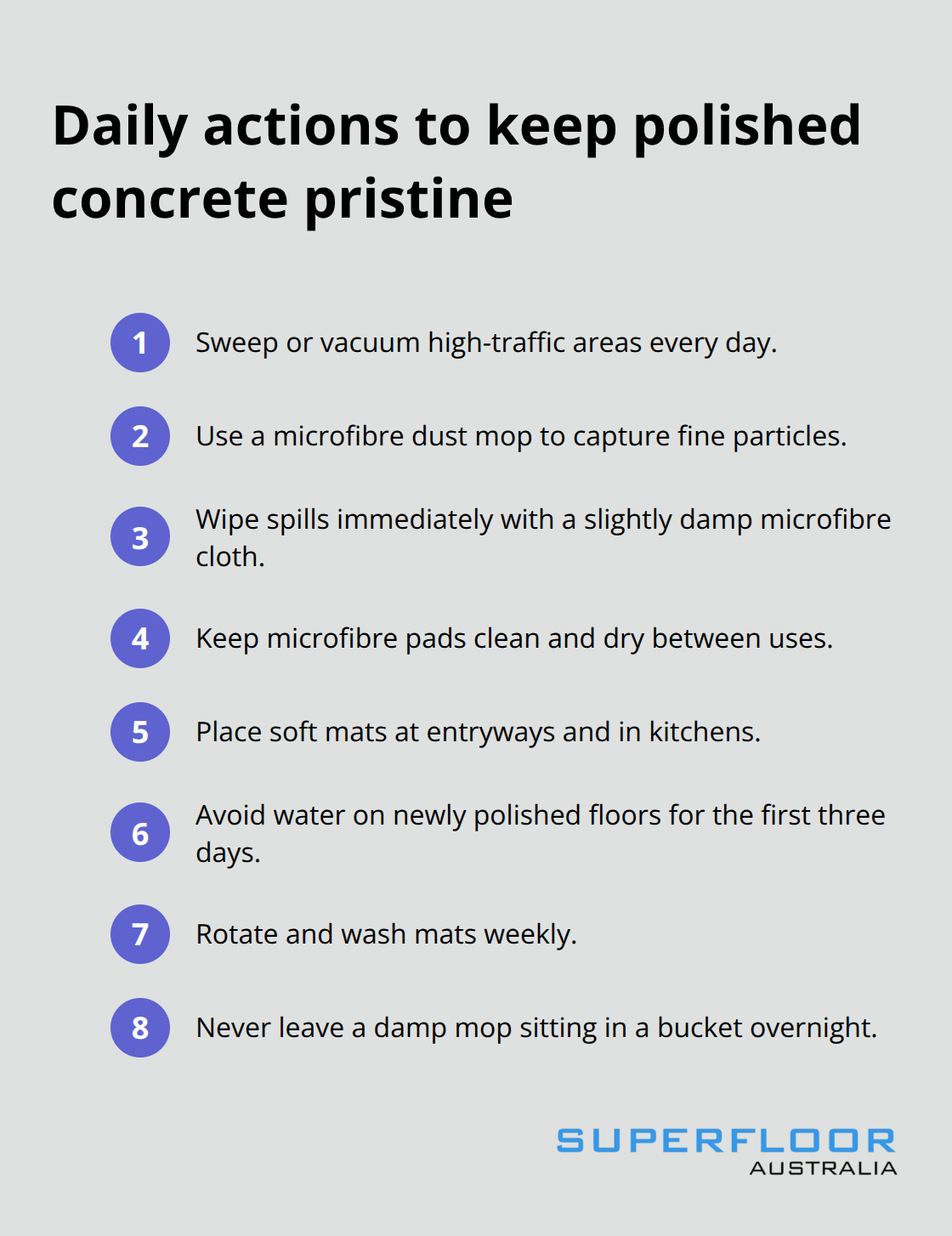
Moisture damage happens within hours on unsealed or freshly polished floors. Homeowners and business owners regret waiting even a few minutes to address water spills, particularly near kitchen areas or entryways where moisture accumulates quickly.
Keep Your Microfibre Mop Clean and Dry
A dirty mop spreads contamination across your floor. Rinse your microfibre cloth or mop head under clean water after each use and allow it to air dry completely. If you’re working on a larger floor, use two cloths so one dries while you use the other. Never leave a damp mop sitting in a bucket overnight; bacteria and mould growth will transfer to your floor on the next use. Professional cleaners replace microfibre pads frequently because they understand that a worn or dirty pad reduces effectiveness and can leave streaks on polished surfaces.
Address Spills Before They Set
The first thirty seconds after a spill are critical. Coffee, juice, and acidic liquids begin etching polished concrete immediately. Blot the spill with a clean cloth rather than wiping, which spreads liquid across a larger area. For sticky residue, a slightly damp microfibre cloth removes it without chemical cleaners. Pets and children increase spill frequency, making your daily routine even more important. Establish this habit through consistent practice-it typically takes about two weeks before it becomes automatic.
Protect High-Traffic Zones with Strategic Placement
Entryways and kitchen areas experience the most moisture exposure and foot traffic. Place soft mats at doorways to prevent water and dirt from being tracked onto floors. These mats absorb spills and protect the surface from water damage before it spreads. High-traffic zones benefit from additional attention during your daily routine, as they accumulate more dust and debris than other areas. Rotating mats and washing them weekly prevents them from becoming sources of dirt themselves.
Move Forward with Preventative Maintenance
Your daily cleaning routine forms the foundation for floor longevity, but polished concrete requires more than just surface-level care. The next step involves selecting the right cleaners and protective products to maintain that high-gloss finish over time.
Maintenance Tips to Preserve Floor Shine
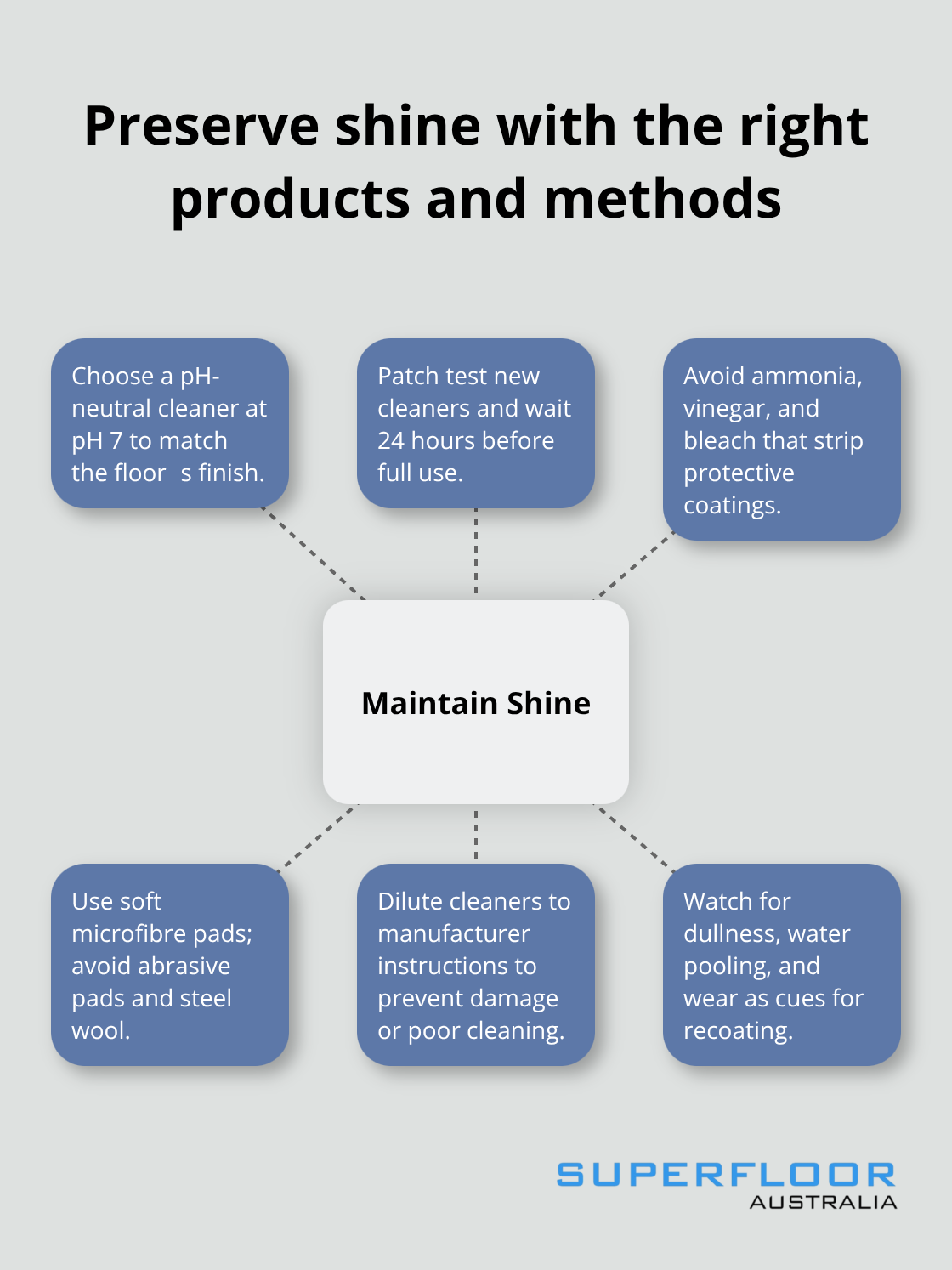
The cleaner you select determines whether your polished concrete maintains its shine or gradually dulls. We recommend pH-neutral cleaners specifically formulated for polished concrete surfaces. Acidic or alkaline cleaners damage the protective seal, creating permanent dull spots that no amount of buffing restores. Most general-purpose household cleaners fall into this category, which is why many homeowners see their floors deteriorate within months despite regular cleaning. A pH-neutral cleaner sits at a 7 on the pH scale, matching the natural balance of your floor’s finish.
Test Before You Apply
Test any new cleaner on a small, inconspicuous area first, waiting 24 hours to observe any changes before applying it across larger sections. This simple step prevents costly mistakes and protects your investment. Harsh chemicals like ammonia, vinegar, and bleach strip away the protective coating faster than foot traffic alone. The damage compounds over time; what looks fine after one cleaning becomes visibly worse after three or four applications.
Use the Right Tools and Techniques
Abrasive scrubbing pads and steel wool scratch polished concrete instantly and irreversibly. Instead, use soft microfibre pads that clean effectively without mechanical damage. When diluting your chosen cleaner, follow the manufacturer’s instructions precisely-using too much concentrate accelerates coating breakdown, while too little fails to remove embedded dust and grime effectively. Soft microfibre materials protect your floor while delivering superior cleaning results.
Know When Your Floor Needs Recoating
Polished concrete typically requires recoating every five years under normal household or commercial use. This timeline shifts based on foot traffic intensity; high-traffic commercial spaces may need recoating every three to four years, while lightly used residential areas might extend to seven years. Watch for signs that recoating is due: increased dullness despite regular cleaning, water pooling instead of beading on the surface, and visible wear patterns in high-traffic zones.
Invest in Professional Recoating
Professional recoating removes built-up residue and applies fresh protective layers that revive the original appearance. Attempting to recoat yourself introduces application inconsistencies and uneven finishes that professional-grade equipment avoids. The cost of professional recoating ranges from 40 to 80 dollars per square metre depending on your location and the floor’s condition, a worthwhile investment compared to full polishing or replacement. Between professional applications, maintain your coating by sticking to pH-neutral cleaners and addressing spills immediately. A well-maintained coating reduces cleaning frequency and keeps your floor looking polished longer than neglected surfaces that accumulate stubborn stains and residue. When your floor shows signs of wear that daily cleaning cannot address, professional deep cleaning and restoration become your next line of defence.
Professional Deep Cleaning and Restoration
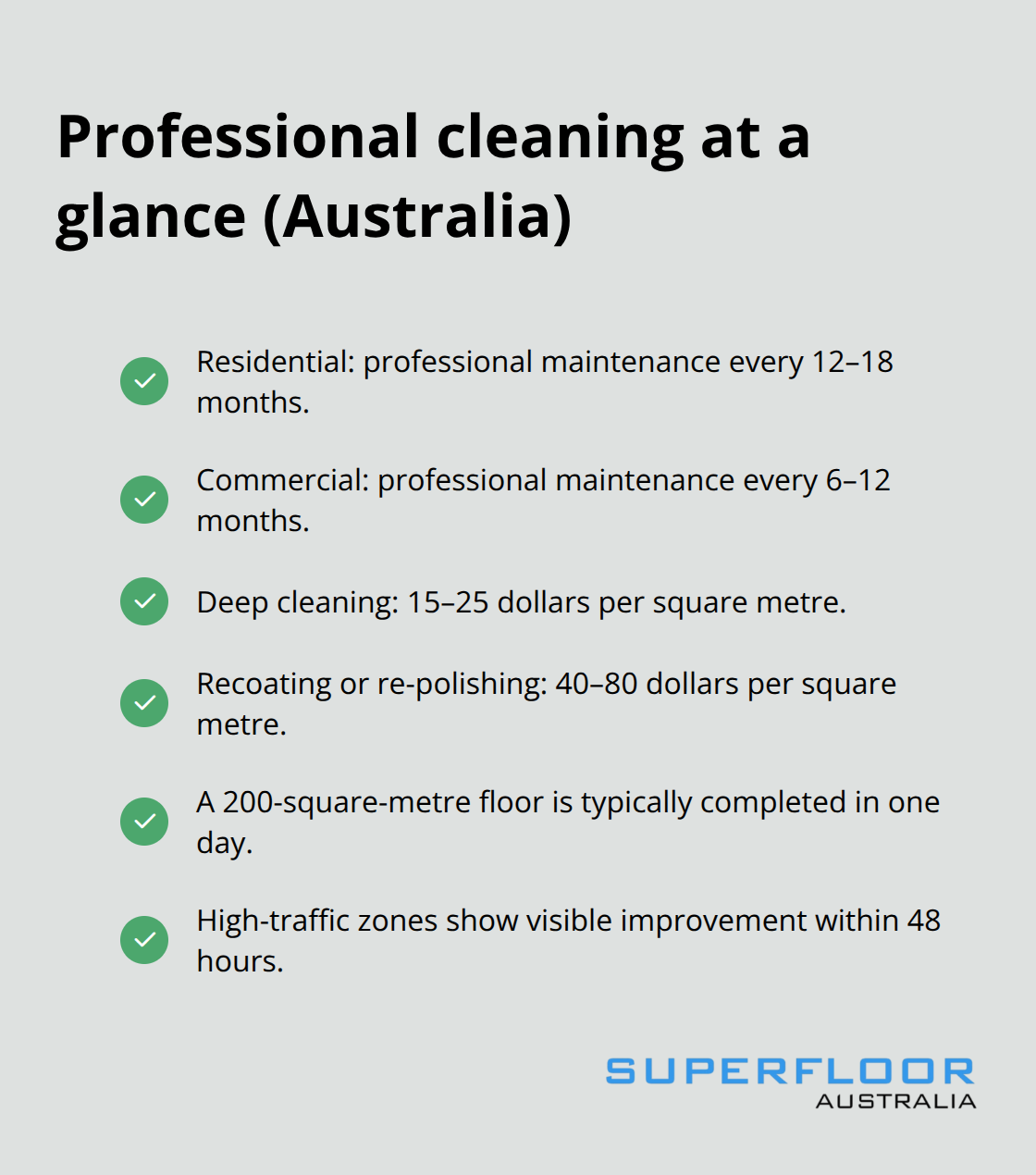
Daily cleaning and pH-neutral maintenance slow the decline of your polished concrete finish, but they cannot reverse years of accumulated damage or restore a floor that has lost its structural shine. Professional deep cleaning targets what your microfibre mop cannot reach: embedded grime in micro-pores, oxidation layers, and residue buildup that dulls the surface despite regular care. We recommend scheduling professional maintenance every 12 to 18 months for residential spaces with moderate foot traffic, and every 6 to 12 months for commercial environments. The cost typically ranges from 15 to 25 dollars per square metre for deep cleaning alone, depending on floor size and contamination level. This investment prevents the need for expensive recoating or full re-polishing, which costs 40 to 80 dollars per square metre.
How Professional Equipment Works
Professional cleaners use rotary machines and specialised alkaline or enzymatic solutions that dissolve stubborn stains without damaging the protective coating-something household equipment or standard pH-neutral cleaners cannot achieve. Specialised extraction and burnishing equipment removes oxidation layers that form when polished concrete sits exposed to air and light. These layers create a hazy appearance that no amount of mopping resolves. Professional honing equipment also smooths micro-scratches that accumulate from foot traffic and debris, restoring the original high-gloss appearance without stripping away the protective coating.
Speed and Efficiency Matter
The equipment operates at speeds and pressures that hand tools cannot match, meaning a professional crew completes a 200-square-metre floor in one day rather than weeks of intensive manual effort. Between professional visits, your daily microfibre routine and pH-neutral cleaning maintain the restored finish far longer than floors that receive only occasional attention. High-traffic zones like entryways show visible improvement within 48 hours of professional cleaning, as the haze lifts and light reflection improves noticeably.
Signs Your Floor Needs Professional Intervention
Water pooling on your floor instead of beading is a clear signal that the protective seal has degraded enough to warrant professional intervention. Increased dullness despite regular cleaning and visible wear patterns in high-traffic zones also indicate that professional deep cleaning will restore appearance more effectively than your daily routine alone.
Maintenance Schedules That Work
Most flooring specialists recommend a maintenance schedule that combines monthly professional spot cleaning for high-traffic areas with full-floor deep cleaning annually, a rhythm that keeps polished concrete looking freshly finished without excessive downtime or cost.
Final Thoughts
Your daily routine of sweeping, wiping spills immediately, and using microfibre cloths forms the foundation that prevents damage before it starts. These habits cost nothing beyond the initial investment in proper tools and take minutes each day. The real protection comes from selecting pH-neutral cleaners, avoiding harsh chemicals, and understanding that water damage happens faster than most homeowners expect. Monthly attention to high-traffic zones and annual professional deep cleaning extend the life of your protective coating by years, delaying expensive recoating or re-polishing.
Consistent maintenance transforms polished concrete from a luxury that demands constant worry into a practical flooring choice that actually improves with age. Floors that receive regular care maintain their high-gloss finish and resist staining far better than neglected surfaces. The financial case is straightforward: spending 15 to 25 dollars per square metre on annual professional cleaning prevents the need for 40 to 80 dollar per square metre recoating every few years.
We at superfloor australia understand that clean polished floors represent a substantial investment in your Brisbane home or business. Whether you maintain a floor we installed or want to upgrade your space, superfloor australia delivers high-quality polished concrete solutions that enhance both aesthetics and durability. Your commitment to daily care combined with professional maintenance ensures your floors remain a source of pride rather than frustration.