

Floor preparation Brisbane projects demand precision and expertise to achieve lasting results. Poor preparation leads to coating failures, uneven surfaces, and costly repairs within months.
We at Superfloor Australia see these mistakes daily across Brisbane’s construction sites. This guide covers proven methods, essential tools, and solutions for Brisbane’s unique climate challenges.
Which Floor Preparation Methods Work Best
Surface Grinding Creates the Foundation
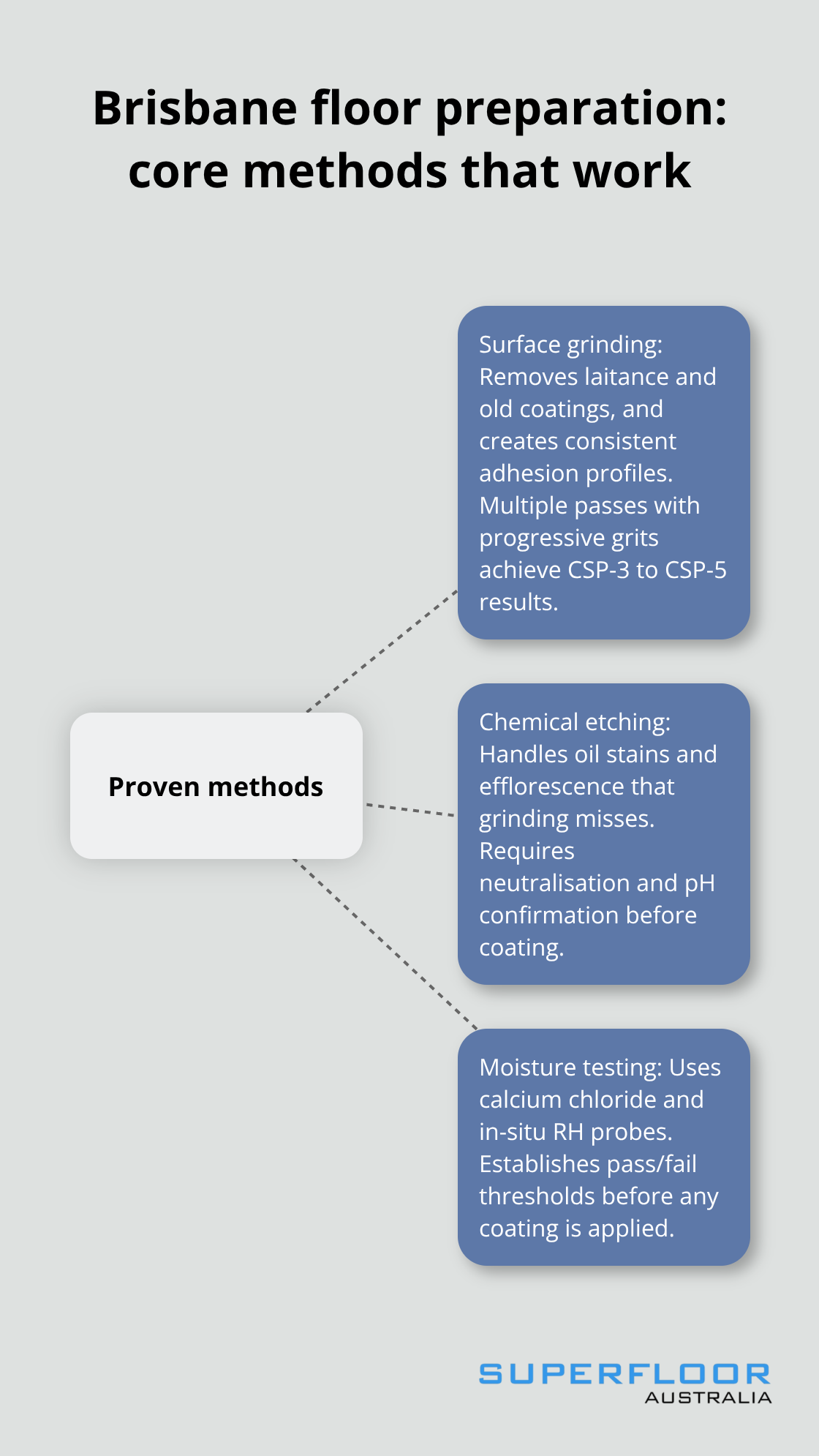
Surface grinding transforms concrete floors by removing imperfections and creates optimal adhesion profiles. Professional equipment uses diamond pads from 16-grit for aggressive material removal to 3000-grit for polish work. This mechanical process eliminates surface laitance, old coatings, and contaminants while it opens concrete pores for better coating penetration. Proper technique requires multiple passes with progressively finer grits, which achieves surface profiles between CSP-3 and CSP-5 according to ICRI standards.
Chemical Etching Handles Stubborn Contaminants
Chemical etching removes oil stains, efflorescence, and surface films that mechanical methods cannot eliminate. Muriatic acid solutions at 10-15% concentration effectively clean concrete surfaces, while specialised degreasers tackle hydrocarbon contamination. pH tests confirm surface neutrality before coating application – concrete should measure between 6-9 pH for optimal adhesion. Always neutralise acid-etched surfaces with alkaline solutions to prevent coating failures.
Moisture Testing Prevents Coating Disasters
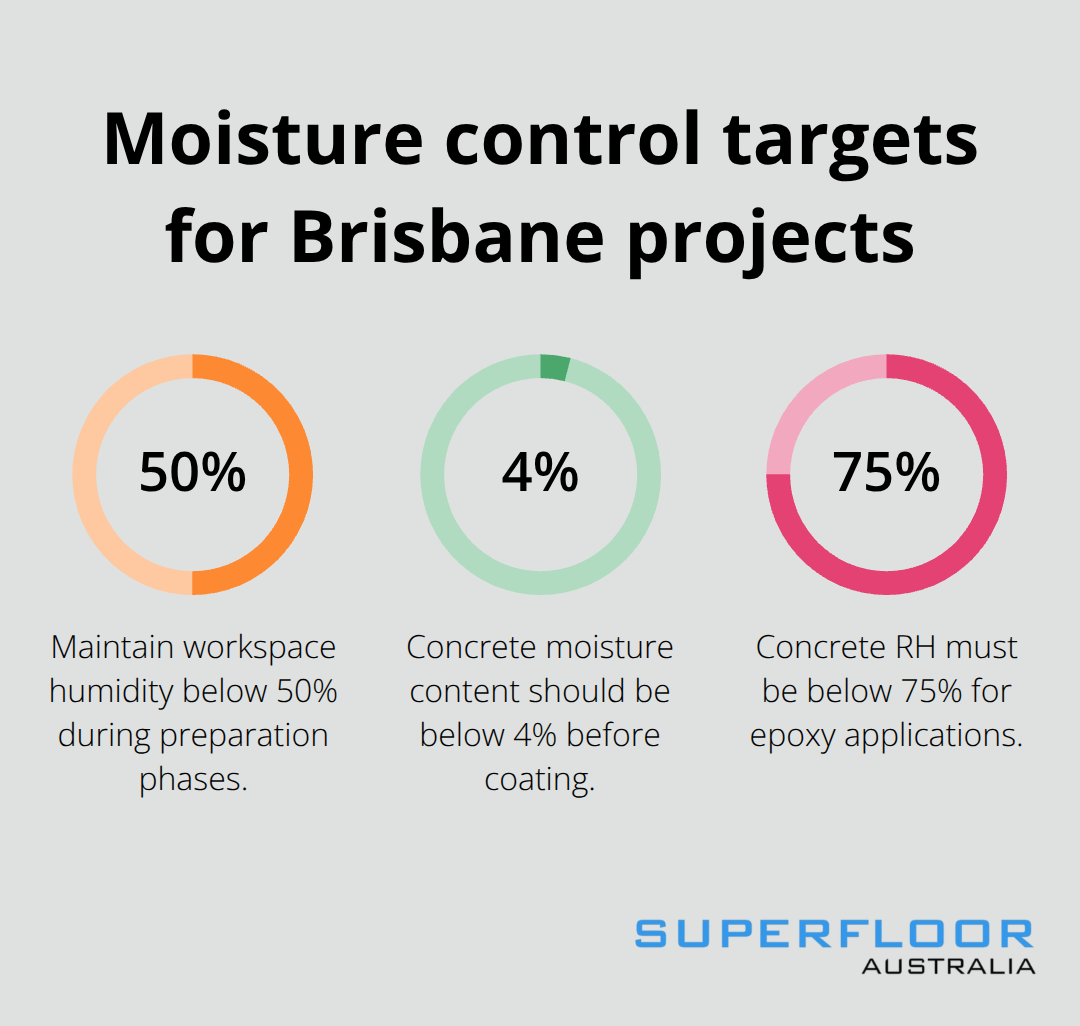
Brisbane’s humidity creates moisture-related coating failures that cost thousands in repairs. Calcium chloride tests measure moisture vapour emission rates – concrete should emit less than 3 pounds per 1000 square feet per 24 hours for most coatings. Relative humidity tests with in-situ probes provide more accurate readings, with concrete moisture levels below 75% RH required for epoxy applications (test multiple locations across large areas, as moisture levels vary significantly within the same slab).
Professional Equipment Makes the Difference
High-quality preparation demands specialised tools that deliver consistent results. Diamond cup wheels, planetary grinders, and dust collection systems work together to create uniform surface profiles. Professional contractors invest in quality equipment to handle Brisbane’s diverse concrete conditions effectively. This investment translates to superior preparation quality that DIY methods simply cannot match.
The right tools and methods form just one part of successful floor preparation – you also need the proper materials and safety equipment to complete projects safely and effectively.
Essential Tools and Materials for Floor Preparation
Professional floor preparation requires specific equipment that delivers consistent results across Brisbane’s diverse concrete conditions. Planetary grinders with 220-240 volt power requirements handle medium to large areas effectively, while smaller angle grinders work for detail work around edges and corners. Diamond cup wheels range from 16-grit for aggressive coating removal to 120-grit for final surface preparation – never skip grits as this creates inconsistent surface profiles. Dust extraction systems with HEPA filtration prevent silica exposure and maintain workspace visibility during operations.
Chemical Testing Equipment Prevents Costly Failures
pH testing strips provide basic surface analysis, but digital pH meters deliver accuracy within 0.1 units – essential for coating compatibility verification. Moisture meters with deep-probe capabilities measure concrete moisture content at various depths, while calcium chloride test kits quantify moisture vapour emission rates over 72-hour periods. Surface profile gauges confirm proper roughness levels between CSP-3 and CSP-5 standards. Quality testing equipment costs between $800-1200 but prevents thousands in coating failures.
Safety Equipment Protects Against Brisbane’s Hazards
Respirators with P2 filters protect against crystalline silica dust – Brisbane’s concrete contains high silica content that creates serious lung damage over time. Safety glasses with side shields prevent chemical splashes during acid etching, while chemical-resistant gloves handle muriatic acid solutions safely. Steel-toed boots with slip-resistant soles navigate wet concrete surfaces during chemical processes (professional contractors invest in quality safety equipment because workplace injuries cost more than prevention measures).
Professional-Grade Materials Make the Difference
High-performance diamond pads outlast cheaper alternatives by 300-400% in Brisbane’s abrasive concrete conditions. Quality degreasing agents remove hydrocarbon contamination more effectively than household cleaners, while industrial-grade neutralisers balance pH levels after acid etching. Professional materials cost more upfront but deliver superior results and reduce project timelines significantly.
Even with the right equipment and materials, Brisbane’s unique climate conditions create specific challenges that require targeted solutions and specialised techniques.
What Challenges Wreck Brisbane Floor Projects
Brisbane’s subtropical climate creates moisture problems that destroy floor coatings within 12-18 months when preparation fails. Concrete slabs absorb humidity year-round, with moisture vapour emission rates during summer months – nearly double the acceptable limit for most coatings. Projects fail because contractors skip moisture tests or rush through preparation during Brisbane’s wet season. Temperature fluctuations between 15-30°C cause concrete expansion and contraction, which creates microcracks that trap moisture and compromise coating adhesion.
Humidity Control Determines Project Success
Brisbane’s average humidity makes moisture management the primary challenge for floor preparation. Dehumidifiers must run continuously during preparation phases and maintain workspace humidity below 50% for optimal coating performance. Concrete moisture content should measure below 4% with calcium carbide meters before contractors apply any coatings. Professional contractors schedule major preparation work during Brisbane’s dry season from June to August when ambient moisture levels drop significantly.
Surface preparation in high humidity conditions requires extended drying times (what takes 24 hours in dry conditions needs 72 hours in Brisbane’s humid environment).
Old Coatings Fight Back Harder Here
Brisbane’s heat accelerates chemical bonds between old coatings and concrete, which makes removal significantly more difficult than in cooler climates. Epoxy coatings applied 5-10 years ago penetrate deeper into concrete pores due to thermal expansion cycles and require aggressive mechanical removal with 16-24 grit diamonds. Chemical strippers work faster in Brisbane’s heat but create ventilation challenges in enclosed spaces. Shot blasting removes stubborn coatings most effectively and achieves CSP-4 to CSP-5 profiles in single passes where grinding requires multiple attempts.
Different Concrete Mixes Create Unique Problems
River sand aggregates common in older Brisbane buildings create harder surfaces that require specialised diamond tooling and slower grinding speeds to prevent equipment damage. These concrete mixes respond differently to preparation methods compared to modern formulations. Contractors must adjust their approach based on the specific aggregate composition they encounter (testing small areas first prevents costly equipment damage and project delays).
Final Thoughts
Successful floor preparation Brisbane projects require systematic moisture tests, proper surface profiles, and chemical neutralisation before contractors apply coatings. Professional equipment worth $15,000-25,000 creates consistent CSP-4 profiles across entire surfaces. DIY methods cannot match this precision and often lead to coating failures within 18 months.
Hire professionals when moisture vapour emission rates exceed 3 pounds per 1000 square feet or when old epoxy coatings resist removal. Brisbane’s river sand aggregates demand specialised diamond tooling that prevents equipment damage. These conditions require expertise that saves thousands in repair costs (proper preparation prevents premature coating replacement and reduces maintenance expenses by 60%).

Quality preparation delivers floors that last 15-20 years versus 3-5 years for poorly prepared surfaces. Professional contractors understand Brisbane’s unique climate challenges and adjust their methods accordingly. We at Superfloor Australia deliver expert floor preparation services across Brisbane’s residential, commercial, and industrial projects.