

Honed concrete looks sleek and modern, but many property owners worry about safety when water enters the picture. At superfloor australia, we’ve seen this concern come up repeatedly in both residential and commercial projects.
The truth is that honed concrete’s slip resistance depends on several factors-surface texture, water management, and the right protective treatments all play a role. This guide breaks down exactly what you need to know about keeping honed concrete safe in wet conditions.
How Honed Concrete Performs When Wet
Surface Texture and Water Behaviour
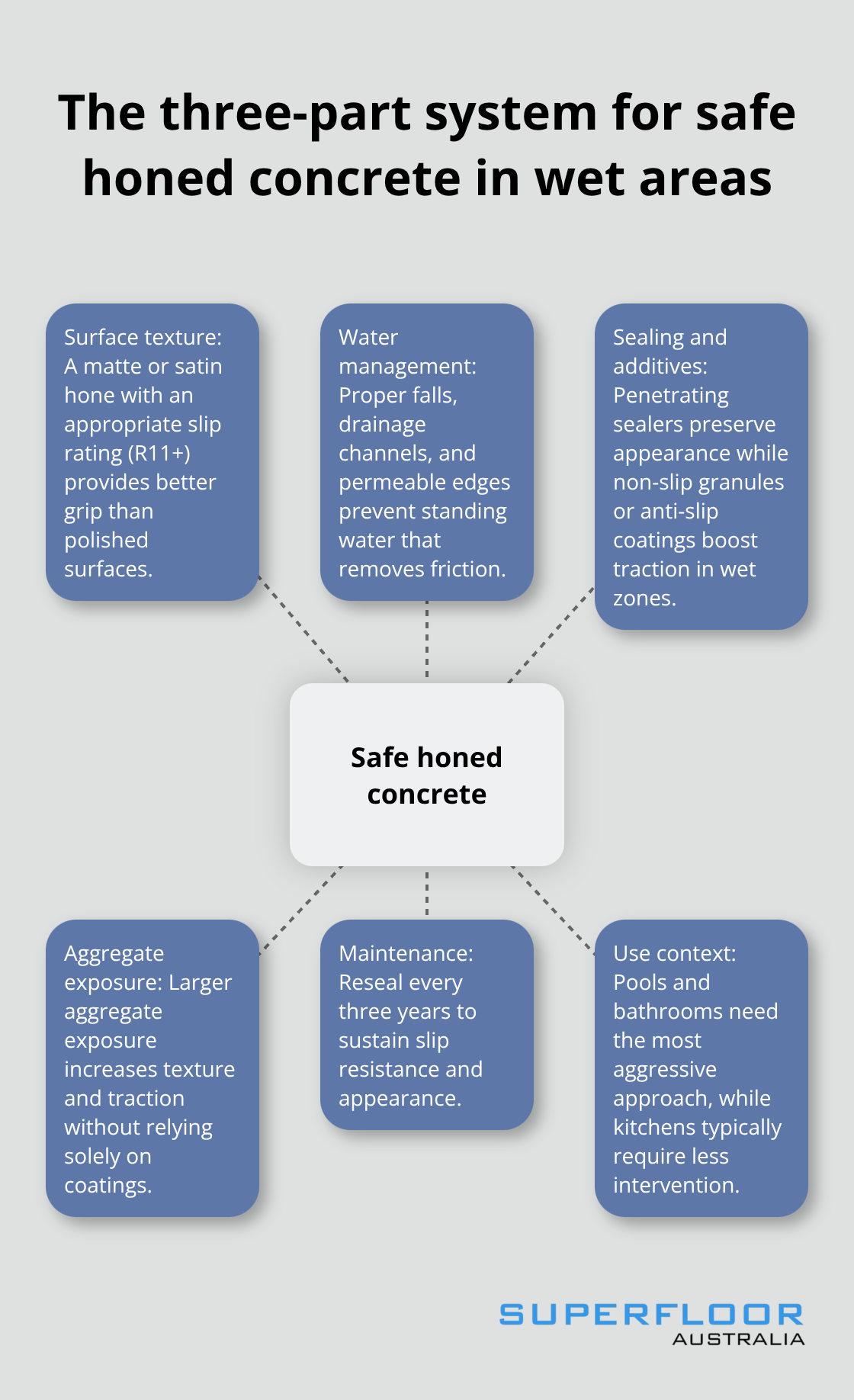
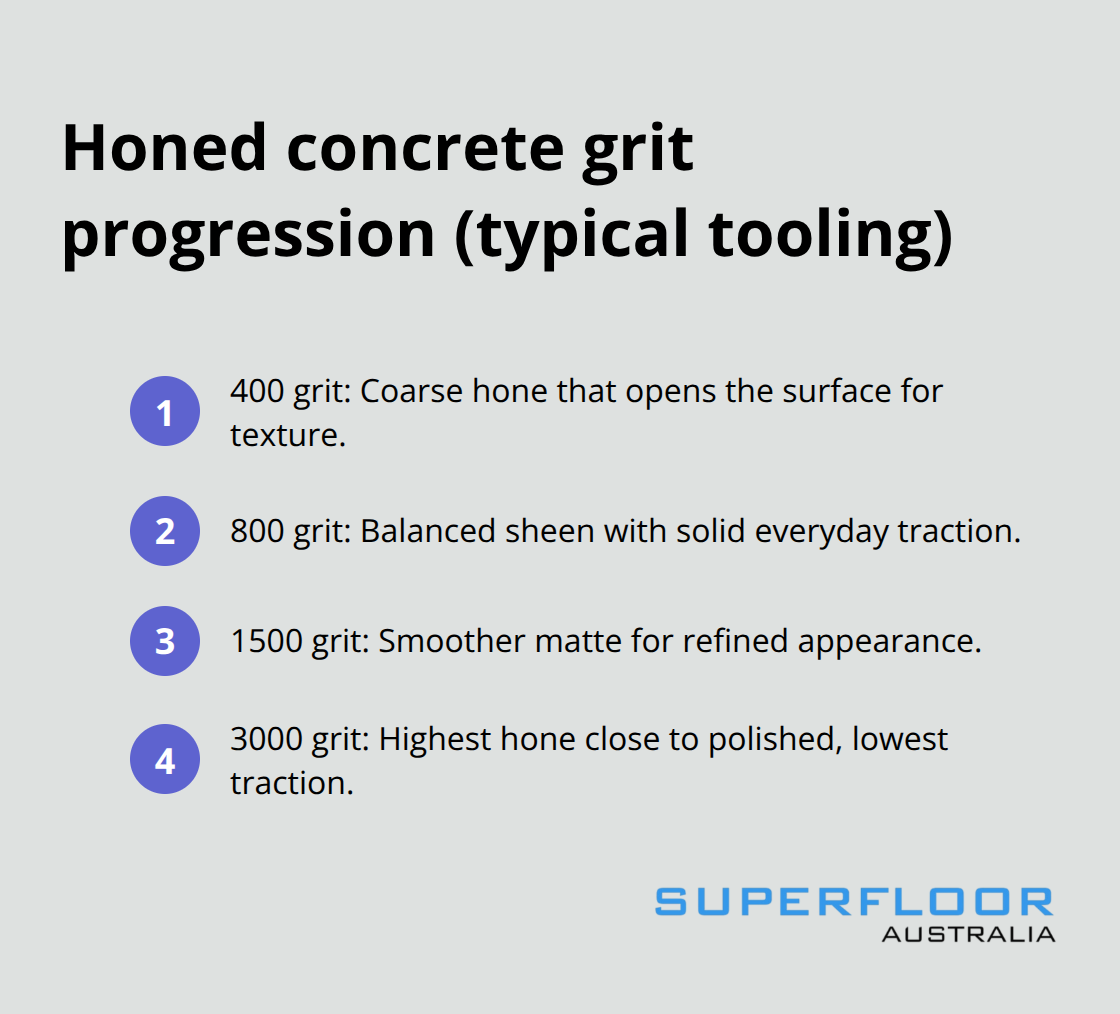
The surface texture of honed concrete determines its behaviour in wet conditions. Honed concrete is created by grinding the surface with progressively finer diamond grits, continuing through higher grits to achieve the desired sheen with typical tooling of 400, 800, 1500, up to 3000 grit resin-bond diamonds. This process removes the top layer to expose the aggregate beneath, creating a matte or satin finish rather than a high-gloss shine. Matte finishes naturally provide better traction than polished concrete because the texture creates more friction points for your foot or shoe to grip. When water sits on a honed surface, it doesn’t form a slick film the way it does on highly polished concrete. However, slip resistance isn’t automatic-it depends entirely on how finely the concrete has been ground and what sealer has been applied afterward. A honed finish at R11 or higher slip rating, which is the standard for outdoor areas where moisture is present, will perform significantly better than lower-rated alternatives.
The Critical Role of Water Management
Water pooling on the surface creates the real slip hazard. Even textured concrete becomes slippery if water doesn’t drain properly, because standing water eliminates the friction that the texture provides. This is why proper water management matters just as much as the finish itself.
Poor drainage transforms a safe surface into a hazardous one, regardless of how well the concrete was honed. Property owners often overlook this factor, focusing only on the finish quality while neglecting the underlying infrastructure that keeps water moving.
Performance Against Other Flooring Options
Polished concrete becomes dangerously slippery when wet because the high-gloss surface reduces friction dramatically. Timber and laminate flooring absorb water and swell, making them unsuitable for wet areas entirely. Tile with grout lines can be problematic because water collects in the grout, creating slip hazards, and the grout itself deteriorates over time in outdoor conditions.
Honed concrete, when properly sealed and maintained correctly, outperforms these options in wet outdoor environments.
Sealing and Maintenance for Slip Resistance
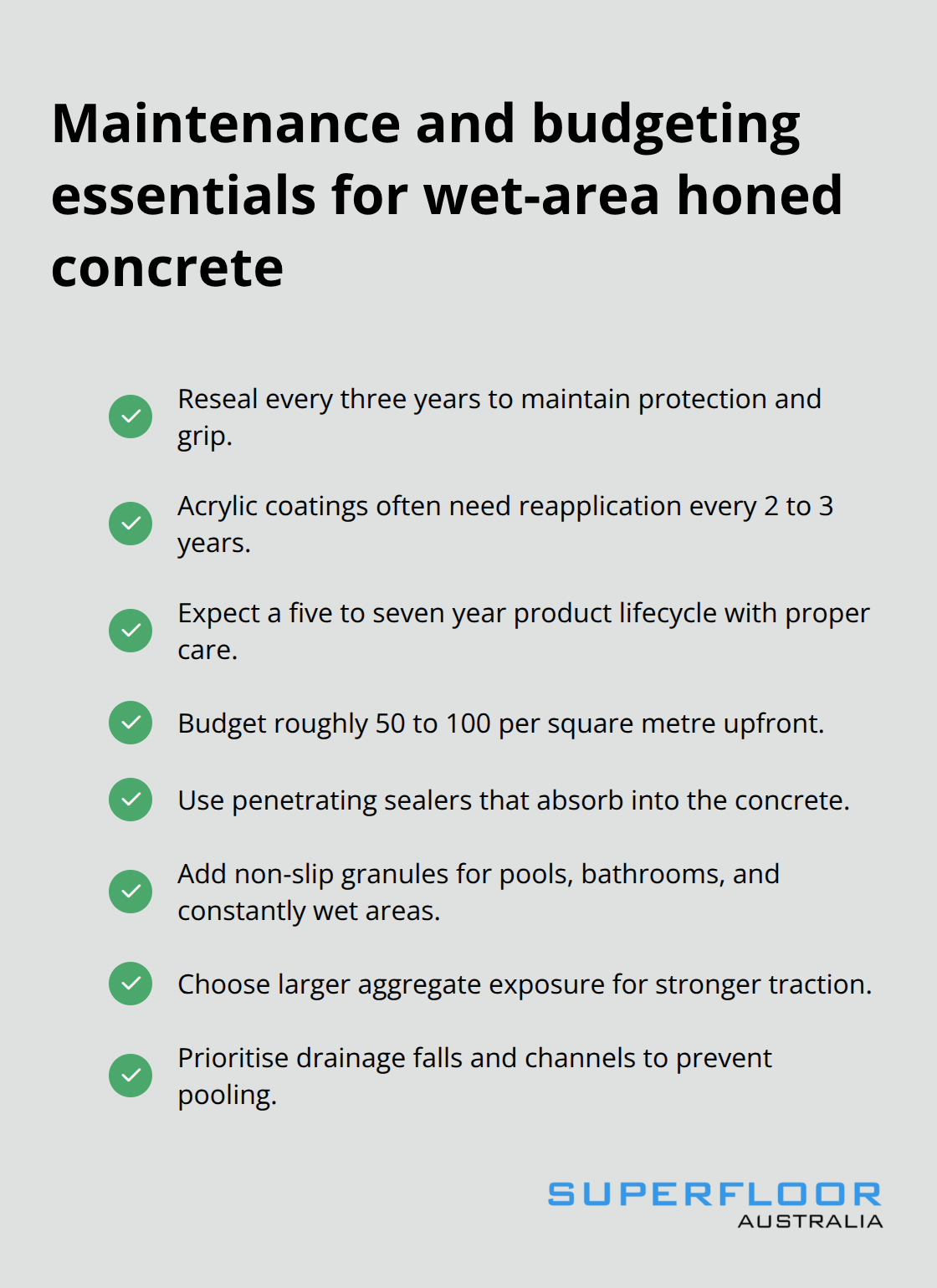
Penetrating sealers absorb into the concrete rather than sitting on top, offering long-term protection against moisture and stains without altering the surface’s appearance. Resealing every 3 years sustains both slip resistance and appearance. For areas around swimming pools or in spaces with constant water exposure, adding non-slip granules to the sealer or applying an anti-slip coating provides an extra layer of protection. The aggregate exposure you choose also affects grip-larger aggregate exposure, such as 20–60mm exotic pebbles, creates more texture and better traction than smaller exposures.
Proven Performance in High-Traffic Spaces
Projects like the Cairns Cruise Liner Terminal and Pavilions on Palm Beach demonstrate that honed concrete performs reliably in high-traffic outdoor areas when these principles are applied correctly. These installations show that the combination of proper finishing, sealing, and maintenance creates surfaces that handle moisture without compromising safety. Understanding these performance factors helps property owners make informed decisions about whether honed concrete suits their specific wet-area needs.
How to Protect Honed Concrete in Wet Areas
Non-Slip Granules and Coatings
Non-slip granules mixed into sealers provide the most direct solution for reducing slip hazards on wet honed concrete. These granules sit on the surface and create additional texture that improves grip without requiring a complete resurfacing. For areas around swimming pools or constantly wet spaces, adding non-slip granules to a penetrating sealer delivers both protection and the clean aesthetic honed concrete offers. Resealing periodically maintains slip resistance in outdoor moisture-prone areas.
Surface coatings like urethane or epoxy incorporate non-slip additives and provide stain resistance alongside improved traction. However, these coatings sit on top of the concrete rather than absorbing into it, so they require more frequent maintenance than penetrating sealers. Acrylic coatings offer a middle ground, delivering modest slip improvement while maintaining a natural appearance, though they typically need reapplication every 2 to 3 years depending on foot traffic and weather exposure.
Aggregate Exposure and Natural Texture
Aggregate exposure level directly influences how much grip the surface naturally provides, making this choice as important as any treatment applied afterward. Honed concrete with larger aggregate exposure creates significantly more texture than standard finishes, delivering better traction in wet conditions without additives. The textured surface maintains traction even when wet, making it much safer than smooth concrete or other slippery materials around pools and spas. This approach means you can reduce reliance on additional treatments by selecting the right finish from the start.
Drainage as the Foundation
Proper drainage infrastructure prevents water from pooling on the surface, which eliminates friction regardless of finish quality or treatments applied. Sloped surfaces that direct water away from high-traffic zones reduce standing water and maintain slip resistance consistently. Installing drainage channels or permeable edges around pool coping and outdoor entertainment areas keeps water moving rather than collecting. Without functional drainage, even a perfectly honed and sealed surface with non-slip granules becomes hazardous when water accumulates.
Property owners often invest in treatments while overlooking drainage, which reverses the priority-drainage forms the foundation, and treatments enhance an already functional system. The most effective wet-area honed concrete projects combine all three elements: appropriate aggregate exposure, quality sealing with non-slip additives, and infrastructure that manages water movement. This layered approach determines whether your honed concrete surface performs safely or creates liability in moisture-prone spaces, making the next step-understanding real-world performance across different environments-essential for your decision.
Where Honed Concrete Works Best
Residential Kitchens and Bathrooms
Honed concrete with R11 slip resistance and proper sealing handles daily moisture exposure effectively in residential kitchens when drainage slopes toward doorways or floor drains. Residential bathrooms require more careful planning than kitchens because standing water around showers and tubs creates slip hazards that drainage alone cannot solve-adding non-slip granules to the sealer becomes necessary in these spaces. The difference between these two rooms reflects how water behaviour changes with usage patterns; kitchens see spills that drain quickly, while bathrooms accumulate standing water that demands additional protection.
Commercial High-Traffic Zones
The Cairns Cruise Liner Terminal demonstrates that commercial applications benefit significantly from honed finishes in high-traffic zones where thousands of people move through daily. The terminal selected honed concrete for its combination of safety and durability in wet conditions, with regular maintenance every three years sustaining both slip resistance and appearance. Larger aggregate exposure creates superior grip compared to standard finishes, making it the better choice for areas with consistent foot traffic and moisture. Commercial environments like foyers, staircases, and bathrooms benefit from penetrating sealers that maintain the finish’s aesthetic while delivering consistent slip resistance across high-traffic zones.
Poolside and Garden Applications
Pavilions on Palm Beach and similar Queensland installations use honed concrete around pools specifically because the matte texture resists algae growth better than polished concrete, and larger aggregate exposure prevents water from creating slick surfaces during typical pool use. Outdoor entertainment areas with proper drainage channels directing water away from seating zones perform reliably for years without slip incidents, but pools require the most aggressive approach-combining R11+ slip ratings, non-slip granules in the sealer, and sloped surfaces that prevent water pooling near edges. Garden pathways benefit from honed finishes because they withstand Queensland’s intense sun without colour fading, unlike many alternative materials, and the natural texture provides consistent grip even after heavy rain.
Maintenance and Lifecycle Expectations
Property owners planning honed concrete in wet areas should budget for maintenance every three years and expect product lifecycle of five to seven years with proper care, making the upfront investment reasonable given the durability advantage over timber, laminate, or standard tile in moisture-prone spaces. Residential projects often underestimate drainage requirements, while commercial and outdoor projects prioritise it from the start. The critical difference between successful and problematic installations lies in how thoroughly teams address water management alongside finish selection and sealing choices.
Final Thoughts
Honed concrete is slippery when wet only if you skip the protective measures that prevent it. The Cairns Cruise Liner Terminal and Pavilions on Palm Beach demonstrate that moisture-prone spaces perform safely when you combine larger aggregate exposure, penetrating sealers with non-slip granules, and functional drainage infrastructure. These three elements work together as a system-remove one, and you create unnecessary risk.
Your upfront investment of 50 to 100 per square metre reflects long-term value that timber, laminate, and standard tile cannot match. A five to seven year product lifecycle with proper maintenance means your surface handles Queensland’s climate without fading, resists algae growth, and maintains consistent grip through regular use. Resealing every three years sustains both protection and appearance across residential bathrooms, commercial foyers, and poolside areas.
At Superfloor Australia, we specialise in outdoor honed solutions that deliver slip-resistant elegance for gardens and poolside areas. Our precision preparation and expert craftsmanship ensure your honed concrete surface performs safely in moisture-prone spaces while maintaining the sleek aesthetic you want. Contact us to discuss how the complete system works for your specific project.