

Kitchen polished concrete flooring has become the go-to choice for homeowners who refuse to compromise between style and practicality. It handles the chaos of daily cooking, spills, and foot traffic without breaking a sweat.
At superfloor australia, we’ve watched this trend transform kitchens across Brisbane. The combination of durability, low maintenance, and modern aesthetics makes it the smart choice for busy homes.
Why Polished Concrete Delivers in Modern Kitchens
Polished concrete floors in kitchens perform where other materials fail. The surface itself resists the exact stresses that destroy traditional flooring. Australian residential kitchens experience 2,000 to 3,000 foot traffic passes daily, and polished concrete withstands this without visible wear or degradation. The wear surface reaches a Mohs hardness rating of 8 to 9, making it harder than most dropped utensils, pots, and appliances that strike it. Unlike timber that scratches or tiles that crack, polished concrete maintains structural integrity for decades.
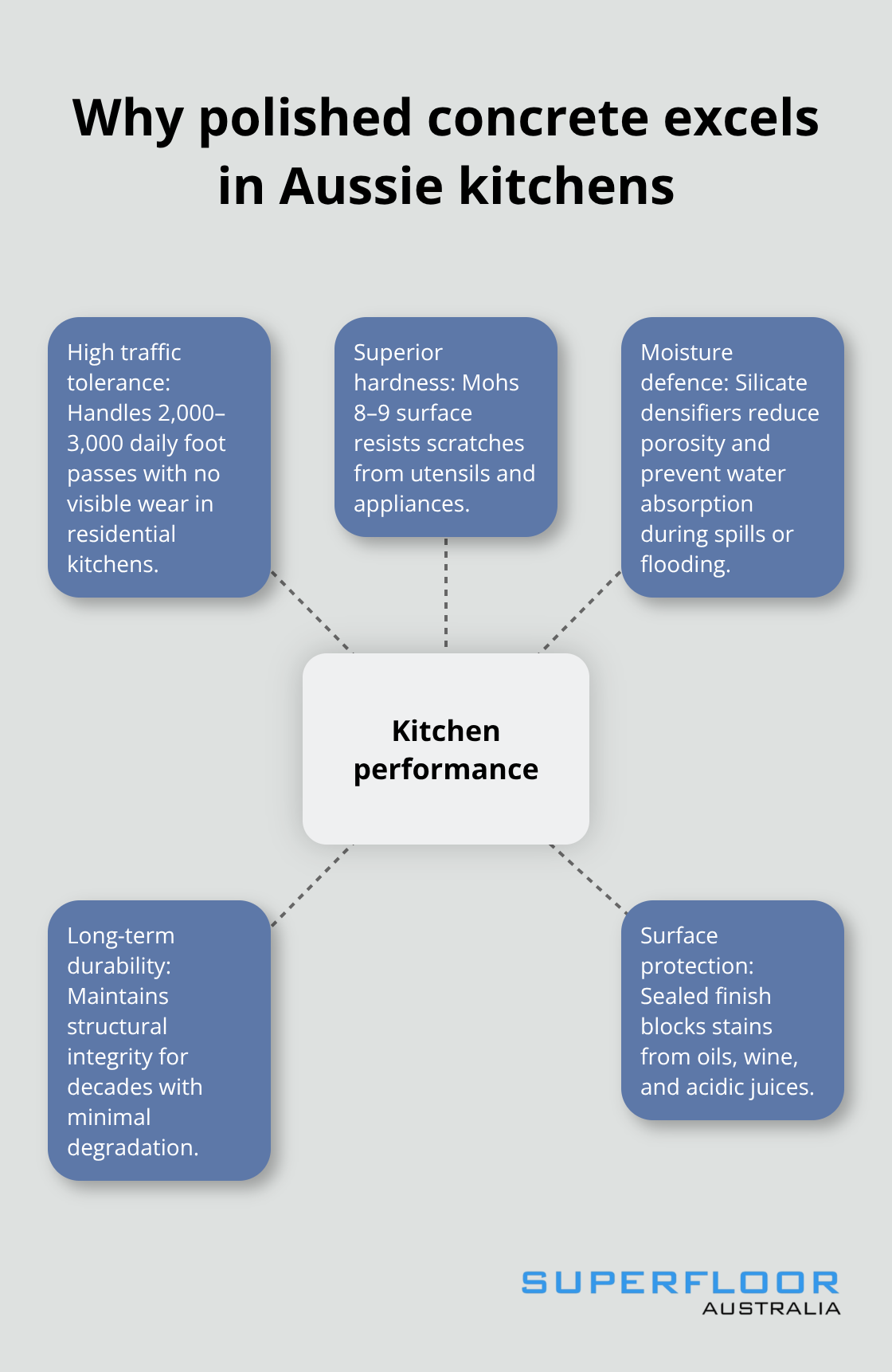
The sealing process, using silicate densifiers, reduces porosity and prevents moisture absorption from spills or accidental flooding, protecting the slab underneath. This means no water damage, no warping, and no hidden mould growth behind the surface.
Cleaning requires minimal effort
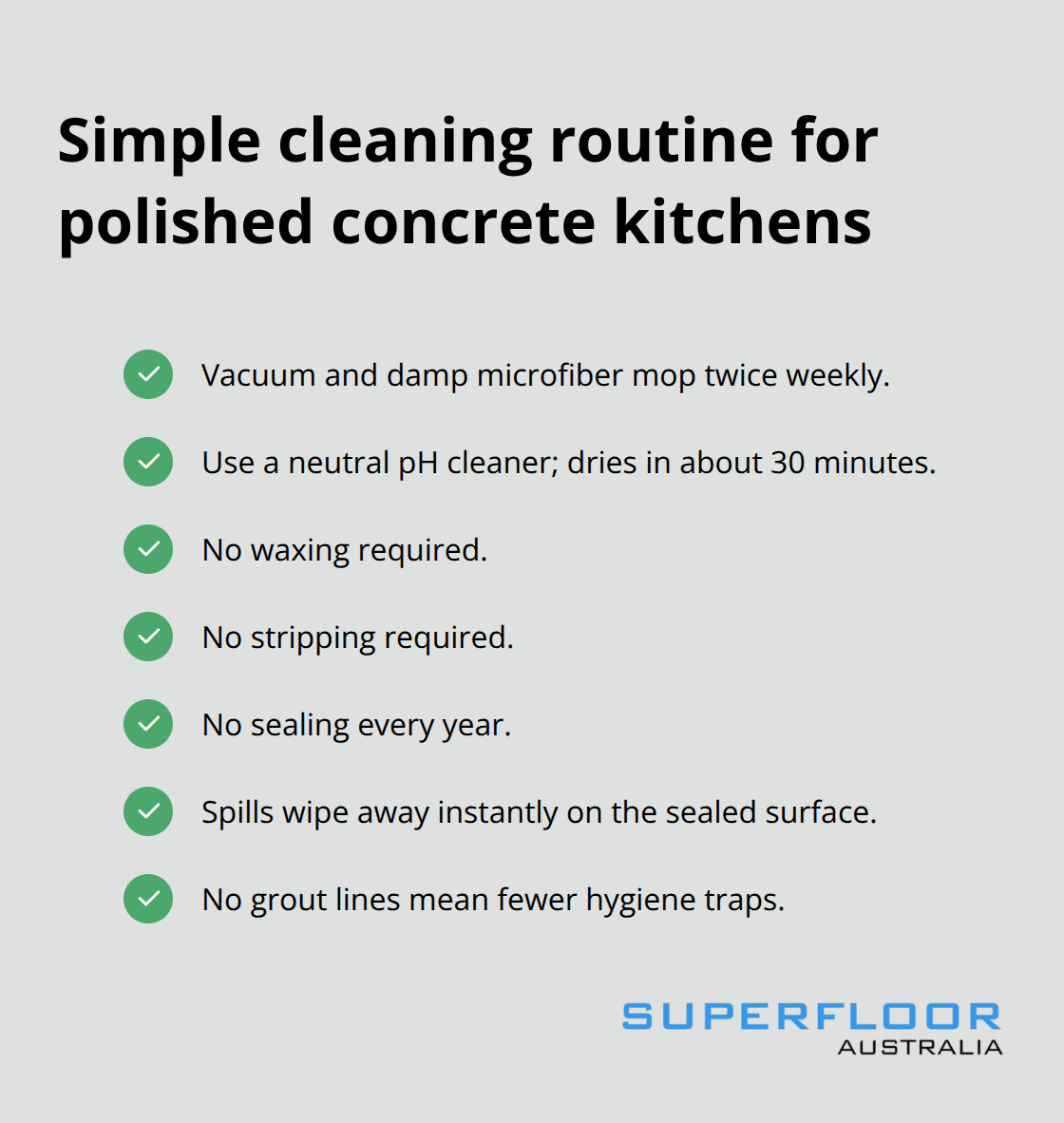
Maintenance stops the moment you stop overthinking it. Polished concrete requires only a vacuum and damp microfiber mop twice weekly for typical household kitchens. No waxing. No stripping. No sealing every year. A neutral pH cleaner takes minutes to apply, and the floor dries within 30 minutes. Spills wipe away instantly because the sealed surface repels oils, wine, and acidic juices that would stain timber or etch stone. The flat finish eliminates grout lines where food particles hide in tile installations, making this floor genuinely more hygienic for families with young children or pets.
Energy costs drop slightly because the light-reflective surface brightens kitchens naturally, reducing artificial lighting needs during daylight hours.
Colour and finish options suit any aesthetic
Colour and finish options span matte, semi-gloss, high-gloss, burnished, and exposed aggregate finishes in beige, grey, black, blue, and custom dyed designs. Modern kitchens gain sleekness from high-gloss finishes that reflect light and create visual depth. Industrial kitchens benefit from matte finishes that require regular mopping and polishing. Warm kitchens work with salt and pepper aggregates or custom stains that add character without fussiness. The trend now extends beyond floors to kitchen benchtops, creating visual continuity that tile or stone cannot match affordably.
Installation and investment timeline
Installation typically spans 3 to 6 days, meaning your kitchen returns to normal use faster than most renovation timelines. Costs range from $50 to $100 per square metre for residential applications in Australia, making this competitive with hardwood or premium tile when you factor in the decades-long lifespan and minimal maintenance. These performance advantages set the stage for understanding how polished concrete handles the specific environmental challenges kitchens present.
How Polished Concrete Handles Kitchen Hazards
Stain and Moisture Resistance
Kitchens demand flooring that performs under genuine stress, and polished concrete excels where traditional materials crumble. The sealed surface actively resists stains that plague timber and stone because silicate densifiers reduce porosity to near-zero levels, preventing oils, wine, and acidic juices from penetrating the slab. A spill on polished concrete wipes away in seconds without permanent marking, whereas the same spill on untreated stone or grout lines requires aggressive cleaning or leaves a ghost stain. Moisture resistance matters equally in kitchens where water splashes from taps, dishwashers leak, or flooding occurs. The sealed concrete prevents moisture absorption that would cause timber to warp, stone to weaken, or tile adhesive to fail. Brisbane homeowners experience humidity and occasional heavy rain that tests flooring integrity, and polished concrete’s moisture control protects the structural slab for decades.
Safety Without Compromise
Safety concerns about slippery floors disappear with proper finishing because anti-slip coatings create sufficient friction for wet conditions without compromising the polished aesthetic. The flat surface eliminates trip hazards that grout lines create in tiled kitchens, reducing fall risks for children and elderly family members who navigate the space daily.
Long-Term Financial Advantage
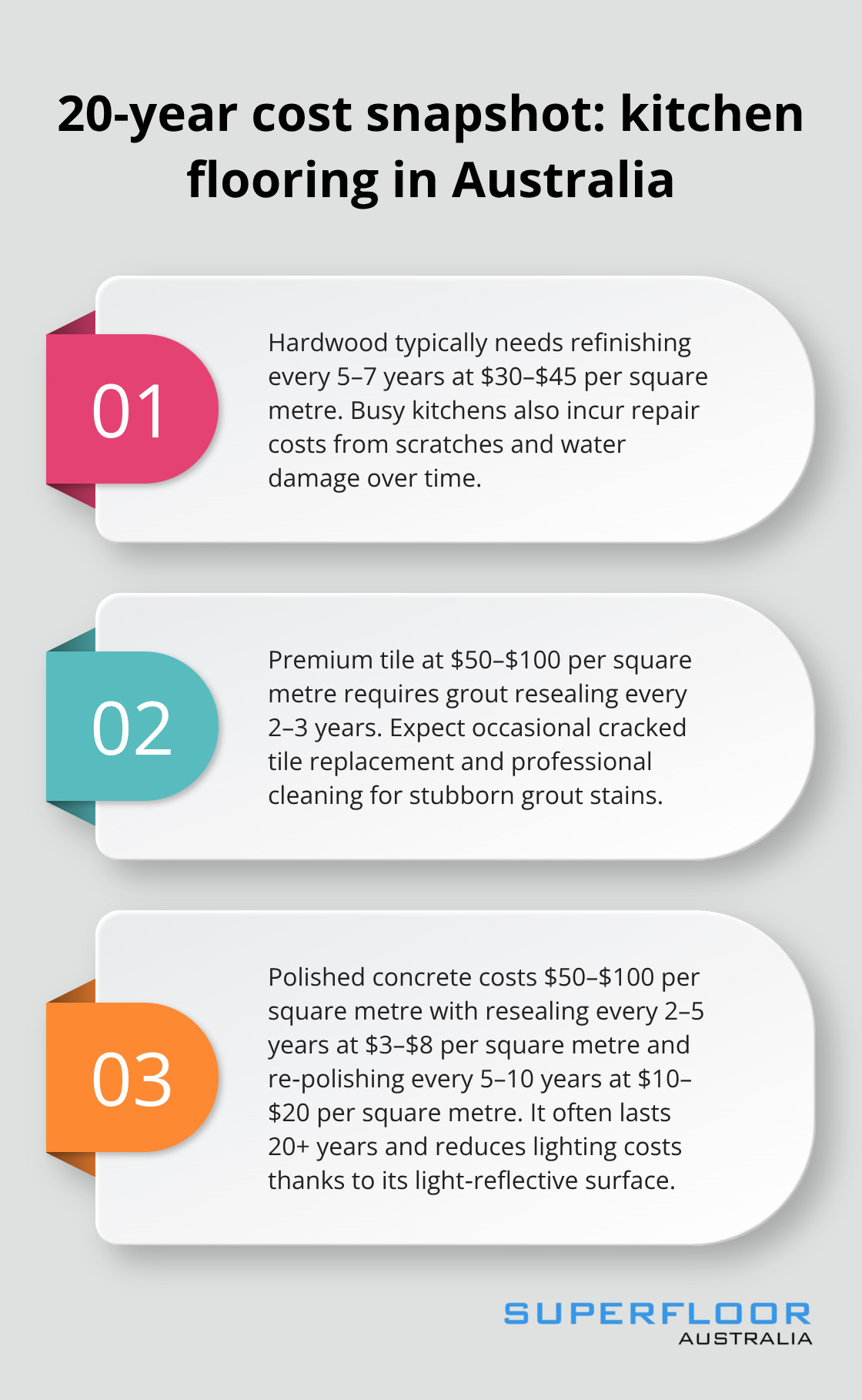
Long-term cost comparison reveals why polished concrete outperforms alternatives over a kitchen’s lifespan. Hardwood flooring requires refinishing every 5 to 7 years at $30 – $45 per m2, plus repair costs from water damage and scratches that accumulate in busy kitchens. Premium tile at $50 to $100 per square metre demands grout resealing every 2 to 3 years, replacement of cracked tiles, and professional cleaning to remove stubborn stains from grout lines. Polished concrete at $50 to $100 per square metre needs resealing every 2 to 5 years at $3 to $8 per square metre and re-polishing every 5 to 10 years at $10 to $20 per square metre. Over 20 years, polished concrete offers superior durability lasting 20+ years compared to most flooring materials that need replacement every 5-15 years, and maintenance costs remain substantially lower than alternatives. Energy efficiency adds hidden savings because the light-reflective surface reduces artificial lighting requirements during daylight hours, lowering electricity costs marginally but consistently.
The combination of no water damage repairs, minimal stain removal expenses, and elimination of replacement cycles creates genuine financial advantage that justifies the initial investment for families planning to stay in their homes long-term. These performance metrics set the foundation for understanding which design and customization options work best for your specific kitchen environment.
Design and Customization Options
High-Gloss Finishes for Contemporary Kitchens
High-gloss finishes dominate contemporary kitchen design because they reflect light and create visual space that smaller kitchens desperately need. A high-gloss polished concrete floor amplifies natural daylight, which matters in Brisbane kitchens where afternoon sun streams through windows. This light reflection reduces artificial lighting requirements during peak daylight hours, lowering electricity costs marginally but consistently across the year. The glossy surface works best in kitchens with modern cabinetry, stainless steel appliances, and minimalist design because the reflective quality complements clean lines and open layouts. However, high-gloss demands more frequent cleaning than matte finishes because dust and footprints show immediately on the reflective surface. Weekly damp-mopping with a microfiber mop becomes non-negotiable, whereas matte finishes mask minor dust between cleanings. Semi-gloss finishes offer compromise for households that want modern aesthetics without obsessive cleaning schedules.
Matte and Textured Finishes for Practical Spaces
Matte finishes suit industrial kitchens or spaces where texture matters more than reflection, and they hide dust effectively for busy families who clean less frequently. These finishes are generally more forgiving during installation, with their texture and finish hiding imperfections well. The reduced gloss also eliminates glare that can strain eyes during extended cooking sessions, making matte finishes practical for kitchens where you spend significant time preparing meals.
Colour Selection and Visual Impact
Colour selection shapes how your kitchen feels functionally and emotionally. Lighter shades like beige, white, and grey expand perceived space and suit kitchens under 15 square metres where visual expansion matters. Darker colours including black and charcoal ground larger kitchens and hide spills temporarily, though they show dust and water spots more obviously than light finishes. Salt and pepper aggregates provide subtle texture that disguises minor marks while maintaining a contemporary appearance. Exposed aggregate finishes in warm tones work exceptionally well in farmhouse or coastal kitchen styles because the natural stone appearance connects to those design aesthetics.
Custom Designs and Patterns
Custom dyed designs now extend polished concrete beyond solid colours, allowing geometric patterns or subtle colour gradients that create focal points without overwhelming the space. Installation typically costs an additional $10 to $25 per square metre for staining or dyeing, but the investment creates genuinely unique kitchens that standard finishes cannot match. This approach transforms your kitchen into a personalized space that reflects your aesthetic preferences while maintaining the durability and low-maintenance benefits of polished concrete.
Extending Design to Kitchen Benchtops
Integration with kitchen benchtops amplifies design impact because extending the same finish from floor to benchtop creates visual continuity that tile or stone cannot achieve affordably. This trend reflects how polished concrete functions as a complete surface solution rather than isolated flooring, transforming entire kitchen environments with cohesive design that other materials struggle to deliver at comparable price points.
Final Thoughts
Polished concrete flooring delivers what busy kitchens genuinely need: durability that lasts decades, maintenance that takes minutes, and aesthetics that work with any design direction. Kitchen polished concrete flooring outperforms traditional materials because it resists the exact stresses that destroy timber, tile, and stone-spills wipe away instantly, foot traffic leaves no marks, and moisture stays out of your slab. The financial advantage compounds over time as you avoid refinishing costs, grout resealing, and replacement cycles that drain budgets for families committed to their homes long-term.
Brisbane homeowners choose polished concrete because it solves real problems without compromise. The sealed surface handles humidity and occasional flooding that tests other flooring materials, while light-reflective finishes brighten kitchens naturally and reduce artificial lighting needs. Anti-slip options provide genuine safety for children and elderly family members without sacrificing the polished aesthetic, and custom colours create personalized spaces that reflect your style while maintaining the practical benefits that make this flooring genuinely low-maintenance.
Starting your kitchen flooring upgrade begins with understanding your specific needs-consider your kitchen size, existing slab condition, preferred finish level, and design aesthetic. Installation typically spans 3 to 6 days, meaning minimal disruption to your daily routine, and costs range from $50 to $100 per square metre for residential applications. Contact superfloor australia to discuss your kitchen flooring project and discover how polished concrete transforms your space into a durable, stylish environment built for the way you actually live.