
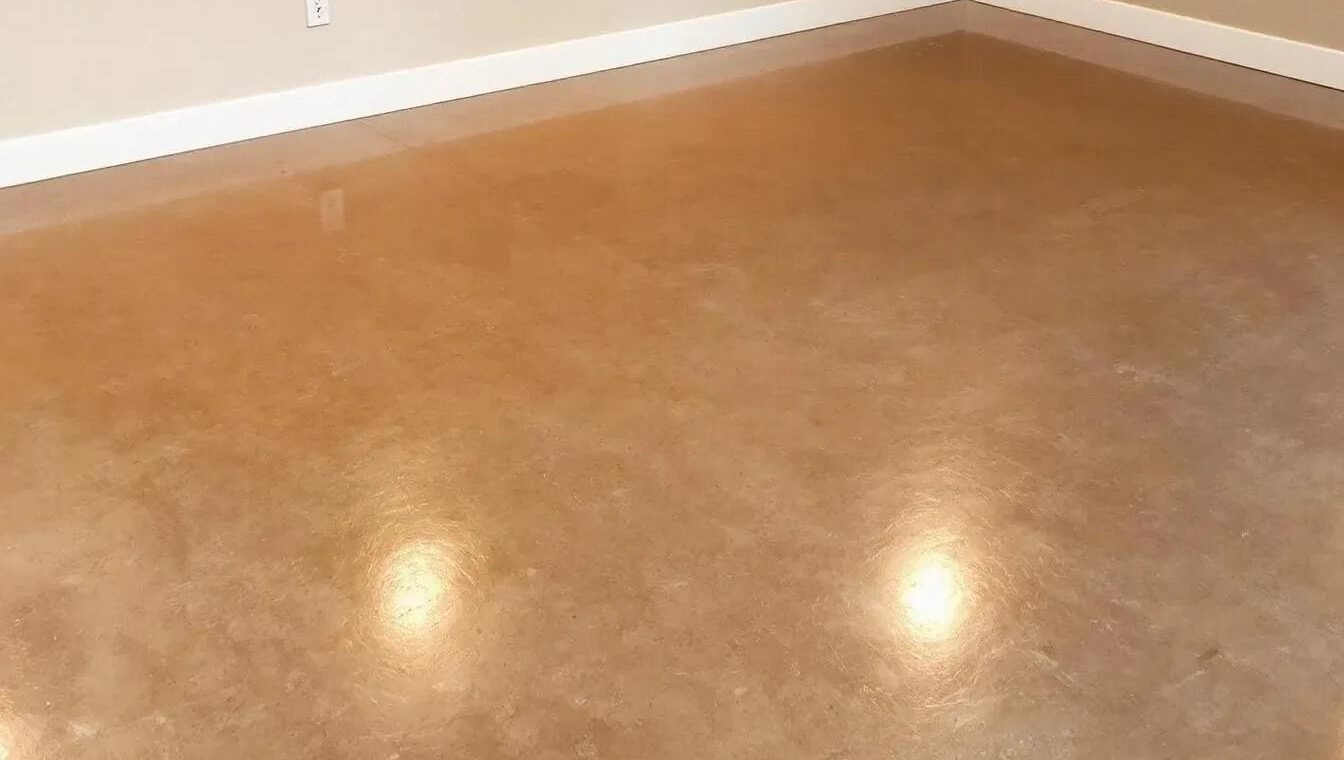
Polished concrete floors Brisbane properties are transforming how homeowners and businesses approach flooring solutions. This durable surface combines industrial strength with modern aesthetics.
We at Superfloor Australia see growing demand for these versatile floors across residential and commercial spaces. The polishing process creates stunning results that last decades with minimal upkeep.
What Makes Polished Concrete Different
Polished concrete transforms ordinary concrete slabs through mechanical action with diamond-embedded discs. The process starts with coarse 30-grit diamonds and advances through finer grits up to 3000-grit for mirror-like finishes. Professional contractors apply concrete densifiers to harden the surface and boost durability. This method creates a non-porous surface that resists stains, dust, and moisture without topical coatings.
The Three Methods Available
Brisbane contractors offer three distinct approaches. Grind and seal costs approximately $50 per square metre and works well for low-traffic areas, though it requires new sealer every seven years. Honed concrete at $75 per square metre provides superior durability through deeper work without ongoing sealer maintenance. Mechanically polished concrete starts at $50 to $100 per square metre and delivers the most durable results. The mechanically polished option resists stains naturally and can last over 20 years (compared to traditional floors that need replacement every 5-15 years).

Stone Exposure and Gloss Levels
Stone exposure levels dramatically affect both appearance and performance. Nil exposure maintains the concrete’s original surface, natural exposure reveals small aggregates, and honed exposure shows larger stone particles that improve slip resistance. Gloss levels range from 1 for matte finishes to 4 for high-gloss surfaces. Level 3 gloss proves optimal for Brisbane’s climate and balances reflectivity with practicality. The reflective quality enhances natural light by up to 30%, which reduces electricity costs while spaces appear larger.

Why Regular Concrete Falls Short
Standard concrete lacks the density and surface refinement of polished versions. Untreated concrete absorbs moisture, harbours dust mites, and requires frequent maintenance. The porous surface stains easily and deteriorates quickly in Brisbane’s humid climate. Polished concrete eliminates these problems through its non-porous surface that prevents moisture absorption and reduces mould risks common in humid environments.
These advantages make polished concrete an attractive option, but the real value comes from understanding the specific benefits this surface delivers for Brisbane properties.
Why Choose Polished Concrete Over Traditional Flooring
Polished concrete delivers exceptional value through proven durability that outlasts traditional options by decades. The World Green Building Council reports that properly installed polished concrete functions for over 20 years without replacement, while carpet typically requires replacement every 5-10 years and timber every 10-15 years. Brisbane’s decorative concrete market has grown 23% in the past two years as property owners recognise these long-term advantages. The thermal mass properties help regulate indoor temperatures during Brisbane’s hot summers, which reduces cooling costs through stable internal temperatures. Research indicates that polished concrete floors significantly reduce cleaning time compared to other materials and require only daily dry mopping with microfibre tools plus occasional damp mopping with pH-neutral cleaners.
Maintenance Costs That Actually Save Money
Professional treatment every 5-7 years costs $15-25 per square metre, which makes polished concrete the most economical long-term choice. Traditional materials demand constant attention – carpet cleaning, timber refinishing, and tile grout maintenance add up quickly. The non-porous surface prevents dust mites and allergens from embedding, which improves indoor air quality through reduced airborne pollutants. Brisbane’s climate makes moisture resistance essential, and polished concrete prevents the mould and mildew problems that plague other options in humid conditions.
Design Flexibility That Matches Brisbane Architecture
The reflective surface enhances natural light by up to 30%, which reduces electricity costs while spaces appear larger. Brisbane homes frequently utilise open-plan layouts, and polished concrete harmonises perfectly with contemporary architectural designs. Warm colour tones complement the city’s abundant natural light, while salt and pepper finishes provide subtle texture. Customisation options include decorative saw cuts and embeddings that add unique character. Brisbane enjoys excellent sunshine throughout the year, making enhanced light reflection a year-round advantage.
Superior Performance in Brisbane’s Climate
Brisbane’s humid subtropical climate creates challenges that polished concrete handles exceptionally well. The non-porous surface resists moisture absorption and prevents warping or deterioration that affects timber and laminate options. High humidity levels above 85% can damage traditional materials, but polished concrete maintains its integrity and appearance. The surface remains stable through temperature fluctuations and seasonal changes that cause expansion and contraction in other materials.
These performance advantages become even more apparent when you understand the precise installation process that creates such durable results.
How Does Professional Installation Work
Professional polished concrete installation demands precise assessment and preparation before any work begins. The concrete slab must cure for a minimum of 28 days to achieve proper strength. Contractors assess existing conditions including cracks, stains, and surface imperfections that could affect the final result. Environmental factors play a major role – humidity levels can compromise the process quality, which makes Brisbane’s climate monitoring essential during installation. Thorough assessment identifies potential issues before work starts, as proper preparation determines the project’s success more than any other factor.
Site Assessment and Preparation Requirements
Professional crews examine the concrete surface for structural integrity and identify areas that need repair. Cracks wider than hairline require filling, while oil stains need specialised treatment before polishing can begin. The assessment includes moisture testing to confirm the slab is ready for treatment (concrete continues to cure for months after initial placement). Surface preparation removes any existing coatings, adhesives, or contaminants that would interfere with diamond abrasives. This stage cannot be rushed – inadequate preparation creates problems that become expensive to fix later.
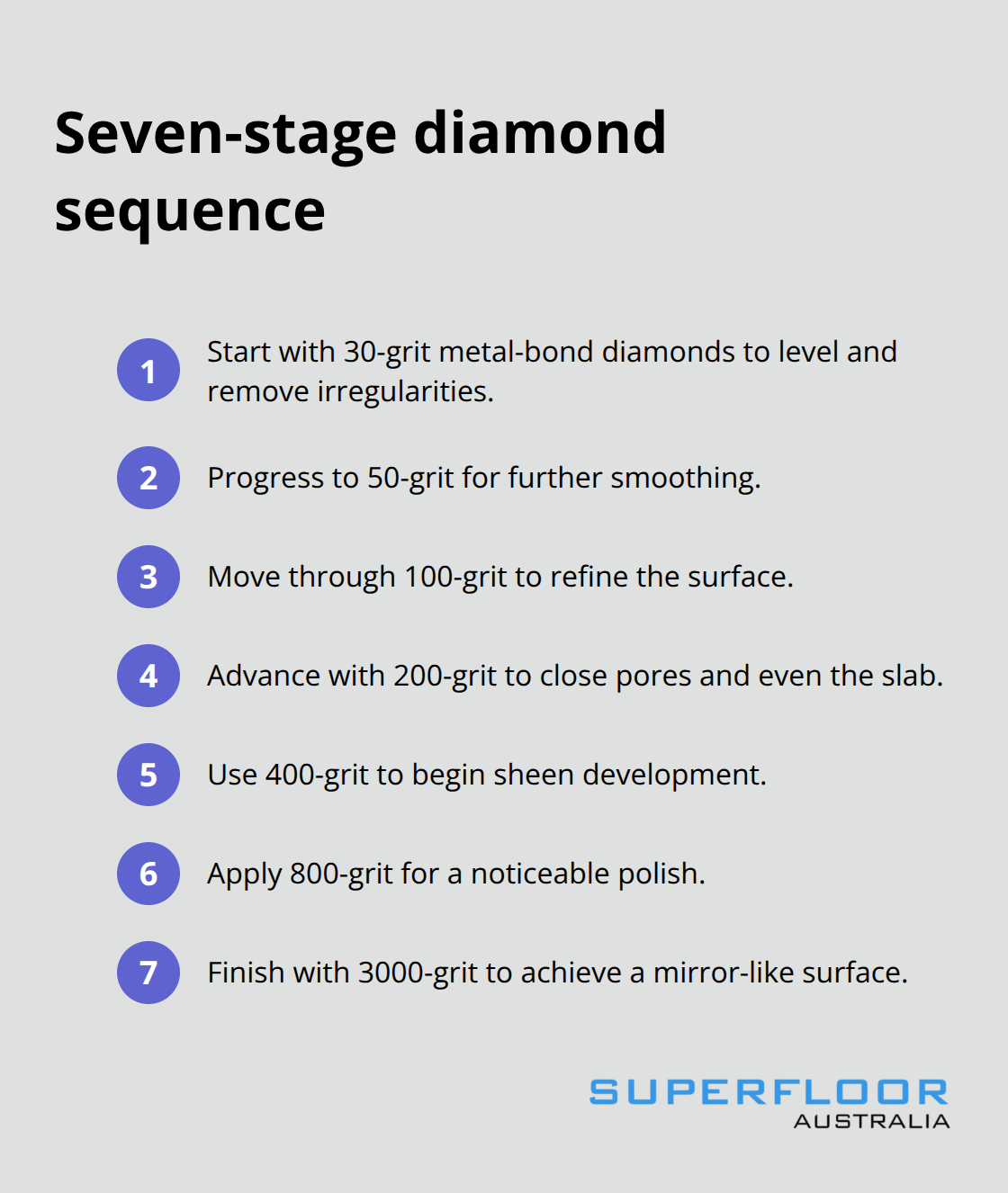
The Seven-Stage Diamond Process
The process uses systematic diamond grinding stages that progress through specific grit sequences to remove surface imperfections and harden the concrete. Stage one starts with 30-grit metal-bond diamonds to remove surface irregularities, then advances through 50, 100, 200, 400, 800, and finishes with 3000-grit diamonds for mirror finishes. Each stage requires complete coverage before advancement, and contractors who skip stages create visible scratches that cannot be corrected later. Concrete densifier application between stages penetrates the surface to increase hardness and polish retention.
The process demands significant attention to detail – rushed work produces inferior results that require complete rework.
Project Timeline Expectations
Small residential projects typically complete within 4-6 days, while larger commercial installations take 2-3 weeks depending on square footage and complexity. Day one involves surface preparation and initial work, days two through four cover progressive diamond stages, and final days focus on densifier application and finishing touches. Weather conditions can extend timelines – Brisbane’s wet seasons may require schedule adjustments to maintain quality standards. Professional installation optimises the process to prevent common failures that occur with inexperienced installation, and proper scheduling accounts for curing time between critical stages that cannot be accelerated.
Final Thoughts
Polished concrete floors Brisbane properties deliver unmatched value through 20+ year lifespans and minimal maintenance costs of $15-25 per square metre every 5-7 years. The 23% market growth reflects property owners who recognise these advantages over traditional materials that require replacement every 5-15 years. Superior performance in humid conditions makes this flooring choice ideal for Brisbane’s climate challenges.
Professional installation separates success from costly failures in every project. The seven-stage diamond process requires expertise that DIY attempts cannot match. Rushed work creates scratches that demand complete rework, while proper technique delivers mirror finishes that last decades.
We at Superfloor Australia specialise in polished concrete floors Brisbane projects with dust, stain, and allergen-resistant finishes. Professional assessment identifies site-specific requirements and timeline expectations for your property. Brisbane’s climate demands experienced contractors who understand environmental factors that affect installation quality (humidity levels above 85% can compromise results).