

Polished concrete residential flooring has become a smart choice for homeowners who want durability without the constant upkeep. At superfloor australia, we’ve seen more families make the switch because it simply works better than traditional options.
This flooring solution offers real benefits: it resists allergens, cleans easily, and costs less over time. We’ll walk you through everything you need to know about making this work in your home.
Why Polished Concrete Outperforms Traditional Flooring
Polished concrete beats traditional flooring because it demands almost nothing from you after installation. Most homeowners spend their time maintaining carpet, timber, or tile, but polished concrete requires only regular sweeping and occasional mopping with a pH-neutral cleaner. That’s it. No waxing, no resealing every few years, no replacing worn sections. Polished concrete floors last 20 to 30 years or more when properly installed, far outlasting carpet which typically needs replacement every 7 to 10 years. The hard-wearing surface resists heavy foot traffic, moisture, stains, and scratches, so busy households with kids and pets won’t see the floor deteriorate the way softer surfaces do. Installation costs typically range from $4 to $10 per square foot, often cheaper than hardwood or tile, which means you spend less upfront while receiving a product that lasts longer.
The Real Aesthetic Advantage
Polished concrete reflects natural and artificial light, which brightens interior spaces and creates the illusion of more room. This matters in Australian homes where maximising light is often important for energy efficiency and open-plan living. You can customise the finish from satin to high gloss, adjust aggregate exposure to reveal different stones in the concrete, and add colours or decorative elements that suit your design style. The neutral, modern look works with minimalist, industrial, and warm rustic interiors, so it unites diverse design elements without clashing. The reflective surface maintains its pristine appearance over time, unlike carpet or timber that fades with sunlight exposure or wear. Real estate professionals often highlight polished concrete as a premium feature because it broadens appeal to buyers and renters, potentially increasing property value and rental income. Outdoor applications extend this aesthetic to patios, alfresco dining areas, and pool surrounds, creating seamless indoor-outdoor living that boosts curb appeal.
Energy Efficiency Built In
Concrete’s thermal mass helps regulate indoor temperatures by storing heat during the day and releasing it at night, which reduces heating and cooling energy use. This passive benefit means your home stays more comfortable without constantly adjusting temperature controls. In colder months, polished concrete absorbs warmth, and in warmer months it stays cooler underfoot, supporting energy efficiency and reducing your reliance on air conditioning. If you live in a climate where you need extra warmth, radiant floor heating works well with polished concrete and complements its thermal properties. The material is also sustainable because it reuses your existing concrete slab rather than requiring new materials, reducing waste and the environmental footprint of installation. This approach can contribute to LEED credits and environmental tax credits if you pursue green building certification.
What Makes Installation the Foundation
The quality of your polished concrete floor depends entirely on proper surface preparation and expert installation. Professionals assess your existing concrete, remove any coatings or defects, and then apply multiple passes with progressively finer diamond discs to achieve the desired finish. The final look reflects both the concrete’s hardness and your chosen aggregate exposure level, so experienced installers know how to balance these factors for results that last. Sealing options (penetrating or topical) protect the surface and lock in the appearance, with choices depending on your desired shine and traffic patterns. When you invest in quality installation now, you avoid costly repairs or refinishing later, making this upfront decision critical to long-term performance and satisfaction.
Health Benefits and Long-Term Financial Advantages
Polished Concrete Stops Allergens at the Source
Polished concrete for allergen elimination eliminates the allergen trap that plagues traditional flooring. Carpet harbours dust mites, pet dander, and mould spores that accumulate deep in fibres and trigger respiratory issues, particularly in households with children or pets. Tile grout lines collect bacteria and allergens that standard cleaning misses. Polished concrete has no porous surfaces, no grout, and no fabric to trap contaminants-allergens simply cannot embed themselves into your flooring.
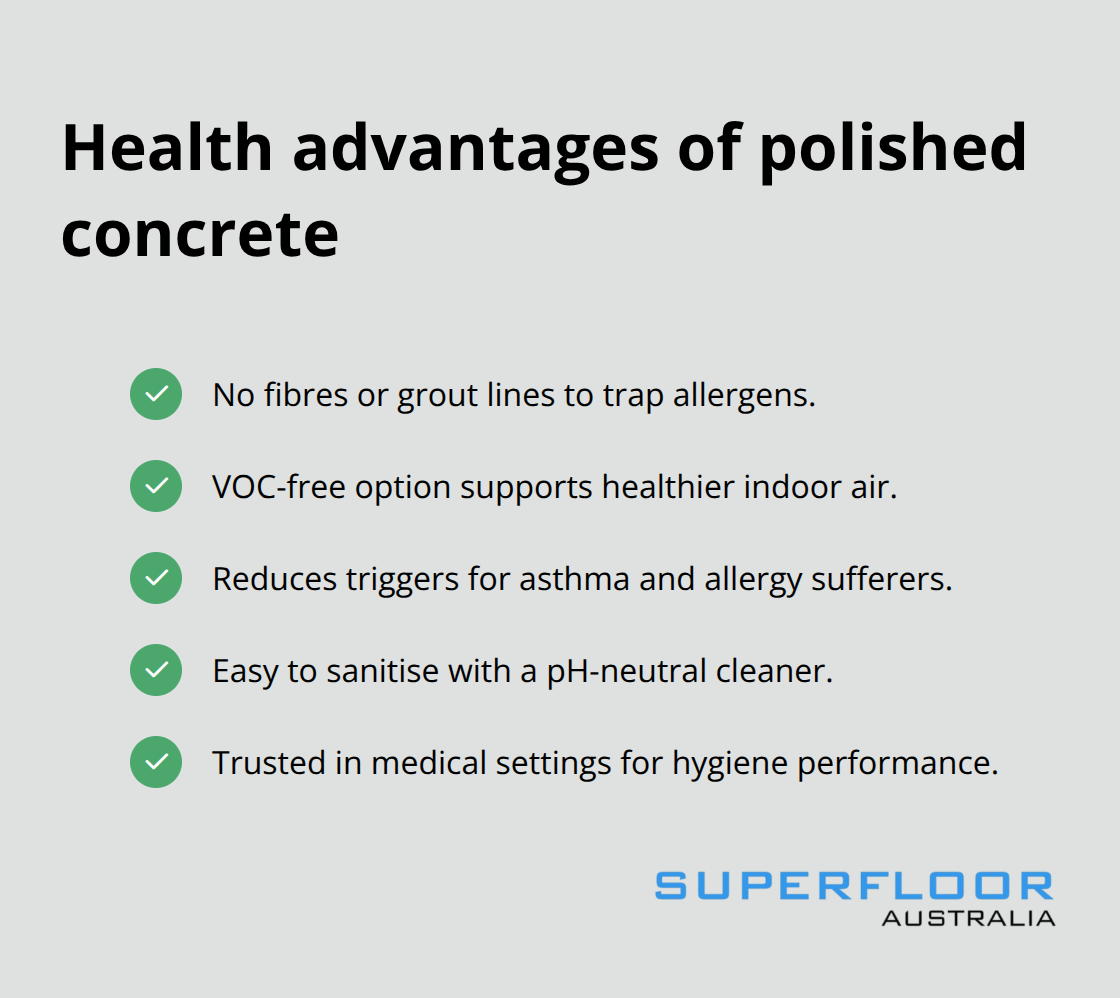
Medical facilities widely adopt polished concrete specifically for its VOC-free flooring and allergen-resistant properties, a choice driven by health standards rather than aesthetics. If anyone in your home suffers from asthma, allergies, or dust sensitivity, switching to polished concrete delivers measurable health improvement because the surface itself resists harbouring the particles that trigger symptoms.
Cleaning Becomes Effortless
A vacuum removes surface dust, and occasional mopping with a pH-neutral cleaner handles everything else. You avoid harsh chemical cleaners that off-gas fumes and create indoor air quality problems. This matters because Australian homes increasingly prioritise indoor air quality, and polished concrete supports that goal without extra effort or expense. The hard surface repels moisture and stains, so spills wipe away instantly without leaving marks or requiring special treatments.
The Financial Case Strengthens Over Time
Installation runs $4 to $10 per square foot, positioning it cheaper than hardwood or premium tile upfront. Carpet replacement every 7 to 10 years costs thousands across a home’s lifetime, while polished concrete durability lifespan extends 20 years without replacement. You’ll never pay for waxing, resealing, or refinishing cycles that drain budgets for timber and some sealed finishes. A microfibre mop and pH-neutral cleaner cost minimal amounts annually, making maintenance expenses negligible compared with professional carpet cleaning, timber restoration, or grout sealing.
Property Value and Rental Appeal
Real estate data shows polished concrete boosts property appeal and rental income potential because buyers and renters recognise the durability advantage and lower maintenance burden. For families planning to stay long-term, this durability translates directly to money saved and stress eliminated from home maintenance schedules. The investment compounds over decades as you avoid the constant cycle of repairs and replacements that other flooring demands.
Understanding these health and financial advantages sets the stage for exploring how to customise polished concrete to match your home’s specific design and layout.
Making Polished Concrete Work in Every Room
Polished concrete adapts to virtually any room in your home, but success depends on understanding where it performs best and how to prepare your space properly. Kitchens, bathrooms, living areas, and outdoor spaces all benefit from polished concrete, though each requires specific considerations during installation. The key is matching the finish to the room’s function and traffic patterns before the grinding and polishing process starts. High-traffic kitchens need a slightly lower gloss level to reduce slip risk when wet, while living rooms can handle higher gloss for maximum light reflection and visual impact. Bathrooms benefit from penetrating sealers that resist moisture without creating a slippery surface underfoot. Outdoor areas demand coarser finishes that expose more aggregate, providing natural grip for safety around pools and entertaining spaces.
Surface Preparation Sets the Foundation
Professional installers assess your existing concrete condition, identify any cracks or uneven sections, and plan repairs before grinding starts because these defects affect the final appearance and longevity. Surface preparation typically takes several days and involves removing old coatings, filling cracks with concrete repair compounds, and confirming the slab is structurally sound. Skipping this step creates problems later when the polished surface reveals underlying damage or when moisture seeps through unsealed cracks. The installation team inspects your space thoroughly during the consultation phase to recommend the right approach for your specific situation.
Aggregate Exposure and Colour Control
Customisation during the polishing process gives you control over the final aesthetic without compromising durability or function. Aggregate exposure is your primary design lever-grinding to different depths reveals different stone sizes and colours in your existing concrete, creating anything from a subtle speckled look to dramatic exposed stone patterns. Colour stains and dyes integrate into the concrete before polishing, offering options from neutral greys to warmer tones that suit your interior style. These choices allow you to match your home’s existing design elements and personal preferences.
Gloss Levels and Sealing Options
Gloss levels range from satin finishes that reduce shine and hide fingerprints to high-gloss surfaces that dramatically brighten rooms and create contemporary visual impact. Decorative elements like saw-cut designs or stencilled graphics add personality to larger areas, though these require precision during the cutting phase before polishing. Sealing choices matter significantly-penetrating sealers protect the concrete while maintaining a natural look and feel, while topical sealers add shine and create a harder protective layer. The sealing decision depends on your desired maintenance level and aesthetic preference because topical sealers require occasional reapplication every 2-10 years under normal household traffic, while penetrating sealers typically last longer but offer less gloss.
Timeline and Room-Specific Considerations
Installation timelines typically run 2 to 4 weeks from initial assessment to completion, with curing time between sealing and full use adding several days. Different rooms demand different finishes-kitchens and bathrooms need slip-resistant properties, while living rooms prioritise visual impact and light reflection. Outdoor entertaining areas require coarser finishes that provide traction on wet surfaces around pools and patios. Discussing your specific room layout and traffic patterns during the consultation phase allows the installation team to recommend finishes that balance your design goals with practical performance requirements for your household.
Final Thoughts
Polished concrete residential flooring breaks the endless maintenance cycle that traditional options impose on homeowners. You invest in a surface that performs for 20 to 30 years without waxing, resealing, or replacement, which means real money stays in your pocket instead of flowing toward constant upkeep. The durability alone justifies the choice, but the health benefits-allergen resistance, easy sanitisation, and VOC-free properties-make it genuinely better for households with children, pets, or anyone with respiratory sensitivity.
The financial case strengthens the longer you stay in your home. Installation costs between $4 and $10 per square foot position polished concrete as cheaper than hardwood or premium tile upfront, but the real savings emerge over years when you avoid replacing worn carpet or refinishing timber. Property value increases because buyers and renters recognise the durability advantage and lower maintenance burden that polished concrete delivers.
If you’re ready to explore polished concrete for your home, contact Superfloor Australia to discuss your specific space and design goals. We deliver high-quality polished concrete flooring with precision preparation and expert craftsmanship tailored to your needs. Whether you’re renovating a kitchen, updating a living area, or creating an outdoor entertaining space, we’ll guide you through customisation options and ensure your installation lasts.