

Polished concrete floors look stunning when they’re new, but that shine fades fast without proper care. We at superfloor australia know that polished concrete maintenance isn’t complicated-it just requires consistency.
The right cleaning routine, protective sealants, and occasional professional attention will keep your floors looking pristine for years. This guide walks you through everything you need to know.
Getting Your Daily Cleaning Right
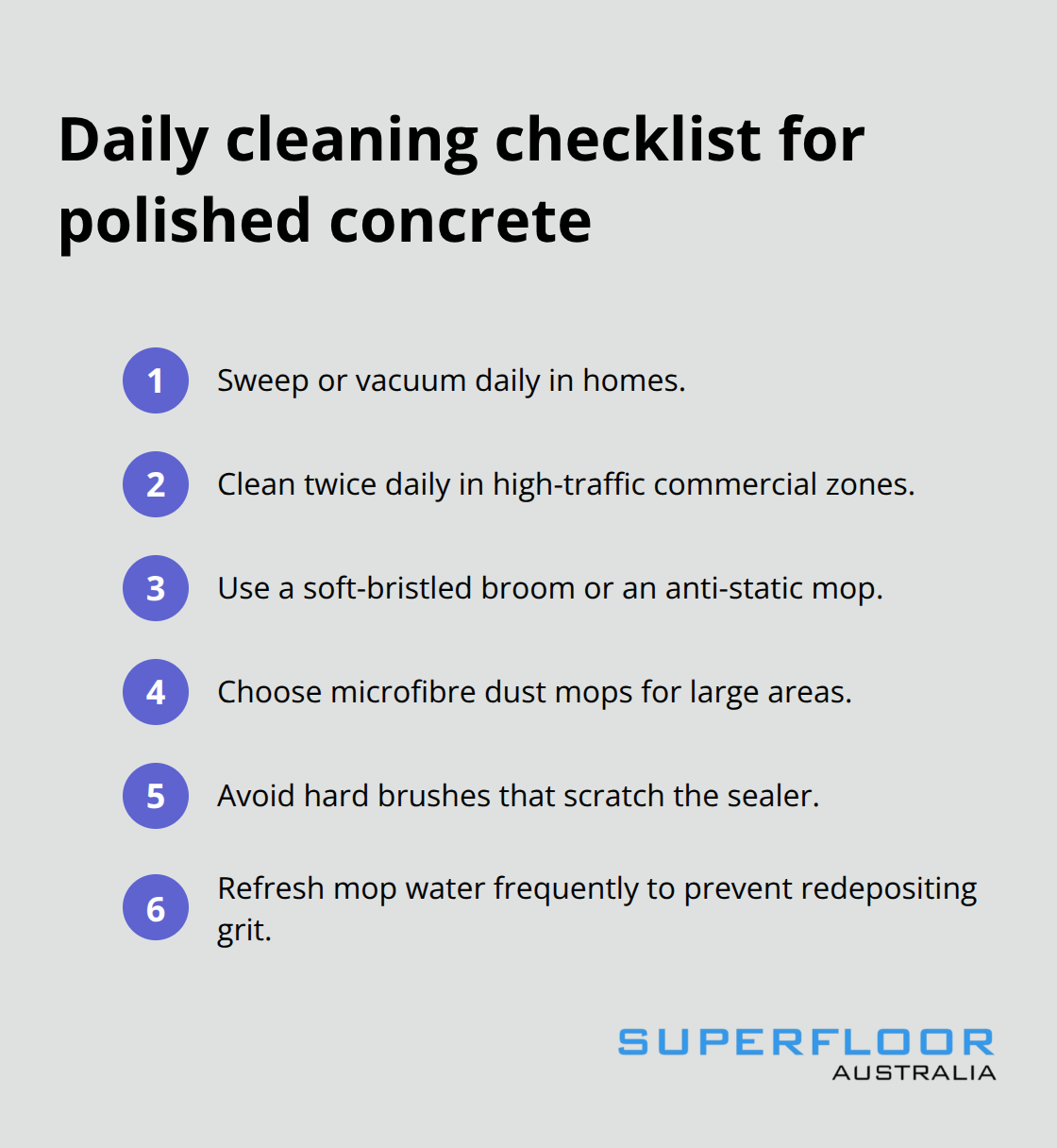
Dust and debris attack your polished concrete floor’s surface constantly. Particles like sand and grit function as sandpaper against the sealed finish, creating micro-scratches that dull the shine over time. Sweep or vacuum regularly in residential spaces and twice daily in high-traffic commercial areas. Use a soft-bristled broom or anti-static mop rather than hard brushes that scratch the sealed surface. For larger commercial spaces, a microfibre dust mop minimizes scratching while efficiently capturing fine particles. One week of accumulated grit will noticeably damage the gloss-don’t assume a weekly clean suffices.
The pH-Neutral Cleaning Method
Never use acidic or alkaline cleaners on polished concrete. Vinegar, bleach, ammonia, hydrochloric acid, and citrus-based solutions stain or etch the surface and destroy the sealer. Mop with a pH-neutral cleaner diluted according to manufacturer instructions instead. For weekly maintenance on moderately soiled floors, use 120 millilitres of approved cleaner per 10 litres of water. If your floor accumulates heavier dirt, increase the concentration to 120 millilitres per 7.5 litres of water. In high-traffic commercial areas, auto-scrubbers with soft, non-abrasive pads deliver superior results without manual labour. Refresh your mop water frequently during cleaning-dirty water redeposits grit and undermines your effort.
Spill Response Matters
Spills require immediate action, particularly oil-based stains and food residue. Blot spills rather than rub them, which spreads contamination deeper into the concrete. For food stains, apply mild dish soap and warm water, then rinse thoroughly to remove soapy residue. Apply a baking soda paste directly onto oil stains, ensuring a uniform layer about 1/4 inch deep, and allow it to dry completely before soft-brush scrubbing. The faster you respond, the less likely a stain becomes permanent. In commercial kitchens or retail environments where spills occur frequently, train staff on this protocol and keep cleaning supplies accessible at the point of use. Entrance floor mats (both outside and inside) reduce grit intrusion significantly, meaning fewer particles reach your polished surface in the first place.
Protective Barriers Start at the Door
Entrance mats form your first line of defence against surface damage. They capture sand, small stones, and moisture before they contact your floor. Install mats outside to catch debris from foot traffic and weather, then place additional mats inside the entrance. This two-layer approach (outdoor and indoor placement) dramatically reduces the particles that eventually scratch your polished surface. Commercial spaces with heavy foot traffic benefit most from this investment, as the cost of regular mat replacement proves far cheaper than premature floor refinishing. With daily cleaning habits established and protective measures in place, your floor is ready for the next critical step.
Sealing Your Floor Against Wear and Damage
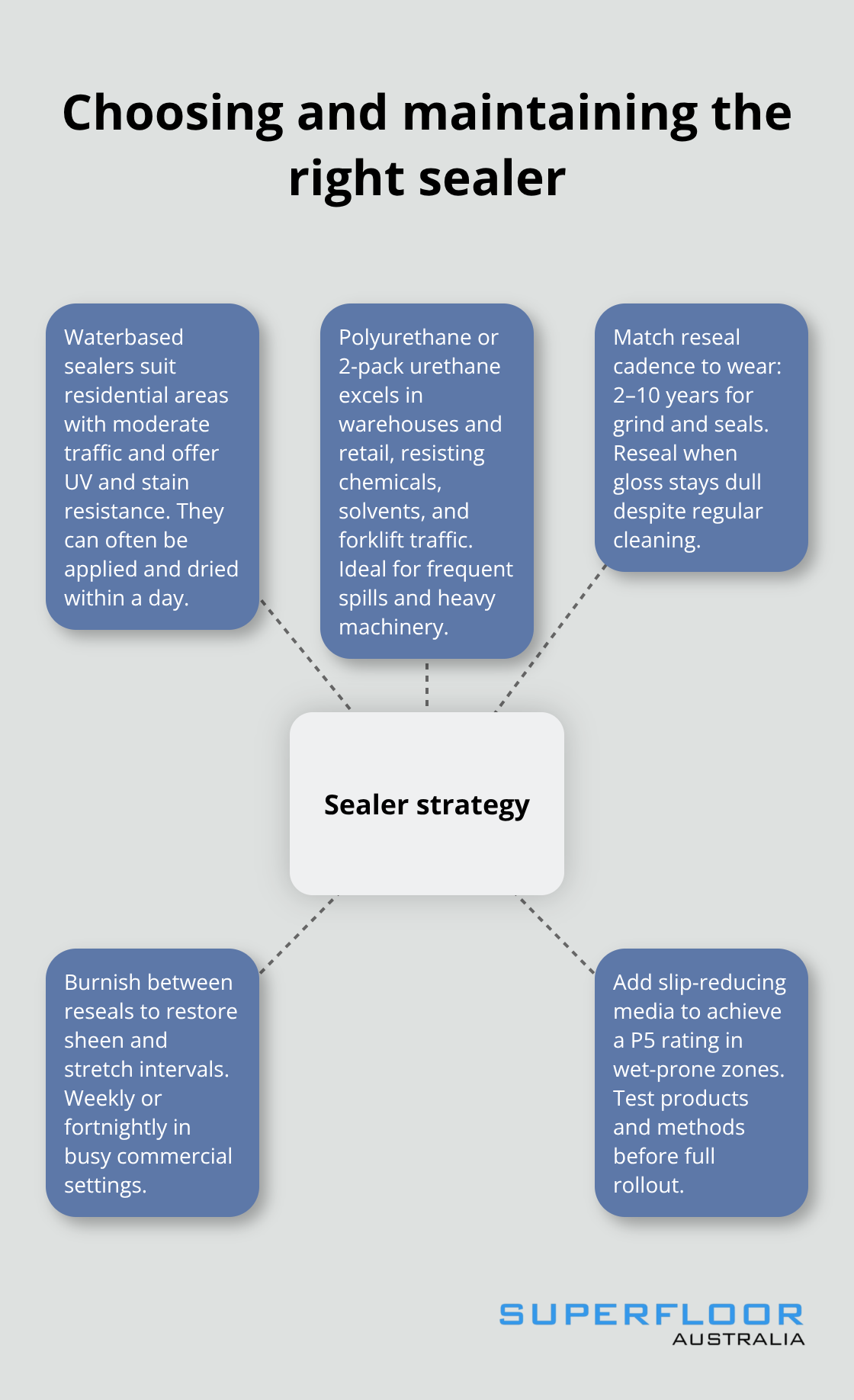
Sealants form the protective barrier between your polished concrete and the elements that degrade it. Select your sealer based on actual traffic patterns and the floor’s location, not generic assumptions. Residential spaces with moderate foot traffic perform well with waterbased sealers like Dulux Avista Waterbased Sealer, which dries fast enough to complete application in a single day and offers UV resistance plus stain protection. Commercial warehouses, retail stores, and industrial facilities demand harder-wearing protection-polyurethane or 2-pack urethane sealers deliver superior chemical and solvent resistance that withstands machinery, forklift traffic, and frequent spills. The cost difference between sealer types is minor compared to the expense of premature floor refinishing.
Timing Your Resealing Schedule
Grind and seals will need to be resealed every 2-10 years depending on the quality of sealer you have selected. Monitor your floor’s gloss level honestly-when shine visibly dulls despite regular cleaning, resealing is overdue. Floors over 50 years old require more frequent maintenance than younger concrete, so adjust your schedule accordingly. This proactive approach prevents the surface from deteriorating to a point where refinishing becomes necessary.
Restoring Gloss Between Sealant Applications
High-speed burnishing maintains shine between full resealing cycles. For diamond-polished floors, run a dry burnisher over the sealed surface weekly or biweekly in commercial settings to restore gloss that foot traffic gradually wears down. This refreshing step takes minimal time but dramatically extends the interval between expensive resealing. Revitalizing involves reapplying a thin sealer coat and burnishing it in, typically twice yearly depending on traffic volume.
Adding Slip Resistance Where It Matters
Slip resistance requires deliberate action in spaces where moisture and polished concrete coexist-bathrooms, kitchens, and outdoor areas. Add slip-reducing powder to waterbased sealers to achieve P5 slip rating, which meets safety standards for commercial environments. This single addition transforms a beautiful but slippery surface into one that performs safely without sacrificing the aesthetic. Never assume standard sealants provide adequate slip protection; test your specific product and application method before full deployment. High-traffic commercial zones benefit most from this investment, as slip incidents create liability exposure that far exceeds the cost of slip-resistant treatment. With your sealant strategy locked in place, the next phase involves addressing damage that inevitably occurs despite your best preventive efforts.
Long-Term Care and Professional Maintenance
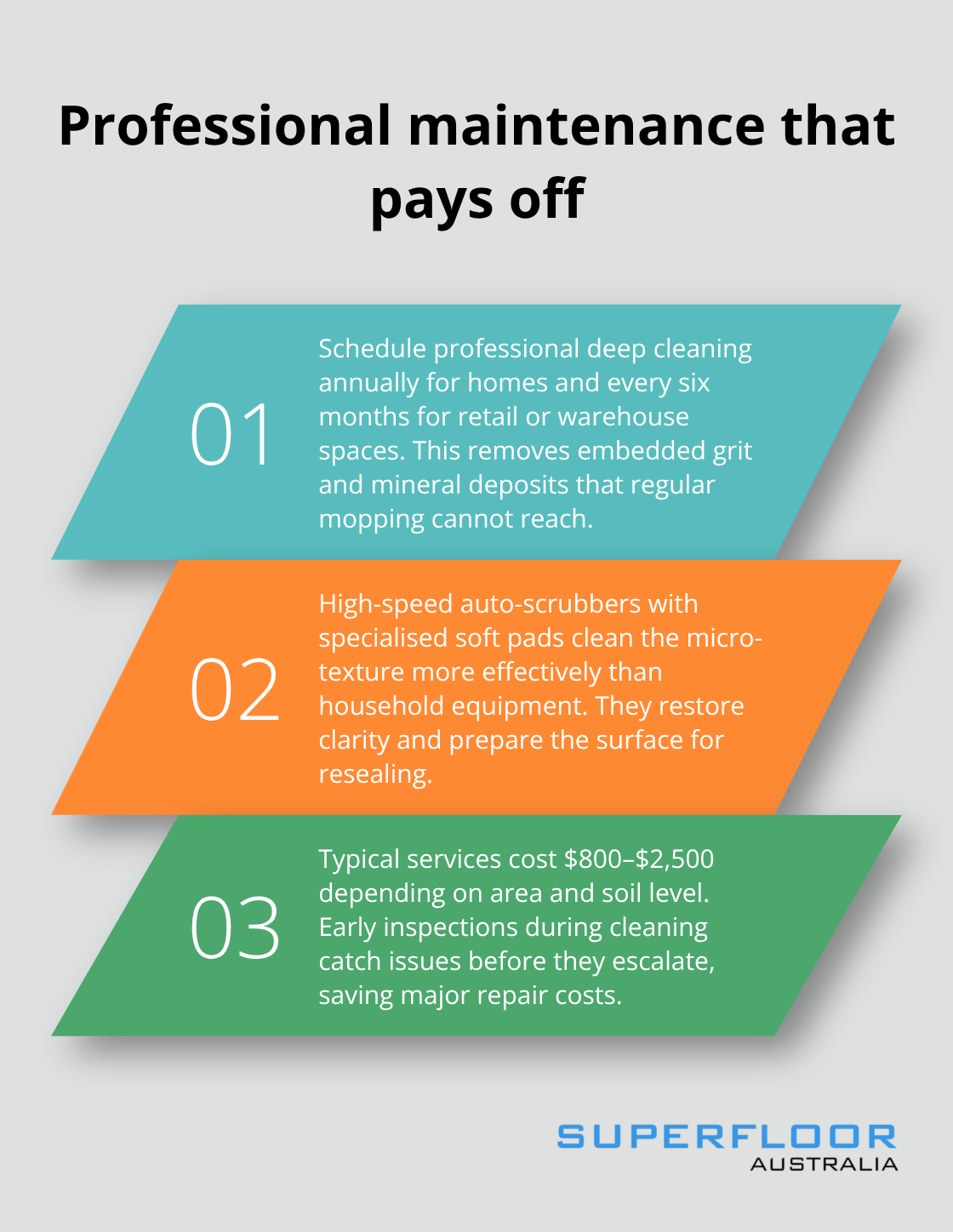
Deep cleaning by professionals removes embedded grit and mineral deposits that regular mopping cannot reach, particularly in commercial spaces where foot traffic grinds particles into the sealed surface. Professional deep cleaning annually in residential settings and every 6 months in retail or warehouse environments maintains floor integrity effectively. High-speed auto-scrubbers with specialised soft pads extract dirt from the micro-texture of polished concrete far more effectively than household equipment, restoring clarity to the surface and preparing it properly for resealing. This investment typically costs between $800 and $2,500 depending on floor area and soil level, but it extends the interval between expensive full resurfacing by years. Damage assessment during professional cleaning catches problems early-hairline cracks, delamination, or areas where the sealer has failed completely reveal themselves under trained inspection. These issues worsen rapidly once moisture penetrates beneath the sealer, so prompt identification prevents exponentially higher repair costs later.
Spotting Damage Before It Spreads
Small scratches confined to the sealant layer respond to spot polishing with fine-grit pads, a straightforward fix that takes hours rather than days. Larger scratched areas require progressive polishing through multiple grit levels, then immediate resealing to prevent moisture ingress at the repair site. Deep cracks that penetrate the concrete itself demand professional intervention-attempting DIY repair on structural damage risks creating worse problems. Moisture trapped beneath the sealer causes concrete deterioration from the underside, eventually leading to surface spalling where chunks separate from the base. Commercial floors in warehouses experience this damage faster due to machinery vibration and chemical spills that compromise sealer integrity.
Acting Fast on Visible Cracks
Address visible cracks within days of discovery rather than weeks, as concrete’s porous nature allows water to migrate deeper with each temperature cycle. Temperature fluctuations expand and contract the concrete, forcing moisture further into structural layers if cracks remain unsealed. Professional contractors assess crack depth and width to determine whether repair requires simple resealing or structural intervention. Waiting more than a week transforms a minor repair into a major restoration project, multiplying both time and expense. Resealing every 2-10 years prevents most damage by maintaining the barrier that protects against moisture and staining, though high-traffic commercial floors typically need attention every 2-3 years rather than waiting the full decade.
Final Thoughts
Polished concrete maintenance requires three consistent practices: clean regularly with pH-neutral products, protect your surface with appropriate sealants, and address damage before it spreads. These habits cost far less than refinishing a neglected floor, and your investment pays dividends through years of durability. A polished concrete floor that receives proper care maintains its gloss and smoothness for a decade or more, resisting dust, stains, and allergens without the constant upkeep that other flooring demands.
Consistent care transforms your initial investment into genuine long-term savings. A floor sealed properly and cleaned weekly costs significantly less to maintain than one that receives sporadic attention and requires premature resurfacing. Commercial spaces see this benefit most clearly-warehouses and retail environments that follow a disciplined maintenance schedule avoid the downtime and expense of emergency floor repairs, while residential floors reward the same commitment with a home that looks polished and feels cleaner underfoot.
We at Superfloor Australia understand that polished concrete maintenance requires expertise and precision. If you’re in Brisbane and want professional guidance on maintaining your polished concrete floors or need expert installation tailored to your space, our team delivers the craftsmanship and service that keeps floors looking exceptional for years.