

Poolside areas demand flooring that keeps people safe, especially in Brisbane’s wet climate. A slippery deck is one of the fastest ways to turn a relaxing afternoon into a hospital visit.
At Superfloor Australia, we’ve installed poolside honed concrete Brisbane for hundreds of homes, and we’ve seen firsthand how the right surface makes all the difference. This guide shows you why honed concrete outperforms tiles, pavers, and other options for durability, grip, and long-term value.
Why Poolside Flooring Fails Without Slip Resistance
Poolside accidents happen faster than you’d expect. In Australia, drowning and non-fatal water injuries remain among the leading causes of unintentional injury-related deaths, according to data from the Royal Life Saving Society. What people don’t realise is that many of these incidents start on the deck, not in the water. A wet surface with poor grip sends someone sprawling before they even reach the pool edge.
Why Standard Poolside Materials Fall Short
Tiles and pavers, commonly used around pools, become skating rinks when wet because their smooth glazed surfaces offer minimal friction. Concrete that hasn’t been properly finished performs similarly. The problem intensifies in Brisbane’s climate, where humidity and frequent rain create constantly slick conditions. One slip doesn’t just mean a bruise-it can mean a head injury, a broken bone, or worse. This isn’t theoretical risk; it’s why Australian building standards exist and why property owners face liability if someone is injured on their deck.
How AS4586 Testing Identifies Safe Surfaces
Australia uses the AS4586 standard to measure slip resistance on pedestrian surfaces, and this is where most poolside options fall short. Testing relies on the wet pendulum slip test, a portable method where certified technicians slide a weighted rubber slider across wet surfaces under controlled conditions, measuring friction as a British Pendulum Number or BPN. Results translate to P ratings, ranging from P5 (lower slip risk) to P0 (very high slip risk). A properly finished honed concrete surface can achieve P ratings that meet safety requirements, while standard polished concrete and glazed tiles typically score poorly.
Honed concrete with anti-slip additives mixed into the sealant delivers the grip people need without sacrificing aesthetics. In Brisbane, where pool decks face intense sun, salt water splash, and algae growth, maintaining that slip resistance requires a surface designed for the environment. Tiles need constant scrubbing to prevent algae buildup that further reduces grip.
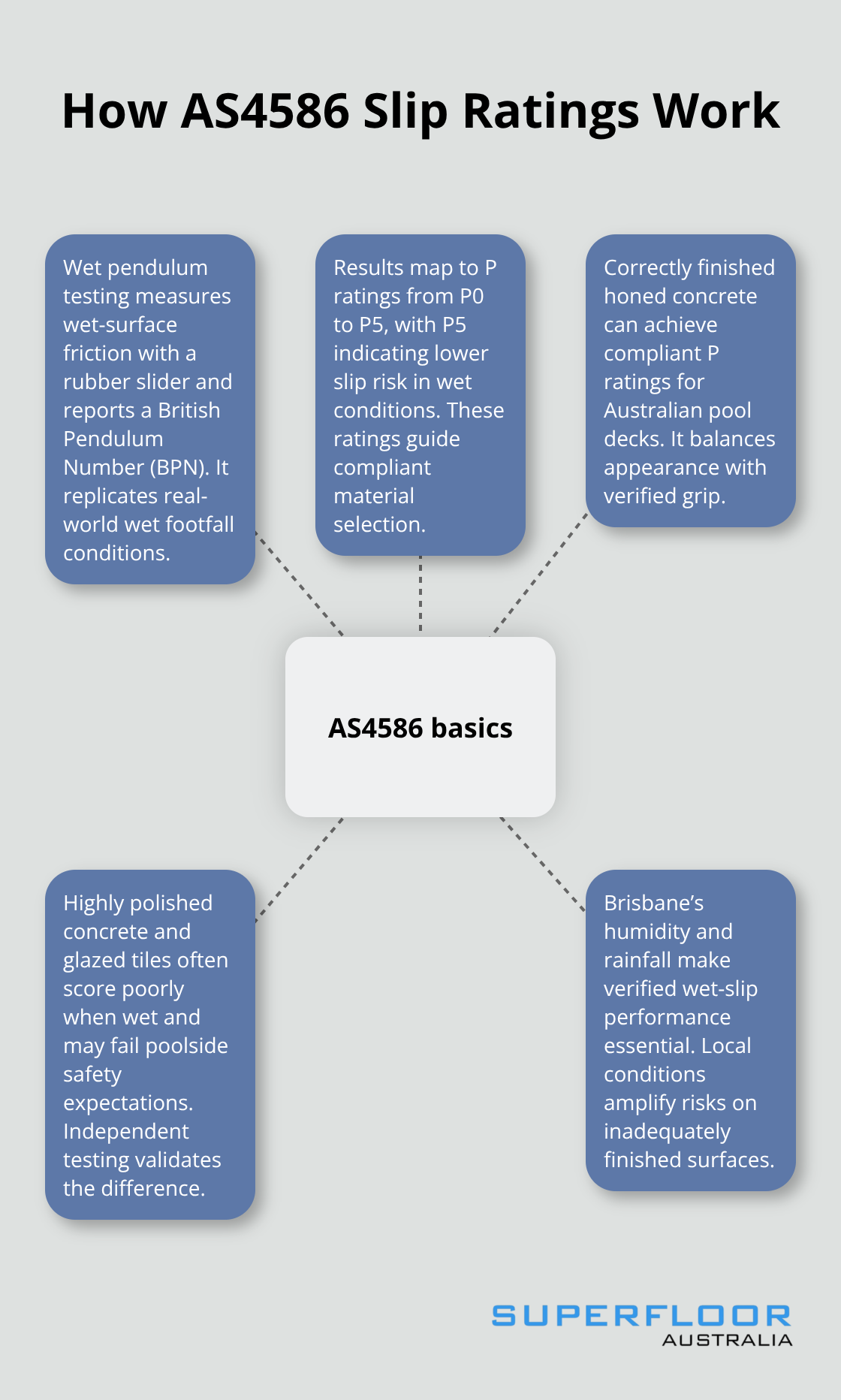
Pavers trap water and debris in grout lines, creating slip hazards. Honed concrete eliminates these problems because the sealer fills surface pores, preventing water pooling and algae colonisation while maintaining traction.
Legal Responsibility and Chemical Durability
Property owners in Brisbane are legally responsible if someone is injured due to an unsafe surface. If a guest slips on your pool deck and proves the surface failed to meet safety standards, your insurance may not cover the claim. Honed concrete tested to AS4586 and properly sealed provides documented safety compliance. The penetrating sealer creates a protective barrier against chlorine and pool chemicals, meaning the surface won’t degrade and lose grip over time like untreated concrete does. Resealing every 2-5 years maintains both appearance and safety performance, a simple maintenance task that protects your investment and your liability.
This combination of tested slip resistance, chemical durability, and straightforward maintenance sets the foundation for understanding why honed concrete outperforms other poolside options. The next section compares honed concrete directly against tiles, pavers, and alternative finishes to show you the real differences in durability, cost, and long-term value.
Honed Concrete Beats Tiles and Pavers for Pool Decks
Why Tiles and Pavers Fail in Brisbane’s Climate
Tiles crack under freeze-thaw stress and thermal shock, which Brisbane’s intense sun creates regularly. When a tile breaks, water seeps underneath, destabilising the entire surface and creating trip hazards within months. Pavers shift as the ground settles, opening grout joints where water pools and algae thrives, making them perpetually slippery despite their textured appearance. Honed concrete avoids these problems because it’s monolithic-no joints, no weak points, no hidden water damage. Tile decks fail in under five years on Brisbane properties, while properly sealed honed concrete installations from a decade ago still perform flawlessly.
The Real Cost Difference Over Time
The upfront cost difference between materials is minimal: tiles and pavers typically run 15–20% less initially. However, the long-term math heavily favours honed concrete. Tiles require regrouting every 3–4 years at $50–$80 per square metre, plus individual tile replacement when breakage occurs. Pavers demand sand top-ups, weed killer treatments, and constant releveling.
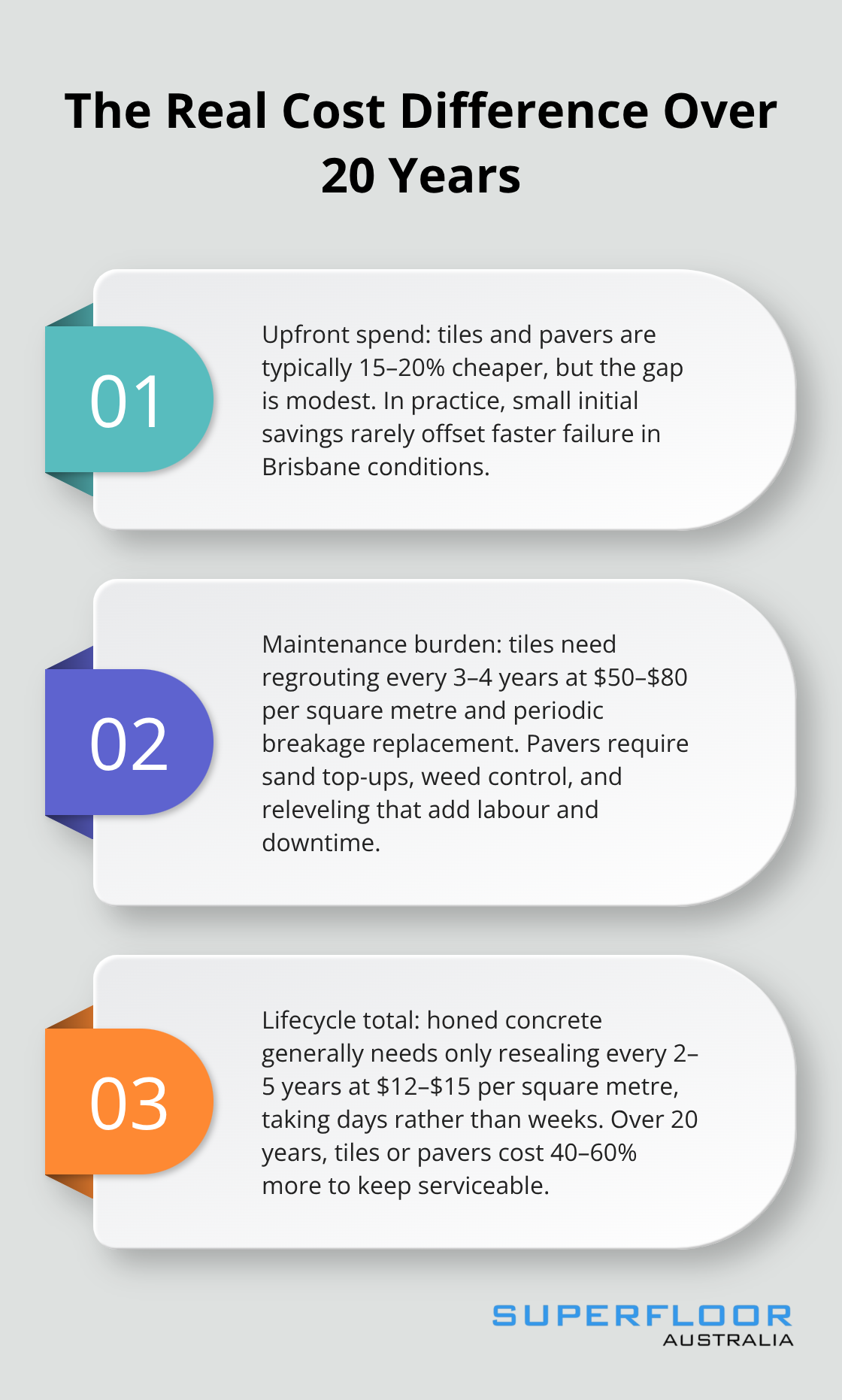
Honed concrete needs resealing every 2–5 years, a straightforward process costing $12–$15 per square metre that takes days rather than weeks. Over 20 years, a 50-square-metre pool deck in tiles or pavers costs 40–60% more in maintenance and repairs than honed concrete, not counting downtime when the deck is unusable.
Design Flexibility and Long-Term Aesthetics
Honed concrete offers flexibility that rigid materials cannot match. You control stone exposure from nil exposure for a clean, minimal look to full exposure revealing the aggregate’s natural colours and texture. You adjust gloss levels from matte to semi-gloss, matching your home’s style without the dated, uniform appearance of tiles. Coloured concrete options let you integrate the deck with your landscaping, something pavers force you to choose from preset colour palettes. Honed concrete ages gracefully; it develops character over time while tiles and pavers accumulate stains in grout lines that resist cleaning.
Durability in Brisbane’s UV Environment
For Brisbane’s intense UV environment, honed concrete with UV-stable coatings maintains colour consistency where tile glazes fade unevenly and paver dyes bleach. The penetrating sealer fills surface pores, preventing water pooling that accelerates algae growth on tiles and pavers. This means your deck stays safer underfoot, cleaner in appearance, and requires less aggressive chemical scrubbing that damages other materials.
Maintenance That Protects Your Investment
Maintenance discipline matters: sweep weekly, clean spills immediately with pH-neutral cleaners, and reseal on schedule. Follow this routine and your honed concrete outperforms tiles and pavers for two decades or more. The real advantage emerges when you compare what happens next-how honed concrete actually delivers the slip resistance and durability that keeps your family safe while protecting your property’s value.
How Honed Concrete Stays Grip-Safe and Lasts Decades
The Texture and Sealer Formula That Creates Grip
The grip on a honed concrete pool deck comes from two sources working together: the surface texture created during grinding and the sealer formulation that locks in traction. When concrete is ground to a honed finish, the process exposes aggregate particles at varying depths, creating a naturally textured surface that provides friction underfoot. Anti-slip additives mixed directly into the sealant increase traction on wet surfaces without creating a rough, uncomfortable texture or compromising the refined appearance that makes honed concrete appealing. A properly sealed honed surface with anti-slip additives achieves the grip needed for safety while maintaining the clean aesthetic that distinguishes it from rougher alternatives like brushed concrete or exposed aggregate finishes.
Weekly Cleaning Prevents Algae and Maintains Traction
Maintenance discipline determines whether that grip persists over years or deteriorates within months. Routine cleaning removes standing water, grease, and organic matter that algae feeds on, which is critical because algae growth directly reduces friction on wet surfaces. Sweep your pool deck weekly with a soft-bristled broom, vacuum with a soft brush attachment, and mop every seven days using a pH-neutral cleaner around 7 on the pH scale. Acidic cleaners below pH 7 etch the surface and dull the finish; alkaline cleaners above pH 7 leave residue that creates slipperiness.
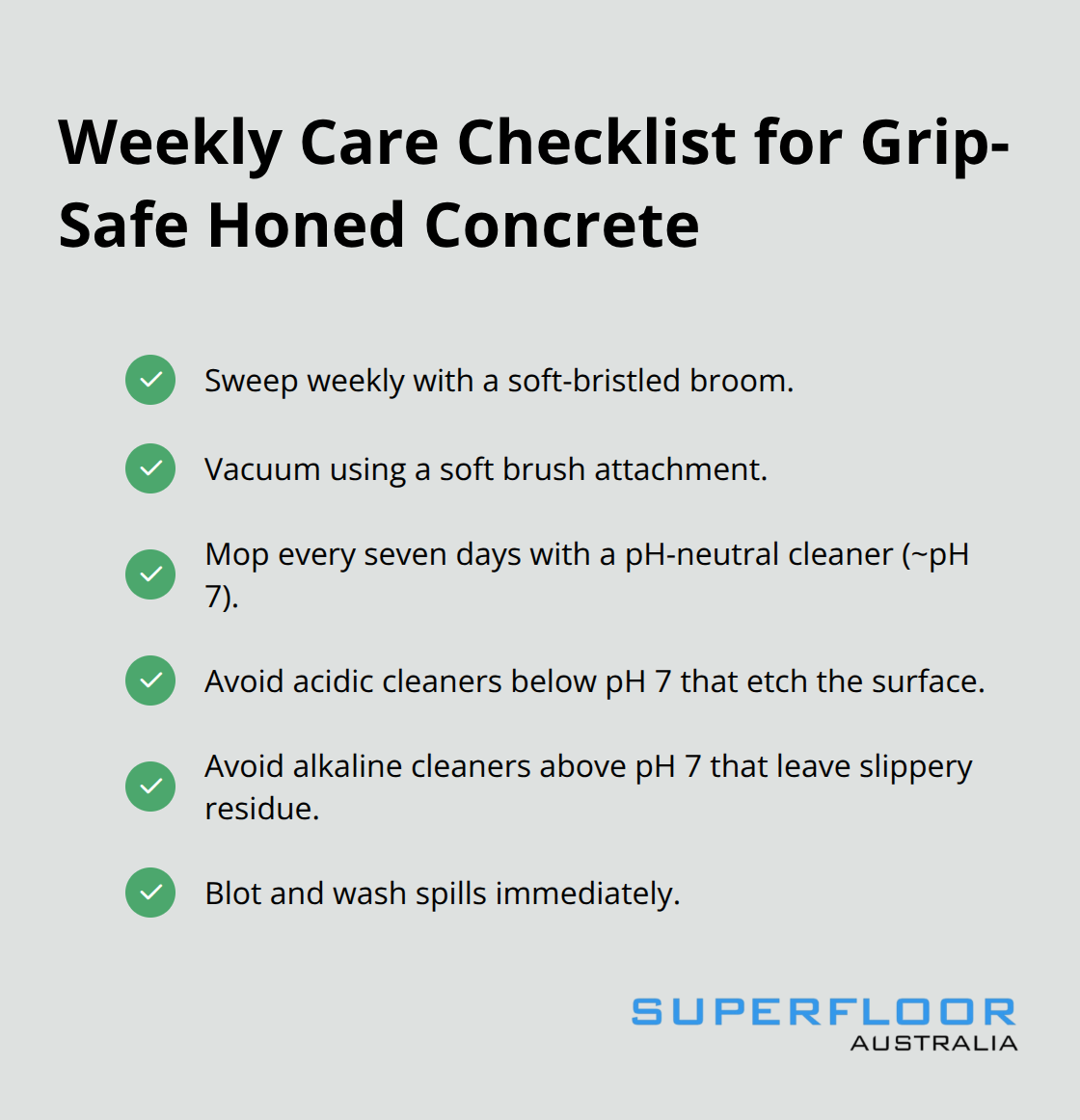
Clean spills immediately by blotting and washing rather than letting them sit, which prevents stains from bonding to the sealer.
Resealing Every 2–5 Years Restores Protection
Brisbane’s intense UV environment and salt-laden air from coastal areas accelerate sealer degradation, so resealing every 2-5 years is essential rather than optional. The resealing process involves thorough cleaning, complete drying, and even application with a roller or brush, followed by 24 to 72 hours of curing before foot traffic resumes. Applying an anti-slip conditioner between full reseal cycles maintains traction during high-use periods without requiring a complete reapplication. For stubborn stains, a baking soda paste works on oil-based marks while hydrogen peroxide addresses organic stains; always test any cleaner on an inconspicuous area first to confirm it won’t damage the sealer.
How the Sealer Protects Against Water and Chemicals
The penetrating sealer fills surface pores, preventing water from pooling beneath the surface where it would weaken the concrete and create invisible safety hazards. This sealed barrier also protects against chlorine and pool chemicals that would otherwise gradually degrade unsealed concrete, causing it to dust, discolour, and lose structural integrity over time. Honed concrete with proper sealing resists chemical degradation that affects tiles, pavers, and unprotected concrete, making it the only poolside option that maintains both safety performance and durability in Brisbane’s demanding environment. The sealer creates a protective barrier that keeps your deck performing safely and looking sharp for decades when you follow a straightforward maintenance schedule.
Final Thoughts
Poolside honed concrete Brisbane represents the most practical choice for homeowners who refuse to compromise on safety, durability, or aesthetics. The evidence is clear: honed concrete outperforms tiles and pavers in slip resistance, costs significantly less over 20 years, and maintains its grip and appearance through Brisbane’s demanding climate when properly maintained. You’ve seen how AS4586 testing validates safety performance, how anti-slip additives deliver traction without sacrificing the refined finish, and how straightforward maintenance protects your investment for decades.
The real value emerges when you step back and consider what you’re actually buying-a surface that keeps your family safe, reduces liability risk, and enhances your property’s appeal to future buyers. Honed concrete installations from a decade ago still perform flawlessly on Brisbane properties, while tile and paver decks have required expensive repairs or complete replacement. That longevity translates directly into money saved and peace of mind gained.
Professional installation separates results that last from installations that disappoint within a few years, as the grinding process, sealer selection, and anti-slip additive application all demand skilled craftsmanship. Contact Superfloor Australia to discuss your poolside project, arrange a site visit, and receive a detailed quotation for your honed concrete needs.