

Stained concrete floors deliver the visual impact of premium finishes without the premium price tag. At superfloor australia, we’ve seen firsthand how a stained concrete look transforms spaces-from warehouses to living rooms-with rich colour and lasting durability.
This guide covers everything you need to know about staining concrete, from the chemistry behind the process to design options that suit any aesthetic.
How Stains Actually Work on Concrete
Stained concrete isn’t magic-it’s chemistry. When stain molecules penetrate the concrete surface, they react with the minerals in the material and create permanent colour that bonds at a molecular level. This is why stained concrete won’t peel, chip, or fade like paint does. Two primary stain types dominate the market, and understanding the difference between them changes everything about your project outcome.
Acid-based stains create the deepest, most durable results
Acid stains chemically bond with concrete through a reaction that typically takes 4 to 24 hours. The stain penetrates deeply into the pores, creating variegated, natural-looking finishes that mimic stone with subtle colour variations. The limitation is real: acid stains restrict you to earth tones-browns, greens, tans-because the chemical reaction itself determines the colour palette. You also work with fumes, so proper ventilation and safety gear including gloves, goggles, and a respirator become essential. The application window matters too. You apply the stain, allow it to react for the specified time, then neutralise it with a baking soda and water mixture (roughly 1 cup per 5 gallons) to stop the chemical reaction. Once neutralised, rinsed thoroughly, and sealed, these floors last longer than water-based alternatives because the bond is genuinely permanent. Most acid-stained floors need resealing every 2 to 3 years depending on traffic, but the stain itself doesn’t fade.
Water-based stains offer flexibility and easier application
Water-based stains work differently. Instead of a chemical reaction, they sit on and within the concrete surface, delivering consistent, uniform colour coverage. The real advantage here is colour range-you access earth tones, pastels, bold hues, and everything in between. They’re also safer indoors because they emit low VOCs, making them suitable for homes and occupied commercial spaces. Application moves faster: you spray, roll, or brush the stain on, allow 2 to 4 hours drying between coats, and build colour depth with multiple layers. The tradeoff is durability. Water-based stains don’t penetrate as deeply as acid stains, so they may need resealing annually in high-traffic areas. However, they’re easier to refresh or repaint if you want to change direction later.
Temperature and surface conditions control your success
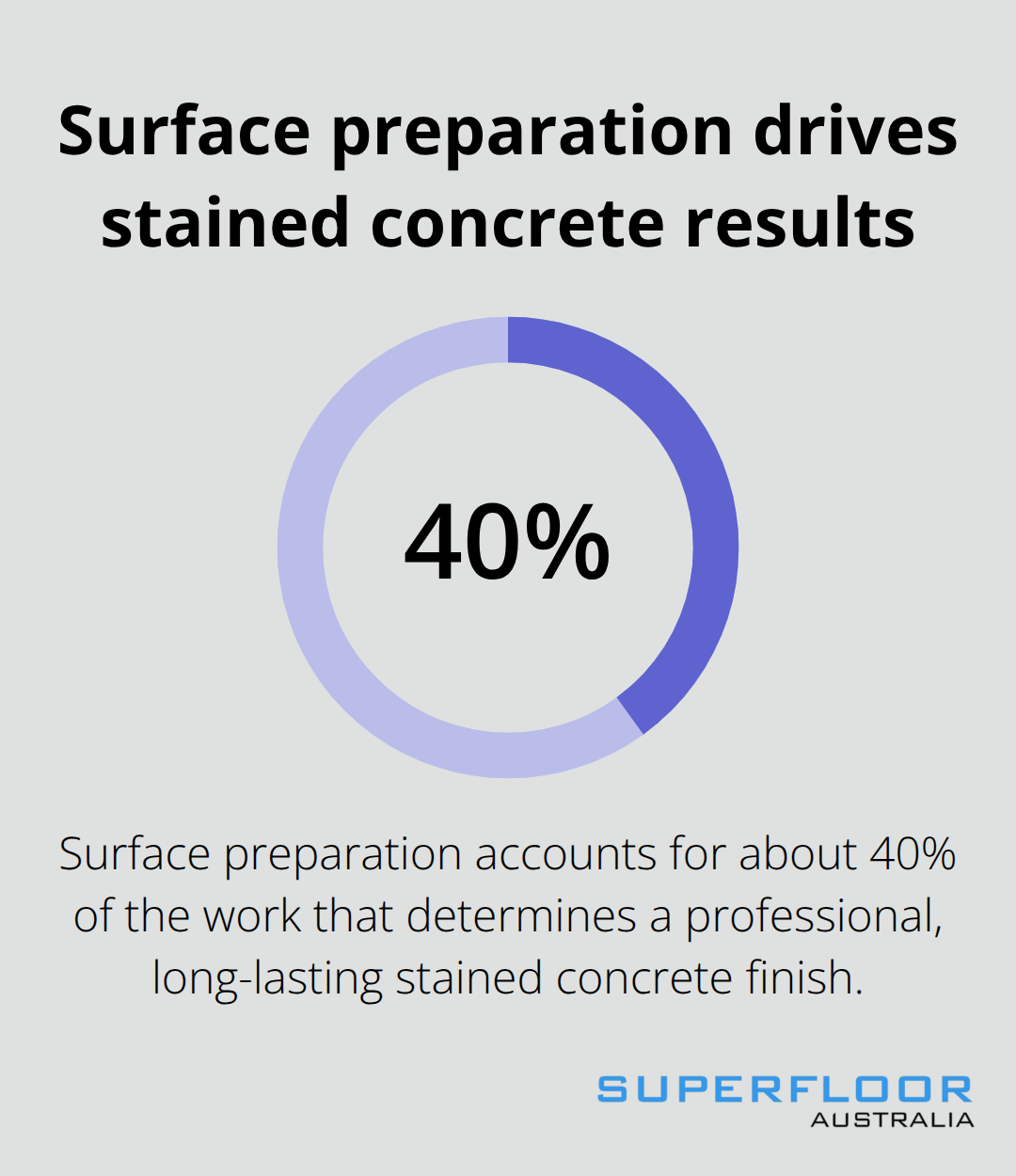
Do not apply sealer at temperatures below 8°C or above 35°C. Before you apply either stain type, your concrete must be clean, free of existing sealers, and have open pores. This means you grind the surface, remove all dust with a vacuum, and confirm there’s no moisture trapped beneath using a 24-hour plastic sheet test. Moisture is the silent killer of stained concrete-if water sits under the surface, the stain won’t bond properly and mould can develop. Proper surface preparation accounts for about 40 percent of the work and determines whether your floor looks professional or patchy.
The colour you choose and the stain type you select work together to shape your final aesthetic. Your next decision involves exploring the full spectrum of design possibilities available to you.
What Colours Actually Work on Stained Concrete
Acid stains lock you into earth tones
Acid stains produce earth tones like tan, brown, rust, and green due to their chemical reaction with lime in concrete. If you want warm, natural finishes that mimic stone or aged materials, acid stains deliver unmatched depth and authenticity. The colour emerges from the concrete’s mineral composition reacting with the stain-you cannot override this chemistry. This restriction frustrates some designers, but it also guarantees a timeless aesthetic that won’t feel dated in five years. The variegated, natural-looking finishes acid stains create work exceptionally well in spaces where you want the floor to recede visually rather than dominate.
Water-based stains remove colour restrictions entirely
Water-based stains work from a completely different mechanism. The colour comes from pigments suspended in the solution, not from a chemical reaction with the concrete. You can apply pastels, bold jewel tones, soft grays, or vibrant reds without limitation. This flexibility appeals to designers who want stained concrete to make a bold statement rather than blend into the background. The tradeoff remains durability-water-based stains don’t penetrate as deeply as acid stains, so they may need resealing annually in high-traffic areas. However, they dry faster (2 to 4 hours between coats), which allows you to layer multiple colours and build visual depth within a single day.
Practical colour selection depends on traffic patterns
In high-traffic commercial spaces, neutral and earthy tones remain dominant because they hide wear patterns and dirt more effectively than lighter shades. Lighter colours do make spaces feel larger and brighter, which appeals to residential clients, but they show every footprint and dust particle. The practical reality is that your colour choice must balance aesthetics with maintenance reality. If you install stained concrete in an entryway or retail environment, try colours that conceal traffic patterns. For living rooms or low-traffic areas, lighter tones work beautifully without creating maintenance headaches.
Layering colours creates dimension without extra work
Multiple colour layering deepens visual interest without increasing maintenance burden. You apply one base coat, allow it to dry fully, then layer a second complementary colour to create dimension and character that single-colour floors lack. This technique works better with water-based stains because they dry faster, allowing you to apply a second coat within 2 to 4 hours rather than waiting 24 hours between acid applications. The result feels custom and sophisticated while remaining straightforward to execute.
Polishing amplifies colour and transforms the aesthetic
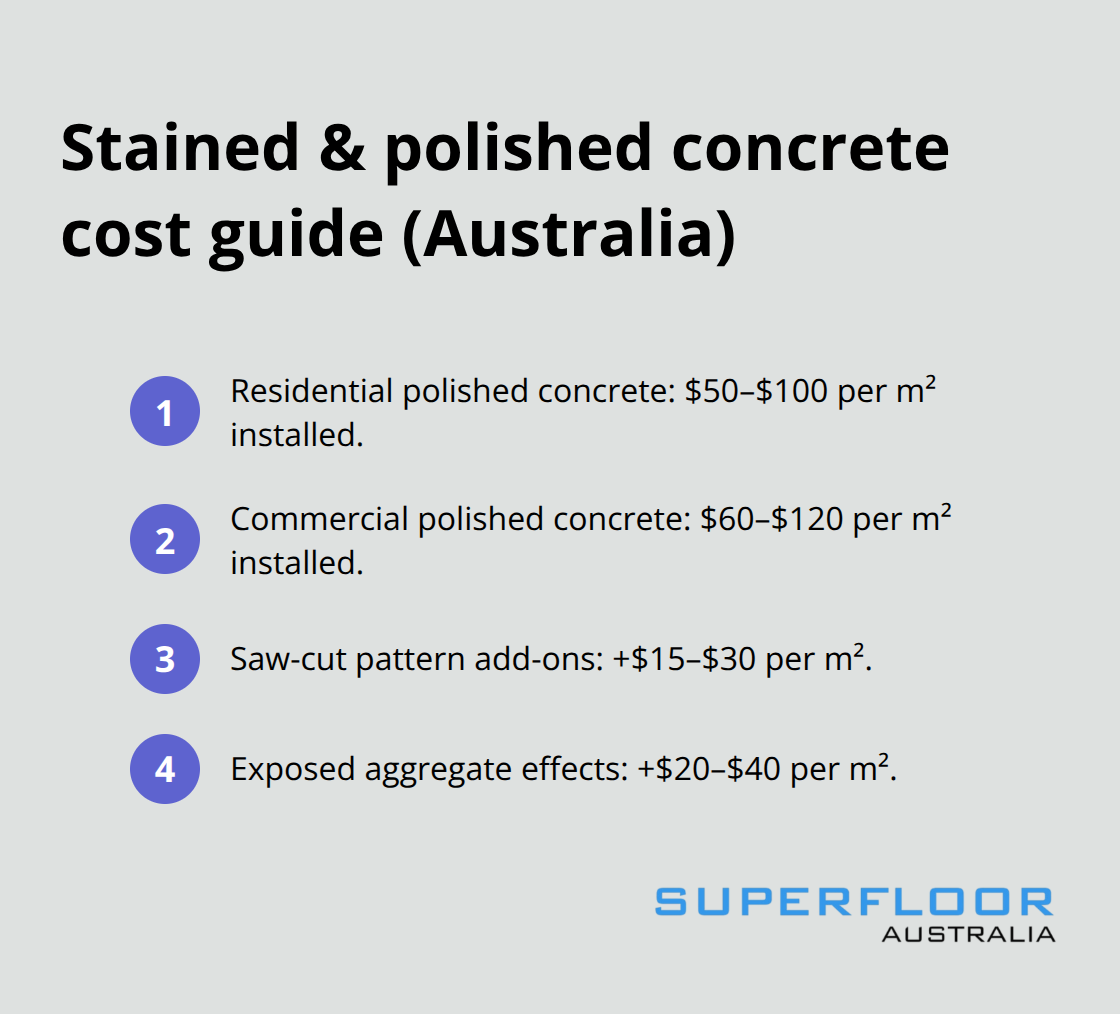
Polishing transforms stained concrete from attractive to exceptional. After staining and sealing, a second round of grinding and polishing removes surface imperfections, opens the concrete’s aggregate, and creates a high-gloss finish that amplifies colour depth and makes spaces feel larger through reflective properties. Residential polished concrete costs between $50 and $100 per square metre, while commercial projects typically range from $60 to $120 per square metre depending on existing slab condition and design complexity. Adding decorative elements like saw-cut patterns costs approximately $15 to $30 per square metre, and exposed aggregate effects run $20 to $40 per square metre. The combination of staining plus polishing creates a premium aesthetic that rivals natural stone or timber at a fraction of the cost.
In commercial applications, this combination delivers measurable durability advantages. A polished and sealed stained floor resists scratches and stains far more effectively than stain alone because the sealer bonds with the polished surface more completely. The high-gloss finish also reduces dust and allergen accumulation, making these floors genuinely low-maintenance in occupied spaces. For residential projects, the polishing step transforms a functional floor into a design statement that enhances property perception without requiring ongoing maintenance beyond regular sweeping and occasional neutral pH mopping. The real question isn’t whether to polish-it’s whether your budget allows it, because the aesthetic and performance gains justify the investment for most applications.
How Long Stained Concrete Actually Lasts
The stain itself outlasts most protective coatings
Stained concrete floors remain vibrant and functional for 20+ years when sealed properly. Acid stains create a permanent molecular bond that resists fading entirely, while water-based stains fade gradually but stay colourfast far longer than paint or vinyl. The stain won’t degrade because it bonds chemically or physically with the concrete matrix. The real variable isn’t the stain-it’s the sealer protecting it. A quality sealer applied correctly lasts 2 to 5 years depending on traffic intensity and cleaning methods. In residential spaces with normal foot traffic, you’ll reseal every 3 to 5 years. Commercial environments and high-traffic entryways demand annual or biennial resealing to maintain protection.
Concrete condition and moisture determine true longevity
The condition of your concrete slab determines longevity far more than the stain type. New or well-maintained slabs with minimal cracks support stained finishes indefinitely, while heavily damaged concrete with deep structural cracks will eventually show wear patterns that no sealer can prevent. Temperature fluctuations and moisture are the enemies here. Concrete that experiences freeze-thaw cycles or sustained moisture exposure degrades faster.
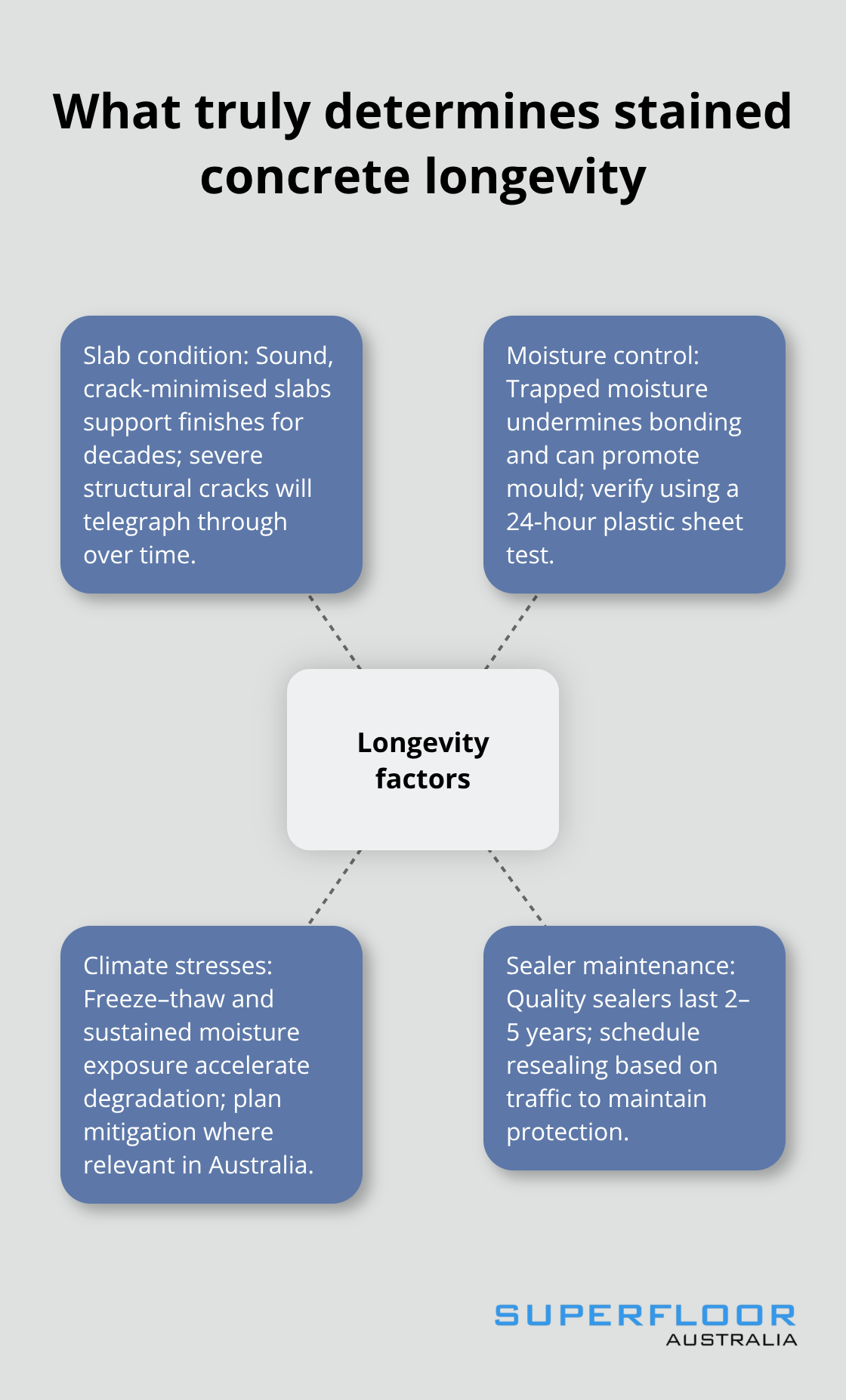
A 24-hour plastic sheet test reveals trapped moisture that will sabotage your floor’s lifespan. If moisture exists, you address it through remediation systems costing $10 to $25 per square metre before staining. This upfront investment protects your entire project from failure.
Maintenance practices directly control floor lifespan
Maintenance determines whether your floor reaches that 20-year mark or fails at five years. Sweep regularly and mop with pH-neutral cleaners only-harsh chemicals, acidic solutions, and abrasive tools destroy sealers and stains. Avoid vinegar, bleach, and commercial floor strippers; they chemically break down the sealer’s protective layer. Proper care extends the life of both acid and water-based stains significantly. Neglect shortens it dramatically.
Installation and long-term costs favour stained concrete
Residential polished stained concrete costs $50 to $100 per square metre installed, while commercial projects run $60 to $120 per square metre depending on slab condition and design complexity. Adding colour variation, patterns, or exposed aggregate effects increases costs by $15 to $40 per square metre. Compared to timber flooring at $80 to $200+ per square metre, stained concrete delivers comparable aesthetics at substantially lower cost. Compared to ceramic tile at $40 to $100 per square metre, stained concrete offers superior durability and easier maintenance.
Maintenance costs reveal the true economic advantage
The long-term value emerges from maintenance expenses. Resealing runs $3 to $8 per square metre every 2 to 5 years, while re-polishing costs $10 to $20 per square metre every 5 to 10 years. Timber requires refinishing at $30 to $80 per square metre every 5 to 7 years, and tile grout fails regularly, requiring expensive regrouting. Over 20 years, stained concrete becomes the most economical choice, especially in commercial applications where durability and low maintenance directly impact operational costs. The initial investment pays dividends through reduced upkeep and extended floor life.
Final Thoughts
Stained concrete delivers genuine advantages that extend far beyond aesthetics. We at Superfloor Australia have watched this flooring solution outperform traditional alternatives across residential and commercial projects for good reason. The environmental case stands out immediately-stained concrete reuses your existing slab rather than replacing it, which eliminates the waste and carbon footprint associated with removing old flooring and installing new material. You avoid manufacturing new products or shipping heavy materials across the country, and the process itself produces minimal waste compared to timber, tile, or vinyl alternatives.
Versatility matters in real applications because a stained concrete look works equally well in a Brisbane warehouse, a family home, a retail showroom, or a medical clinic. The same floor handles heavy machinery, children’s footsteps, customer traffic, and sterile environments without requiring different maintenance protocols or specialised care. This adaptability means you’re not locked into a single aesthetic or functional category-the floor grows with your space rather than limiting what you can do with it. The maintenance reality separates stained concrete from competitors entirely: you sweep, mop with neutral pH cleaner, and reseal every few years ($3 to $8 per square metre every 2 to 5 years), while timber refinishing costs $30 to $80 per square metre every 5 to 7 years.
Long-term value emerges from durability combined with low maintenance, as a properly sealed stained concrete floor lasts 20+ years without structural failure and resists scratches and stains effectively. When you factor in reduced cleaning time, eliminated refinishing costs, and extended lifespan, stained concrete becomes the most economical flooring choice for spaces where durability matters. Contact Superfloor Australia to explore how stained concrete can transform your space with high-quality polished concrete flooring solutions tailored to your specific needs.