

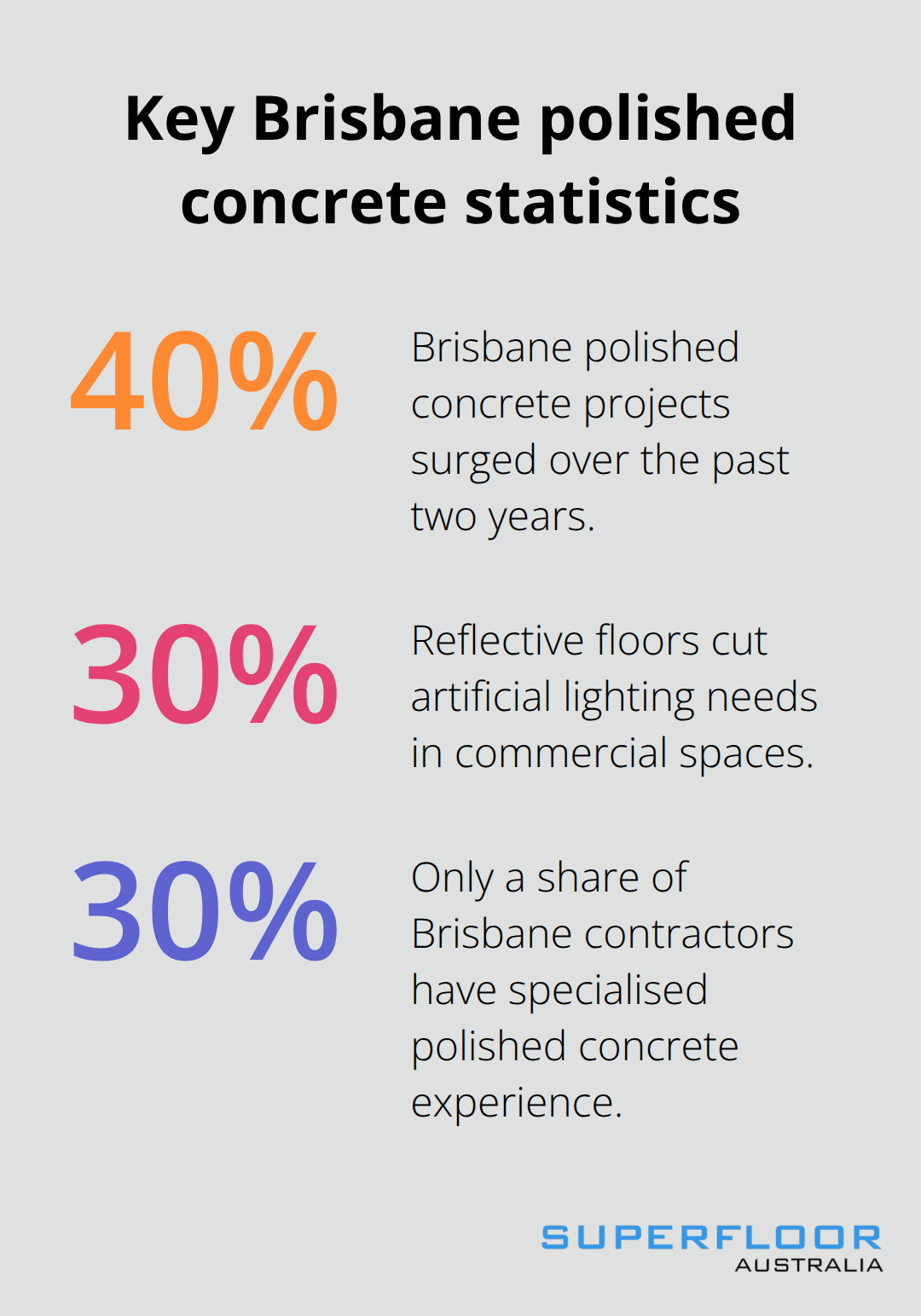
Polished concrete Brisbane projects have surged 40% in the past two years as property owners recognise the superior durability and low maintenance costs. This flooring solution transforms ordinary concrete into a sleek, professional surface that lasts decades.
We at Superfloor Australia guide hundreds of Brisbane clients through the polishing process annually. The right approach saves thousands in long-term maintenance while creating stunning results.
Why Polished Concrete Outperforms Regular Flooring
Regular concrete serves as basic foundation material, while polished concrete becomes a sophisticated floor system through mechanical processes and chemical densification. The process applies progressively finer diamond abrasives to achieve gloss levels from 1 to 4, with level 3 working best for Brisbane’s conditions according to industry standards.
Superior Durability Spans Multiple Decades
Polished concrete floors last 20-30 years under heavy traffic without replacement, while carpet requires replacement after 7 years and timber after 15 years. The densification process creates resistance to impacts, scratches, and chemical spills. Brisbane receives substantial annual rainfall, making moisture resistance essential – polished concrete’s non-porous surface blocks water damage that destroys traditional materials.
Maintenance Costs Stay Between $15-25 Per Square Metre
Maintenance expenses for polished concrete average $15-25 per square metre every 5-7 years, while carpet replacement costs $40-80 per square metre each decade. Daily care needs only microfibre dust mops, which eliminates expensive deep clean services. The reflective surface cuts artificial light needs by 30%, reducing electricity bills significantly in Brisbane’s commercial spaces.
Long-Term Value Exceeds All Alternatives
Installation costs between $3-12 per square foot deliver 40-year performance, making polished concrete the most cost-effective floor choice. Property values rise 8-12% with polished concrete installation (according to real estate data from Brisbane markets). The thermal mass properties regulate indoor temperatures, reducing cooling costs during Brisbane’s hot summers.
These performance advantages make surface preparation and contractor selection critical factors that determine your project’s success.
How Do You Start Your Polished Concrete Project
Surface Assessment Determines Project Success
Existing concrete condition makes or breaks polished concrete results. Slab age, crack patterns, and surface contamination directly impact final quality and costs. Brisbane’s older homes often have concrete poured before 1990 that requires extensive repair work, which adds costs to project expenses.
Professional assessment identifies structural issues, moisture problems, and aggregate quality within the first site visit. Concrete with higher water-cement ratios requires extended drying time or moisture mitigation systems. Oil stains, paint residue, or adhesive contamination demand specialised removal techniques that increase preparation time by 2-3 days.
Power requirements matter significantly – polished concrete equipment needs 15-amp circuits minimum, and older Brisbane properties often require electrical upgrades that cost $500-1,200 per project.
Contractor Selection Impacts Everything
QBCC licence verification prevents costly mistakes and project failures. Brisbane’s decorative concrete market includes over 200 contractors, but only 30% possess specialised polished concrete experience according to industry association data.
Request portfolio photos from projects completed within 12 months, with focus on gloss consistency and edge work quality. Equipment quality separates professionals from amateurs – legitimate contractors own diamond systems worth $15,000-25,000 (professional-grade equipment costs significantly more than basic tools).
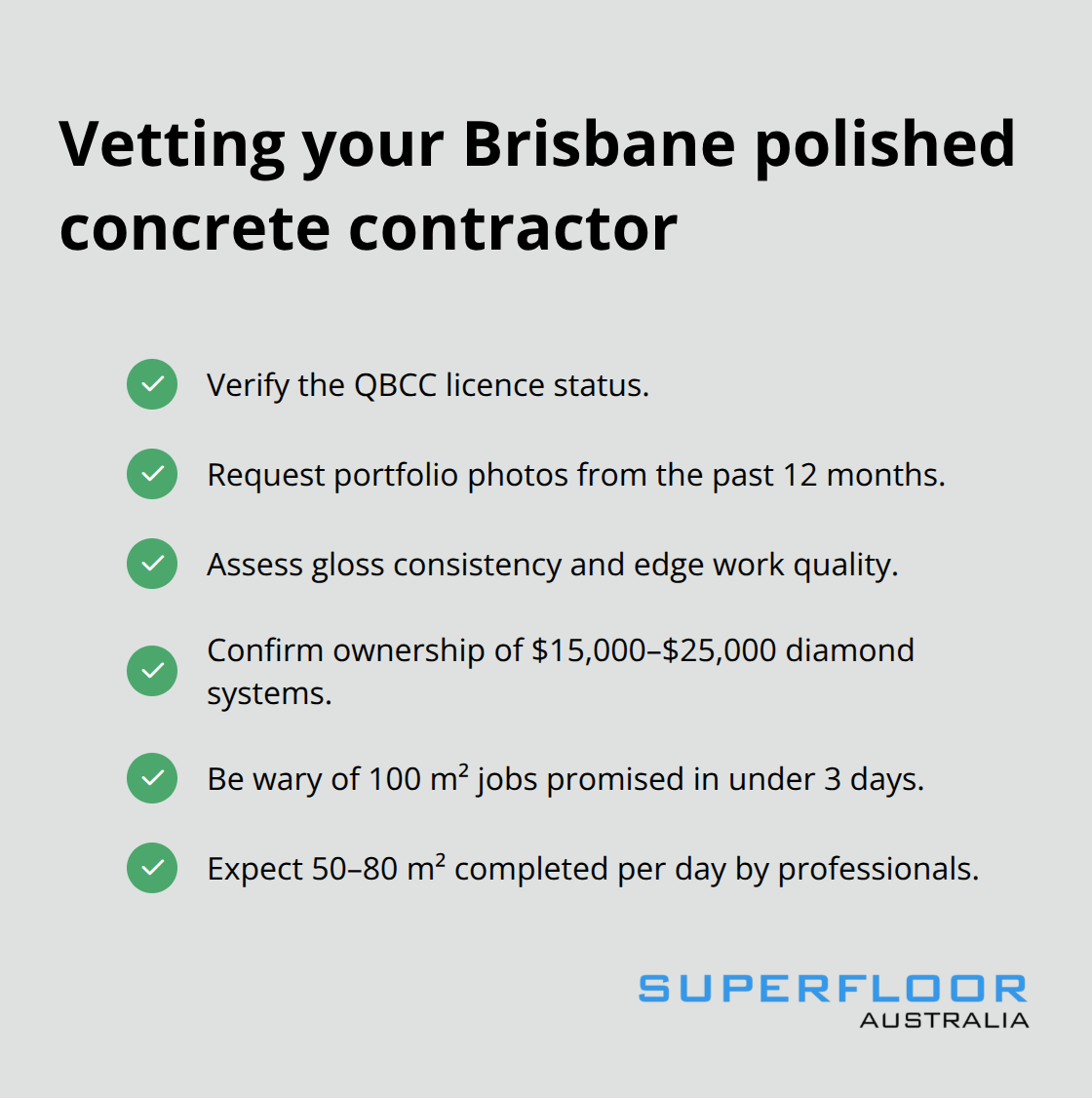
Timeline reveals contractor capacity – rushed jobs under 3 days for 100 square metres indicate corner-cutting. Professional contractors complete 50-80 square metres daily depending on existing surface conditions.
Installation Process Timeline
The installation process spans 4-6 days for residential projects. Initial preparation takes 1-2 days, densification requires 24-hour curing, progressive polishing needs 2-3 days, and final sealing adds one day.
Pricing variations that exceed 40% between quotes signal either inexperience or hidden cost structures. Professional contractors provide detailed breakdowns that include preparation work, materials, and labour costs (transparent pricing helps avoid unexpected expenses).
These preparation and contractor factors directly influence your design options and final finish quality, which we’ll explore next.
What Factors Will Make or Break Your Project
Surface Conditions Determine Project Success
Surface conditions create the foundation for polished concrete success or failure. Concrete older than 15 years typically needs crack repairs that start around $200-$400 for residential properties, while surfaces with oil contamination require specialised treatment that adds $12-20 per square metre to project costs. Aggregate quality determines final appearance – Brisbane’s river rock aggregate creates stunning exposed finishes, while recycled concrete aggregate produces inconsistent results that disappoint homeowners.
Moisture levels above 4% according to Australian Standards AS 1884 force project delays of 2-4 weeks for proper drying. Power supply inadequacy costs $800-1,500 for electrical upgrades that many contractors overlook during initial quotes (these hidden costs catch homeowners off guard).
Design Choices Drive Final Costs
Gloss levels from 1-4 impact prices dramatically – level 1 matte finish costs $45-65 per square metre while level 4 high-gloss reaches $85-120 per square metre due to additional steps. Stone exposure options range from minimal salt-and-pepper finish at base rates to full aggregate exposure that adds $25-40 per square metre. Colour integration through acid stains or integral pigments increases costs by $15-30 per square metre but transforms plain concrete into designer floors.
Level 3 gloss works best for Brisbane homes because it balances durability with maintenance needs perfectly. This finish level resists Brisbane’s climate extremes while maintaining professional appearance.
Budget Factors Prevent Project Disasters
Installation costs span $3-12 per square foot based on existing conditions and finish selection. Projects under 50 square metres incur premium rates due to equipment mobilisation costs, while areas exceeding 200 square metres qualify for volume discounts of 15-25%. Hidden expenses emerge from inadequate site preparation – concrete work generates 3-5 cubic metres of dust per 100 square metres that requires professional disposal at $300-500.
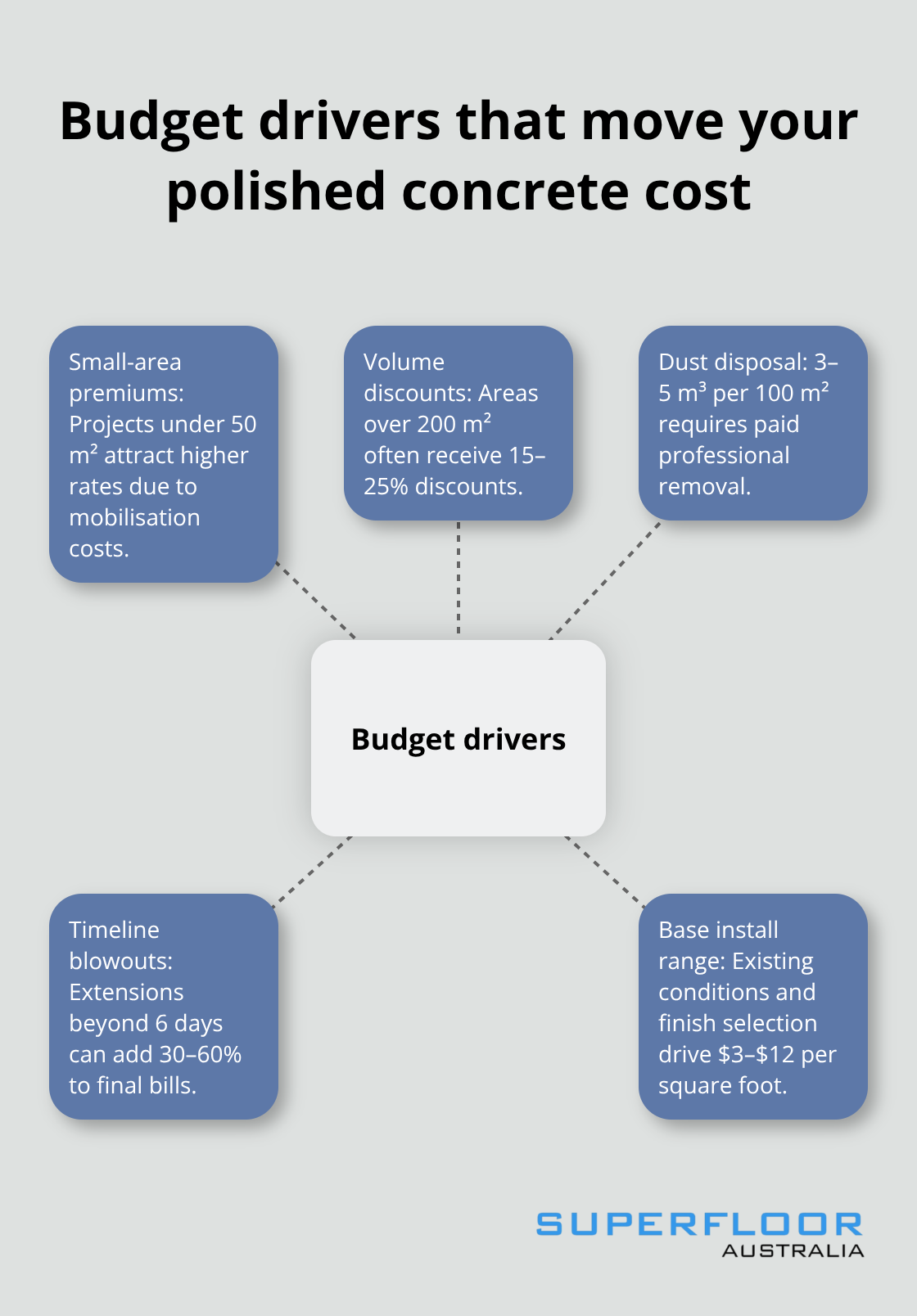
Timeline extensions beyond 6 days indicate surface problems that increase final bills by 30-60% through additional preparation work and material usage (proper assessment prevents these costly surprises).
Final Thoughts
Polished concrete Brisbane projects succeed when property owners prioritise surface assessment, contractor expertise, and realistic budget plans. The 40% market growth reflects proven performance advantages that deliver decades of value through minimal maintenance requirements and exceptional durability. Professional installation prevents the costly mistakes that plague DIY attempts and inexperienced contractors.
QBCC-licensed specialists possess the $15,000-25,000 diamond equipment needed for consistent results, while proper surface preparation eliminates the hidden costs that destroy project budgets. Timeline adherence and transparent prices separate legitimate contractors from those who cut corners. Surface assessment and electrical requirements evaluation prevent unexpected expenses that derail budgets and timelines (these factors determine project success from day one).
We at Superfloor Australia combine precision preparation with expert craftsmanship to deliver results tailored to individual needs. Our polished concrete floors enhance both aesthetics and durability while providing dust, stain, and allergen-resistant surfaces ideal for Brisbane homes and commercial spaces. Start your project by requesting detailed quotes from multiple QBCC-licensed contractors, comparing equipment quality and portfolio examples from recent work.